
The Council, the Consistory, Liturgy and Life
We live as we pray, for we pray as we live. (CCC, 2725)
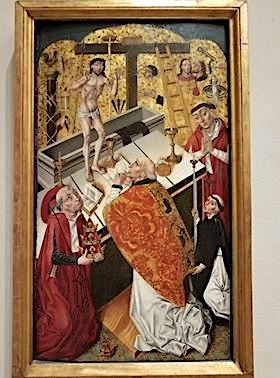
So it seems the Liturgy was taken off the agenda at the recent consistory of cardinals. Still, the current head of the Dicastery of Divine Worship, British cardinal Arthur Roche, sent around a two-page letter, explaining why a return to the usus antiquior, the Traditional Latin Mass, is not only unadvisable, but apparently impossible.
His argument may be summed up as follows: He invokes Pope Saint Pius V – of all people – who promulgated a ‘revised Mass’ in 1570 in accord with the decrees of the Council of Trent (1545 – 1563). So too, Paul VI’s own Missal of 1969 was promulgated in the wake of the Second Vatican Council, in accord with its own teachings. In the cardinal’s mind, therefore, rejection, or even criticism, of the Novus Ordo is linked with rejection of the Council. There is no going back, only forward.
The argument may seem true, but doesn’t hold up.
The Missal of 1570 made no fundamental changes to the Mass, which looked much the same as what was before 1570. Whatever modifications were made were fully in accord with the decrees of Trent.
What of the Novus Ordo? Whatever Paul VI and the Council Fathers intended, we can only compare what was – and is –done liturgically with what the Council actually taught.
Here we turn to Sacrosanctum Concilium, the Constitution on the Sacred Liturgy, the first document of the Council, promulgated in 1963.
Therein it was decree that Gregorian chant should be given ‘pride of place’ in the Liturgy, followed by polyphony, and only then other sacred music. The organ was to be the principal instrument, ‘held in great esteem’, and other instruments only insofar as they could be made ‘apt for sacred use’, which means fitting for the Temple, and not the campfire or glee club. The Liturgy was to be primarily in Latin, with some vernacular permitted. When one of the Fathers warned that if they allowed some of the vernacular, it would become all vernacular, there was an awkward silence, and the other bishops laughed. ‘Impossibile!’
There was no mention at all in Conciliar constitution of Mass said facing the people (contra populum); or of lay, to say nothing of female, lectors; or Communion in the hand; or Communion as ‘procession’; or Eucharistic ministers; or forbidding kneeling or removing altar rails, or ‘Gothic’ vestments, or circular churches, or amplified music, guitars and pianos turned up to ‘11’.
All of this was made up and imposed after the Council, in light of an imagined vague and amorphous ‘spirit’ – certainly, not from the text of the documents.
To get to the nub of the matter, the Mass is meant to be truly ‘Catholic’, which means ‘universal’, the same across the planet. When a Byzantine Catholic walks into a Byzantine church, he gets a Byzantine liturgy. The same with Coptic, Carmelite, Carthusian, Ambrosian. This is legitimate diversity, signifying a deeper unity.
What they all have in common is that they signify what the Mass essentially is: the eternal sacrifice of Christ offered to the Father, and His real sacramental Presence abiding in the Eucharistic species.
These two essentials – sacrifice and sacrament – are obscured in too many Novus Ordo liturgies. We shouldn’t have to wander into a parish not knowing what to expect. Drums and guitars or chant and solemnity? Altar rail, or not? Kneeling permitted, or verboten? Communion on the tongue, or in the hand only? Legions of lay ministers? An orthodox sermon, or quasi-heresy? Regular confession available, or ‘by appointment’ only?
For there is also a diversity that undermines unity, sowing chaos, undermining faith, which should not be hallmarks of the Catholic Church. Sure, as Joyce quipped, the Church may be ‘here comes everybody’, but everybody should find the stable and tranquil ‘pillar and bulwark’ of truth, the ark of salvation.
Yes, this is there under the surface, but the barque of Peter is buffeted and storm tossed, the uncertain tossings of a vagarious wind.
Most of us, myself included, would prefer a daily low traditional Mass early each morning, whether of the 1962 or 1969 Missal, preferably in Latin either way. Solemn, sweet and to the point, nourishment for the soul, like hearty spiritual porridge. The Fathers of the Second Vatican Council – at least as far as the text promulgated goes – envisioned that any post-conciliar reform would keep the Mass looking much the same.
But this is not what happened. Perhaps Christ, like the Apostles in that boat, has permitted the current turmoil to test us, to see how much we trust Him and the efficacy of His sacraments in the midst of imperfection.
Perhaps God, in the broadness of His mercy, is ‘lowering the bar’, to bring in as many as He might, all those in the highways and byways, compelling them to come into the marriage feast, even if they know little of what they do.
Perhaps it’s just His permissive will at work.
Whatever the case, we must stay with Peter’s barque, and pray for the Almighty to rein in the confusion in His own good time, like Christ waking up in the prow of the boat and calming the storm. In the meantime, since prayer, and especially liturgical prayer shapes our lives, we should seek whatever perfection, whatever measure of truth, beauty, goodness, we might, whether in the parish He has placed us, or in our journeys further afield.
The momentum does seem to be on the side of tradition amongst younger priests and families, and such will prevail through the current chaos. In the meantime, God is there, even in fractured Masses, like He is in the indissoluble bond of a turbulent but faithful marriage, in good times and in bad, in sickness and in health.
The difference is that if we persevere to the end, death will not do us part, but bring us to eternal life with Him, in everlasting beatitude.
Carney’s Amoral Majority
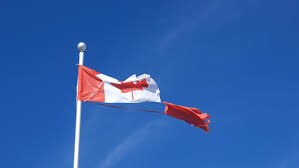
After five defections – euphemistically described as ‘crossing the floor’ – and three by-elections, Mark Carney and his Liberals how have their coveted majority. One wonders what bowls of pottage were offered in back-room deals. In the archaic monarchical system that is the Dominion of Canada, this majority allows the newly-minted Prime Minister to rule[…]Continue reading→

Saint Kateri , Canada’s Protectress
This was the title given to Saint Kateri Tekakwitha, by Pope Benedict XVI, when he canonized her on October 28th, 2012, along with six others, in Saint Peter’ Square (she had been beatified by Pope John Paul II back in 1980). With Saint Joseph as our protector, along with the Canadian martyrs, we seem to[…]Continue reading→
A Tale of Two Benedicts
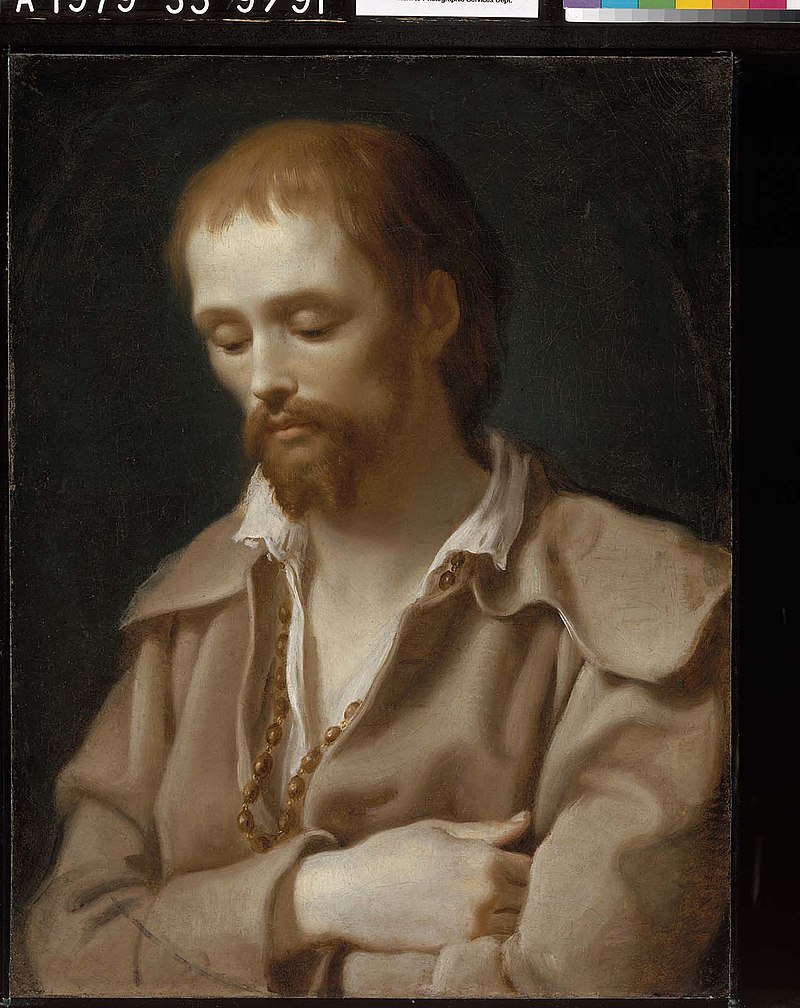
A grace-filled Holy Week to all our readers! As we await and prepare for the Resurrection about to dawn upon us, we might keep in mind two Benedicts: Pope Emeritus Benedict XVI, requiescat in pace, elected on this day in 2005; and today’s commemoration of the mystic pilgrim, Benedict Joseph Labre, who died on this[…]Continue reading→

My Name is Bernadette
April 16th is a propitious day, for besides the anniversary of Father de Valk’s death, who founded Catholic Insight in its print form decades ago, and the commemoration of the ‘two Benedicts’, mentioned in accompanying posts, today we also recall Saint Bernadette Soubirous, the young visionary to whom the Virgin Mary appeared numerous times at[…]Continue reading→
Saint Lydwina of Schiedam and Suffering Joyfully
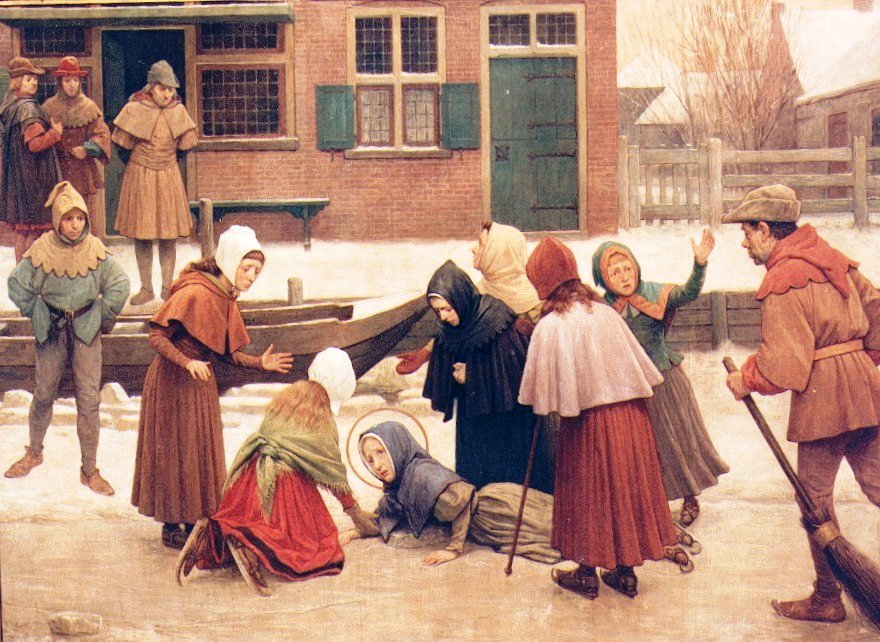
Saint Lydwina of Schiedam (1380 – 1433) was one of the countless and glorious ‘victim souls’ in the history of the Church, those whose lives are filled with suffering, often of an unimaginable intensity, but who suffer joyfully. She was a fifteen-year old Dutch girl, out skating one day, when she fell and broke one[…]Continue reading→
The Glorious Martyrdoms of Martin and Maximus
As we enter into Eastertide, we recall on this 13th of April Pope Saint Martin I (+655), one of the noblest, if most tragic, of the successors of Saint Peter. Born in Umbria, Italy, he was of noble lineage, with great intelligence combined with charity and love of the poor and the Church. While still[…]Continue reading→

Saint Stanislaus of Szczepanów
We celebrate Saint Stanislaus today (+ April 11, 1079), in light of this Easter Octave, a bishop and martyr who accepted the episcopacy only at the direct order of Pope Alexander II. He proved a wise and courageous leader of his flock, put to death by his own king, Boleslaus, for rebuking the monarch’s ‘immoral[…]Continue reading→
Saint Gemma Galgani
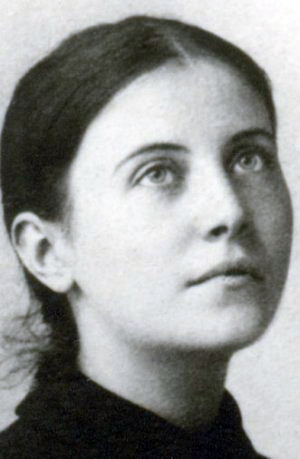
On this April 11th, in 1903 – the same year that the Italian Guiseppe Sarto was elected Pope later that summer as Pius X – a lovely, young Italian woman died, by the name of Gemma Galgani. She lived a brief life of 24 years, as did a number of other young saints, including Pier[…]Continue reading→
An Ideological and Improper Translation
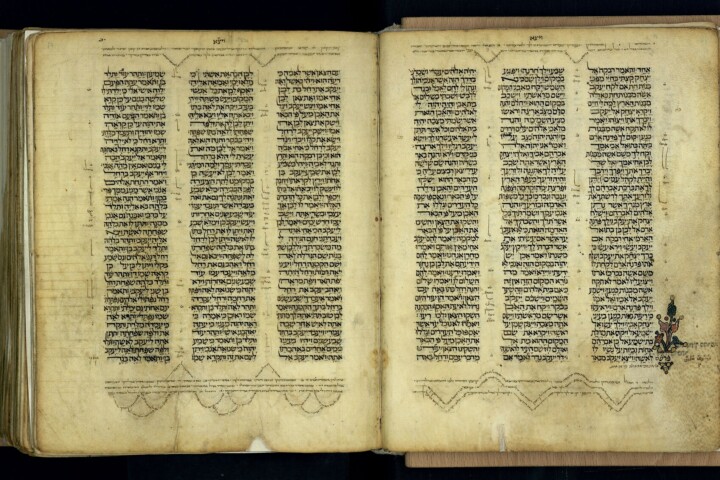
I noticed something odd with the psalm reading at Mass the other day. Our bishops’ conference here in Canada has decreed that the Mass in English – Novus Ordo – use the ‘NRSV’, the ‘New Revised Standard Version’, an ‘updated’ translation of the original RSV, first published in 1952. This ‘new translation’ has the tendency[…]Continue reading→
Saint Jean-Baptiste de la Salle: A Teacher for Teachers
Jean-Baptiste de la Salle (1651 – 1719), a French nobleman, ordained a priest, founded the first order in the Church’s history entirely without priests, and this came about almost by accident. I say ‘almost’, for, of course, there are no accidents with God. Destined for ordination from an early age, Jean-Baptiste never looked back, even[…]Continue reading→