
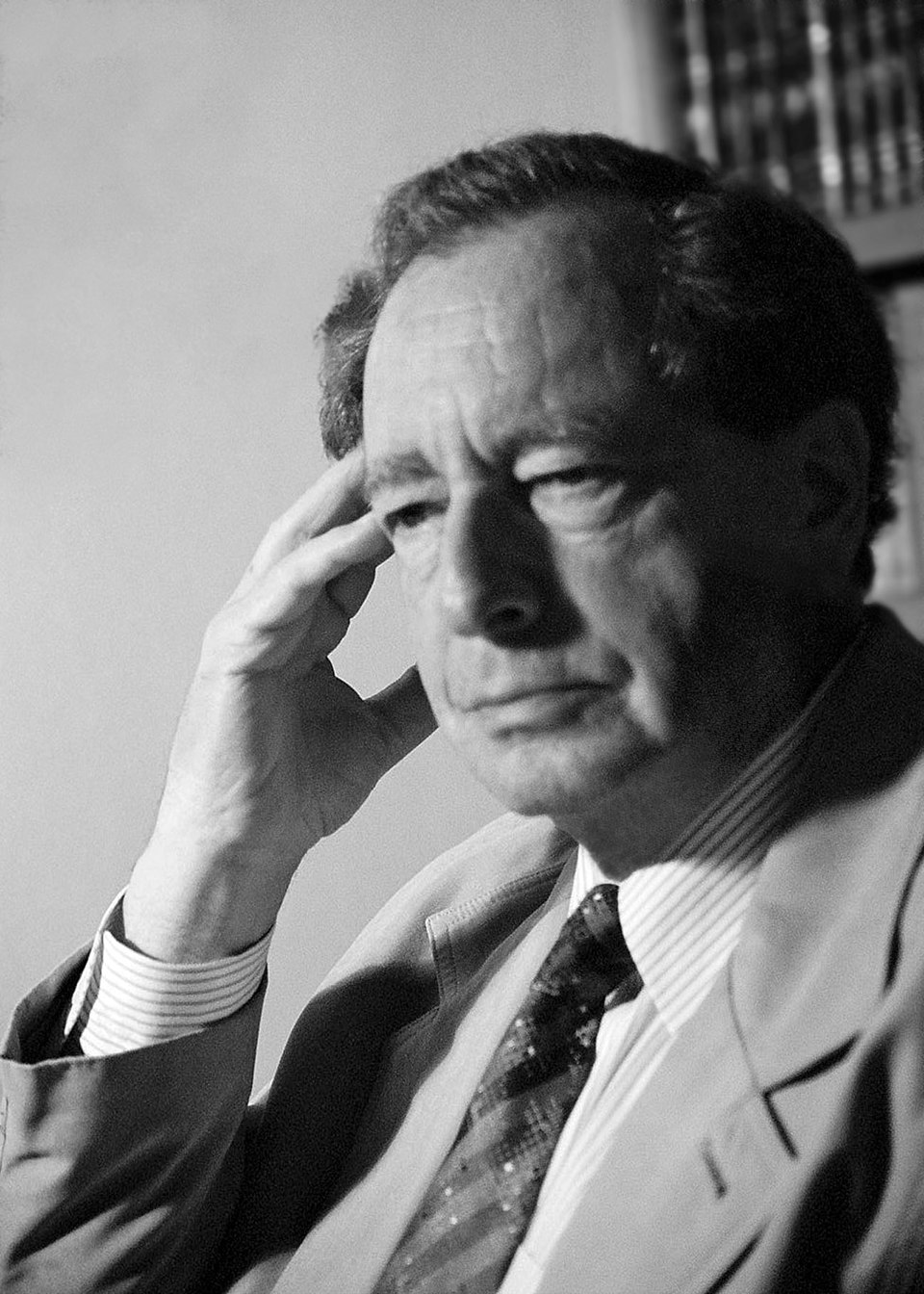
Wolfgang Smith’s Legacy: A Metaphysician for Our Times
On July 19, 2024, the world lost Wolfgang Smith, one of the most underappreciated yet profoundly important thinkers of our time. A rare polymath, Smith united the rigours of science with the depths of metaphysical and theological wisdom. In an age consumed by materialist reductionism and technological utopianism, he stood out as a thinker who refused to sever science from the sacred.
At just 18 years old, Smith completed degrees in mathematics, physics, and philosophy at Cornell University. He would go on to earn a Master’s in physics from Purdue and a PhD in mathematics from Columbia. In the early 1950s, he worked at Bell Aircraft Corporation, contributing to research on atmospheric reentry. Yet as brilliant as his scientific accomplishments were, they were only a prelude to his life’s deeper mission: to restore meaning to a disenchanted interpretation of the cosmos.
Smith held academic positions at MIT, UCLA, and Oregon State University, where he taught mathematics and published extensively in differential geometry. But even as he excelled in the sciences, he became increasingly troubled by the metaphysical void at the heart of modern scientific thought. He argued that contemporary science, rooted in quantity and abstraction, had lost its grasp of being. In his view, the world as described by physics was not the world as it truly is, but a shadow realm that is mathematically precise, yet ontologically hollow.
His metaphysical awakening led him to draw deeply from Thomism, Platonism, Neoplatonism, and Vedanta. Central to his philosophical vision was the principle of vertical causality: the idea that higher levels of being can influence lower ones. This stood in contrast to the flattened causality of materialism and reintroduced the possibility of divine action, the soul, and sacramentality into the natural order.
One of Smith’s most profound distinctions was between the corporeal and the physical, not merely as empirical categories but as ontological realities. The corporeal refers to the fully realized world of lived experience, rich with quality, meaning, and symbols of what we truly encounter as beings-in-the-world. The physical, by contrast, lacks intrinsic being; it is not a full level of existence but something ontologically deficient. Drawing from the metaphysical insight of St. Thomas Aquinas, Smith described the physical as akin to materia signata quantitate—matter designated by quantity, which is something that lies midway between being and non-being. It is not yet actualized by form and thus lacks full existence. This “sub-existential” status explains why modern physics, which focuses solely on this domain, provides only a fragmented account of reality rather than a complete one, abstracted from the concrete and meaningful whole. In Smith’s view, this is precisely what makes quantum mechanics both fascinating and ontologically unstable, since it operates in a realm of semi-reality that permits technological utility but cannot account for the fullness of existence. Without the reintegration of the corporeal, modern science remains blind to the symbolic and spiritual dimension of the cosmos.
In this light, Smith interpreted quantum theory not as a refutation of metaphysics, but as a field crying out for it. Echoing Richard Feynman’s famous remark that “no one understands quantum mechanics,” Smith insisted that only a robust metaphysical framework could do justice to the strange behavior of particles, the collapse of the wave function, and the fundamental ambiguity at the heart of quantum physics.
His books such as The Quantum Enigma: Finding the Hidden Key, Ancient Wisdom and Modern Misconceptions, and Science and Myth, offered a devastating critique of scientism, the belief that science alone can answer all questions. In Science and Myth, he rebutted Stephen Hawking and Leonard Mlodinow’s The Grand Design, exposing the philosophical incoherence of their claim that philosophy had become obsolete. His analysis went deeper than most Christian apologists, laying bare the metaphysical presuppositions of modern science itself.
Smith also engaged with the Intelligent Design movement, challenging the adequacy of Darwinian mechanisms to explain biological complexity. Like other mathematical critics, such as David Berlinski and Marcel-Paul Schützenberger, he found Neo-Darwinian evolution implausible. Though he respected the work of William Dembski and the theory of complex specified information, Smith’s own metaphysical critique of evolution went further, questioning its coherence at the ontological level.
As someone who has written critically about both Teilhard de Chardin and Intelligent Design, I have long appreciated Smith’s clarity even when I did not fully agree with his conclusions. In a forthcoming paper of mine, “Front-Loading: The Bridge Between Evolution and Intelligent Design,” I argue for a theologically coherent synthesis of design and evolution. One of my criticisms of Smith is that he did not define “evolution” with sufficient precision, leaving room for confusion. Yet even in disagreement, Smith sharpened the debate. He compelled us to confront the consequences of our metaphysical commitments.
Despite his towering intellect, Smith remains little known in Catholic circles. A few may have encountered his interviews on YouTube or the documentary The End of Quantum Reality, but he has yet to receive the attention he deserves. I first came across his work nearly two decades ago, while researching evolution and faith. His book Teilhardism and the New Religion opened my eyes to an often-unquestioned synthesis in Catholic theology that needed deeper scrutiny.
Indeed, most Catholics today are familiar with Pierre Teilhard de Chardin, the Jesuit paleontologist whose vision of cosmic evolution continues to influence theology and popular spirituality. Far fewer, however, know Smith, whose critique of Teilhard is one of the most incisive of the past century. Though I see value in aspects of Teilhard’s vision, especially concerning consciousness, I have also argued, as Smith did, that Teilhard’s theology tends toward pantheism, ambiguity, and philosophical incoherence.
In one of his final interviews, Smith went so far as to claim that Teilhard was “possessed in a clinical sense” and that an occult power had influenced his role in the Second Vatican Council. While this language may strike some as extreme, it reflects Smith’s conviction that Teilhard’s synthesis was not only flawed but spiritually dangerous. At the same time, Smith held out hope for the Church’s future, not in a rationalistic institution, but one animated by mysticism, in which both the scholar and the peasant stand before the same eternal truth. He called this vision “the Church of the Resurrection.”
In his last public appearances, Smith spoke calmly and clearly about the desacralization of the cosmos. He mourned the loss of symbolism and transcendence, but he did not despair. He offered hope: the hope that science could be re-enchanted and theology re-grounded in metaphysical truth.
Wolfgang Smith’s work remains a luminous testament to the possibility of restoring order, meaning, and mystery to a world gone flat. He reminded us that human beings are not algorithmic machines, but creatures with a soul and destiny. By recovering classical concepts such as form, act, and telos, he helped renew the ancient vision of a cosmos suffused with purpose.
If modern science is ever to recover its soul, it may need to return to the door Smith held open—not a door that rejects reason, but one that leads to a more complete truth, where science, philosophy, and theology meet again in sacred harmony.
Requiescat in pace, Wolfgang Smith.

Saint Kateri , Canada’s Protectress
This was the title given to Saint Kateri Tekakwitha, by Pope Benedict XVI, when he canonized her on October 28th, 2012, along with six others, in Saint Peter’ Square (she had been beatified by Pope John Paul II back in 1980). With Saint Joseph as our protector, along with the Canadian martyrs, we seem to[…]Continue reading→

Remembering Father Alphonse de Valk
(Today marks the sixth anniversary of the death of Father Alphonse de Valk, C.S.B., a faithful, courageous and indefatigable Basilian priest, pro-life-and-family apostle, and the founder of Catholic Insight magazine. Here is what we wrote those on his entering into eternity five years ago, as we continue to remember him in our prayers and thoughts)[…]Continue reading→

A Tale of Two Benedicts
A grace-filled Holy Week to all our readers! As we await and prepare for the Resurrection about to dawn upon us, we might keep in mind two Benedicts: Pope Emeritus Benedict XVI, requiescat in pace, elected on this day in 2005; and today’s commemoration of the mystic pilgrim, Benedict Joseph Labre, who died on this[…]Continue reading→

My Name is Bernadette
April 16th is a propitious day, for besides the anniversary of Father de Valk’s death, who founded Catholic Insight in its print form decades ago, and the commemoration of the ‘two Benedicts’, mentioned in accompanying posts, today we also recall Saint Bernadette Soubirous, the young visionary to whom the Virgin Mary appeared numerous times at[…]Continue reading→

Saint Lydwina of Schiedam and Suffering Joyfully
Saint Lydwina of Schiedam (1380 – 1433) was one of the countless and glorious ‘victim souls’ in the history of the Church, those whose lives are filled with suffering, often of an unimaginable intensity, but who suffer joyfully. She was a fifteen-year old Dutch girl, out skating one day, when she fell and broke one[…]Continue reading→

The Glorious Martyrdoms of Martin and Maximus
As we enter into Eastertide, we recall on this 13th of April Pope Saint Martin I (+655), one of the noblest, if most tragic, of the successors of Saint Peter. Born in Umbria, Italy, he was of noble lineage, with great intelligence combined with charity and love of the poor and the Church. While still[…]Continue reading→

Canonizing Sister Faustina and Divine Mercy
HOMILY OF THE HOLY FATHER MASS IN ST PETER’S SQUARE FOR THE CANONIZATION OF SR MARY FAUSTINA KOWALSKA Sunday, 30 April 2000 1. “Confitemini Domino quoniam bonus, quoniam in saeculum misericordia eius”; “Give thanks to the Lord for he is good; his steadfast love endures for ever” (Ps 118: 1). So the Church sings on the Octave of[…]Continue reading→

Divine Mercy Sunday – An Echo of Every Mass
Reach out your hand and put it in my side. Do not doubt but believe’… ‘My Lord and my God!’ (Jn. 20:18)). Today is Divine Mercy Sunday, and as we celebrate the end of the Easter Octave, we contemplate the wounded side of our Saviour, the Church’s source of life. On Good Friday in the[…]Continue reading→
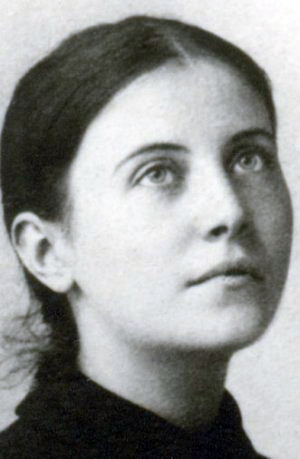
Saint Gemma Galgani
On this April 11th, in 1903 – the same year that the Italian Guiseppe Sarto was elected Pope later that summer as Pius X – a lovely, young Italian woman died, by the name of Gemma Galgani. She lived a brief life of 24 years, as did a number of other young saints, including Pier[…]Continue reading→
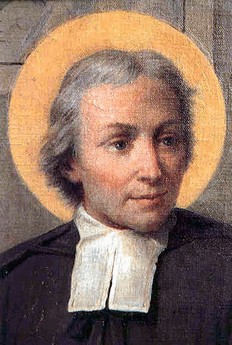
Saint Jean-Baptiste de la Salle: A Teacher for Teachers
Jean-Baptiste de la Salle (1651 – 1719), a French nobleman, ordained a priest, founded the first order in the Church’s history entirely without priests, and this came about almost by accident. I say ‘almost’, for, of course, there are no accidents with God. Destined for ordination from an early age, Jean-Baptiste never looked back, even[…]Continue reading→