
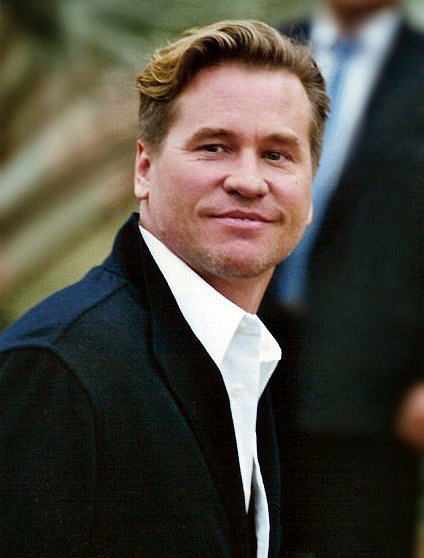
The Longing Beneath the Roles: Kilmer, the Catechism, and the Search for God
The cinematic roles of Val Kilmer – who died April 1st, 2025 at the age of 65 after a long cinematic career – did far more than exhibit an actor’s versatility; they disclosed a profound spiritual restlessness, a yearning for permanence amid the ephemeral illusions of fame. Regardless of the movie, the characters he portrayed often carried an uncomfortable tension caught between tragedy and redemption, despair and the hope of transcendence. At its core, this longing points to something deeply human. The Catechism explains its meaning in the following way: “The desire for God is written in the human heart, because man is created by God and for God” (CCC 27). Kilmer’s artistic journey, from his raw and electric portrayal of Jim Morrison to his quietly powerful return as Iceman, speaking through digital restoration, mirrors the path of a man becoming more aware of the fragile line between illusion and truth, fame and mortality.
These moments, although on the big screen, faintly reflect the dignity found in Christ’s silent endurance: “He was oppressed, and he was afflicted, yet he opened not his mouth” (Isaiah 53:7). While only Christ’s Passion redeems, human suffering can bear witness to patience and hope. When Kilmer was diagnosed with throat cancer in 2014, he faced a long and painful journey: a tracheotomy, chemotherapy, and radiation. Yet through it all, his faith remained central. As a committed Christian Scientist, Kilmer held that true healing comes through prayer and the divine Spirit, beyond medical means. Catholic teaching differs sharply: it acknowledges the goodness of medicine and the reality of the body. Nevertheless, it shows that suffering, particularly when united with Christ, can take on a deeper spiritual meaning. As the Catechism makes clear: “By his passion and death on the Cross, Christ has given a new meaning to suffering: it can henceforth configure us to him and unite us with his redemptive Passion” (CCC 1505). From this perspective, Kilmer’s perseverance demonstrates a type of grace and endurance, a silence amidst enduring life’s afflictions.
This makes Kilmer’s suffering appear not to have been in vain. Although his theological understanding was radically different from that of the Catholic Church; he indeed brought testimony to the power of the spirit throughout his physical and mental suffering, which provides something worthy of recognition. His life came to reflect a kind of modern parable: the famous actor who became physically diminished but remained spiritually resilient while offering his remaining gifts to a world longing for truth and beauty.
Before that, in The Salton Sea, Kilmer portrayed a grief-stricken man drifting between addiction and the search for existential meaning. Although the film was dark and tragic, it contained echoes that resonated deeply with the Catholic understanding of the human condition. The film provoked questions such as our identity before God. Can brokenness be a path to grace? His later self-produced documentary, Val (2021), offered a raw glimpse into his decline and resilience, capturing a man who had once embodied Hollywood myth now grappling with his mortality. Kilmer’s Val came to represent more than a memoir. In light of Catholic teaching, especially the Catechism’s emphasis on the dignity of the human person in suffering (CCC 1700), the film becomes a moving portrayal of the imago Dei shining through affliction.
In Real Genius, a teenage comedy from 1985, Kilmer’s character, Chris Knight, a brilliant physics student, delivers a surprisingly philosophical reflection when considering the fading of another brilliant physicist into obscurity: “He thought the answers were the answer for everything. Wrong. All science, no philosophy.” Knight continues: “So then one day someone tells him that the stuff he’s making was killing people.” This reflection anticipates modern dilemmas such as nuclear warfare, where scientific progress detached from moral grounding leads to existential peril. The Catechism warns that science must serve persons and conform to the will of God (CCC 2294).
In my estimation, Kilmer’s body of work, especially in a secular age gripped by materialism, urged audiences toward the metaphysical: to consider meaning, morality, and the divine. If left unfettered and ungrounded in moral principles, science can lead us to oblivion.
One of Kilmer’s most unsettling roles was that of Jim Morrison, which he played with disturbing authenticity. Morrison, a self-proclaimed shaman, was consumed by the chaos he courted. The boldly embraces explicit excess, portraying a life that attempted to fill the spiritual void through intoxication, reckless art, and self-deification.[1] Psalm 115 reminds us that idols are lifeless things: “Their idols are silver and gold, the work of human hands… Those who make them become like them; so, do all who trust in them” (Psalm 115:4, 8).
In contrast, one of Kilmer’s most moving performances comes in the 1993 Western Tombstone, based on a true story, where he portrays the doomed gunslinger, Doc Holliday. Holliday, while brilliant, sharp-tongued, and fearless, is also a man slowly succumbing to tuberculosis. As the film nears its end, we see a different side of him, quieter and more vulnerable. In a final act of dignity, he chooses to face death alone, gently asking his loyal friend Wyatt Earp (played by Kurt Russell) not to stay with him in his final moments. This poignant solitude evokes a striking spiritual realism: the stark interiority of death. As Catholics, we understand that while death is conquered in Christ, it remains the moment of ultimate personal encounter with God: “In death, the separation of the soul from the body, the human body decays and the soul goes to meet God” (CCC 997). In a way that is almost proleptic, Kilmer’s portrayal of Holliday brilliantly captures a man resigned to suffering yet not devoid of dignity, prefiguring his battle with cancer decades later. Whether intentional or providential, Kilmer’s portrayal of Holliday became a kind of cinematic rehearsal for his own confrontation with mortality. It is a memento mori framed in defiant grace.
Catholics affirm that death is not annihilation but a transition into eternity. “In death, God calls man to himself” (CCC 1011). And yet, even for the believer, death remains mysterious. We mourn, we question, and we remember. But we also hope.
We mustn’t forget that Christ conquered death so that we might live. In his films, art, and personal suffering, Kilmer showed, however imperfectly, the deep human ache for God’s unconditional love.
May he rest in peace. And may his journey now lead him, as we pray all journeys will, to the face of the eternal and most merciful God.
[1] The reader should be cautioned that Kilmer’s portrayal of Jim Morrison contains some disturbing scenes of disordered sexuality and drug use. It is significant for our troubled zeitgeist that Morrison’s grave in Père Lachaise Cemetery in Paris has become a place of quasi-pilgrimage. (Ed.)

Saint Kateri , Canada’s Protectress
This was the title given to Saint Kateri Tekakwitha, by Pope Benedict XVI, when he canonized her on October 28th, 2012, along with six others, in Saint Peter’ Square (she had been beatified by Pope John Paul II back in 1980). With Saint Joseph as our protector, along with the Canadian martyrs, we seem to[…]Continue reading→
A Closed, Unsustainable, Descending Loop
As a follow-up to my thoughts on Payette’s payout, here be a stark image of where are here in Canada. As the graph shows in, well, graphic terms, since 2025, the public sector has contributed to 95.5% of economic growth. The private sector – which funds the public sector, or is supposed to – has[…]Continue reading→

Remembering Father Alphonse de Valk
(Today marks the sixth anniversary of the death of Father Alphonse de Valk, C.S.B., a faithful, courageous and indefatigable Basilian priest, pro-life-and-family apostle, and the founder of Catholic Insight magazine. Here is what we wrote those on his entering into eternity five years ago, as we continue to remember him in our prayers and thoughts)[…]Continue reading→

My Name is Bernadette
April 16th is a propitious day, for besides the anniversary of Father de Valk’s death, who founded Catholic Insight in its print form decades ago, and the commemoration of the ‘two Benedicts’, mentioned in accompanying posts, today we also recall Saint Bernadette Soubirous, the young visionary to whom the Virgin Mary appeared numerous times at[…]Continue reading→

Canonizing Sister Faustina and Divine Mercy
HOMILY OF THE HOLY FATHER MASS IN ST PETER’S SQUARE FOR THE CANONIZATION OF SR MARY FAUSTINA KOWALSKA Sunday, 30 April 2000 1. “Confitemini Domino quoniam bonus, quoniam in saeculum misericordia eius”; “Give thanks to the Lord for he is good; his steadfast love endures for ever” (Ps 118: 1). So the Church sings on the Octave of[…]Continue reading→

Divine Mercy Sunday – An Echo of Every Mass
Reach out your hand and put it in my side. Do not doubt but believe’… ‘My Lord and my God!’ (Jn. 20:18)). Today is Divine Mercy Sunday, and as we celebrate the end of the Easter Octave, we contemplate the wounded side of our Saviour, the Church’s source of life. On Good Friday in the[…]Continue reading→
Pope Leo and a Rosary for Peace
Pope Leo XIV has asked Catholics across the world to join him in a Rosary for peace today, at 18:00 Rome time (6 pm), which would be noon from where I write (EST). If you are able, whether at that time or another, and in whatever way you pray, to join in intercession with the[…]Continue reading→
Payette’s Payout
I was glancing through some headlines, and noticed a mention of Julie Payette – engineer and astronaut and sometime the Queen’s representative in Canada – which brought back vague memories. She was appointed Governor-General by Justin Trudeau in 2017. Ms. Payette resigned in 2021, amidst claims that she created a ‘toxic work environment’, with allegations[…]Continue reading→
First Holy Communion: Sermon from May 16, 1943
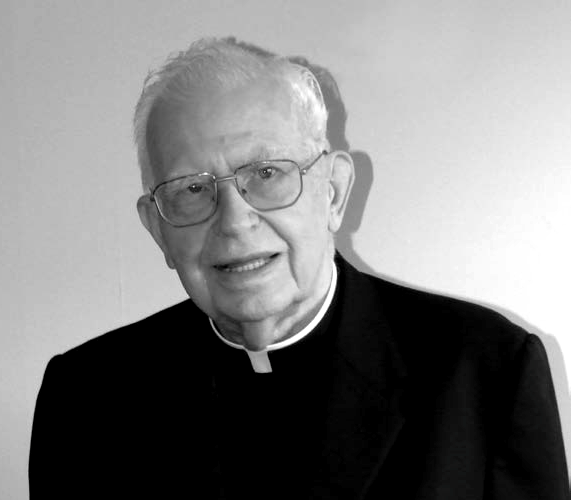
Here is a sermon from the good old days by +Rev. Msgr. Vincent Nicholas Foy (August 14, 1915 – March 13, 2017), from 1943. Readers may recall that Pope Saint Pius X, by the decree Quam Singulari in 1910, lowered the customary age of reception of Holy Communion – after the rigours of the plague[…]Continue reading→
Your Easter Prayer
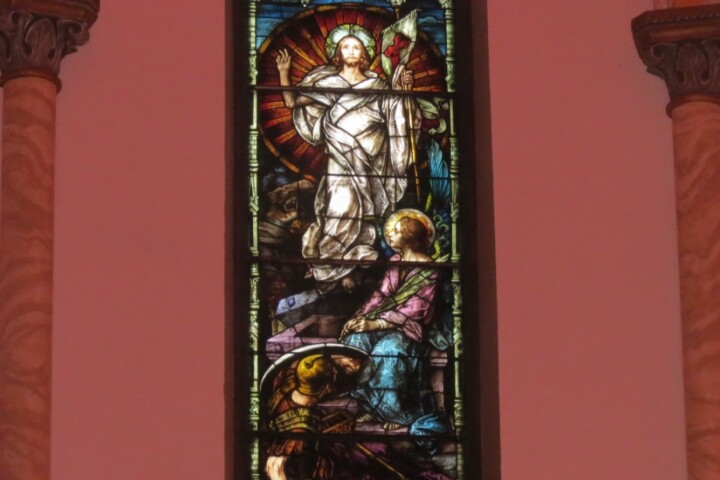
Happy Easter Lord Jesus Christ. It’s Easter day and we smile In the Lord’s in gentle light and His tomb is bare the stone is rolled A story new that must be told And Lord Jesus Christ We love you it’s so true and Lord Jesus Christ has risen From his sleep and the Promises[…]Continue reading→