
SAD to See Life Issues Being Silenced
In the fifth of a series of voters’ guides for conscience-informed Catholics, Matthew Marquardt notes that abortion and medical non-culpable homicide are leading causes of death for Canadians – yet politicians refuse to discuss them.
Why are Catholics so obsessed about abortion? And euthanasia? There are many other evils we could concern ourselves with. So why don’t we get real, give up, and join everyone else in the 21st century?
The answer, of course, is that the sanctity of life – the dignity of the human person – is the foundation of all principles and all content of the Church’s social teaching. It is our Catholic conviction that the entire purpose of this life is for each of us, each and every human soul God chooses to put into this world, to spend all of the time, talent, and strength He has entrusted to us to find our way back to Him by loving Him, sharing in His work of creation, and caring for all the souls He has placed around us, ensuring that every one has all the opportunity and resources he or she needs to do the same thing – in their own way, using all the time, talent, and strength God has entrusted to them.
Voluntary termination of life at any time necessarily frustrates that purpose.
Abortion and euthanasia (including socially-assisted death, or SAD) are not issues to be ignored.
Why is it, then, that abortion, SAD, and other important life issues have dropped out of virtually all civic discourse outside the Church? It is a sad fact that nearly all of our political parties, along with most of our fellow voters, have stopped talking about or even acknowledging the evils of abortion, SAD, and other sins against the sanctity of the body and the dignity of life. They’ve just gone silent. And they can only do that because, to some extent, we allow it. Is this because we as a society have been distracted by the comforts and worries of modern life, and lost touch with the purpose of life? Or are we simply hiding, like the timid steward of Matthew 25:18?
The intentional killing of human beings is not a small problem in Canada. According to Statistics Canada, the leading cause of death for Canadians in 2022 (the latest year for which comprehensive comparative data is available) was cancer. Based on statistics provided by the Abortion Rights Coalition of Canada, the federal Ministry of Health, and others, it was homicide:
Causes of Death in Canada, 2022
1. Abortion — 97,211†
2. Cancer — 82,412*
3. Heart Disease — 57,357*
4. COVID — 19,716*
5. Accidents — 18,365*
6. Cerebrovascular Disease*** — 13,915*
7. SAD (“MAiD”) — 13,241**
8. Lower Respiratory Disease — 12,462*
9. Diabetes — 7,557*
10. Influenza and pneumonia — 5,985*
27. Other Assault / Homicide — 489
SAD finished 7th, but with its steady 31% annual growth rate reported by the Minister of Health, it is climbing fast. All told, homicide accounted for the lives of 110,941 Canadians in 2022. An impressively disappointing lead.
Is it possible for us, the Church, to do something about that? Is it possible for us to keep these topics alive in ways that are gathering and healing, rather than divisive and hurtful, and therefor likely to succeed in spreading not only awareness, but change of heart and improvement?
Of course it is. There are many ways. We can (and should) talk to our local candidates and speak up about life issues, and we can (and should) join political parties, whichever seem most attractive (or least objectionable) to us, and we can (and should) speak up (respectfully) to other party members, vote for the best leaders, and even offer our own time and effort as candidates or volunteers.
And if we want to have an effect, now is a good time to start. Canada is in the midst of an election campaign with the national vote looming this month. Liberal leader Mark Carney’s most famous published work bears the watermark of Catholic social teaching, even though it apparently dare not speak that name. And many parties profess concern for upholding the dignity of people in a wide variety of ways – though they seldom trouble to define what they mean by that.
There are other signs of hope, too, including a quietly-introduced new “Quality of Life” index of social well-being meant to drive government policymaking. Enough to work with, if we roll up our sleeves, pray, and start participating.
(Matthew Marquardt is the founder and director of Catholic Conscience. This article was originally published in Canadian Catholic News on April 2nd, 2025)
†Abortion Rights Coalition of Canada, (www.arcc-cdac.ca/media/2020/07/statistics-abortion-in-canada.pdf, updated April 18, 2024)
* Statistics Canada, https://www150.statcan.gc.ca/n1/daily-quotidien/250305/t001a-eng.htm
** Health Canada, Fourth Annual Report on Medical Assistance in Dying in Canada 2022
*** defined as strokes and other brain blood vessel concerns

Remembering Father Alphonse de Valk
(Today marks the sixth anniversary of the death of Father Alphonse de Valk, C.S.B., a faithful, courageous and indefatigable Basilian priest, pro-life-and-family apostle, and the founder of Catholic Insight magazine. Here is what we wrote those on his entering into eternity five years ago, as we continue to remember him in our prayers and thoughts)[…]Continue reading→

Divine Mercy Sunday – An Echo of Every Mass
Reach out your hand and put it in my side. Do not doubt but believe’… ‘My Lord and my God!’ (Jn. 20:18)). Today is Divine Mercy Sunday, and as we celebrate the end of the Easter Octave, we contemplate the wounded side of our Saviour, the Church’s source of life. On Good Friday in the[…]Continue reading→

Saint Stanislaus of Szczepanów
We celebrate Saint Stanislaus today (+ April 11, 1079), in light of this Easter Octave, a bishop and martyr who accepted the episcopacy only at the direct order of Pope Alexander II. He proved a wise and courageous leader of his flock, put to death by his own king, Boleslaus, for rebuking the monarch’s ‘immoral[…]Continue reading→

First Holy Communion: Sermon from May 16, 1943
Here is a sermon from the good old days by +Rev. Msgr. Vincent Nicholas Foy (August 14, 1915 – March 13, 2017), from 1943. Readers may recall that Pope Saint Pius X, by the decree Quam Singulari in 1910, lowered the customary age of reception of Holy Communion – after the rigours of the plague[…]Continue reading→

In the Glorious Light of Easter, Alleluia!
Set your minds on things that are above, not on things that are on earth, for you have died, and your life is hidden with Christ in God. When Christ who is your life is revealed, then you also will be revealed with him in glory (Col. 3:3-4). The Resurrection of Our Lord and Saviour[…]Continue reading→

An Ancient Homily for Holy Saturday
The time between Good Friday and Easter Sunday is one of waiting, in silence, as the world wonders – anticipates – what will happen, after the death of Christ. We re-live this time each year in the anamnesis of our liturgy, and in turn look forward to the glorious re-creation of all things at the[…]Continue reading→

Europe’s Long Descent
(As we meditate on this day on Christ’s burial, and His descent into hell, it is fitting to ponder here with contributor Peter Marcus how the world seems to be heading there as well. The difference is that, although God cannot ‘redeem’ hell, nor those therein, He can and did redeem the world. There is[…]Continue reading→
Pope Saint John Paul II’s First Good Friday Homily
ADDRESS OF HIS HOLINESS JOHN PAUL II AT THE CONCLUSION OF THE STATIONS OF THE CROSS AT THE COLOSSEUM Good Friday, 13 April 1979 When we make the Way of the Cross from one station to the next, in spirit we are always at the spot wherethis journey had its “historical” place: where it[…]Continue reading→
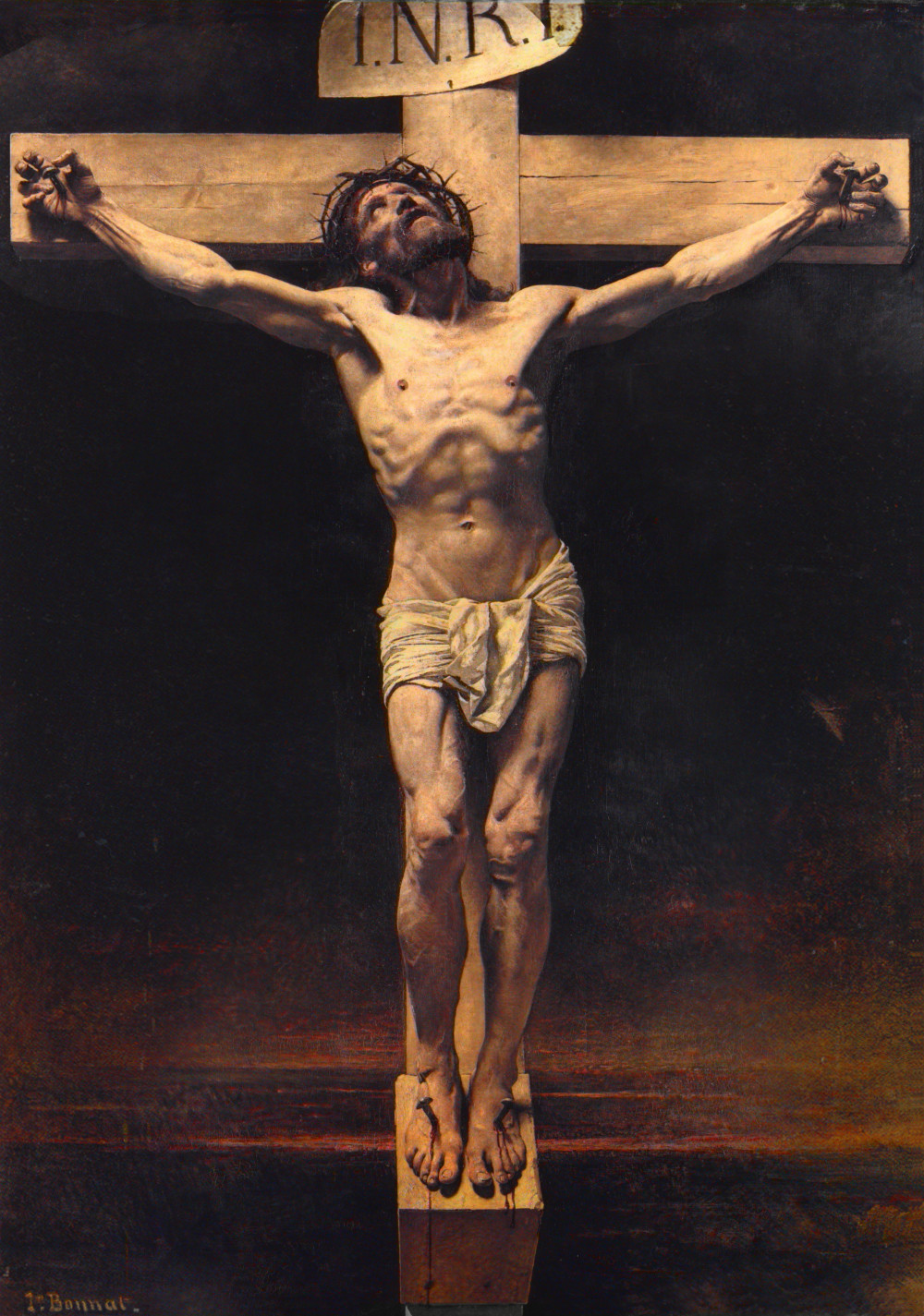
A Meditation for Good Friday: How To Undo the Effects of Sin?
Cardinal Newman, now Saint John Henry Newman, was a towering figure of nineteenth-century Catholicism who is almost universally admired. I say “almost” because not everyone likes him. I knew a priest once, Arthur Caulkins, who has become disenchanted with Newman. As an undergraduate Arthur had been enamoured of Newman, and this interest continued when he[…]Continue reading→
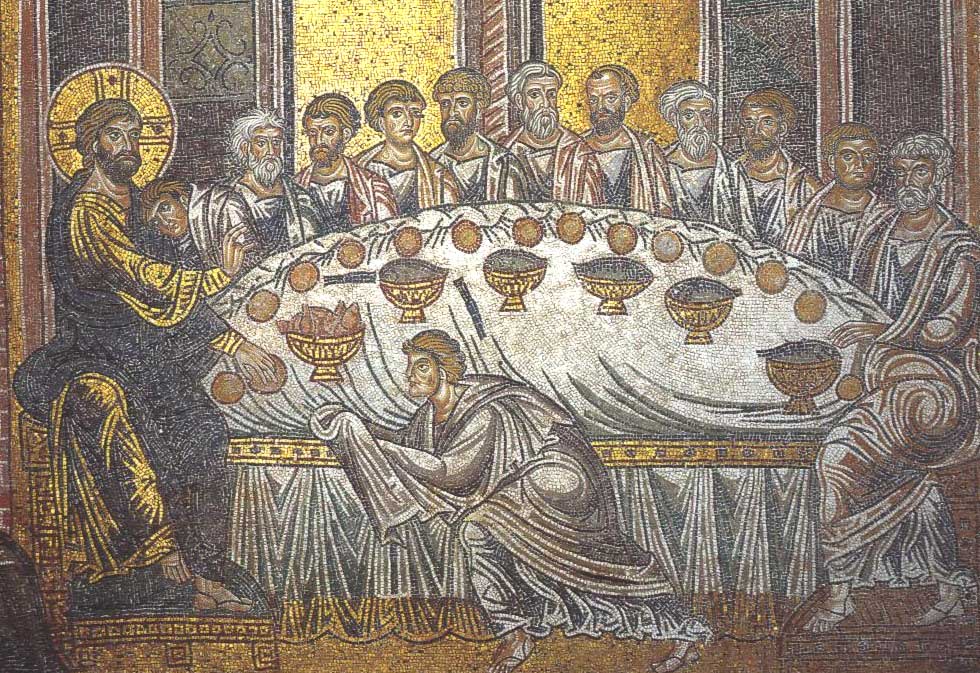
Pope Benedict’s Last Holy Thursday Homily
MASS OF THE LORD’S SUPPER HOMILY OF HIS HOLINESS BENEDICT XVI Basilica of St John Lateran Holy Thursday, 5 April 2012 Photo Gallery (Video) Dear Brothers and Sisters! Holy Thursday is not only the day of the institution of the Most Holy Eucharist, whose splendour bathes all else and in some ways draws it to[…]Continue reading→