

Whatever Happened to Sin?
(Pius XII warned in 1946 that the worst sin of the twentieth century was the loss of the sense of sin. In Sunday’s Gospel, Christ challenges and rebukes the hypocritical Pharisees so unaware of their own sins, and offered mercy to the woman caught in adultery. Yet He told her – as He told so many – to go and sin no more. God can only forgive the soul is not hardened in sin, that responds to His grace, and seeks forgiveness. Editor)
A great deal of what happened to sin is that the world has chosen the path most traveled rather than the path less traveled. Many mistakenly believe it is easier to get through life not believing in sin, or at least not believing that we in particular have sinned. But Christ warns us: Enter through the narrow gate. For wide is the gate and broad is the road that leads to destruction, and many enter through it. (Matthew 7:13)
Sin is a distinctly human trait. We do not imagine dogs or cats with a conscience feeling remorse for stealing each other’s food. Not only is sin human, it is human everywhere; so sin is catholic (universal) in the truest sense of the word; and that is why the Catholic Church puts such emphasis on sin. It may well be that the gravity of specific sins can be debated in every culture, but there is no doubt that all cultures throughout history have recognized both mortal (greater) and venial (lesser) sins.
Invariably there is a movement among so-called “progressive” cultures to reduce the categories of sin, and especially to remove the guilt that attaches to sin. As Phyllis McGinley noted, in a relatively godless world sin has been made passé. Rather, it is regarded as a type of immaturity, or ignorance, or mental instability that is to be cured by denying that there are any laws of God, or even of nature, to sin against. Remorse, confession, penance, resolve not to sin again, are said to be quaint notions that belong to a medieval world rather than to modernity. Psychologists since Freud now prefer to speak of any particular sin as a “complex.” Presumably, it is better and more palatable to believe that we are complicated rather than that we are guilty.
A logical consequence of this fanciful notion of what sin really is, is that sins of all kinds have come to be ever-more popular and more commonplace, with hardly any consequences. For example, whereas everywhere sodomy once was held to be a criminal act with dire consequences. Thomas Jefferson even approved a Virginia statute for castrating male sodomites (which the Church would roundly condemn, ed.). Today sodomites proudly demand society’s approval and the right to the full rights and privileges of marriage. The gradual disappearance of shame and the emergence of sinful bragging, even to the point of achieving fifteen minutes of fame on a television talk show, seems now to be one of the more coveted outcomes of sin. In the movies, sinners have become (as those of us who are old enough to remember) what in the old days they were never allowed to become: people for whom crime pays … and pays rather well.
For many of those who have abandoned their faith, sin is believed to be a newly-won freedom. This is an illusion. Giving ourselves up to sin is really a type of dictatorship of the devil within, a condition in which we have yielded our freedom to choose right over wrong. Not only have we given up our freedom to choose, we have given up our freedom altogether in many instances, such as to live under the dictatorship of a prison warden. There are thousands of prisons filled with millions of prisoners. These people are no longer ‘free’ to sin; they have been enslaved by their sins.
Nothing is so transparent to any prisoner as the realization that what Jesus said is true after all. Come to me all of you who are weary and burdened, and I will give you rest. Take my yoke upon you and learn from me for I am gentle and humble in heart, and you will find rest for your souls. For my yoke is easy and my burden is light. (Matthew 11:28-30) The burden of prison life is one that any prisoner would gladly exchange for the “easier burden” of following Christ outside the barbed-wire walls of a prison.
Sin is, after all, freely chosen. We do not even sin by error. As Archbishop Bishop Fulton Sheen remarked, A man sins, not because he is ignorant, but because he is perverse. The intellect makes mistakes, but the will sins. Our salvation is not in our intellect, but in our will. More perversely, in some of us the will directs the intellect to see sin as a good thing. But as Alexander MacLaren put it, “Every sin is a mistake, as well as a wrong; and the epitaph for the sinner is: ‘Thou fool!’”
The age we are in may well hate the Church more than any other age in history. Many hate the Church because she insists on reminding us of our sins. Yet to be hated so much by so many can be taken as a sign that the Church remains, despite its modern scandals, very much a huge thorn in the Devil’s side.

Saint Kateri , Canada’s Protectress
This was the title given to Saint Kateri Tekakwitha, by Pope Benedict XVI, when he canonized her on October 28th, 2012, along with six others, in Saint Peter’ Square (she had been beatified by Pope John Paul II back in 1980). With Saint Joseph as our protector, along with the Canadian martyrs, we seem to[…]Continue reading→

Remembering Father Alphonse de Valk
(Today marks the sixth anniversary of the death of Father Alphonse de Valk, C.S.B., a faithful, courageous and indefatigable Basilian priest, pro-life-and-family apostle, and the founder of Catholic Insight magazine. Here is what we wrote those on his entering into eternity five years ago, as we continue to remember him in our prayers and thoughts)[…]Continue reading→

My Name is Bernadette
April 16th is a propitious day, for besides the anniversary of Father de Valk’s death, who founded Catholic Insight in its print form decades ago, and the commemoration of the ‘two Benedicts’, mentioned in accompanying posts, today we also recall Saint Bernadette Soubirous, the young visionary to whom the Virgin Mary appeared numerous times at[…]Continue reading→
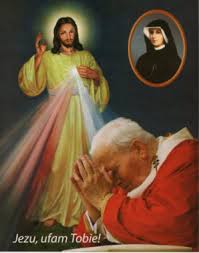
Canonizing Sister Faustina and Divine Mercy
HOMILY OF THE HOLY FATHER MASS IN ST PETER’S SQUARE FOR THE CANONIZATION OF SR MARY FAUSTINA KOWALSKA Sunday, 30 April 2000 1. “Confitemini Domino quoniam bonus, quoniam in saeculum misericordia eius”; “Give thanks to the Lord for he is good; his steadfast love endures for ever” (Ps 118: 1). So the Church sings on the Octave of[…]Continue reading→

Divine Mercy Sunday – An Echo of Every Mass
Reach out your hand and put it in my side. Do not doubt but believe’… ‘My Lord and my God!’ (Jn. 20:18)). Today is Divine Mercy Sunday, and as we celebrate the end of the Easter Octave, we contemplate the wounded side of our Saviour, the Church’s source of life. On Good Friday in the[…]Continue reading→

Saint Stanislaus of Szczepanów
We celebrate Saint Stanislaus today (+ April 11, 1079), in light of this Easter Octave, a bishop and martyr who accepted the episcopacy only at the direct order of Pope Alexander II. He proved a wise and courageous leader of his flock, put to death by his own king, Boleslaus, for rebuking the monarch’s ‘immoral[…]Continue reading→
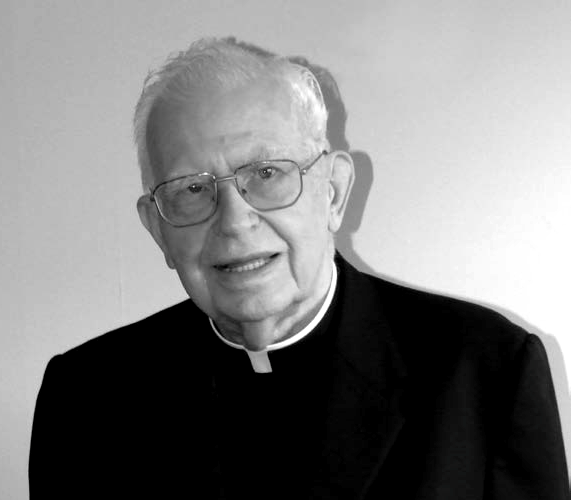
First Holy Communion: Sermon from May 16, 1943
Here is a sermon from the good old days by +Rev. Msgr. Vincent Nicholas Foy (August 14, 1915 – March 13, 2017), from 1943. Readers may recall that Pope Saint Pius X, by the decree Quam Singulari in 1910, lowered the customary age of reception of Holy Communion – after the rigours of the plague[…]Continue reading→
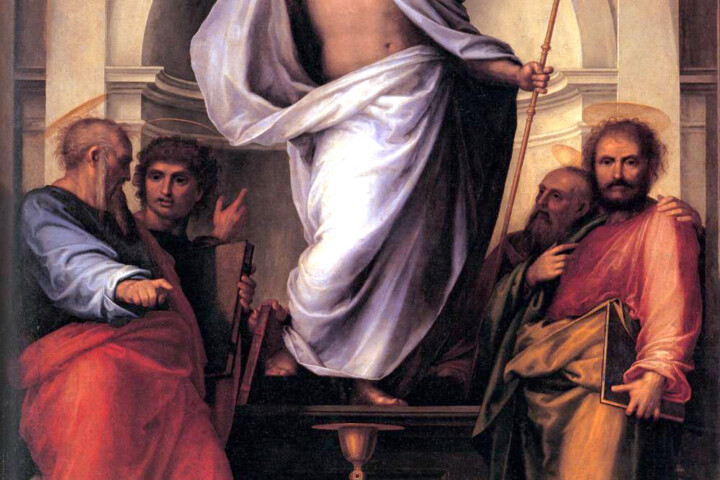
In the Glorious Light of Easter, Alleluia!
Set your minds on things that are above, not on things that are on earth, for you have died, and your life is hidden with Christ in God. When Christ who is your life is revealed, then you also will be revealed with him in glory (Col. 3:3-4). The Resurrection of Our Lord and Saviour[…]Continue reading→

An Ancient Homily for Holy Saturday
The time between Good Friday and Easter Sunday is one of waiting, in silence, as the world wonders – anticipates – what will happen, after the death of Christ. We re-live this time each year in the anamnesis of our liturgy, and in turn look forward to the glorious re-creation of all things at the[…]Continue reading→
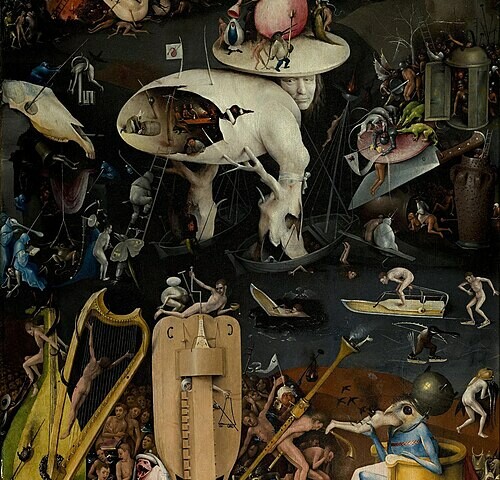
Europe’s Long Descent
(As we meditate on this day on Christ’s burial, and His descent into hell, it is fitting to ponder here with contributor Peter Marcus how the world seems to be heading there as well. The difference is that, although God cannot ‘redeem’ hell, nor those therein, He can and did redeem the world. There is[…]Continue reading→