
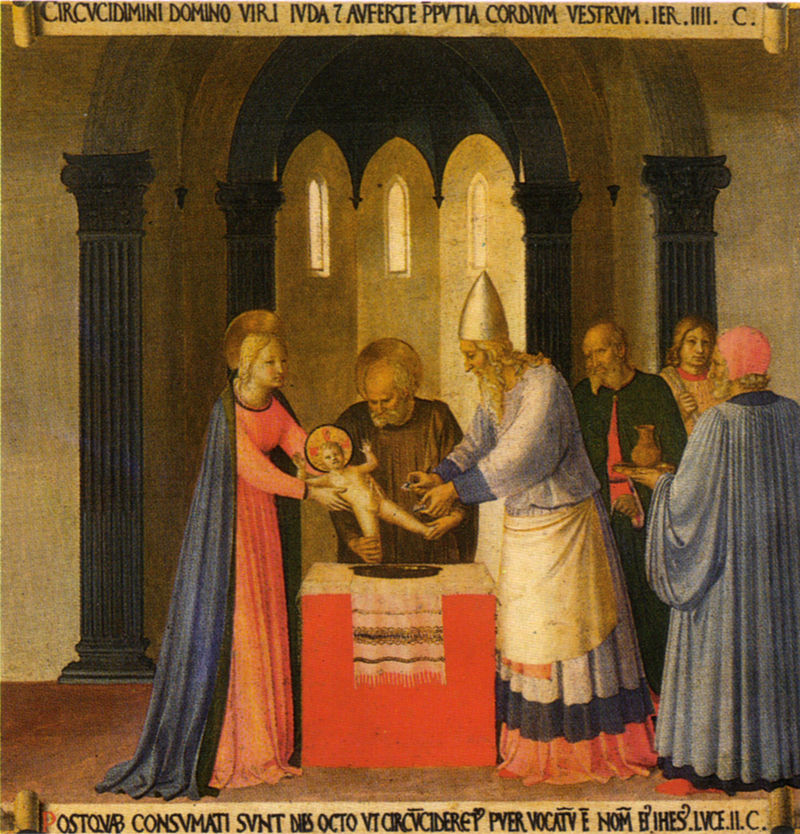
Three Reasons Why Celebrating the Circumcision of Jesus is a Great Way to Start the Year
(Mikyele Schramm has a few thoughts on the feast of the Circumcision of Christ, commemorated on the octave of Christmas, the first day of the calendar year. This feast was replaced in the revisions of 1969 with the Solemnity of Mary, Mother of God, which itself used to fall on October 11th. But it’s still celebrated in the usus antiquior, and there are reasons why we should recall this even in the life of Our Lord)
Okay, hear me out. I know that is a weird opening, but it got your attention, right?
Maybe you are wondering where this even comes from. Celebrating the circumcision of Jesus has long been part of the Church calendar and corresponds to the eighth day after His birth, the traditional day a Jewish boy would be circumcised. With Christmas being celebrated on Dec. 25th, this would make the Feast of the Circumcision on January 1st. The eighth day in Jewish and Christian liturgical calendars includes the day from which you’re counting as well. This is why Pentecost, the fiftieth day, is seven weeks (7×7=49) after Easter.
So it is an old feast day and it happens to fall on January 1st, but what makes it a great way to start the year?
First, circumcision was the way that one entered into God’s covenant. This was the first step on one’s faith journey. It was one of the first things God called Abraham to do, even in his old age, because he was called to a new relationship with God and this covenant included a visible sign.
The idea of a visible sign for an invisible promise with God should remind Christians of something: a sacrament. In fact, St Paul compared baptism to circumcision because the former entered one into the New Covenant much like the latter (Colossians 2:11-12). This is one of the reasons why it makes sense for Christians to baptize babies, as it is a fulfillment of circumcision, which was given to children in the old covenant. Baptism is also our first step to a life of faith. We look ahead much like we do at the start of life and the start of the new year.
Another reason to celebrate the circumcision of Jesus is because it marks the first time Jesus shed his blood for us. All Christian’s recognize the great sacrifice of Jesus shedding His blood for us on the Cross. Sacramental Christians also recognize how Jesus offered his Blood at the Last Supper and continues to do so in the Eucharist. St. Thomas Aquinas wrote about the importance of the circumcision of Jesus in his Summa Theologiae, part III, question 37, article 1 and alluded to it in his famous hymn Adoro Te Devote when he said that only one drop of Divine blood was necessary for our salvation, yet out of love Jesus chose to give all he had. St. Thomas even saw the little blood shed at his crucifixion, because it was Jesus’s blood, as precious.
If the Blood of Jesus is so precious, we should recognize every time he deigned to allow himself to bleed on our behalf when he never needed to at all. Historically, Christians did not just see Calvary as Jesus’s redeeming sacrifice, but saw his entire life as redemptive. Just like we can make a morning offering of our entire day to God’s will, what better way to dedicate our entire year to serving Christ than to remember that the very beginning of his life started in sacrifice.
Finally, another traditional practice associated with Jewish circumcision included the reception of the child’s name. St. Gabriel tells St. Joseph the importance of Jesus’s name before his birth (Matthew 1:20-25) and after his resurrection (Philippians 2:10-11). We even celebrate the name of Jesus on January 3rd (it used to fall on January 1st with the feast of the circumcision, but different religious orders celebrated it on different days too).
Now, I would never want to usurp any Marian feast day, which is what is now celebrated on January 1st, the Feast of Mary, Mother of God. This too is a great and powerful title of Our Lady and is a great way to start the year as a dedication to Mary and this title, which is the title from which all her other titles flow. I simply want to bring attention to this ancient and important feast as it too is a preeminent source of grace in our liturgy.
The blood of Christ is precious and we should remember every moment he offered it to us as they all point to the Blood we receive from him at every Mass in the Eucharist.

Saint Kateri , Canada’s Protectress
This was the title given to Saint Kateri Tekakwitha, by Pope Benedict XVI, when he canonized her on October 28th, 2012, along with six others, in Saint Peter’ Square (she had been beatified by Pope John Paul II back in 1980). With Saint Joseph as our protector, along with the Canadian martyrs, we seem to[…]Continue reading→

Remembering Father Alphonse de Valk
(Today marks the sixth anniversary of the death of Father Alphonse de Valk, C.S.B., a faithful, courageous and indefatigable Basilian priest, pro-life-and-family apostle, and the founder of Catholic Insight magazine. Here is what we wrote those on his entering into eternity five years ago, as we continue to remember him in our prayers and thoughts)[…]Continue reading→

My Name is Bernadette
April 16th is a propitious day, for besides the anniversary of Father de Valk’s death, who founded Catholic Insight in its print form decades ago, and the commemoration of the ‘two Benedicts’, mentioned in accompanying posts, today we also recall Saint Bernadette Soubirous, the young visionary to whom the Virgin Mary appeared numerous times at[…]Continue reading→
Canonizing Sister Faustina and Divine Mercy
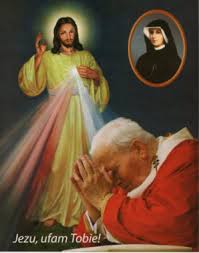
HOMILY OF THE HOLY FATHER MASS IN ST PETER’S SQUARE FOR THE CANONIZATION OF SR MARY FAUSTINA KOWALSKA Sunday, 30 April 2000 1. “Confitemini Domino quoniam bonus, quoniam in saeculum misericordia eius”; “Give thanks to the Lord for he is good; his steadfast love endures for ever” (Ps 118: 1). So the Church sings on the Octave of[…]Continue reading→

Divine Mercy Sunday – An Echo of Every Mass
Reach out your hand and put it in my side. Do not doubt but believe’… ‘My Lord and my God!’ (Jn. 20:18)). Today is Divine Mercy Sunday, and as we celebrate the end of the Easter Octave, we contemplate the wounded side of our Saviour, the Church’s source of life. On Good Friday in the[…]Continue reading→

Saint Stanislaus of Szczepanów
We celebrate Saint Stanislaus today (+ April 11, 1079), in light of this Easter Octave, a bishop and martyr who accepted the episcopacy only at the direct order of Pope Alexander II. He proved a wise and courageous leader of his flock, put to death by his own king, Boleslaus, for rebuking the monarch’s ‘immoral[…]Continue reading→
First Holy Communion: Sermon from May 16, 1943
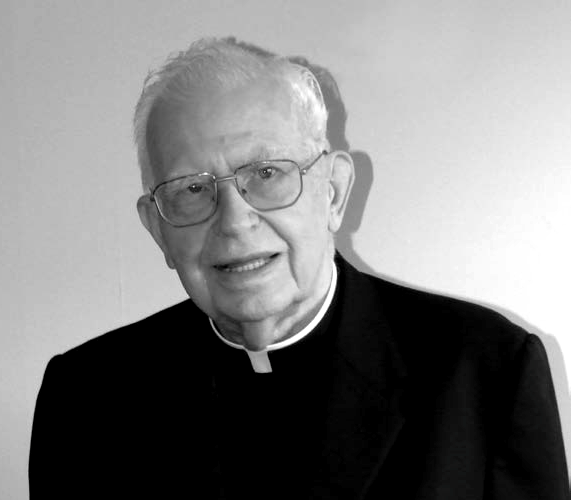
Here is a sermon from the good old days by +Rev. Msgr. Vincent Nicholas Foy (August 14, 1915 – March 13, 2017), from 1943. Readers may recall that Pope Saint Pius X, by the decree Quam Singulari in 1910, lowered the customary age of reception of Holy Communion – after the rigours of the plague[…]Continue reading→

In the Glorious Light of Easter, Alleluia!
Set your minds on things that are above, not on things that are on earth, for you have died, and your life is hidden with Christ in God. When Christ who is your life is revealed, then you also will be revealed with him in glory (Col. 3:3-4). The Resurrection of Our Lord and Saviour[…]Continue reading→

An Ancient Homily for Holy Saturday
The time between Good Friday and Easter Sunday is one of waiting, in silence, as the world wonders – anticipates – what will happen, after the death of Christ. We re-live this time each year in the anamnesis of our liturgy, and in turn look forward to the glorious re-creation of all things at the[…]Continue reading→
Europe’s Long Descent
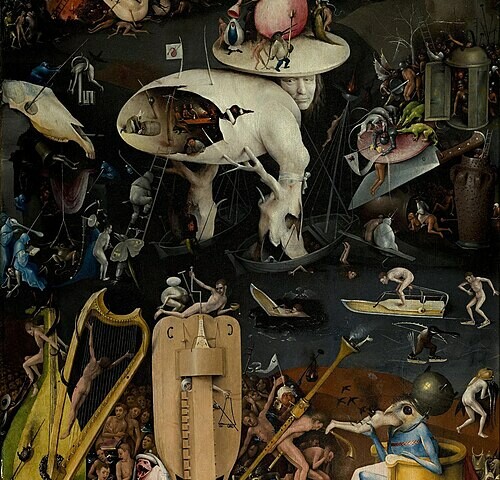
(As we meditate on this day on Christ’s burial, and His descent into hell, it is fitting to ponder here with contributor Peter Marcus how the world seems to be heading there as well. The difference is that, although God cannot ‘redeem’ hell, nor those therein, He can and did redeem the world. There is[…]Continue reading→