
The Pope, COP and Climate Change
There’s a story told of Father Georges Lemaitre, the priest who first proposed the theory of the Big Bang in 1927. He didn’t call it that, but rather the ‘Hypothesis of the Primeval Atom’. It was the atheist Frederick Hoyle who coined the nickname, perhaps in derision (although he later denied this motivation) in a 1949 BBC interview. In the ensuing decades, evidence of the Big Bang piled up, and the Pope, Pius XII, wanted to use Lemaitre’s theory in a papal letter to help bolster the theory of creation. The priest warned against this, saying that his theory could later be proved wrong, and the Church would have cosmic egg all over her face.
The Big Bang may be true – although recent evidence from the Webb telescope shows the formation of early galaxies that don’t jibe with the standard model, the universe developing much more quickly than seems possible or predicted. But Lemaitre was right – whether his theory ends up true or not, we shouldn’t hinge truths of the Faith upon fallible hypotheses. God’s Word is true because God is true, and creation ex nihilo stands, whatever the science.
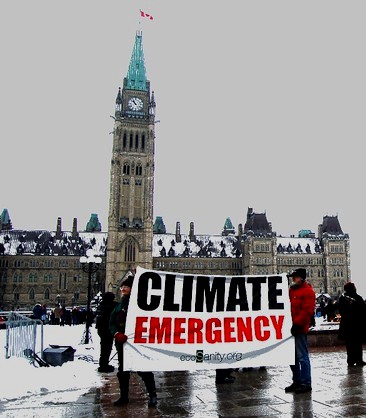
What holds for faith holds even more so for morals. The COP-29 meeting is currently underway in Baku, Azerbaijan. One need not expound on the irony of thousands of ‘elites’ flying in on private jets from their many-roomed mansions to discuss forcing us all into a ‘carbon-free’ world to ‘save the earth’. The planet has done quite well so far without their help. They are free to their opinion, and to living on cricket paste in wattle huts. But they’re not free to foist that opinion upon everyone on the planet. And one wonders whether all those Lears will be left to rust in airport hangars. Or will there be one law for me, and another for thee, with some animals more equal than others.
The ones who should be more circumspect with their opinions, and their exhortations, are our own pastors. The Scottish bishops (why Scotland?), have joined the chorus of the COP – altogether now! – claiming a moral duty to commit all nations to a rapid and just transition away from fossil fuels. In this, they are following Francis, who in last year’s message ‘For the Care of Creation’ to COP 28, exhorted:
The world leaders who will gather for the COP28 summit in Dubai from 30 November to 12 December next must listen to science and institute a rapid and equitable transition to end the era of fossil fuel. According to the commitments undertaken in the Paris Agreement to restrain global warming, it is absurd to permit the continued exploration and expansion of fossil fuel infrastructures. Let us raise our voices to halt this injustice towards the poor and towards our children, who will bear the worst effects of climate change. I appeal to all people of good will to act in conformity with these perspectives on society and nature.
‘End the era of fossil fuel’? ‘Fossil fuel infrastructures’? Does the Holy Father realize what that entails, in terms of heating homes, powering infrastructure and travel? Jets cannot fly without fossil fuels, so how are all those pilgrims going to get to Rome for the great Jubilee year? Will Luce the little mascot lead the teeming masses across the waters to the eternal city with a sprinkling of fairy dust? Or will they sail with a fleet of triremes?
I’ve written before (here and other places) on climate alarmism, that the whole fiasco is warmed-over recrudescent Manicheism and Catharism. Whatever the intentions of those on this not-so-merry bandwagon, implied in its dark philosophy is that the fewer humans there are, doing fewer things, the better. That is not how nor why God created the world, which was made for Man, not the other way around.
We Catholics are exhorted to offer ‘religious submission of mind and will’ to the Pope in his ordinary Magisterial authority, but only when that authority is within its proper bounds of faith and morals.
One might argue that the use, or non-use, of fossil fuels is a ‘moral’ issue, but only in an extended sense. That is, it is a moral question whether or not to fly, drive, cycle or walk to any given destination, but not one normally guided by the Magisterium, but by one’s own conscience within the given circumstances.
‘Climate change’, insofar as it is a science and not an ideology masking as such, is empirical, dependent upon evidence, which in this case is notoriously difficult to gather. It’s on much shakier ground than the robust evidence for the Big Bang. Most of what counts as proof is based on mathematical models, which are in turn dependent upon what data – that is, numbers – are plugged into the computer. We may sum it all up as WYPIIWYGO – what you put in is what you get out. That some summers in some parts of the globe may be warmer than others of late is anecdotal. There have been warm summers and mild winters – along with freezing summers and brutal winters – long before the industrial revolution. Climate is a very broad, long-term phenomenon, spanning decades, centuries, millennia and aeons. The temperature of our planet is much more heliogenic than anthropogenic. But that doesn’t fit into their narrative, does it? For, unlike the herds of humans, you can’t control the Sun, which alters with ‘chance or nature’s changing course’ – or, more properly, God’s providence.
Compare climate change to contraception, which Pius XI and Paul VI condemned not because, a posteriori, it’s bad for us and the environment (which it is, and they do point that out). Rather, contraception is wrong because it’s contrary to our nature, and the truth of conjugal love.
But there is nothing inherently wrong with fossil fuels, and much that is right with them. Most people’s simple existence is dependent upon them – heating our homes first and foremost, with anything from fireplaces to furnaces. And there are no other practical sources of such concentrated energy by which we may live a life more to the full. The world, and our lives, have been expanded with the invention of the combustion engine, in all its variations, when used rightly and well.
Advocating the proper use of natural resources – and any other technology – should be the modus docendi for the Vicar of Christ and the bishops: Not to join in the climate doom-mongering with these benighted acolytes of the climate cult marching in lockstep to whatever agenda is behind all this. The task of the Magisterium is to inform and exhort our consciences based on revealed, perennial moral principles, not the propaganda of ideological ‘consensus science’, which is only so until the evidence says otherwise, and whatever deceit there be is unmasked.
Carney’s Amoral Majority
After five defections – euphemistically described as ‘crossing the floor’ – and three by-elections, Mark Carney and his Liberals how have their coveted majority. One wonders what bowls of pottage were offered in back-room deals. In the archaic monarchical system that is the Dominion of Canada, this majority allows the newly-minted Prime Minister to rule[…]Continue reading→

Saint Kateri , Canada’s Protectress
This was the title given to Saint Kateri Tekakwitha, by Pope Benedict XVI, when he canonized her on October 28th, 2012, along with six others, in Saint Peter’ Square (she had been beatified by Pope John Paul II back in 1980). With Saint Joseph as our protector, along with the Canadian martyrs, we seem to[…]Continue reading→

A Tale of Two Benedicts
A grace-filled Holy Week to all our readers! As we await and prepare for the Resurrection about to dawn upon us, we might keep in mind two Benedicts: Pope Emeritus Benedict XVI, requiescat in pace, elected on this day in 2005; and today’s commemoration of the mystic pilgrim, Benedict Joseph Labre, who died on this[…]Continue reading→

My Name is Bernadette
April 16th is a propitious day, for besides the anniversary of Father de Valk’s death, who founded Catholic Insight in its print form decades ago, and the commemoration of the ‘two Benedicts’, mentioned in accompanying posts, today we also recall Saint Bernadette Soubirous, the young visionary to whom the Virgin Mary appeared numerous times at[…]Continue reading→

Saint Lydwina of Schiedam and Suffering Joyfully
Saint Lydwina of Schiedam (1380 – 1433) was one of the countless and glorious ‘victim souls’ in the history of the Church, those whose lives are filled with suffering, often of an unimaginable intensity, but who suffer joyfully. She was a fifteen-year old Dutch girl, out skating one day, when she fell and broke one[…]Continue reading→

The Glorious Martyrdoms of Martin and Maximus
As we enter into Eastertide, we recall on this 13th of April Pope Saint Martin I (+655), one of the noblest, if most tragic, of the successors of Saint Peter. Born in Umbria, Italy, he was of noble lineage, with great intelligence combined with charity and love of the poor and the Church. While still[…]Continue reading→

Saint Stanislaus of Szczepanów
We celebrate Saint Stanislaus today (+ April 11, 1079), in light of this Easter Octave, a bishop and martyr who accepted the episcopacy only at the direct order of Pope Alexander II. He proved a wise and courageous leader of his flock, put to death by his own king, Boleslaus, for rebuking the monarch’s ‘immoral[…]Continue reading→
Saint Gemma Galgani
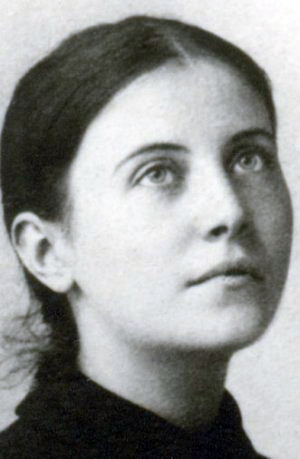
On this April 11th, in 1903 – the same year that the Italian Guiseppe Sarto was elected Pope later that summer as Pius X – a lovely, young Italian woman died, by the name of Gemma Galgani. She lived a brief life of 24 years, as did a number of other young saints, including Pier[…]Continue reading→
An Ideological and Improper Translation
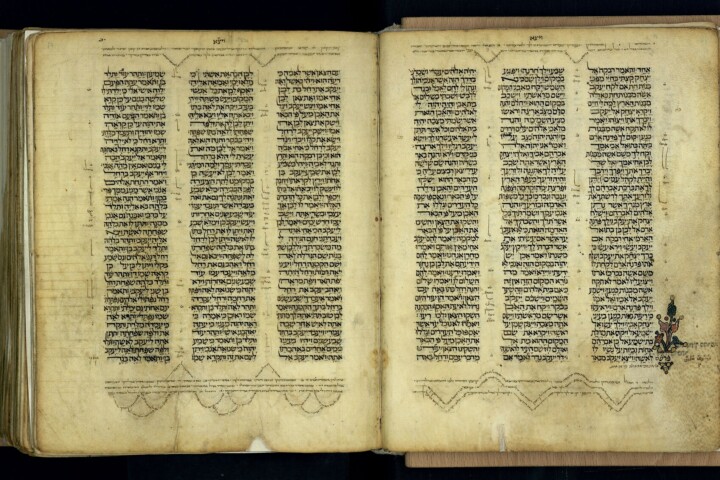
I noticed something odd with the psalm reading at Mass the other day. Our bishops’ conference here in Canada has decreed that the Mass in English – Novus Ordo – use the ‘NRSV’, the ‘New Revised Standard Version’, an ‘updated’ translation of the original RSV, first published in 1952. This ‘new translation’ has the tendency[…]Continue reading→
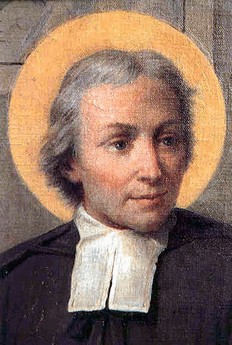
Saint Jean-Baptiste de la Salle: A Teacher for Teachers
Jean-Baptiste de la Salle (1651 – 1719), a French nobleman, ordained a priest, founded the first order in the Church’s history entirely without priests, and this came about almost by accident. I say ‘almost’, for, of course, there are no accidents with God. Destined for ordination from an early age, Jean-Baptiste never looked back, even[…]Continue reading→