
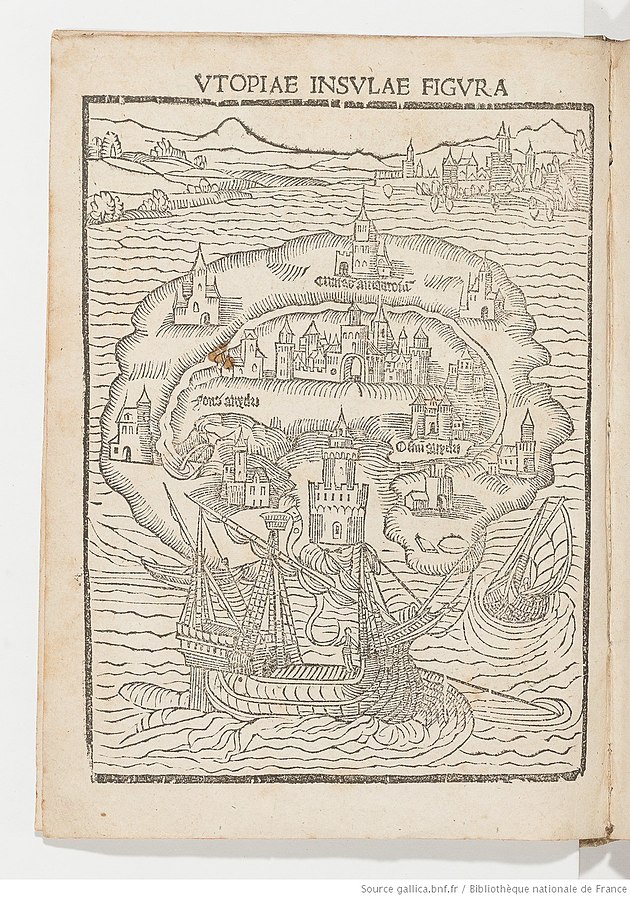
The Uselessness of Utopias
(The term ‘utopia’ was coined by the great statesman and martyr, Thomas More, in his 1516 book by the same name. It literally means ‘no place’, but comes to mean a ‘perfect place’, often in an ideal sense. More’s book is taken as a satire on Henry VIII’s England, on the impossibility of building such a perfect society, and here is Carl Sundell’s own take on such).
A utopia may be defined as an ideal society. In his dialogue, Republic, Plato imagined such a world, ruled by philosopher-kings. Yet no ideal world has ever been created except the one inhabited by Adam and Eve, and that utopia was short-lived. Ever since, people of intellect and imagination have been trying to figure out how to recreate the Garden of Eden. College campuses and their guru professors all over the world have supplanted philosopher-kings as the architects of hypothetical utopias. It should be no surprise to anyone that the unrest and radicalism found on campuses are rooted in some deep-seated hatred for a real society that can never live up to the aspirations of utopia.
The Founders of the United States republic were not deluded idealists. They knew it was possible to improve the world, but impossible to create a perfect one. As Thomas Jefferson put it: “Although I do not, with some enthusiasts, believe that the human condition will ever advance to such a state of perfection as there shall no longer be pain or vice in the world, yet I believe it is susceptible of much improvement, and most of all, in matters of government and religion, and that the diffusion of knowledge among the people is to be the instrument by which it is to be effected.”
But utopian thinkers never give up on the belief that a perfect world is possible. So far as Catholic theology is concerned, this belief in a perfect society is really a kind of heresy. In the first place, utopian thought defies the consequence of original sin, which is that we are all heirs to the temptations of the world, the flesh and the devil. We cannot avoid the struggle of choosing between pleasure and suffering or between good and evil. It is in the nature of our free will that we are allowed to choose. Utopian thought denies freedom more than anything else. In a utopian world you would not be free to choose because all your choices would have been made for you, and you would be obliged to follow the course laid out by others rather than choose your own destiny. How else would a utopian world be possible?
This means that those who manage utopias would be the masters of the world. It would be their vocation to keep everyone else in line, much as a mechanic’s job is to keep all the parts of a machine greased and well-tuned to perform their proper function. This situation has to breed a collectivist mentality. The will of all must become subject to the will of the State, or Big Brother, as George Orwell called it in his novel 1984. It was this fact Orwell noticed about the difference between the promised prosperity of Karl Marx’s world under Communism versus the horrible actual and very real poverty of the Soviet Union under Josef Stalin. And it was this disparity that everyone noticed about the messianic promise of the Third Reich of Adolf Hitler and the horrors that followed.
To the degree that socialism seeks to solve all human problems, the State usurps the place of God, and the State is worshiped as the First Cause of all things material, educational, spiritual, and militaristic. But as Lord Acton liked to remind us, power corrupts, and absolute power corrupts absolutely. Count on it. As the social planners increase their power of planning utopia, everyone’s will must be sacrificed to theirs. When those who protest the will of the planners are perceived as enemies of utopia, they will be removed by the quickest and most expedient method. It is this very maniacal power that the framers of the American Constitution sought to prevent when they created a system loaded with checks and balances, all dependent on the vote of the people themselves.
That small societies can design themselves to approach the conditions of utopia is no doubt possible. Catholic monks in a monastery can provide each other’s needs for a simple life with far fewer troubles. However, such a life is purely voluntary. No one can be a prisoner of the system in a monastery. Every monk freely gives of himself to all the others and the good of the Order, and ultimately to God. The abbot is a leader, not a tyrant. If at some point a monk should decide to leave this kind of ideal existence and take his chances in the outside world, he is, in one sense, free to do so (even if to do so canonically and morally he must be released from his voluntary vows – Ed.)
In a utopian society no one is free. Even the managers ironically are slaves to the system because they dare not buck the rules of the system to which they have given themselves and from which they get their daily bread. This is proven by the mainstream media who slavishly manage the lies and the fake news that pervade society. These managers lie constantly and without blushing.
Yes, Jefferson believed in progress. But if he lived in our time he would see among the so-called “progressive” (liberal) types a thinly veiled impulse to return to the slavish mentality of the ancient world.
The decline of our Judaeo-Christian religion (which has relied upon swearing on a Bible to tell the truth) and the rise of modern atheism (which repudiates the Bible) will make virtually inevitable the return of universal slavery in the form life-suffocating utopias. This is because human nature demands absolutes in one form or another.
If these absolutes are not found in God, they will be found in Big Brother.

Remembering Father Alphonse de Valk
(Today marks the sixth anniversary of the death of Father Alphonse de Valk, C.S.B., a faithful, courageous and indefatigable Basilian priest, pro-life-and-family apostle, and the founder of Catholic Insight magazine. Here is what we wrote those on his entering into eternity five years ago, as we continue to remember him in our prayers and thoughts)[…]Continue reading→

Divine Mercy Sunday – An Echo of Every Mass
Reach out your hand and put it in my side. Do not doubt but believe’… ‘My Lord and my God!’ (Jn. 20:18)). Today is Divine Mercy Sunday, and as we celebrate the end of the Easter Octave, we contemplate the wounded side of our Saviour, the Church’s source of life. On Good Friday in the[…]Continue reading→

Saint Stanislaus of Szczepanów
We celebrate Saint Stanislaus today (+ April 11, 1079), in light of this Easter Octave, a bishop and martyr who accepted the episcopacy only at the direct order of Pope Alexander II. He proved a wise and courageous leader of his flock, put to death by his own king, Boleslaus, for rebuking the monarch’s ‘immoral[…]Continue reading→

First Holy Communion: Sermon from May 16, 1943
Here is a sermon from the good old days by +Rev. Msgr. Vincent Nicholas Foy (August 14, 1915 – March 13, 2017), from 1943. Readers may recall that Pope Saint Pius X, by the decree Quam Singulari in 1910, lowered the customary age of reception of Holy Communion – after the rigours of the plague[…]Continue reading→

In the Glorious Light of Easter, Alleluia!
Set your minds on things that are above, not on things that are on earth, for you have died, and your life is hidden with Christ in God. When Christ who is your life is revealed, then you also will be revealed with him in glory (Col. 3:3-4). The Resurrection of Our Lord and Saviour[…]Continue reading→

An Ancient Homily for Holy Saturday
The time between Good Friday and Easter Sunday is one of waiting, in silence, as the world wonders – anticipates – what will happen, after the death of Christ. We re-live this time each year in the anamnesis of our liturgy, and in turn look forward to the glorious re-creation of all things at the[…]Continue reading→

Europe’s Long Descent
(As we meditate on this day on Christ’s burial, and His descent into hell, it is fitting to ponder here with contributor Peter Marcus how the world seems to be heading there as well. The difference is that, although God cannot ‘redeem’ hell, nor those therein, He can and did redeem the world. There is[…]Continue reading→
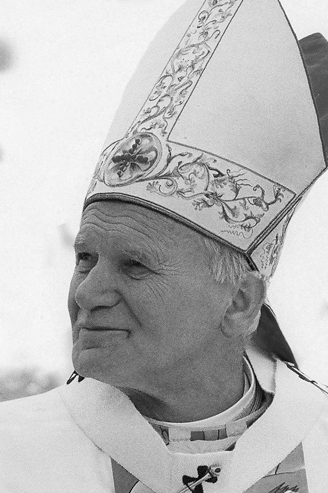
Pope Saint John Paul II’s First Good Friday Homily
ADDRESS OF HIS HOLINESS JOHN PAUL II AT THE CONCLUSION OF THE STATIONS OF THE CROSS AT THE COLOSSEUM Good Friday, 13 April 1979 When we make the Way of the Cross from one station to the next, in spirit we are always at the spot wherethis journey had its “historical” place: where it[…]Continue reading→
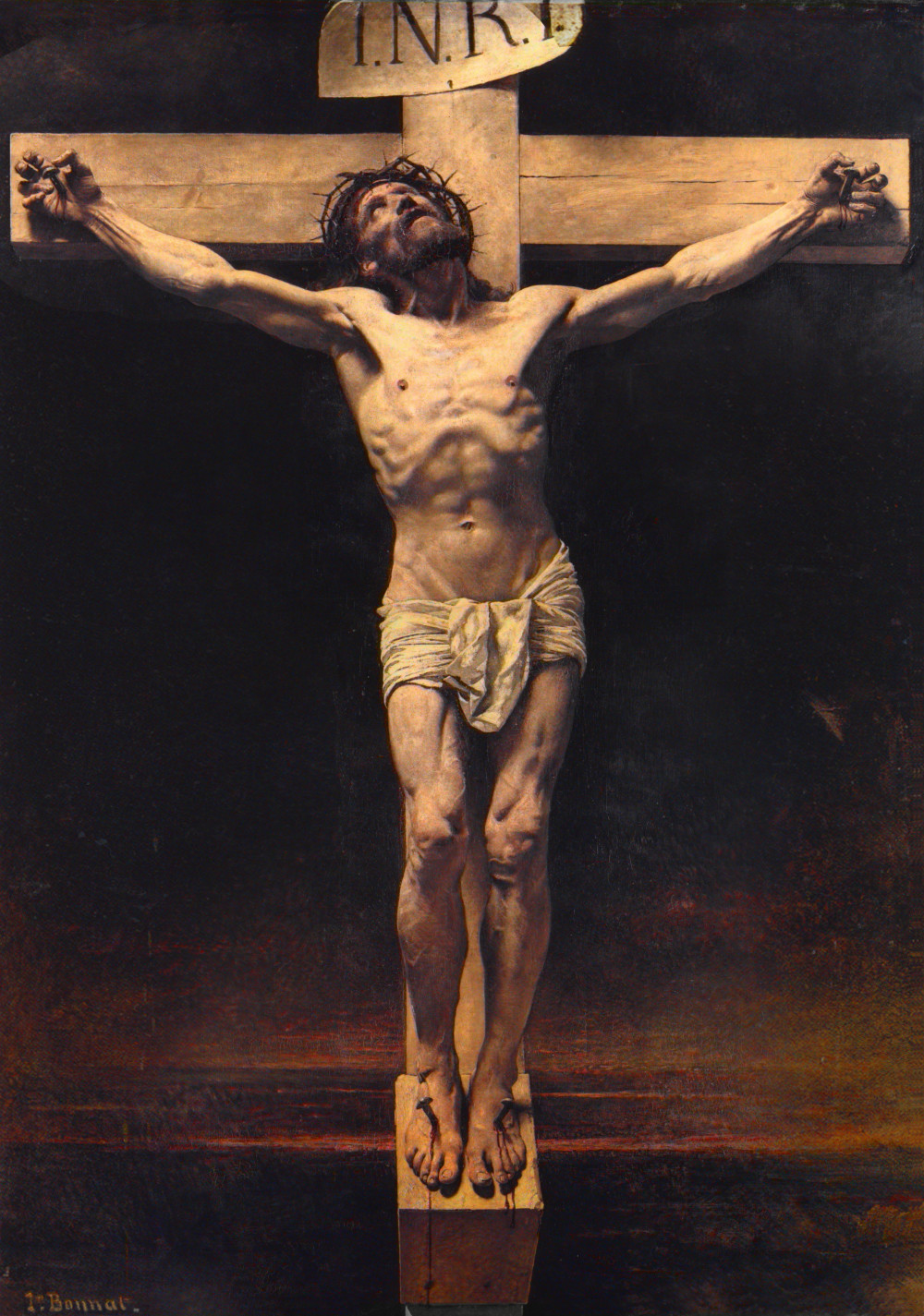
A Meditation for Good Friday: How To Undo the Effects of Sin?
Cardinal Newman, now Saint John Henry Newman, was a towering figure of nineteenth-century Catholicism who is almost universally admired. I say “almost” because not everyone likes him. I knew a priest once, Arthur Caulkins, who has become disenchanted with Newman. As an undergraduate Arthur had been enamoured of Newman, and this interest continued when he[…]Continue reading→
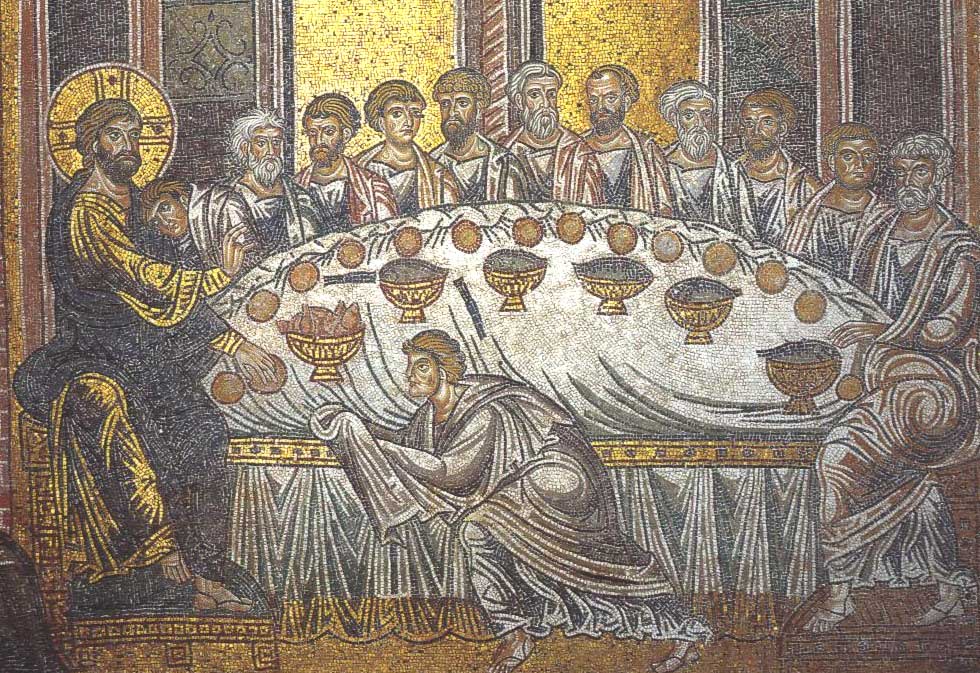
Pope Benedict’s Last Holy Thursday Homily
MASS OF THE LORD’S SUPPER HOMILY OF HIS HOLINESS BENEDICT XVI Basilica of St John Lateran Holy Thursday, 5 April 2012 Photo Gallery (Video) Dear Brothers and Sisters! Holy Thursday is not only the day of the institution of the Most Holy Eucharist, whose splendour bathes all else and in some ways draws it to[…]Continue reading→