
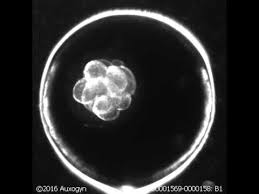
IVF and Adopting Embryos
I was waiting for it, as I listened to a recent pro-life talk I attended, the topic of which was IVF: I had an inkling the presenter would raise the fractious issue of ‘adopting’ abandoned frozen embryos, which many Christians, even Catholics, support. It seems a win-win: The mother gets a child, and the child gets to live.
But not all things are as they seem, nor are they so straightforward. (See also Aedan Reidy’s discussion of this issue in these pages from 2020)
First, a bit of background: In-vitro fertilization was first demonstrated in 1978 with the birth of Marie-Louise Brown, on July 25th, ironically ten years to the day after the promulgation of Paul VI’s prophetic Humanae Vitae. Since then, there have been millions of babies conceived ‘in a dish’ – the literal translation of ‘in vitro’ (the term ‘test tube’ baby is a bit of a misnomer).
The process is complex, but may be described simply enough: A number of ova are surgically retrieved from a woman, who has been given treatment to make her hyperovulate. These eggs are then placed in the ‘dish’, and artificially inseminated with sperm, gathered from a ‘partner’ – whether husband or anonymous, gathered via the age-old, but disordered, method of masturbation.
These ‘fertilized eggs’ – so they are termed, even if they really be tiny humans about 1/10 of a millimetre in size[i], but a human’s a human, no matter how small – are then sifted for ‘quality’ (that is, their DNA, implanting potential, and other factors). Usually a few are implanted in the prospective mother’s uterus – since they don’t all take – and then brought to term. Voila, a new baby. If more than one embryo implants, the others are usually ‘suppressed’ (that is, killed via saline solution).
The unused and leftover embryos are usually placed in cold storage in nitrogen tanks, their fate uncertain, a point to which we shall return in a moment.
There are any number of moral problems – that is, evils – inherent with this technology, spelled out clearly in two documents from the Congregation for the Doctrine of the Faith during the glory days of that institution: Donum Vitae, from 1987 (signed by Pope Saint John Paul II), and Dignitatis Personae, from 2008 (in turn authorized by Benedict XVI).
The moral difficulties may be boiled down to one principle, that the only morally licit way for babies to come into existence is through a proper conjugal act – which is to say, a sexual act between a man and woman united in holy matrimony. Technologies may be permitted that assist in this, but not those that dominate or replace it.
IVF, related technologies, and the actions inherent in them fall into the latter category. The conjugal union of husband and wife is absent – in fact, replaced – and the child’s ‘coming into being’ left in the hands of clinicians and lab techs. This is not for the good of the children, who are commodified and turned into products; nor is it good for the parents, who cease to become mother and father through each other’s reciprocal love, but reduced to donors of sperm and ova (and even these may be derived from strangers).
There is a further evil: Since this process is so expensive and uncertain, more embryos are ‘made’ than are needed – a lot more. Some are, as mentioned, killed, but most of these spare embryos are put into deep freeze in liquid nitrogen, to be used at a later date. But many are not, and are abandoned, after couples divorce, or lose interest, or the money runs out.
There are untold thousands of such embryos. In Canada, IVF is government regulated and funded, at least since the 2004 Assisted Human Reproduction Act, which legalized this procedure. As a side note, many prelates and priests scandalously supported in order to ‘limit the harm’ of an unregulated system, but once evil is made legal, as we have seen with euthanasia, it is impossible to control. One study back in 2003 put the number of frozen embryos in Canada at 15,615. In the United States, where the procedure is unregulated, no one quite knows how many there are. Some estimates say up to a million, or more.
No one quite knows what to do with them. The Magisterium has weighed in on this issue in two documents: The instruction Donum Vitae (1987) and its follow-up, Dignitiats Personae in 2008. Both documents state in no uncertain terms that, with all its good intentions to cure or assist fertility, the whole process of IVF is disordered, from start to finish, taking the procreation of new life from its proper place and setting into the laboratory, the tragic consequences of which we are only now dimly beginning to see. A Brave New World does not seem far off, and its dawn is already upon us.
There is more to say, but we will end for now where we began, with the proposal that women adopt these embryos into their healthy wombs, and bring them to term.
As much as this may appeal to the heartstrings and emotions, the Church teaches that this is not an option, for the act of implanting such children in a womb by technological and artificial means is itself contrary to God’s law, dominating the sacred act of procreation, whose purpose is to bring not only bodies, but souls into existence, persons made in God’s image.
Here is Donum Vitae:
In consequence of the fact that they have been produced <in vitro,> those embryos which are not transferred into the body of the mother and are called “spare” are exposed to an absurd fate, with no possibility of their being offered safe means of survival which can be licitly pursued.
‘Absurd’ here is from the Latin, ab-surdum, that is, deaf to any proposed solution.
And here is Dignitatis Personae replies to the question of ‘prenatal adoption’:
The proposal that these embryos could be put at the disposal of infertile couples as a treatment for infertility is not ethically acceptable for the same reasons which make artificial heterologous procreation illicit as well as any form of surrogate motherhood;38 this practice would also lead to other problems of a medical, psychological and legal nature.
It has also been proposed, solely in order to allow human beings to be born who are otherwise condemned to destruction, that there could be a form of “prenatal adoption”. This proposal, praiseworthy with regard to the intention of respecting and defending human life, presents however various problems not dissimilar to those mentioned above.
This entire technology needs to be re-thought and, quite bluntly, abandoned:
All things considered, it needs to be recognized that the thousands of abandoned embryos represent a situation of injustice which in fact cannot be resolved. Therefore John Paul II made an “appeal to the conscience of the world’s scientific authorities and in particular to doctors, that the production of human embryos be halted, taking into account that there seems to be no morally licit solution regarding the human destiny of the thousands and thousands of ‘frozen’ embryos which are and remain the subjects of essential rights and should therefore be protected by law as human persons“.
We should recall what Pope Saint John Paul II says in his encyclical on life, Evangelium Vitae, that life on earth is not an “ultimate” but a “penultimate” reality. We cannot do evil that good may come, even to save the lives of these children. Our true home, and the fullness of life, is in heaven, where we may hope these little babies will go, in some way in His mysterious and merciful providence.
Addendum and Endnote:
[i] The Church has not dogmatically declared when the soul is infused, and the developing zygote takes on the fullness of human personhood, even if Tertullian says that ‘what will be a man is a man already’. Saint Thomas held the Aristotelian position that there had to a requisite complexity of matter – that is, of the body – before the soul could be infused. Hence, there was delayed ‘animation’, at about 40 days for males, and 80 days for females. But the Church has clarified this, in Donum Vitae, which states:
From the time that the ovum is fertilized, a new life is begun which is neither that of the father nor of the mother; it is rather the life of a new human being with his own growth. It would never be made human if it were not human already. To this perpetual evidence. . . modern genetic science brings valuable confirmation. It has demonstrated that, from the first instant, the program is fixed as to what this living being will be: a man, this individual—man with his characteristic aspects already well determined. Right from fertilization is begun the adventure of a human life, and each of its great capacities requires time…to find its place and to be in a position to act.[25] This teaching remains valid and is further confirmed, if confirmation were needed, by recent findings of human biological science which recognize that in the zygote (The zygote is the cell produced when the nuclei of the two gametes have fused.) resulting from fertilization the biological identity of a new human individual is already constituted.
Certainly no experimental datum can be in itself sufficient to bring us to the recognition of a spiritual soul; nevertheless, the conclusions of science regarding the human embryo provide a valuable indication for discerning by the use of reason a personal presence at the moment of this first appearance of a human life: how could a human individual not be a human person? The Magisterium has not expressly committed itself to an affirmation of a philosophical nature, but it constantly reaffirms the moral condemnation of any kind of procured abortion. This teaching has not been changed and is unchangeable.[26]
Thus the fruit of human generation, from the first moment of its existence, that is to say from the moment the zygote has formed, demands the unconditional respect that is morally due to the human being in his bodily and spiritual totality. The human being is to be respected and treated as a person from the moment of conception; and therefore from that same moment his rights as a person must be recognized, among which in the first place is the inviolable right of every innocent human being to life.
This doctrinal reminder provides the fundamental criterion for the solution of the various problems posed by the development of the biomedical sciences in this field: since the embryo must be treated as a person, it must also be defended in its integrity, tended and cared for, to the extent possible, in the same way as any other human being as far as medical assistance is concerned.

Carney’s Amoral Majority
After five defections – euphemistically described as ‘crossing the floor’ – and three by-elections, Mark Carney and his Liberals how have their coveted majority. One wonders what bowls of pottage were offered in back-room deals. In the archaic monarchical system that is the Dominion of Canada, this majority allows the newly-minted Prime Minister to rule[…]Continue reading→

Saint Kateri , Canada’s Protectress
This was the title given to Saint Kateri Tekakwitha, by Pope Benedict XVI, when he canonized her on October 28th, 2012, along with six others, in Saint Peter’ Square (she had been beatified by Pope John Paul II back in 1980). With Saint Joseph as our protector, along with the Canadian martyrs, we seem to[…]Continue reading→

A Tale of Two Benedicts
A grace-filled Holy Week to all our readers! As we await and prepare for the Resurrection about to dawn upon us, we might keep in mind two Benedicts: Pope Emeritus Benedict XVI, requiescat in pace, elected on this day in 2005; and today’s commemoration of the mystic pilgrim, Benedict Joseph Labre, who died on this[…]Continue reading→

My Name is Bernadette
April 16th is a propitious day, for besides the anniversary of Father de Valk’s death, who founded Catholic Insight in its print form decades ago, and the commemoration of the ‘two Benedicts’, mentioned in accompanying posts, today we also recall Saint Bernadette Soubirous, the young visionary to whom the Virgin Mary appeared numerous times at[…]Continue reading→

Saint Lydwina of Schiedam and Suffering Joyfully
Saint Lydwina of Schiedam (1380 – 1433) was one of the countless and glorious ‘victim souls’ in the history of the Church, those whose lives are filled with suffering, often of an unimaginable intensity, but who suffer joyfully. She was a fifteen-year old Dutch girl, out skating one day, when she fell and broke one[…]Continue reading→

The Glorious Martyrdoms of Martin and Maximus
As we enter into Eastertide, we recall on this 13th of April Pope Saint Martin I (+655), one of the noblest, if most tragic, of the successors of Saint Peter. Born in Umbria, Italy, he was of noble lineage, with great intelligence combined with charity and love of the poor and the Church. While still[…]Continue reading→

Saint Stanislaus of Szczepanów
We celebrate Saint Stanislaus today (+ April 11, 1079), in light of this Easter Octave, a bishop and martyr who accepted the episcopacy only at the direct order of Pope Alexander II. He proved a wise and courageous leader of his flock, put to death by his own king, Boleslaus, for rebuking the monarch’s ‘immoral[…]Continue reading→

Saint Gemma Galgani
On this April 11th, in 1903 – the same year that the Italian Guiseppe Sarto was elected Pope later that summer as Pius X – a lovely, young Italian woman died, by the name of Gemma Galgani. She lived a brief life of 24 years, as did a number of other young saints, including Pier[…]Continue reading→
An Ideological and Improper Translation
I noticed something odd with the psalm reading at Mass the other day. Our bishops’ conference here in Canada has decreed that the Mass in English – Novus Ordo – use the ‘NRSV’, the ‘New Revised Standard Version’, an ‘updated’ translation of the original RSV, first published in 1952. This ‘new translation’ has the tendency[…]Continue reading→
Saint Jean-Baptiste de la Salle: A Teacher for Teachers
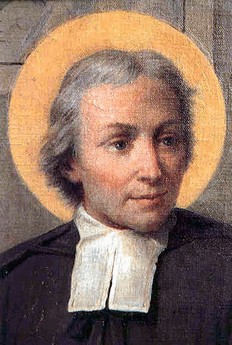
Jean-Baptiste de la Salle (1651 – 1719), a French nobleman, ordained a priest, founded the first order in the Church’s history entirely without priests, and this came about almost by accident. I say ‘almost’, for, of course, there are no accidents with God. Destined for ordination from an early age, Jean-Baptiste never looked back, even[…]Continue reading→