
The Paradox of Parables
You have just heard one of the parables of Jesus, quite a complicated one. It accomplishes what a parable is supposed to do: it teases the imagination. Who was that king, and how could anyone, presumably his subject, dare refuse the invitation to the prince’s wedding, much less abuse the messengers? Why would the invitee even want to, given that retribution was swift and terrible: “He sent troops to destroy those murders and burned their city.”[1] Is it not equally odd that the king would have his slaves fill the hall with whatever riff-raff they could find in the streets of the city, including perhaps beggars and even those prostitutes and tax collectors that Jesus praised for accepting the summons to repentance proclaimed by John the Baptist . . . and which the chief priests and the Pharisees refused:
Truly, I say to you, the tax collectors and the prostitutes go into the kingdom of God before you. For John came to you in the way of righteousness, and you did not believe him, but the tax collectors and the prostitutes did.”[2]
The business about the wedding garment is also confusing. What precisely was it? And how was the poor fellow to obtain one? Why did he not at least try to explain? The king is again relentless in his punishment for what seems to have been a minor faux pas, a trivial social gaffe.
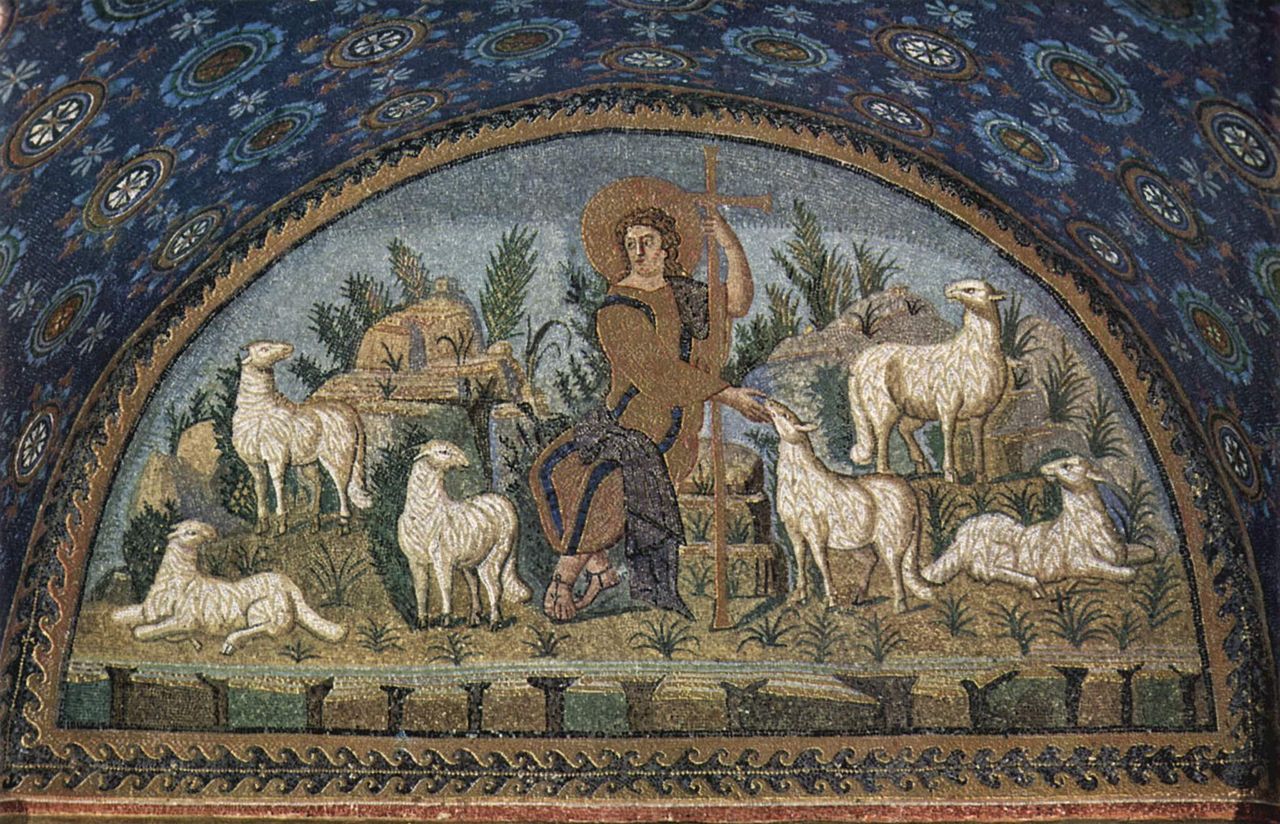
There are numerous other parables in the Gospels as well as similes, comparisons and figures of speech. Even as simple a statement as Jesus’s “I am the good shepherd” has layers of meaning when we remember how central shepherds are in the history of salvation. Abel, killed by his own brother, Cain, was a shepherd, as were the patriarch Jacob—the father of the twelve tribes of Israel—Moses—both a prophet and a priest—, and David—the king who was pleasing to the God. Our Lord’s being the good shepherd thus implicitly identifies him as the progenitor of the new, the true Israel, as its prophet and priest, and also as the new David, a king who reigns from the cross. Some of the parables are simple, like the ones about the lost sheep or the lost coin; others can be quite elaborate, such as the parable of the sower whose seed fell, some on the path, some on rocky ground or among thorns, and some on good soil. Two of the most beautiful are found in Saint Luke’s Gospel: the prodigal son and the good Samaritan. But again, there are obscurities. What is the purpose in the story of the prodigal’s older brother who was so angry that he refused to enter the house? And what was a Samaritan doing far from home, on the road from Jerusalem to Jericho? Those parables are rich in symbolism, and I cannot accept the opinion, fairly common among biblical scholars, that the point of the parable of the good Samaritan, for instance, is simply “Be nice; be kind to strangers.” Our Lord himself seemed to point to a subtle and far from obvious interpretation of his preaching when he explained
to those who were about him with the twelve . . . concerning the parables. And he said to them, to you has been given the secret of the kingdom of God, but for those outside everything is in parables; so that they may indeed see but not perceive, and may indeed hear but not understand; lest they should turn again, and be forgiven.”[3]
Surely, he wanted his auditors to grasp the meaning of his words; we know that because at the beginning of his ministry he made his meaning abundantly clear: “Repent and believe the good news.”[4] What could be more direct? It was the message that John the Baptist had proclaimed with such vigour. “You brood of vipers! Who warned you to flee from the coming wrath? Produce fruit in keeping with repentance.”[5] Why, then, could the people not understand the parables of Jesus? I think the point is this: his proclamation of the kingdom was meant to have an affect on people, to lead them to a change of heart, for that is what repentance means. The casual listener, the mere passer-by could not profit from hearing the message because there was no investment of self in his lukewarm response to the message of salvation. Just as someone who is tone deaf cannot tell jazz from Gregorian chant, so the obtuse listener could not recognize or respond to the call to repentance.
Perhaps after this long preamble, you are expecting me to provide a brilliant exposition of today’s Gospel, about that merciless king. But if, as I say, the purpose of a parable is to intrigue the mind of the hearer as well as to invite him to a profound encounter with its speaker, it would surely be more in keeping with the spirit of the Gospel to leave you with the text that you have just now heard, allowing you to gauge its applicability to you in the here and now. Instead, then, of my expounding on the effect the parable has had on me, let me imitate the method of Jesus’s preaching by teasing your imagination with a parable of my own.
The kingdom of heaven may be compared to a young man who moved from Quebec to Saskatchewan some years ago. Although he spent many years there, his English was never very good; nor did he ever lose his heavy French-Canadian accent. When, as an old man he was close to death, his family looked for a priest who could manage French to administer the last rites. I was called upon, but, to my surprise, when I greeted him in French, I discovered that he could not respond; he had lost his native tongue.
[1] Mtt 22.7.
[2] Mtt 21.31-32.
[3] Mk 4.10-12
[4] Mk 1.15.
[5] Mtt 3.7-8.

Remembering Father Alphonse de Valk
(Today marks the sixth anniversary of the death of Father Alphonse de Valk, C.S.B., a faithful, courageous and indefatigable Basilian priest, pro-life-and-family apostle, and the founder of Catholic Insight magazine. Here is what we wrote those on his entering into eternity five years ago, as we continue to remember him in our prayers and thoughts)[…]Continue reading→

Divine Mercy Sunday – An Echo of Every Mass
Reach out your hand and put it in my side. Do not doubt but believe’… ‘My Lord and my God!’ (Jn. 20:18)). Today is Divine Mercy Sunday, and as we celebrate the end of the Easter Octave, we contemplate the wounded side of our Saviour, the Church’s source of life. On Good Friday in the[…]Continue reading→

Saint Stanislaus of Szczepanów
We celebrate Saint Stanislaus today (+ April 11, 1079), in light of this Easter Octave, a bishop and martyr who accepted the episcopacy only at the direct order of Pope Alexander II. He proved a wise and courageous leader of his flock, put to death by his own king, Boleslaus, for rebuking the monarch’s ‘immoral[…]Continue reading→

First Holy Communion: Sermon from May 16, 1943
Here is a sermon from the good old days by +Rev. Msgr. Vincent Nicholas Foy (August 14, 1915 – March 13, 2017), from 1943. Readers may recall that Pope Saint Pius X, by the decree Quam Singulari in 1910, lowered the customary age of reception of Holy Communion – after the rigours of the plague[…]Continue reading→

In the Glorious Light of Easter, Alleluia!
Set your minds on things that are above, not on things that are on earth, for you have died, and your life is hidden with Christ in God. When Christ who is your life is revealed, then you also will be revealed with him in glory (Col. 3:3-4). The Resurrection of Our Lord and Saviour[…]Continue reading→

An Ancient Homily for Holy Saturday
The time between Good Friday and Easter Sunday is one of waiting, in silence, as the world wonders – anticipates – what will happen, after the death of Christ. We re-live this time each year in the anamnesis of our liturgy, and in turn look forward to the glorious re-creation of all things at the[…]Continue reading→

Europe’s Long Descent
(As we meditate on this day on Christ’s burial, and His descent into hell, it is fitting to ponder here with contributor Peter Marcus how the world seems to be heading there as well. The difference is that, although God cannot ‘redeem’ hell, nor those therein, He can and did redeem the world. There is[…]Continue reading→
Pope Saint John Paul II’s First Good Friday Homily
ADDRESS OF HIS HOLINESS JOHN PAUL II AT THE CONCLUSION OF THE STATIONS OF THE CROSS AT THE COLOSSEUM Good Friday, 13 April 1979 When we make the Way of the Cross from one station to the next, in spirit we are always at the spot wherethis journey had its “historical” place: where it[…]Continue reading→
A Meditation for Good Friday: How To Undo the Effects of Sin?
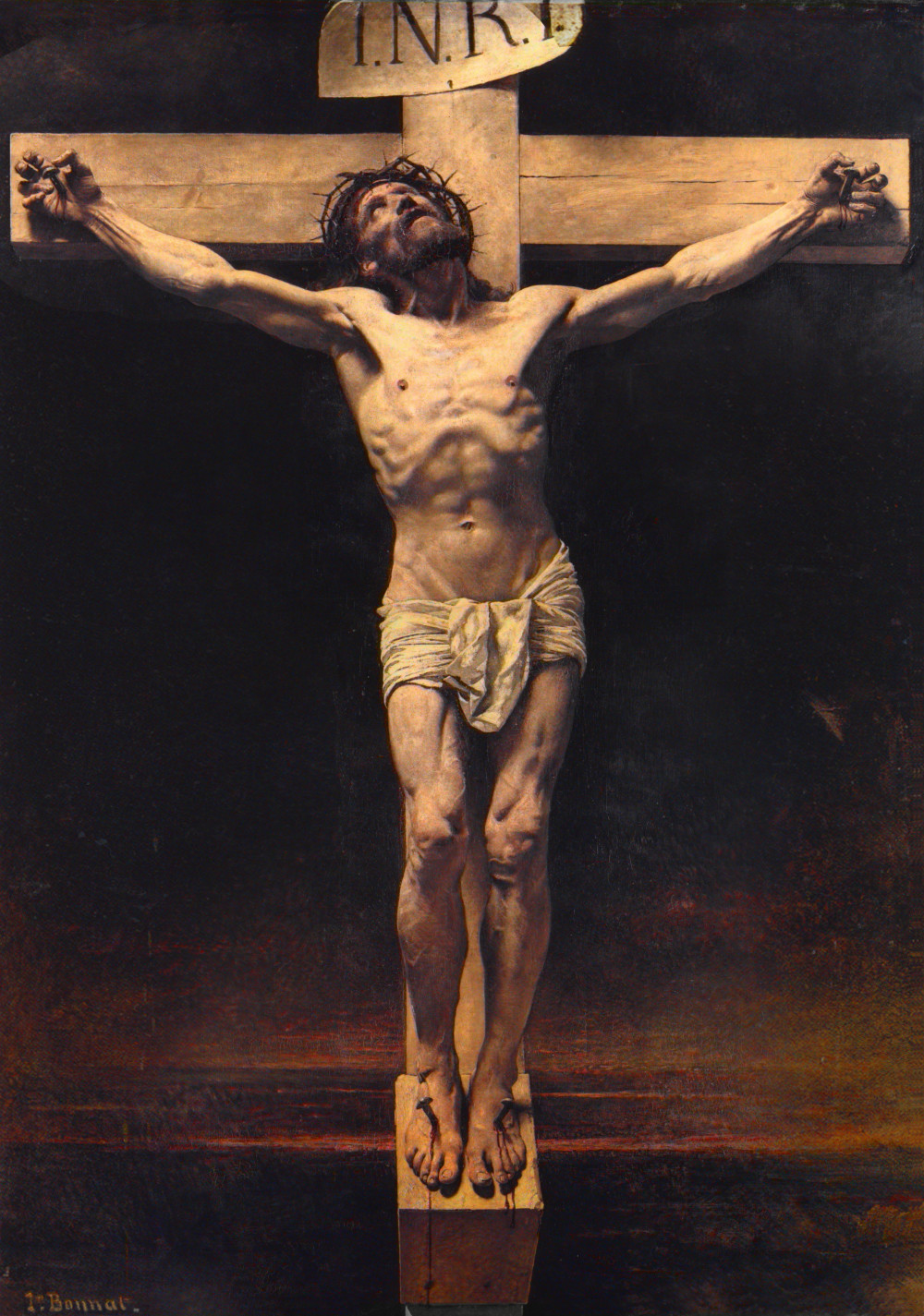
Cardinal Newman, now Saint John Henry Newman, was a towering figure of nineteenth-century Catholicism who is almost universally admired. I say “almost” because not everyone likes him. I knew a priest once, Arthur Caulkins, who has become disenchanted with Newman. As an undergraduate Arthur had been enamoured of Newman, and this interest continued when he[…]Continue reading→
Pope Benedict’s Last Holy Thursday Homily
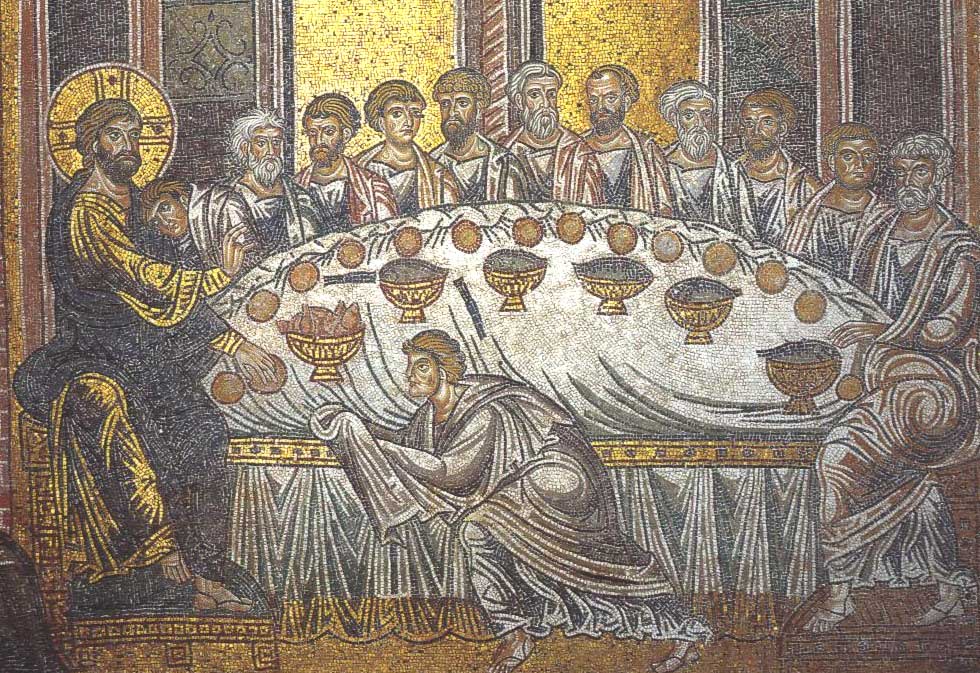
MASS OF THE LORD’S SUPPER HOMILY OF HIS HOLINESS BENEDICT XVI Basilica of St John Lateran Holy Thursday, 5 April 2012 Photo Gallery (Video) Dear Brothers and Sisters! Holy Thursday is not only the day of the institution of the Most Holy Eucharist, whose splendour bathes all else and in some ways draws it to[…]Continue reading→