
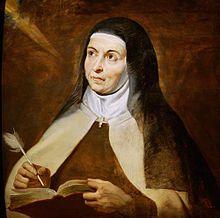
Ten Truths from Saint Teresa of Avila
Today, Sunday 15 October 2023, is not only the twenty-eighth Sunday in Ordinary Time but also the liturgical memorial of Saint Teresa of Avila. In his catechesis on the saint imparted on Wednesday, 2 February 2011, Pope Benedict XVI referred to her as a Saint who is one of the peaks of Christian spirituality of all time. But what is special about St Teresa of Avila?
In his great catechesis on the saint, Pope Benedict tells us that Teresa was a great teacher of prayer. She was able to do that by listening to God’s words, meditate on it, and let it change her from within. The German Pope taught us:
St Teresa proposes a profound harmony with the great biblical figures and eager listening to the word of God. She feels above all closely in tune with the Bride in the Song of Songs and with the Apostle Paul, as well as with Christ in the Passion and with Jesus in the Eucharist. The Saint then stresses how essential prayer is. Praying, she says, “means being on terms of friendship with God frequently conversing in secret with him who, we know, loves us” (Vida 8, 5). St Teresa’s idea coincides with Thomas Aquinas’ definition of theological charity as “amicitia quaedam hominis ad Deum”, a type of human friendship with God, who offered humanity his friendship first; it is from God that the initiative comes (cf. Summa Theologiae II-II, 23, 1). Prayer is life and develops gradually, in pace with the growth of Christian life: it begins with vocal prayer, passes through interiorization by means of meditation and recollection, until it attains the union of love with Christ and with the Holy Trinity. Obviously, in the development of prayer climbing to the highest steps does not mean abandoning the previous type of prayer. Rather, it is a gradual deepening of the relationship with God that envelops the whole of life. Rather than a pedagogy Teresa’s is a true “mystagogy” of prayer: she teaches those who read her works how to pray by praying with them. Indeed, she often interrupts her account or exposition with a prayerful outburst.
Moreover, Saint Teresa let Christ’s humanity make her fall in love with both the Eucharistic Jesus as well as the Mystical Jesus, the Church. With how much fervour, determination and commitment she loved from the depths of her heart the Eucharist as well as the Church! Pope Benedict brings out this point very strongly when he said: Another subject dear to the Saint is the centrality of Christ’s humanity. For Teresa, in fact, Christian life is the personal relationship with Jesus that culminates in union with him through grace, love and imitation. Hence the importance she attaches to meditation on the Passion and on the Eucharist as the presence of Christ in the Church for the life of every believer, and as the heart of the Liturgy. St Teresa lives out unconditional love for the Church: she shows a lively “sensus Ecclesiae”, in the face of the episodes of division and conflict in the Church of her time.
Saints show God’s overflowing holiness in them throughout their daily lives. Saint Teresa was certainly one of them. Her teaching on holiness totally stems from her following Christ in her daily actions as her great friend, saint and co-founder of the Carmelite reform St John of the Cross used to say: Try to be continuous in prayer, and in the midst of bodily exercises do not leave it. Whether you eat, drink, talk with others, or do anything, always go to God and attach your heart to him.
Saint Teresa teaches you and me to carry out acts of love which heal our soul. She said: Accustom yourself continually to make many acts of love, for they enkindle and melt the soul. Secondly, she encourages us to let God be God in ourselves by asking him to intervene with all of his power. You pay God a compliment by asking great things of Him.
Thirdly, Teresa teaches us to abandon our prayers to God without being glued to them. She says: There are more tears shed over answered prayers than over unanswered prayers. Fourthly, she reminds us of our responsibility to be Christ for others. She says: Christ has no body now but mine. He prays in me, works in me, looks through my eyes, speaks through my words, works through my hands, walks with my feet and loves with me here. Fifth, Teresa recognized that true holiness brings joy. That is why she was able to joke in the following manner: From silly devotions and sour-faced saints, good Lord, deliver us!
Sixth, love of God is concretely assessed if one is able to love his and her neighbour in need. She said: The surest way to determine whether one possesses the love of God is to see whether he or she loves his or her neighbor. These two loves are never separated. Rest assured, the more you progress in love of neighbor, the more your love of God will increase. Seventh, Teresa is a great teacher of how to trust God. She tells us: Trust God that you are exactly where you are meant to be.
Eighth, the saint of Avila reminds us that God is to be found in the everyday life. In fact, she taught persuasively: God walks among the pots and the pans. Ninth, Teresa also highlighted suffering as the distinctive consequence of true friendship with Christ. She said: We always find that those who walked closest to Christ were those who had to bear the greatest trials. Finally, Teresa taught us that if we really want to know who we are, we must try our best to know God. She said: We shall never learn to know ourselves except by endeavoring to know God; for, beholding his greatness, we realize our own littleness; his purity shows us our foulness; and by meditating upon his humility we find how very far we are from being humble.
Let us pray now with St Teresa:
Guided by You, Lord, grant that I may always allow myself to be guided by You,
always follow Your plans, and perfectly accomplish Your Holy Will.
Grant that in all things, great and small, today and all the days of my life,
I may do whatever You require of me.
Help me respond to the slightest prompting of Your Grace, so that I may be Your trustworthy instrument for Your honour.
May Your Will be done in time and in eternity by me, in me, and through me. Amen.

Saint Kateri , Canada’s Protectress
This was the title given to Saint Kateri Tekakwitha, by Pope Benedict XVI, when he canonized her on October 28th, 2012, along with six others, in Saint Peter’ Square (she had been beatified by Pope John Paul II back in 1980). With Saint Joseph as our protector, along with the Canadian martyrs, we seem to[…]Continue reading→

Remembering Father Alphonse de Valk
(Today marks the sixth anniversary of the death of Father Alphonse de Valk, C.S.B., a faithful, courageous and indefatigable Basilian priest, pro-life-and-family apostle, and the founder of Catholic Insight magazine. Here is what we wrote those on his entering into eternity five years ago, as we continue to remember him in our prayers and thoughts)[…]Continue reading→

My Name is Bernadette
April 16th is a propitious day, for besides the anniversary of Father de Valk’s death, who founded Catholic Insight in its print form decades ago, and the commemoration of the ‘two Benedicts’, mentioned in accompanying posts, today we also recall Saint Bernadette Soubirous, the young visionary to whom the Virgin Mary appeared numerous times at[…]Continue reading→

Canonizing Sister Faustina and Divine Mercy
HOMILY OF THE HOLY FATHER MASS IN ST PETER’S SQUARE FOR THE CANONIZATION OF SR MARY FAUSTINA KOWALSKA Sunday, 30 April 2000 1. “Confitemini Domino quoniam bonus, quoniam in saeculum misericordia eius”; “Give thanks to the Lord for he is good; his steadfast love endures for ever” (Ps 118: 1). So the Church sings on the Octave of[…]Continue reading→

Divine Mercy Sunday – An Echo of Every Mass
Reach out your hand and put it in my side. Do not doubt but believe’… ‘My Lord and my God!’ (Jn. 20:18)). Today is Divine Mercy Sunday, and as we celebrate the end of the Easter Octave, we contemplate the wounded side of our Saviour, the Church’s source of life. On Good Friday in the[…]Continue reading→
First Holy Communion: Sermon from May 16, 1943
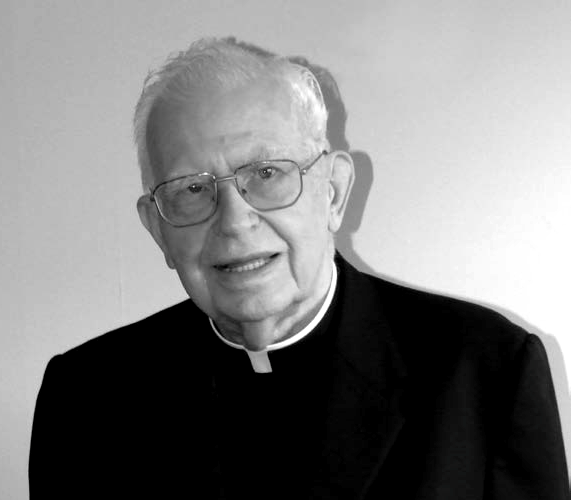
Here is a sermon from the good old days by +Rev. Msgr. Vincent Nicholas Foy (August 14, 1915 – March 13, 2017), from 1943. Readers may recall that Pope Saint Pius X, by the decree Quam Singulari in 1910, lowered the customary age of reception of Holy Communion – after the rigours of the plague[…]Continue reading→
In the Glorious Light of Easter, Alleluia!
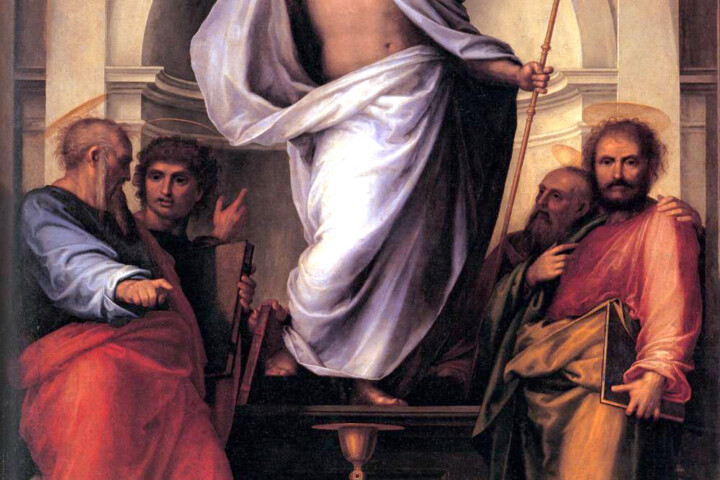
Set your minds on things that are above, not on things that are on earth, for you have died, and your life is hidden with Christ in God. When Christ who is your life is revealed, then you also will be revealed with him in glory (Col. 3:3-4). The Resurrection of Our Lord and Saviour[…]Continue reading→
An Ancient Homily for Holy Saturday
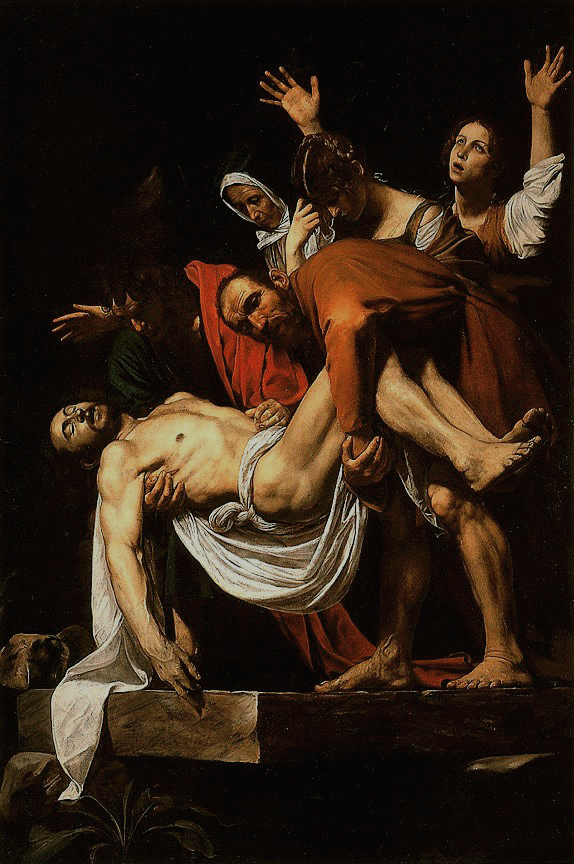
The time between Good Friday and Easter Sunday is one of waiting, in silence, as the world wonders – anticipates – what will happen, after the death of Christ. We re-live this time each year in the anamnesis of our liturgy, and in turn look forward to the glorious re-creation of all things at the[…]Continue reading→
Europe’s Long Descent
(As we meditate on this day on Christ’s burial, and His descent into hell, it is fitting to ponder here with contributor Peter Marcus how the world seems to be heading there as well. The difference is that, although God cannot ‘redeem’ hell, nor those therein, He can and did redeem the world. There is[…]Continue reading→
Pope Saint John Paul II’s First Good Friday Homily
ADDRESS OF HIS HOLINESS JOHN PAUL II AT THE CONCLUSION OF THE STATIONS OF THE CROSS AT THE COLOSSEUM Good Friday, 13 April 1979 When we make the Way of the Cross from one station to the next, in spirit we are always at the spot wherethis journey had its “historical” place: where it[…]Continue reading→