

Gregorian Chant: Music for Soul, Body, and God
I recently read a short (152 pages) and small book (each page is 5” by 6”), with beautiful font, and a fittingly short title, Chant, by Katherine le Mée, published in 1994. But don’t let its size fool you, for, in flowing and precise text, it is one of the best treatises that I have come across on Gregorian chant, the history, practice and the profound spiritual and even physiological benefits of this ancient and sacred music. Dr. Le Mée has the credentials: A Ph.D. in Romance Linguistics from Columbia, who “as a singer and conductor” has “immersed herself in the monophonic and polyphonic music of the Middle Ages”.
As the author puts it in her introduction,
Medieval people were well aware of the formative power of music. They knew that setting lines of scripture to song would imprint them ever more deeply into the memories of the worshippers, and that the words’ effects would be sustained over longer periods of time, with greater intensity. They also knew that sound is causal, that it can bring about changes in the very nature and fabric of society as well as within the individual.
What follows in the subsequent pages is an unpacking of this truth, that the music in which we immerse ourselves, especially in Liturgy, and not least in the Holy Sacrifice of the Mass, will affect us, our souls and bodies, our culture, yes, the very course of history, for good or ill. Chant, all to the good. Modern music, well, much for the ill, especially when used for sacred purposes.
The author traces the history and development of chant, its composition and notation, how it is sung, how it heals spiritually and bodily, and the role of chant in our own world. All in easy-to-read, succinct chapters. From the chapter ‘Healing Through Chant’:
One of the most powerful ways that sound acts upon us is to draw us into itself. Some music holds our attention, allowing us, for a few moments, to merge with it completely. If we are closely attentive to the sound, we are taken into it, away from pain, sorrow agitation or confusion.
And a few pages on:
It would be difficult to think of music that is more balanced than Gregorian Chant, rising and falling like the gentle ebb and flow of the sea. Neither attracting nor repelling, it remains centered at a point of rest and stability. It does not overwhelm us with sentiment but invites us to join in the devotion it calls forth.
We can trace the origins of the Gregorian chant back to the very beginnings of the Church, and even before that in the chants used in the liturgy of Israel: The perfect harmony between melody and text, the flowing rhythm, the transcendence and sublimity. That chant is rarely heard in churches since the Second Vatican Council is a deep privation, even a tragedy – and what we’re given instead is a four-hymn liturgical sandwich, often with hymns that are not all that good to begin with, and often sung even worse. It’s also odd and ironic, for the same Council described the Church’s ancient musical tradition as a ‘treasure of inestimable value’, especially the chant:
The Church acknowledges Gregorian chant as specially suited to the Roman liturgy (ut liturgiae romanae proprium): therefore, other things being equal, it should be given pride of place (principem locum) in liturgical services.
Here, the Council is following the late, great Pope Saint Pius X, who said in his 1903 motu proprio Tra Le Sollecitudini, on the restoration of sacred music:
Gregorian Chant has always been regarded as the supreme model for sacred music, so that it is fully legitimate to lay down the following rule: the more closely a composition for church approaches in its movement, inspiration and savor the Gregorian form, the more sacred and liturgical it becomes; and the more out of harmony it is with that supreme model, the less worthy it is of the temple.
All is not lost, for, as Dr. Le Mée points out, with helpful examples, chant, at a basic level, is not that difficult to learn and put into practice, even if, like many other ‘simple’ things, such as prayer, to which chant is intimately and inextricably connected, it may take a lifetime, even an eternity, to perfect.
So, tolle, lege – pick up and read. And, better yet, tolle, canta – pick up, and sing!
Carney’s Amoral Majority
After five defections – euphemistically described as ‘crossing the floor’ – and three by-elections, Mark Carney and his Liberals how have their coveted majority. One wonders what bowls of pottage were offered in back-room deals. In the archaic monarchical system that is the Dominion of Canada, this majority allows the newly-minted Prime Minister to rule[…]Continue reading→

Saint Kateri , Canada’s Protectress
This was the title given to Saint Kateri Tekakwitha, by Pope Benedict XVI, when he canonized her on October 28th, 2012, along with six others, in Saint Peter’ Square (she had been beatified by Pope John Paul II back in 1980). With Saint Joseph as our protector, along with the Canadian martyrs, we seem to[…]Continue reading→
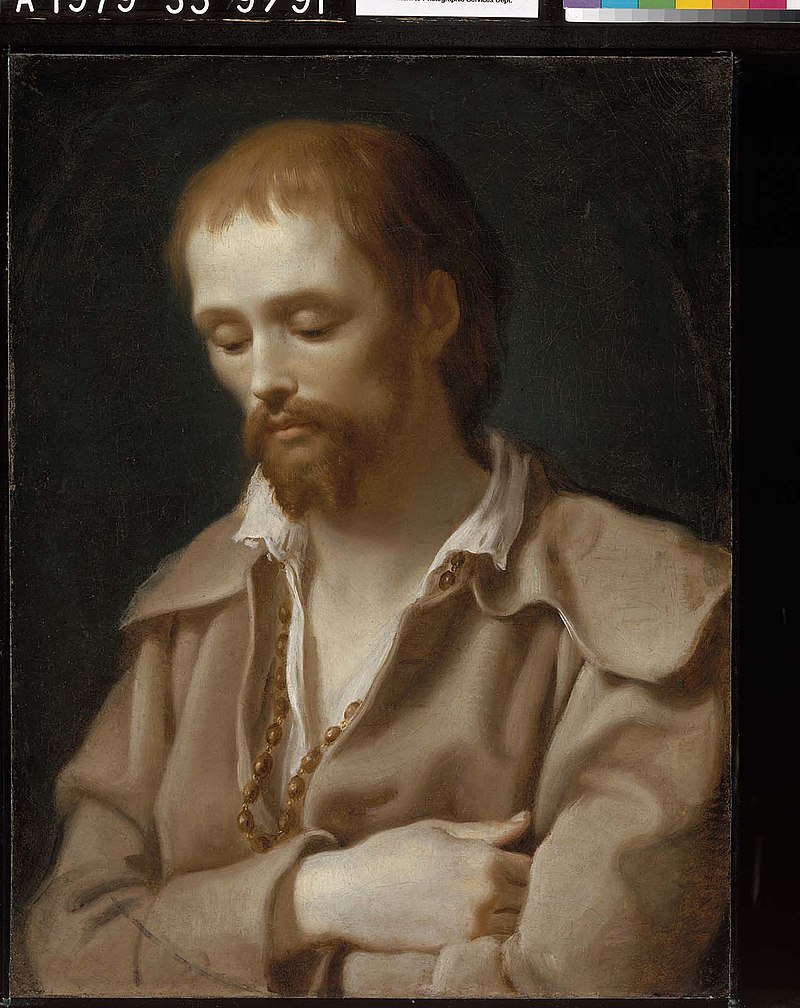
A Tale of Two Benedicts
A grace-filled Holy Week to all our readers! As we await and prepare for the Resurrection about to dawn upon us, we might keep in mind two Benedicts: Pope Emeritus Benedict XVI, requiescat in pace, elected on this day in 2005; and today’s commemoration of the mystic pilgrim, Benedict Joseph Labre, who died on this[…]Continue reading→

My Name is Bernadette
April 16th is a propitious day, for besides the anniversary of Father de Valk’s death, who founded Catholic Insight in its print form decades ago, and the commemoration of the ‘two Benedicts’, mentioned in accompanying posts, today we also recall Saint Bernadette Soubirous, the young visionary to whom the Virgin Mary appeared numerous times at[…]Continue reading→
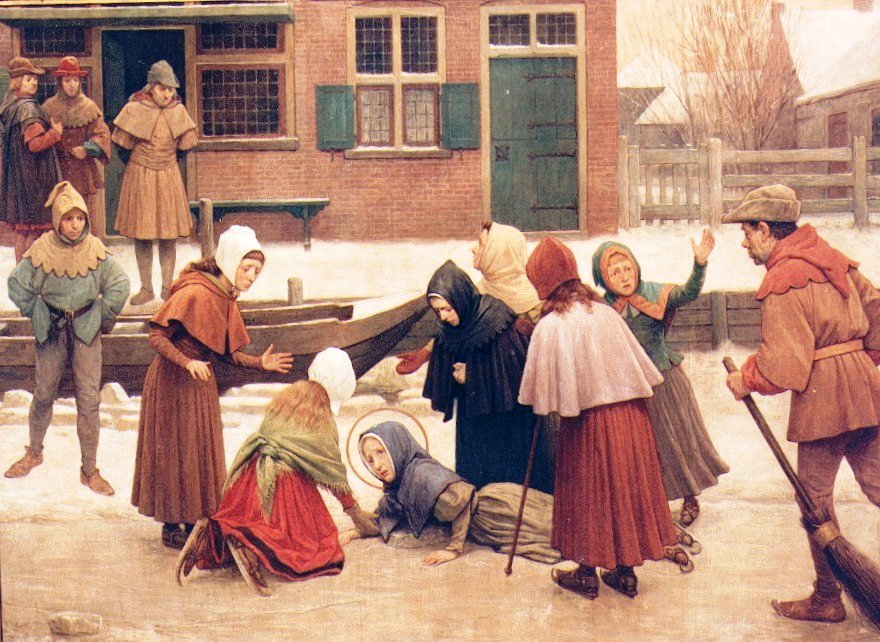
Saint Lydwina of Schiedam and Suffering Joyfully
Saint Lydwina of Schiedam (1380 – 1433) was one of the countless and glorious ‘victim souls’ in the history of the Church, those whose lives are filled with suffering, often of an unimaginable intensity, but who suffer joyfully. She was a fifteen-year old Dutch girl, out skating one day, when she fell and broke one[…]Continue reading→
The Glorious Martyrdoms of Martin and Maximus
As we enter into Eastertide, we recall on this 13th of April Pope Saint Martin I (+655), one of the noblest, if most tragic, of the successors of Saint Peter. Born in Umbria, Italy, he was of noble lineage, with great intelligence combined with charity and love of the poor and the Church. While still[…]Continue reading→

Saint Stanislaus of Szczepanów
We celebrate Saint Stanislaus today (+ April 11, 1079), in light of this Easter Octave, a bishop and martyr who accepted the episcopacy only at the direct order of Pope Alexander II. He proved a wise and courageous leader of his flock, put to death by his own king, Boleslaus, for rebuking the monarch’s ‘immoral[…]Continue reading→
Saint Gemma Galgani
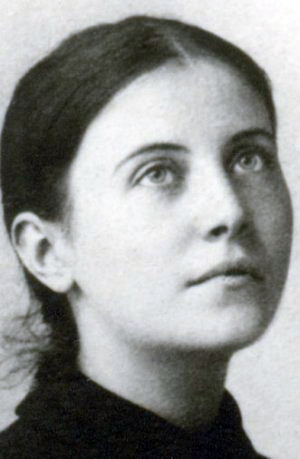
On this April 11th, in 1903 – the same year that the Italian Guiseppe Sarto was elected Pope later that summer as Pius X – a lovely, young Italian woman died, by the name of Gemma Galgani. She lived a brief life of 24 years, as did a number of other young saints, including Pier[…]Continue reading→
An Ideological and Improper Translation
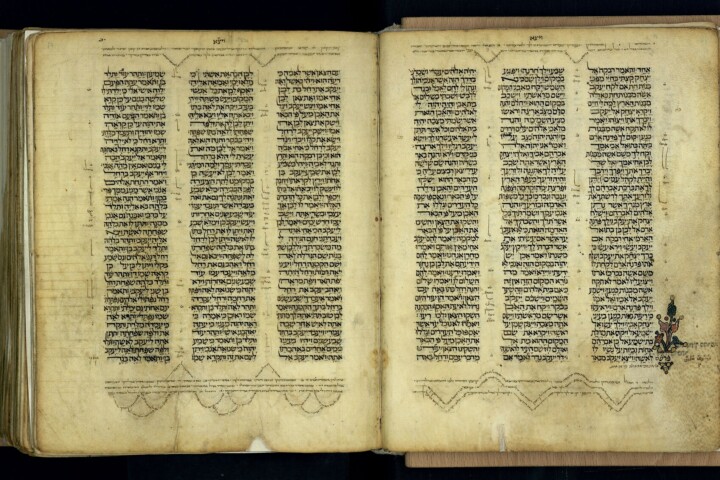
I noticed something odd with the psalm reading at Mass the other day. Our bishops’ conference here in Canada has decreed that the Mass in English – Novus Ordo – use the ‘NRSV’, the ‘New Revised Standard Version’, an ‘updated’ translation of the original RSV, first published in 1952. This ‘new translation’ has the tendency[…]Continue reading→
Saint Jean-Baptiste de la Salle: A Teacher for Teachers
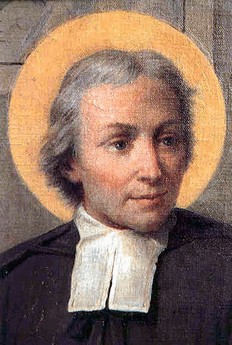
Jean-Baptiste de la Salle (1651 – 1719), a French nobleman, ordained a priest, founded the first order in the Church’s history entirely without priests, and this came about almost by accident. I say ‘almost’, for, of course, there are no accidents with God. Destined for ordination from an early age, Jean-Baptiste never looked back, even[…]Continue reading→