
Pope Benedict and Augustine
BENEDICT XVI
GENERAL AUDIENCE
Paul VI Audience Hall
Wednesday, 9 January 2008
Saint Augustine of Hippo (1)
Dear Brothers and Sisters,
After the great Christmas festivities, I would like to return to the meditations on the Fathers of the Church and speak today of the greatest Father of the Latin Church, St Augustine. This man of passion and faith, of the highest intelligence and tireless in his pastoral care, a great Saint and Doctor of the Church is often known, at least by hearsay, even by those who ignore Christianity or who are not familiar with it, because he left a very deep mark on the cultural life of the West and on the whole world. Because of his special importance St Augustine’s influence was widespread. It could be said on the one hand that all the roads of Latin Christian literature led to Hippo (today Annaba, on the coast of Algeria), the place where he was Bishop from 395 to his death in 430, and, on the other, that from this city of Roman Africa, many other roads of later Christianity and of Western culture itself branched out.
A civilization has seldom encountered such a great spirit who was able to assimilate Christianity’s values and exalt its intrinsic wealth, inventing ideas and forms that were to nourish the future generations, as Paul VI also stressed: “It may be said that all the thought-currents of the past meet in his works and form the source which provides the whole doctrinal tradition of succeeding ages” (Inaugural Address at the Patristic Institute of the “Augustinianum”, 4 May 1970; L’Osservatore Romano English edition, 21 May 1970, p. 8). Augustine is also the Father of the Church who left the greatest number of works. Possidius, his biographer, said that it seemed impossible that one man could have written so many things in his lifetime. We shall speak of these different works at one of our meetings soon. Today, we shall focus on his life, which is easy to reconstruct from his writings, in particular the Confessions, his extraordinary spiritual autobiography written in praise of God. This is his most famous work; and rightly so, since it is precisely Augustine’s Confessions, with their focus on interiority and psychology, that constitute a unique model in Western (and not only Western) literature—including non-religious literature—up to modern times. This attention to the spiritual life, to the mystery of the “I”, to the mystery of God who is concealed in the “I”, is something quite extraordinary, without precedent, and remains for ever, as it were, a spiritual “peak”.
But to come back to his life: Augustine was born in Tagaste in the Roman Province of Numidia, Africa, on 13 November 354 to Patricius, a pagan who later became a catechumen, and Monica, a fervent Christian. This passionate woman, venerated as a saint, exercised an enormous influence on her son and raised him in the Christian faith. Augustine had also received the salt, a sign of acceptance in the catechumenate, and was always fascinated by the figure of Jesus Christ; indeed, he said that he had always loved Jesus but had drifted further and further away from ecclesial faith and practice, as also happens to many young people today.
Augustine also had a brother, Navigius, and a sister whose name is unknown to us and who, after being widowed subsequently became the head of a monastery for women. As a boy with a very keen intelligence, Augustine received a good education although he was not always an exemplary student. However, he learned grammar well, first in his native town and then in Madaura, and from 370, he studied rhetoric in Carthage, the capital of Roman Africa. He mastered Latin perfectly but was not quite as successful with Greek and did not learn Punic, spoken by his contemporaries. It was in Carthage itself that for the first time Augustine read the Hortensius, a writing by Cicero later lost, an event that can be placed at the beginning of his journey towards conversion. In fact, Cicero’s text awoke within him love for wisdom, as, by then a Bishop, he was to write in his Confessions: “The book changed my feelings”, to the extent that “every vain hope became empty to me, and I longed for the immortality of wisdom with an incredible ardour in my heart” (III, 4, 7).
(To continue reading, please see here).

Saint Kateri , Canada’s Protectress
This was the title given to Saint Kateri Tekakwitha, by Pope Benedict XVI, when he canonized her on October 28th, 2012, along with six others, in Saint Peter’ Square (she had been beatified by Pope John Paul II back in 1980). With Saint Joseph as our protector, along with the Canadian martyrs, we seem to[…]Continue reading→

Remembering Father Alphonse de Valk
(Today marks the sixth anniversary of the death of Father Alphonse de Valk, C.S.B., a faithful, courageous and indefatigable Basilian priest, pro-life-and-family apostle, and the founder of Catholic Insight magazine. Here is what we wrote those on his entering into eternity five years ago, as we continue to remember him in our prayers and thoughts)[…]Continue reading→
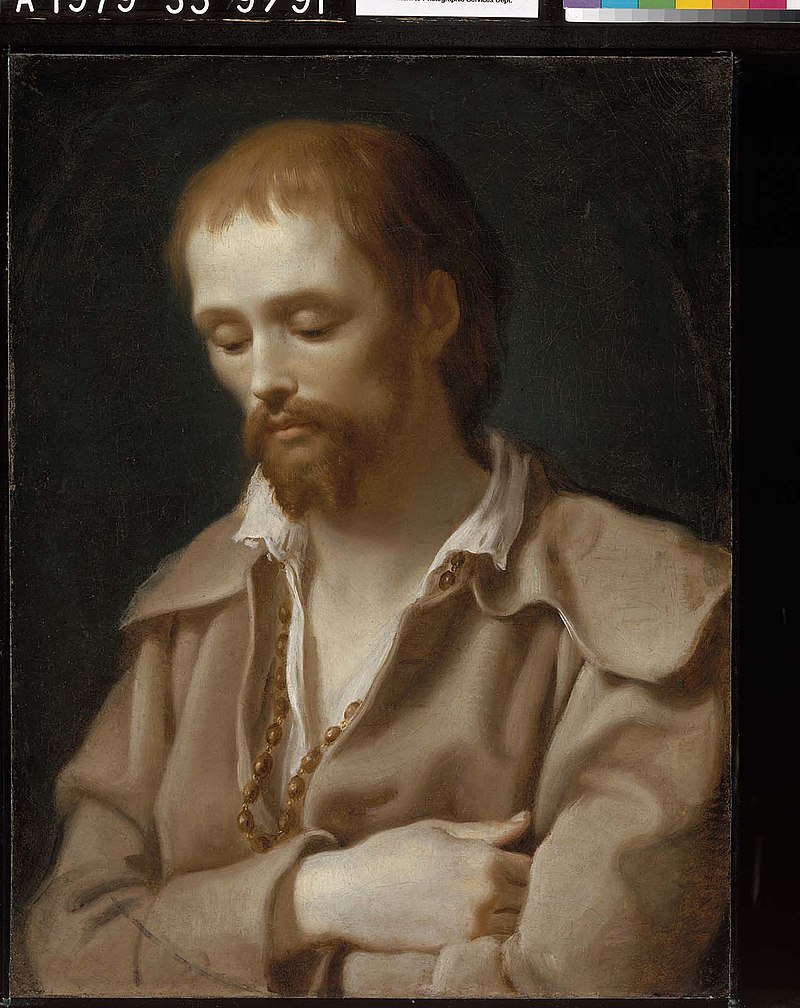
A Tale of Two Benedicts
A grace-filled Holy Week to all our readers! As we await and prepare for the Resurrection about to dawn upon us, we might keep in mind two Benedicts: Pope Emeritus Benedict XVI, requiescat in pace, elected on this day in 2005; and today’s commemoration of the mystic pilgrim, Benedict Joseph Labre, who died on this[…]Continue reading→

My Name is Bernadette
April 16th is a propitious day, for besides the anniversary of Father de Valk’s death, who founded Catholic Insight in its print form decades ago, and the commemoration of the ‘two Benedicts’, mentioned in accompanying posts, today we also recall Saint Bernadette Soubirous, the young visionary to whom the Virgin Mary appeared numerous times at[…]Continue reading→
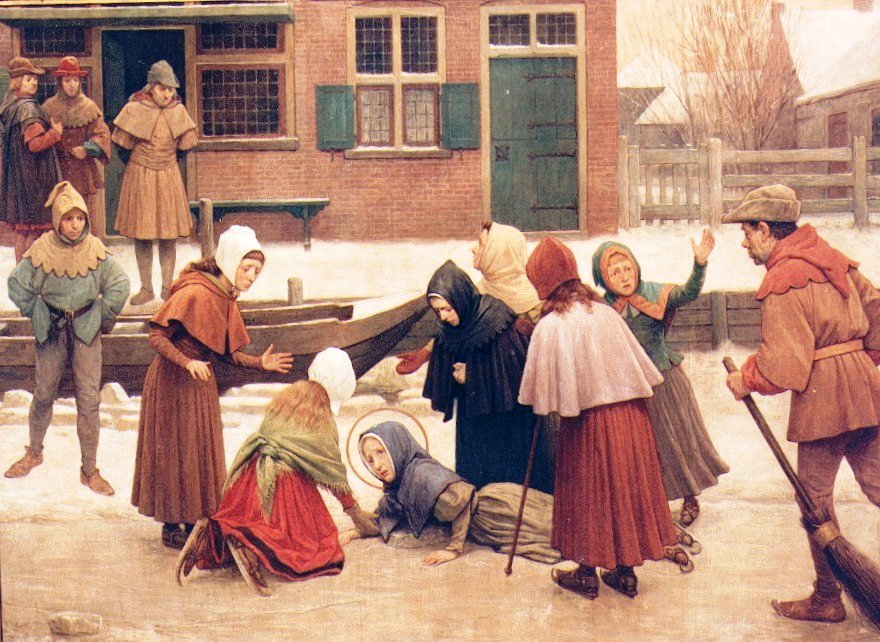
Saint Lydwina of Schiedam and Suffering Joyfully
Saint Lydwina of Schiedam (1380 – 1433) was one of the countless and glorious ‘victim souls’ in the history of the Church, those whose lives are filled with suffering, often of an unimaginable intensity, but who suffer joyfully. She was a fifteen-year old Dutch girl, out skating one day, when she fell and broke one[…]Continue reading→
The Glorious Martyrdoms of Martin and Maximus
As we enter into Eastertide, we recall on this 13th of April Pope Saint Martin I (+655), one of the noblest, if most tragic, of the successors of Saint Peter. Born in Umbria, Italy, he was of noble lineage, with great intelligence combined with charity and love of the poor and the Church. While still[…]Continue reading→
Canonizing Sister Faustina and Divine Mercy
HOMILY OF THE HOLY FATHER MASS IN ST PETER’S SQUARE FOR THE CANONIZATION OF SR MARY FAUSTINA KOWALSKA Sunday, 30 April 2000 1. “Confitemini Domino quoniam bonus, quoniam in saeculum misericordia eius”; “Give thanks to the Lord for he is good; his steadfast love endures for ever” (Ps 118: 1). So the Church sings on the Octave of[…]Continue reading→

Divine Mercy Sunday – An Echo of Every Mass
Reach out your hand and put it in my side. Do not doubt but believe’… ‘My Lord and my God!’ (Jn. 20:18)). Today is Divine Mercy Sunday, and as we celebrate the end of the Easter Octave, we contemplate the wounded side of our Saviour, the Church’s source of life. On Good Friday in the[…]Continue reading→

Saint Stanislaus of Szczepanów
We celebrate Saint Stanislaus today (+ April 11, 1079), in light of this Easter Octave, a bishop and martyr who accepted the episcopacy only at the direct order of Pope Alexander II. He proved a wise and courageous leader of his flock, put to death by his own king, Boleslaus, for rebuking the monarch’s ‘immoral[…]Continue reading→
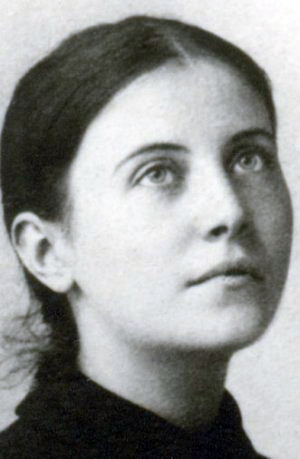
Saint Gemma Galgani
On this April 11th, in 1903 – the same year that the Italian Guiseppe Sarto was elected Pope later that summer as Pius X – a lovely, young Italian woman died, by the name of Gemma Galgani. She lived a brief life of 24 years, as did a number of other young saints, including Pier[…]Continue reading→