
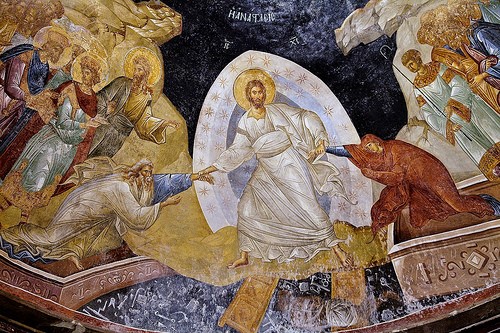
Easter, Atonement and the Mystagogy of Our Faith
These are my words that I spoke to you while I was still with you – that everything written about me in the Law of Moses, the Prophets, and the Psalms must be fulfilled.’ Then he opened their minds to understand the Scriptures…. You are witnesses of these things (Lk. 24: 44-48).
As we continue to contemplate the Easter Mystery, we also continue our mystagogy, our liturgical catechesis that draws us ever more deeply into the Mystery of Christ. This mystery is not a riddle or a fable but a reality that is the foundation of our hope and the reality that illuminates our entire earthly pilgrimage, including the enigma of suffering and death (Pope Benedict XVI). This is the Paschal Mystery that we celebrate with great care and solemnity every year; and this Mystery is the source of our renewal and life in Christ. As the word mystery is used in the New Testament, it signifies an object of revelation. In other words, it is not something that we could come to know without God revealing it. St Peter speaks of this mystery as foretold through all the prophets (Acts 3:17), though evidently misunderstood and even rejected. The Mystery is Christ Our Lord, and the content of this Mystery is summarised for us by the Apostle John: Jesus Christ the righteous…he is the atoning sacrifice for our sins, and not for our sins only but also for the sins of the whole world (1 Jn. 2:1-2).
The word that St. John uses to describe the sacrifice of Our Lord is atoning. Atonement is a concept which explains how Our Lord achieved our salvation and it is absolutely essential to have an understanding of this concept if we wish to understand our Christian faith. The expiation of our sins and our reconciliation with God is atonement, namely at-one-ment or bringing together (adunatio). In Himself, Christ Our Lord brings together divinity and humanity; and what had been lost through the devil’s deception is restored by Our Lord’s atoning sacrifice. An ancient Easter homily (attributed to St. John Chrysostom) speaks of the Paschal Mystery in a manner that may help us to understand how to make this Mystery our very own and how to grow in its knowledge and power. Christ, the sacrifice that was offered for us, is the father of the world to come. He puts an end to our former life, and through the regenerating waters of baptism in which we imitate his death and resurrection, he gives us the beginning of a new life. The knowledge that Christ is the Passover lamb who was sacrificed for us should make us regard the moment of his immolation as the beginning of our lives. As far as we are concerned, Christ’s immolation on our behalf takes place when we become aware of this grace and understand the life conferred on us by this sacrifice.
It could be said that this is what took place in the hearts and minds of Our Lord’s disciples when He to them, as our Gospel text relates. ‘These are my words that I spoke to you while I was still with you – that everything written about me in the Law of Moses, the Prophets, and the Psalms must be fulfilled.’ Then he opened their minds to understand the Scriptures…. You are witnesses of these things (Lk. 24:44-48). We know that once the disciples came to the awareness of these truths, everything changed. They boldly proclaimed the truth of the Resurrection and this has continued through the ages; and we in our day are now the witnesses of these things. The truth of the Resurrection is not true because we believe it to be true; it is true in itself. However, the power of its truth is only felt when we become aware of its implication in our own lives.
As we yearly celebrate the Paschal Mystery we do become more aware of this grace, and understand with greater depth of knowledge the life conferred on us by Our Lord’s sacrifice. This is mystagogy, instruction and growth in the Mystery of Christ; and because our lives change and we change and grow, this truth must be brought to bear on the concrete circumstances of our lives here and now. We approach these Feasts each year with a sense of expectation and hope in the awareness that God desires that we come to a deeper appreciation of the life that is ours because of Our Lord’s saving Sacrifice. This is what active participation in the Sacred Liturgy implies: a deeper sense of the truths and events of salvation and their effect on our life.
In the Paschal Mystery, the words of Scripture are fulfilled; and this means that the atoning sacrifice of Our Lord ‘according to the Scriptures’ is an event that bears within itself a ‘logos’ a logic (Pope Benedict XVI, Easter Wednesday Catechesis, 2009). This is the only logic capable of explaining the entire history of man and of the world. On a more intimately personal level, the Paschal Mystery enables us to understand our own existence. To enter into this Mystery and to strive to understand the events of our own lives by its meaning and logic is what Our Lord calls each one of us to do and what the Sacred Liturgy endeavours especially brings about during this privileged time of instruction. Knowledge of the true God leads us to the possession of true knowledge of ourselves in Christ, in whom we have redemption, the forgiveness of sins (Col. 1:14). The journey to self-knowledge is one of the more difficult aspects of our Christian discipleship, but without it we risk simply skimming the surface of Christian life, never fully realizing in the transformative power of God’s grace at work in us and thus never experiencing the liberating and moderating influence that grace alone affords us.
Our prayerful presence in church on the Lord’s Day, the dies Domini that each week celebrates the Resurrection is our encounter with the Risen Lord. Our hearts do burn with love when He speaks to us in the Gospel that is proclaimed and like the disciples on the road to Emmaus, Our Lord is made known to us in the breaking of the bread (Lk. 24:35). The fullest expression of the Paschal Mystery is the celebration of the Holy Sacrifice of the Mass and the devout reception of Holy Communion. In the Sacrifice of the Mass, Our Lord’s Atoning Sacrifice is made present on our Altar and in the Sacrament of Holy Communion, we the many are brought together and made one in Christ and we are reconciled to God. So we pattern our lives on the Mystery that we profess and celebrate; and this is the lesson and work of a lifetime.
May the example and prayers of Our Lady of the Atonement whose fidelity and faith were never wavered, help us to be one in the grace of salvation that today we implore upon us and upon the whole world. +

Carney’s Amoral Majority
After five defections – euphemistically described as ‘crossing the floor’ – and three by-elections, Mark Carney and his Liberals how have their coveted majority. One wonders what bowls of pottage were offered in back-room deals. In the archaic monarchical system that is the Dominion of Canada, this majority allows the newly-minted Prime Minister to rule[…]Continue reading→

Remembering Father Alphonse de Valk
(Today marks the sixth anniversary of the death of Father Alphonse de Valk, C.S.B., a faithful, courageous and indefatigable Basilian priest, pro-life-and-family apostle, and the founder of Catholic Insight magazine. Here is what we wrote those on his entering into eternity five years ago, as we continue to remember him in our prayers and thoughts)[…]Continue reading→
A Tale of Two Benedicts
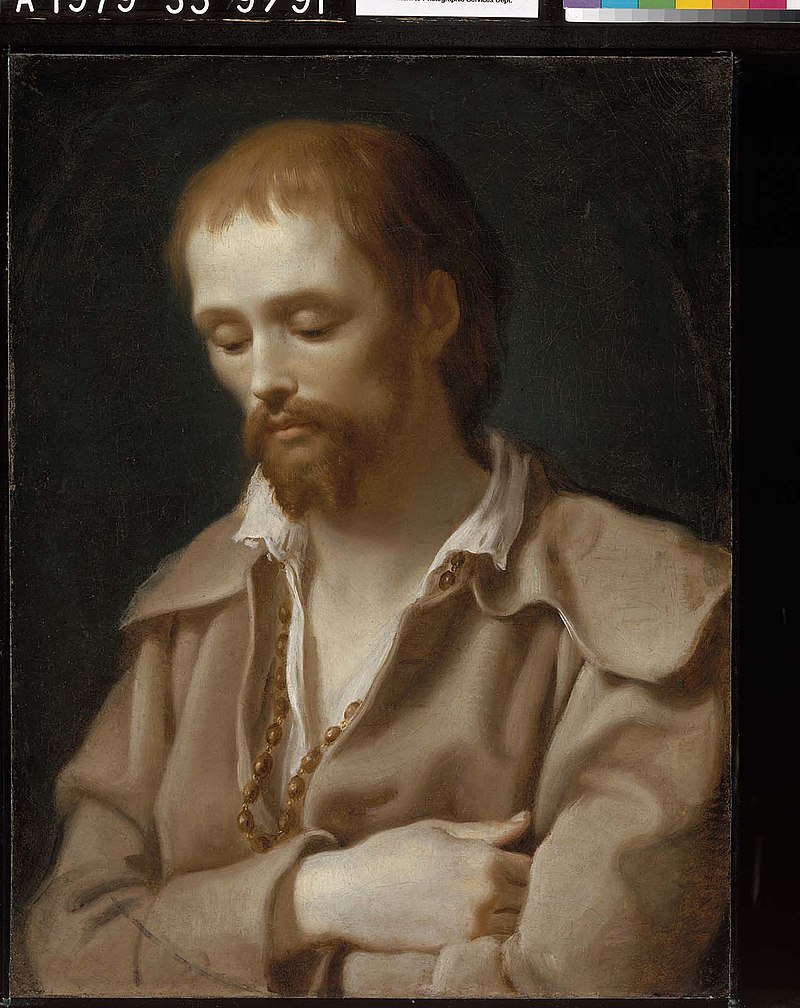
A grace-filled Holy Week to all our readers! As we await and prepare for the Resurrection about to dawn upon us, we might keep in mind two Benedicts: Pope Emeritus Benedict XVI, requiescat in pace, elected on this day in 2005; and today’s commemoration of the mystic pilgrim, Benedict Joseph Labre, who died on this[…]Continue reading→
Saint Lydwina of Schiedam and Suffering Joyfully
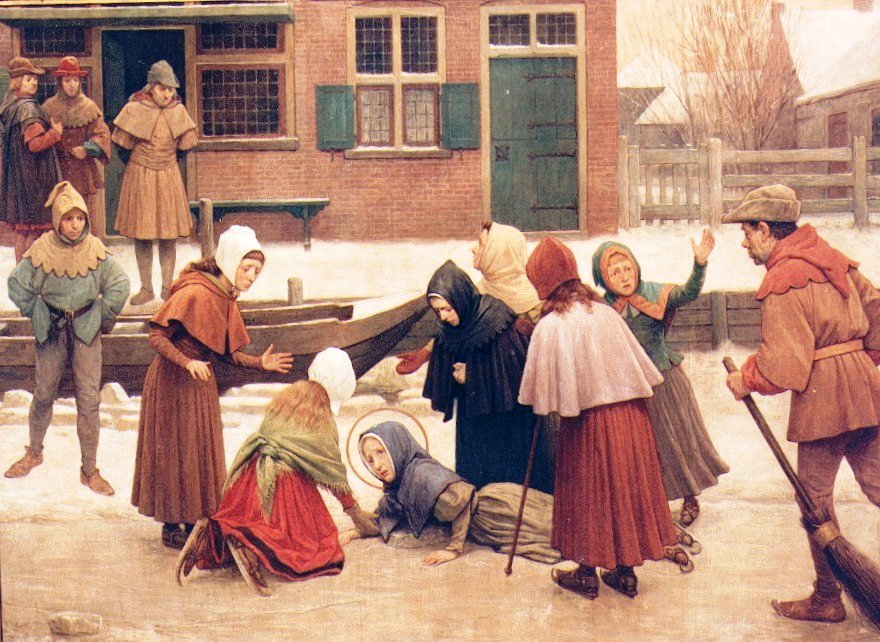
Saint Lydwina of Schiedam (1380 – 1433) was one of the countless and glorious ‘victim souls’ in the history of the Church, those whose lives are filled with suffering, often of an unimaginable intensity, but who suffer joyfully. She was a fifteen-year old Dutch girl, out skating one day, when she fell and broke one[…]Continue reading→
The Glorious Martyrdoms of Martin and Maximus
As we enter into Eastertide, we recall on this 13th of April Pope Saint Martin I (+655), one of the noblest, if most tragic, of the successors of Saint Peter. Born in Umbria, Italy, he was of noble lineage, with great intelligence combined with charity and love of the poor and the Church. While still[…]Continue reading→

Divine Mercy Sunday – An Echo of Every Mass
Reach out your hand and put it in my side. Do not doubt but believe’… ‘My Lord and my God!’ (Jn. 20:18)). Today is Divine Mercy Sunday, and as we celebrate the end of the Easter Octave, we contemplate the wounded side of our Saviour, the Church’s source of life. On Good Friday in the[…]Continue reading→

Saint Stanislaus of Szczepanów
We celebrate Saint Stanislaus today (+ April 11, 1079), in light of this Easter Octave, a bishop and martyr who accepted the episcopacy only at the direct order of Pope Alexander II. He proved a wise and courageous leader of his flock, put to death by his own king, Boleslaus, for rebuking the monarch’s ‘immoral[…]Continue reading→
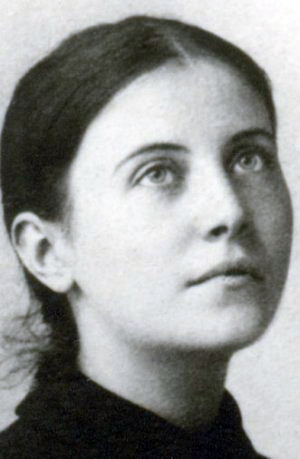
Saint Gemma Galgani
On this April 11th, in 1903 – the same year that the Italian Guiseppe Sarto was elected Pope later that summer as Pius X – a lovely, young Italian woman died, by the name of Gemma Galgani. She lived a brief life of 24 years, as did a number of other young saints, including Pier[…]Continue reading→
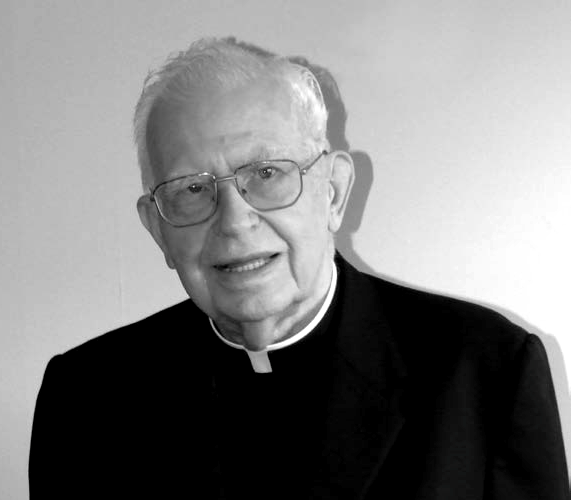
First Holy Communion: Sermon from May 16, 1943
Here is a sermon from the good old days by +Rev. Msgr. Vincent Nicholas Foy (August 14, 1915 – March 13, 2017), from 1943. Readers may recall that Pope Saint Pius X, by the decree Quam Singulari in 1910, lowered the customary age of reception of Holy Communion – after the rigours of the plague[…]Continue reading→
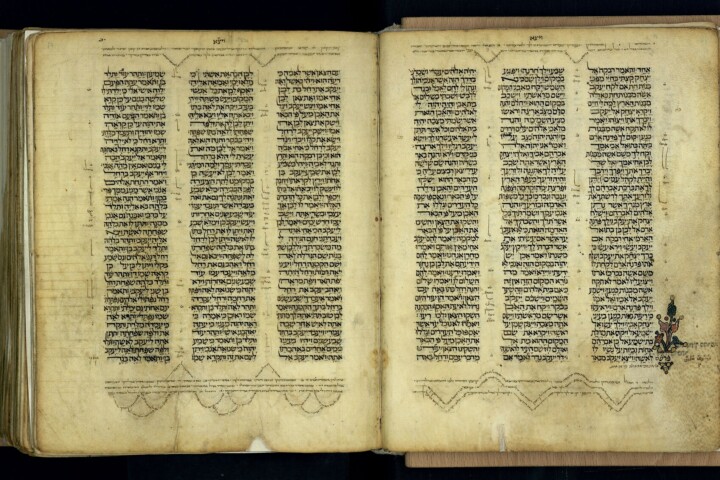
An Ideological and Improper Translation
I noticed something odd with the psalm reading at Mass the other day. Our bishops’ conference here in Canada has decreed that the Mass in English – Novus Ordo – use the ‘NRSV’, the ‘New Revised Standard Version’, an ‘updated’ translation of the original RSV, first published in 1952. This ‘new translation’ has the tendency[…]Continue reading→