
Third Sunday of Lent: Thirsting for the True Water of Life
‘Give me a drink’ (Jn. 4:7).
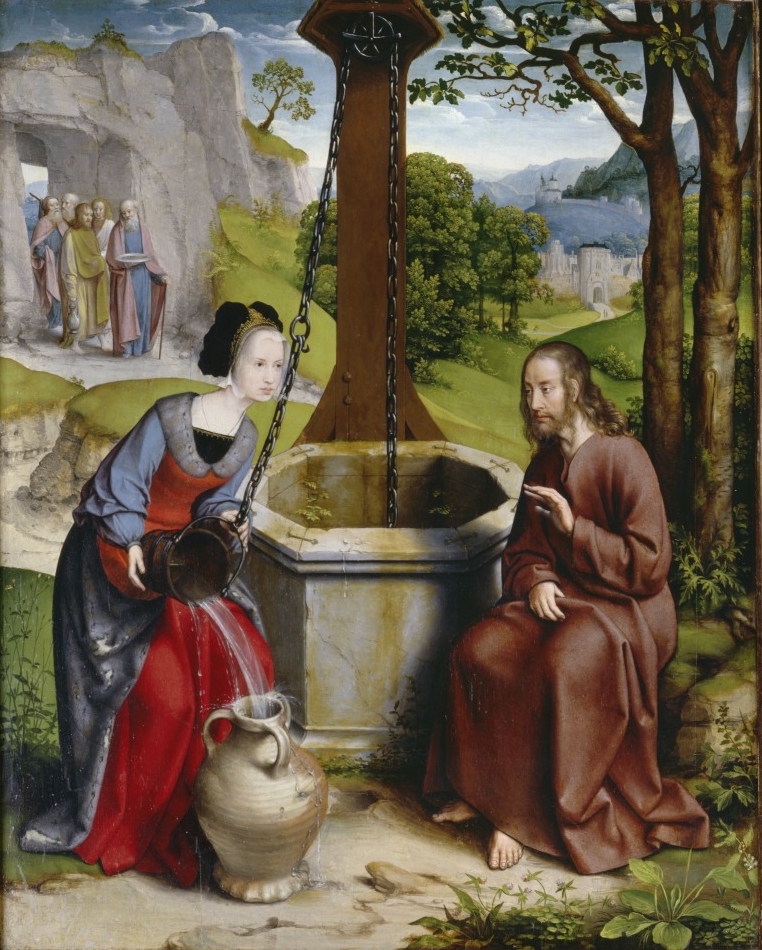
The conversation of Our Lord and the Samaritan woman revolves around the gift of water. This request is presented to us to contemplate on this third Sunday in Lent; and it is a request that we will hear again during the Commemoration of the Passion of Our Lord when on the Cross Our Lord will say, ‘I thirst’ (Sitio). These are the penultimate words of Our Lord, spoken at the end of His earthly life. The last are: ‘It is finished’. These last words are a confirmation of the mission and purpose of His life and ministry, particularly on Calvary but also in His dialogue with the Samaritan woman: to reveal the Father, to present the Father as love and mercy (Cf. John Paul II, Dives in misericordia). Every gesture, every word of Our Lord is a reflection of the Father (Cf. Heb. 1:3); every word is an echo of the Father for He did not come to speak in His own name but in the name of the One who sent Him: My teaching is not mine, but His who sent me (Jn. 7:16).
‘Give me a drink’ (Jn. 4:7). What is the meaning of these words? Why are they proposed for our reflection and contemplation during Lent? They express God’s desire to give His life and grace to every person. The two requests for water, ‘Give me a drink’ and ‘I thirst’ reveal a profound reality of God’s nature and our own human nature. St. Augustine expressed this truth poetically: God thirsts to be thirsted for. This does not mean that God needs us but because God is love and mercy, He wills to give and to share His life. In turn, this thirst on the part of God helps us to understand man’s thirst. The mystery of these words reveals the truth about the human person. Man also thirsts and this thirst can only be fully satisfied by God. This is a spiritual thirst that is often encountered in the texts of Sacred Scripture. In the course of time the symbolic union between physical thirst and spiritual thirst became so rooted in the Hebrew mind that that the Hebrew word nefesh can mean both thirst and soul. The Psalms present the human person as a living thirst for God. The Psalmist cries out: As the deer yearns for flowing streams so my soul longs for thee, O God (Ps. 42).
The human person possesses an innate thirst for something outside of the self for fulfillment. We can fulfill ourselves. We can be somewhat fulfilled by achievements, possessions, relationships but only one thing can ultimately fulfill us. That something is the unconditional love of God that in Christ Our Lord becomes a Someone. This is what Our Lord offers the Samaritan woman when He says to her, ‘Everyone who drinks of this water will be thirsty again, but the one who drinks of the water that I will give will never be thirsty. The water that I will give him will become in him a spring of water gushing up to eternal life’ (Jn. 4: 13-14). The water that Our Lord gives is the unconditional love of God in the life of grace; and only when we ourselves receive the unconditional love of God through our individual act of repentance and faith do we become capable of sharing that love with others. This is our mission through faith – to share our knowledge of Christ. There is nothing more beautiful than to be surprised by the Gospel, by the encounter with Christ. There is nothing more beautiful than to know Him and to speak to others of our friendship with Him (Pope Benedict XVI, April 24, 2005). So the Samaritan woman left her water jar and went back to the city. She said to the people, ‘Come and see a man who told me everything I have done! He cannot be the Messiah, can he?’ (Jn. 4:29).
Our yearly observance of Lent, a tenth of the whole year, is dedicated to a serious effort to discover anew our innate thirst for God and to deepen our friendship with Our Lord. This is a thirst that cannot be satisfied by anything other than God. Our Lenten discipline, especially our fasting makes us more keenly aware of this thirst and disposes our souls to have this thirst satiated by God. In this light, every Lenten season becomes a journey into the depth of this mystery and we affirm anew that only God who reveals Himself as love and mercy can satiate this thirst. On the Cross, when Our Lord cries out, ‘I thirst’, He both reveals and unites in Himself these two dimensions of our thirst for God, and God’s thirst for our love. Deepening this union in prayer and the experience of it in the reception of the Sacrament of Holy Communion unites us to the Heart of God whose will it is that all men be saved and come to the knowledge of the truth.
We therefore look forward to the celebration of the Paschal Mystery when on Good Friday we will hear Our Lord’s cry from the Altar of the Cross: ‘I thirst’. Let us even now, indeed every day, satiate this thirst by renewing often our acts of love for God who has created, redeemed us and called us to share His own life through grace. May this cry find an echo in our own hearts as it did in the heart of the Canadian mystic Mother Catherine Aurelia, Foundress of the Sisters Adorers of the Most Precious Blood of Our Lord Jesus Christ. In a monograph called The Sitio that she wrote for her Sisters, Mother Catherine wrote these words which I hope, will inspire all of us to deeper prayer and devotion:
The mysterious Sitio which the Divine Crucified One made resound from the height of His cross has found an echo in my poor heart. I have meditated on it, I have relished it, I have understood it, and I, in turn, have cried out in burning ecstasy: ‘I thirst.’ In the ardent zeal urging me on, I would like to be a magnet to attract all hearts in order to give them to Jesus Christ….I implore Him that He Himself bring all hearts under His gentle sway to make them so many springs of living water where He may quench His burning thirst.
‘I thirst’. May this cry also find an echo in our own poor hearts; that we may be generous with our prayer and penance in atonement for our own sins and for the conversion of poor sinners; especially those most in need of God’s love and mercy. +

Remembering Father Alphonse de Valk
(Today marks the sixth anniversary of the death of Father Alphonse de Valk, C.S.B., a faithful, courageous and indefatigable Basilian priest, pro-life-and-family apostle, and the founder of Catholic Insight magazine. Here is what we wrote those on his entering into eternity five years ago, as we continue to remember him in our prayers and thoughts)[…]Continue reading→

Divine Mercy Sunday – An Echo of Every Mass
Reach out your hand and put it in my side. Do not doubt but believe’… ‘My Lord and my God!’ (Jn. 20:18)). Today is Divine Mercy Sunday, and as we celebrate the end of the Easter Octave, we contemplate the wounded side of our Saviour, the Church’s source of life. On Good Friday in the[…]Continue reading→

Saint Stanislaus of Szczepanów
We celebrate Saint Stanislaus today (+ April 11, 1079), in light of this Easter Octave, a bishop and martyr who accepted the episcopacy only at the direct order of Pope Alexander II. He proved a wise and courageous leader of his flock, put to death by his own king, Boleslaus, for rebuking the monarch’s ‘immoral[…]Continue reading→
First Holy Communion: Sermon from May 16, 1943
Here is a sermon from the good old days by +Rev. Msgr. Vincent Nicholas Foy (August 14, 1915 – March 13, 2017), from 1943. Readers may recall that Pope Saint Pius X, by the decree Quam Singulari in 1910, lowered the customary age of reception of Holy Communion – after the rigours of the plague[…]Continue reading→
In the Glorious Light of Easter, Alleluia!
Set your minds on things that are above, not on things that are on earth, for you have died, and your life is hidden with Christ in God. When Christ who is your life is revealed, then you also will be revealed with him in glory (Col. 3:3-4). The Resurrection of Our Lord and Saviour[…]Continue reading→
An Ancient Homily for Holy Saturday
The time between Good Friday and Easter Sunday is one of waiting, in silence, as the world wonders – anticipates – what will happen, after the death of Christ. We re-live this time each year in the anamnesis of our liturgy, and in turn look forward to the glorious re-creation of all things at the[…]Continue reading→
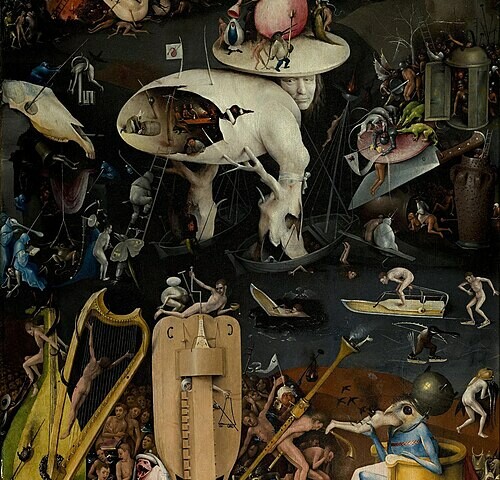
Europe’s Long Descent
(As we meditate on this day on Christ’s burial, and His descent into hell, it is fitting to ponder here with contributor Peter Marcus how the world seems to be heading there as well. The difference is that, although God cannot ‘redeem’ hell, nor those therein, He can and did redeem the world. There is[…]Continue reading→
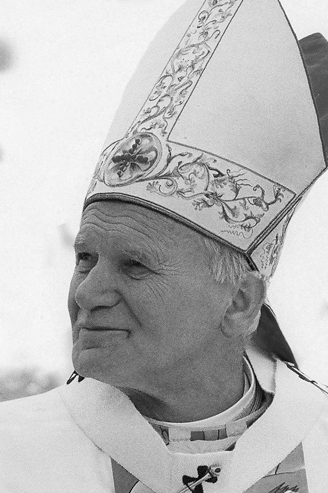
Pope Saint John Paul II’s First Good Friday Homily
ADDRESS OF HIS HOLINESS JOHN PAUL II AT THE CONCLUSION OF THE STATIONS OF THE CROSS AT THE COLOSSEUM Good Friday, 13 April 1979 When we make the Way of the Cross from one station to the next, in spirit we are always at the spot wherethis journey had its “historical” place: where it[…]Continue reading→
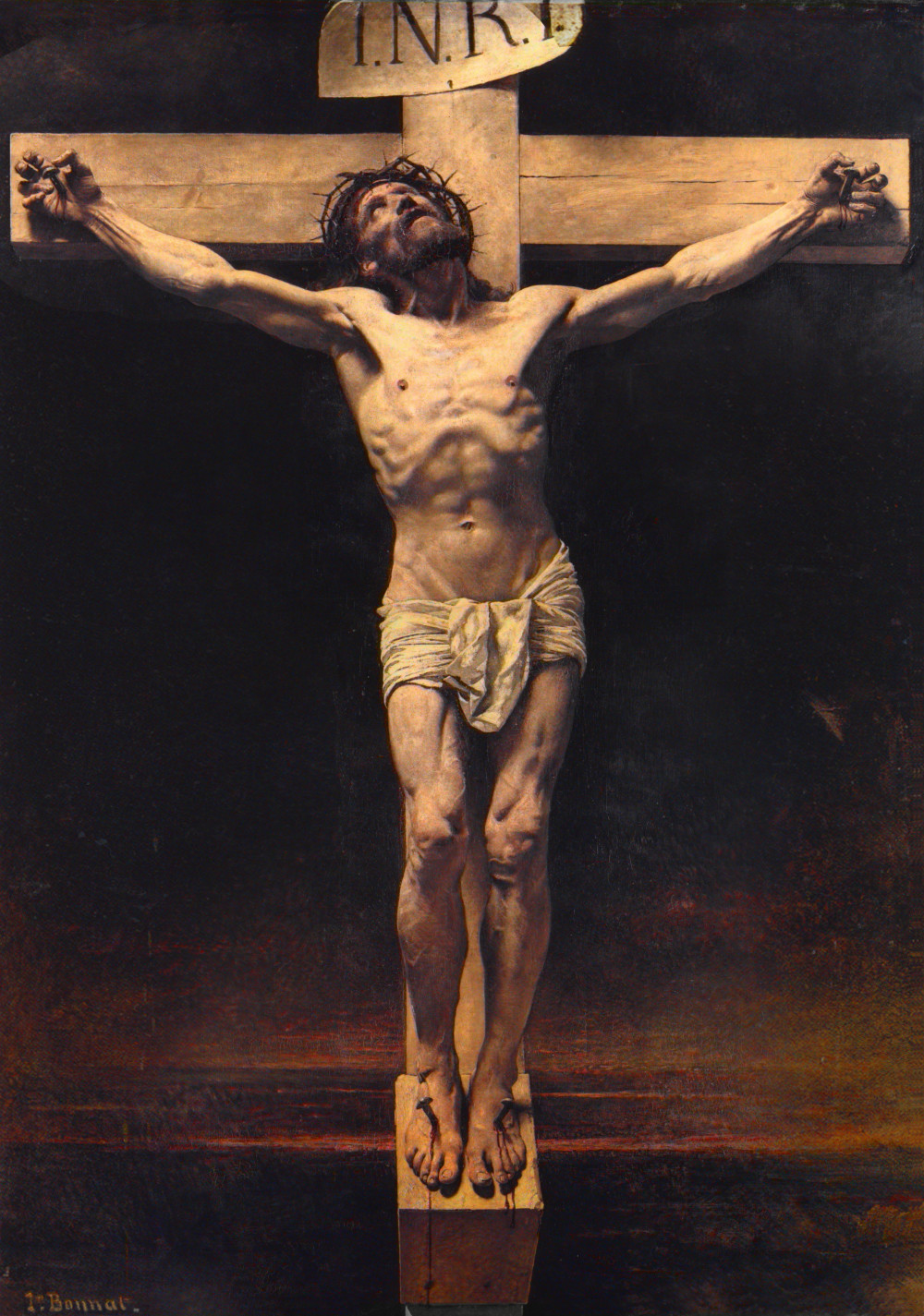
A Meditation for Good Friday: How To Undo the Effects of Sin?
Cardinal Newman, now Saint John Henry Newman, was a towering figure of nineteenth-century Catholicism who is almost universally admired. I say “almost” because not everyone likes him. I knew a priest once, Arthur Caulkins, who has become disenchanted with Newman. As an undergraduate Arthur had been enamoured of Newman, and this interest continued when he[…]Continue reading→
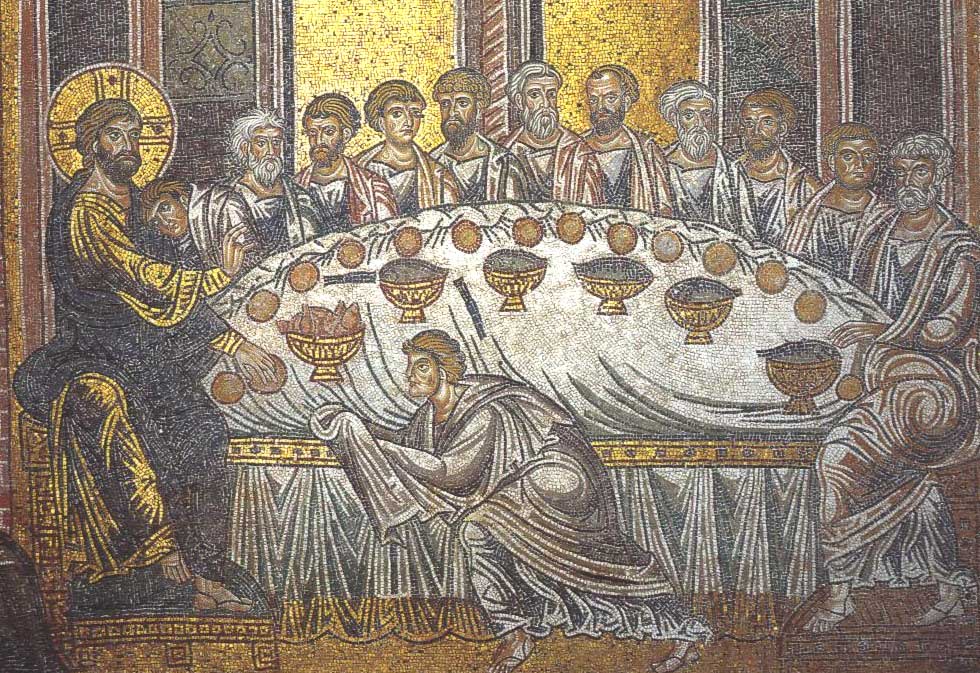
Pope Benedict’s Last Holy Thursday Homily
MASS OF THE LORD’S SUPPER HOMILY OF HIS HOLINESS BENEDICT XVI Basilica of St John Lateran Holy Thursday, 5 April 2012 Photo Gallery (Video) Dear Brothers and Sisters! Holy Thursday is not only the day of the institution of the Most Holy Eucharist, whose splendour bathes all else and in some ways draws it to[…]Continue reading→