
First Sunday: The Hope and Joy of Lent
‘Worship the Lord your God, and serve only Him’ (Mt. 4:11).
On Ash Wednesday we began the observance of the holy season of Lent with the imposition of blessed ashes, an external sign of our interior resolve to undertake Lenten penance. By the solemn forty days of Lent the Church unites herself each year to the mystery of Jesus in the desert (The Catechism of the Catholic Church, 510). As this mystery is described and revealed by St. Matthew, Our Lord confronts the devil’s temptations with the sword of the spirit, which is the Word of God (Eph. 6:17). St. Gregory the Great observes that in so doing Our Lord was giving us an example; that when we suffer anything at the hands of evil men, we should be stirred up to learning rather than revenge (St. Thomas Aquinas, Catena Aurea, St. Matthew, Vol. I, p. 122). The temptations we endure can lead us to a deeper knowledge of ourselves and of God’s merciful love. Indeed, all things work for the good for those who love God (Rom. 8:28).
The temptations experienced by Our Lord, like all temptations, are an invitation to do wrong. We easily understand this; and for this reason, in the prayer that Our Lord Himself taught us, we pray: lead us not into temptation, but deliver us from evil. We face temptations in a variety of ways. We may be tempted either from without or from within. External or environmental factors such as bad company, bad entertainment, and lack of moral guidance or places of ill-repute may tempt us to sin; or our own desires may be the cause of temptation or sin: pride, envy, impure thoughts and desires, grudges. Regardless of the origin, what we do is never frivolous.
Evil means that by what we do in this world, we can choose implicitly or explicitly to reject God’s invitation to participate in His eternal life; for God included freedom in creation’s plan. Freedom is the ability to choose the good – not as it is often seen, doing whatever we want. In endowing us with freedom, God included the possibility of rejection. Yet in His mercy, as we read in the Book of Wisdom, God fills us with good hope, because He gives repentance for sins (12:19). St. Paul declared that where sin abounds, grace abounds all the more (Rom. 5:20). In other words, God’s response to sin is love; a love that calls us to repent and to believe in the Gospel. Hence the cry of the Psalmist in the famous Miserere Psalm: Have mercy on me, O God, according to your steadfast love… Create in me a clean heart, O God, and put a new and right spirit within me (Ps. 51).
This is why we can speak of the joy of repentance and regard this Lenten time of penance as a gracious gift each year during which we await the sacred paschal feasts with the joy of minds made pure, so that more eagerly intent on prayer and on the works of charity… [we] may be led to the fullness of grace (Preface I of Lent, The Roman Missal). To undertake the discipline of Lent as we have, means that we seek this fullness of grace and to establish ourselves on the firm foundation of God’s merciful love. To present oneself to be marked by ashes is an act of humility. Yet it is no less an act of great hope for despite the symbolism of death in these ashes, we see that the God who formed man from the dust of the ground, and breathed into his nostrils the breath of life (Gen. 2:9), is also the God who become Man for our salvation and His act of righteousness leads to justification and life for all people (Rom. 5:18). Jesus is the new Adam whose vicarious death brings the offer of salvation and grace to the whole human race. He teaches us by His life and death to bear one another’s burdens. St. Paul the Apostle understood this mystery and so he formulated a saying that we do well to take to heart as we follow Our Lord along the path of devout humility: Bear one another’s burdens and so fulfill the law of Christ (Gal. 6:2).
We can do this first and foremost in expanding the scope of our prayer, such that we embrace the whole world with it; mindful that we stand before God for all. Our almsgiving and penance enable us to come to the aid of those in need by sharing with the needy the fruits of our Lenten sacrifices. Through our works of mercy the Church endeavours to alleviate the physical and the spiritual or moral burdens that sin always imposes. Nothing good ever comes from sin. Perhaps more than at any other time in our history the Church faces a temptation that seeks to reduce her relevance solely to social and material issues. Man however, does not live by bread alone but by every word that comes from the mouth of God. This is why our focus during this privileged liturgical season must be on the spiritual. The Church is first and foremost the universal sacrament of salvation; and we therefore especially take to heart the words that rebuked the devil himself: ‘Worship the Lord your God, and serve only Him’ (Mt. 4:11). We don’t worship the state, or the environment or any other ideology in vogue. Nor do we fast from the use of fossil fuels during Lent. Certainly not in this weather, in this country! Madness!
Worship the Lord your God, and serve only Him’ (Mt. 4:11). This command is our point of reference always; and our yearly observance of Lent is a summons to each one of us as we seek to live an integrated life in Christ; to weave together what we know from faith and reason, what we are experiencing in our own times and what we are experiencing in our own inner conversion. From all these forces and influences our life comes forth; and we endeavour to submit ourselves to the logic of God’s truth and purpose for humanity. So we live for God and to serve Him with grateful hearts.
The psalmist exhorts us: Serve the Lord in fear, and rejoice unto Him with reverence: take hold of discipline, lest ye perish from the right way (Cf. Ps 2:11.12, Servite Domino). In the adoration that we render to God in the Holy Sacrifice of the Mass we learn to serve only Him (Mt. 4:11), in spirit and in truth. Here we are given to see, to hear and to receive the summons to a deeper and more meaningful life. This is what we strive to learn and to deepen through our worship always; and especially in this Lenten season through our voluntary acts of penance, fasting and almsgiving we seek to conform ourselves more perfectly to the patter of Our Lord’s earthly life. Our Lenten obedience and our union with the mystery of Jesus in the desert lead to the Sacrifice of Jesus on the Cross. The saving knowledge of the Cross of Our Saviour is at the heart of authentic Christian discipleship; and so at the beginning of this holy season we pray for the grace to come to a deeper awareness of the power of the Cross and of our own participation in this Mystery. By its power, we overcome the world, the flesh and the devil; and by its wisdom, we make sense of the enigma of human suffering, a reality that for many is all too often a source of temptation and despair.

Remembering Father Alphonse de Valk
(Today marks the sixth anniversary of the death of Father Alphonse de Valk, C.S.B., a faithful, courageous and indefatigable Basilian priest, pro-life-and-family apostle, and the founder of Catholic Insight magazine. Here is what we wrote those on his entering into eternity five years ago, as we continue to remember him in our prayers and thoughts)[…]Continue reading→

Divine Mercy Sunday – An Echo of Every Mass
Reach out your hand and put it in my side. Do not doubt but believe’… ‘My Lord and my God!’ (Jn. 20:18)). Today is Divine Mercy Sunday, and as we celebrate the end of the Easter Octave, we contemplate the wounded side of our Saviour, the Church’s source of life. On Good Friday in the[…]Continue reading→

Saint Stanislaus of Szczepanów
We celebrate Saint Stanislaus today (+ April 11, 1079), in light of this Easter Octave, a bishop and martyr who accepted the episcopacy only at the direct order of Pope Alexander II. He proved a wise and courageous leader of his flock, put to death by his own king, Boleslaus, for rebuking the monarch’s ‘immoral[…]Continue reading→
First Holy Communion: Sermon from May 16, 1943
Here is a sermon from the good old days by +Rev. Msgr. Vincent Nicholas Foy (August 14, 1915 – March 13, 2017), from 1943. Readers may recall that Pope Saint Pius X, by the decree Quam Singulari in 1910, lowered the customary age of reception of Holy Communion – after the rigours of the plague[…]Continue reading→
In the Glorious Light of Easter, Alleluia!
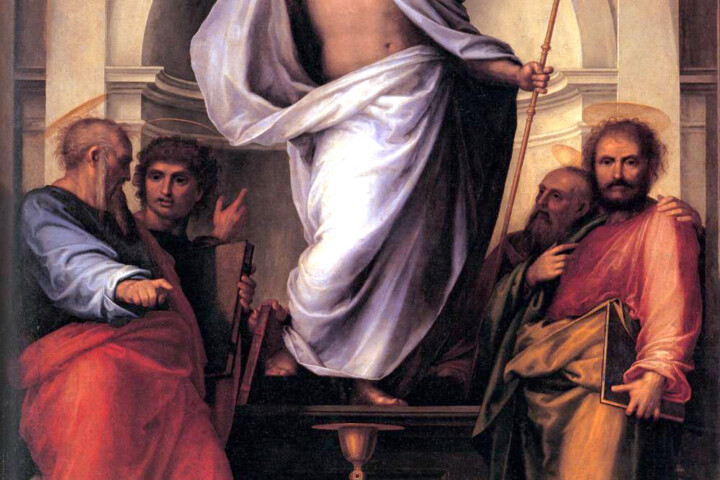
Set your minds on things that are above, not on things that are on earth, for you have died, and your life is hidden with Christ in God. When Christ who is your life is revealed, then you also will be revealed with him in glory (Col. 3:3-4). The Resurrection of Our Lord and Saviour[…]Continue reading→

An Ancient Homily for Holy Saturday
The time between Good Friday and Easter Sunday is one of waiting, in silence, as the world wonders – anticipates – what will happen, after the death of Christ. We re-live this time each year in the anamnesis of our liturgy, and in turn look forward to the glorious re-creation of all things at the[…]Continue reading→

Europe’s Long Descent
(As we meditate on this day on Christ’s burial, and His descent into hell, it is fitting to ponder here with contributor Peter Marcus how the world seems to be heading there as well. The difference is that, although God cannot ‘redeem’ hell, nor those therein, He can and did redeem the world. There is[…]Continue reading→
Pope Saint John Paul II’s First Good Friday Homily
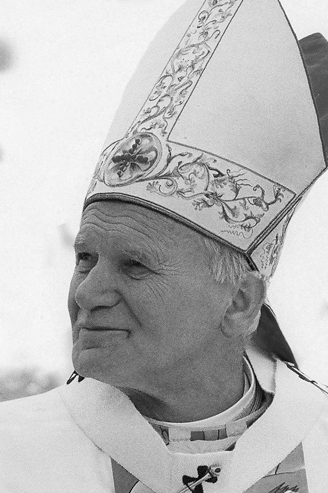
ADDRESS OF HIS HOLINESS JOHN PAUL II AT THE CONCLUSION OF THE STATIONS OF THE CROSS AT THE COLOSSEUM Good Friday, 13 April 1979 When we make the Way of the Cross from one station to the next, in spirit we are always at the spot wherethis journey had its “historical” place: where it[…]Continue reading→
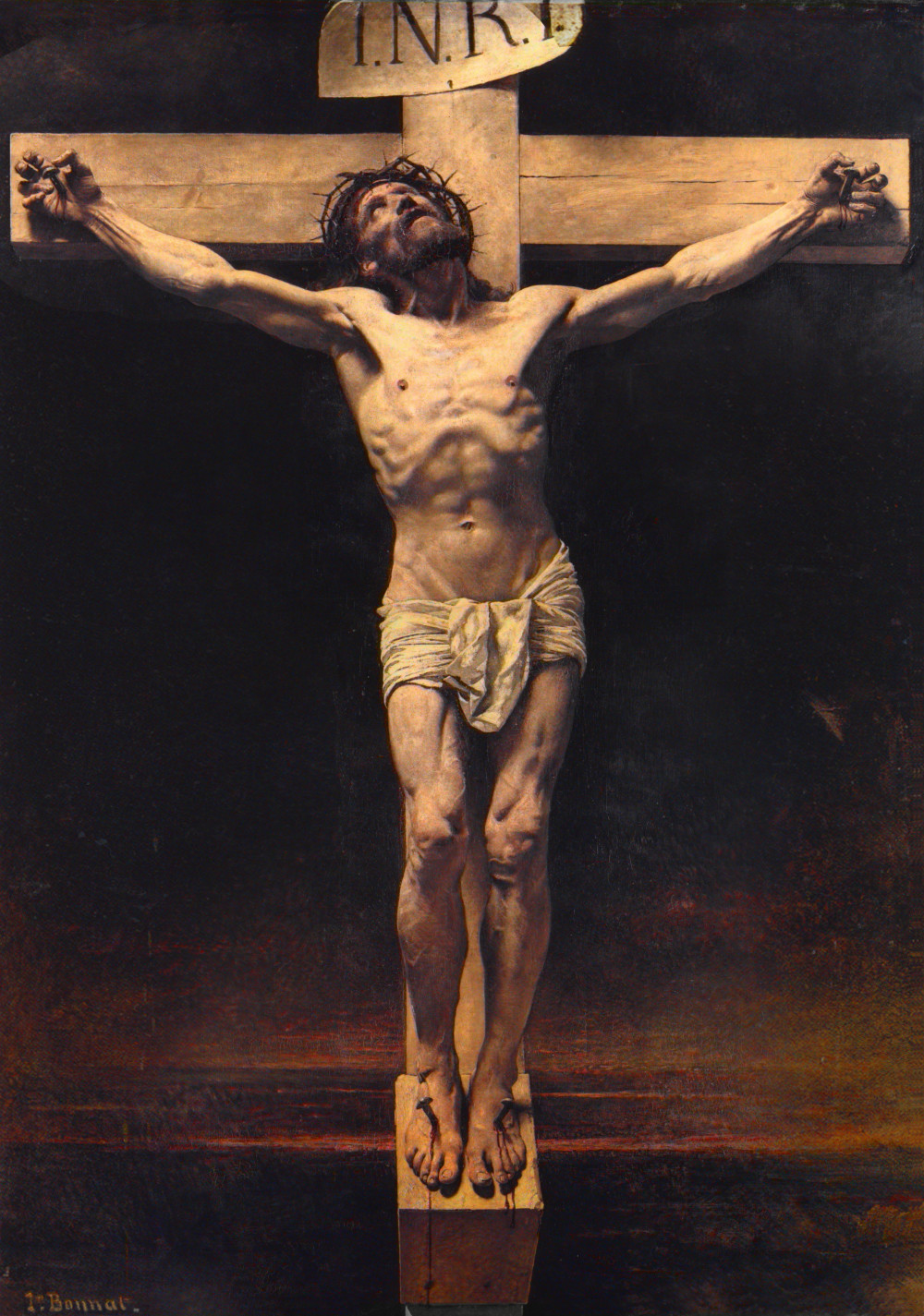
A Meditation for Good Friday: How To Undo the Effects of Sin?
Cardinal Newman, now Saint John Henry Newman, was a towering figure of nineteenth-century Catholicism who is almost universally admired. I say “almost” because not everyone likes him. I knew a priest once, Arthur Caulkins, who has become disenchanted with Newman. As an undergraduate Arthur had been enamoured of Newman, and this interest continued when he[…]Continue reading→
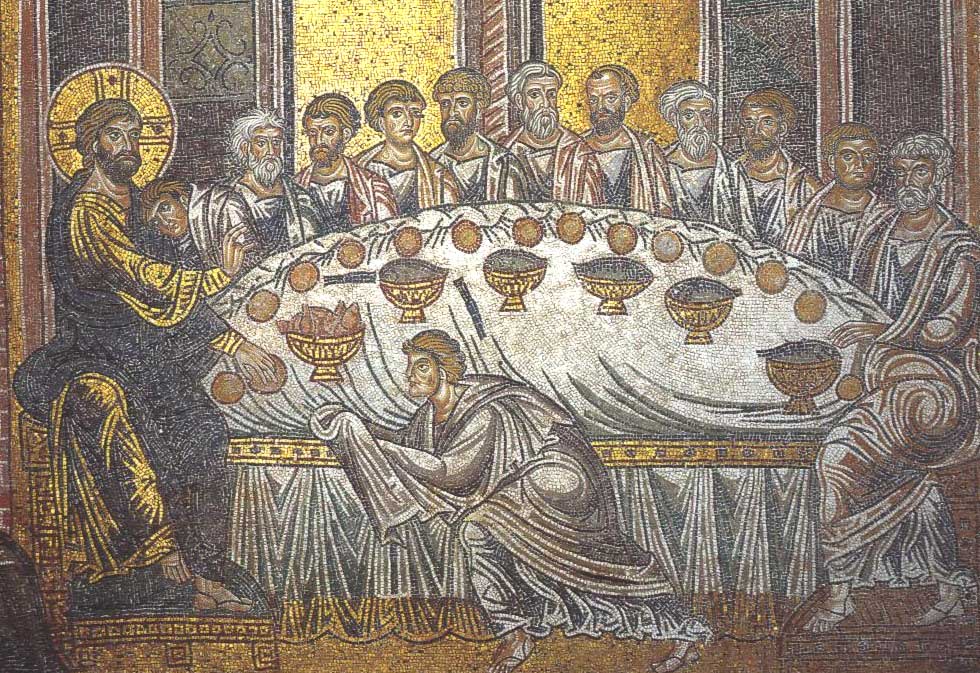
Pope Benedict’s Last Holy Thursday Homily
MASS OF THE LORD’S SUPPER HOMILY OF HIS HOLINESS BENEDICT XVI Basilica of St John Lateran Holy Thursday, 5 April 2012 Photo Gallery (Video) Dear Brothers and Sisters! Holy Thursday is not only the day of the institution of the Most Holy Eucharist, whose splendour bathes all else and in some ways draws it to[…]Continue reading→