
Sixth Sunday – Fulfilling the Law
If you choose, you can keep the commandments, and they will save you… [God] has not commanded anyone to be wicked, and He has not given anyone permission to sin (Sir. 15:15, 20).
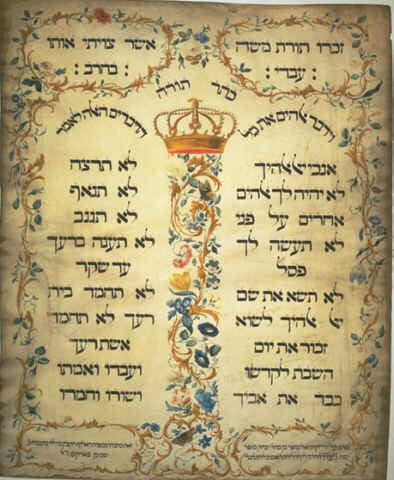
The Gospel of St. Matthew presents Our Lord as the new Moses or lawgiver who explains the precepts of the Old Law in greater fullness and detail and who brings the Law to perfection. ‘Do not think that I have come to abolish the Law or the Prophets; I have come not to abolish but to fulfill’ (Mt. 5:17). Hence, Our Lord introduces the fuller meaning of the Law with this familiar phrase: ‘You have heard that it was said to those of ancient times….But I say to you’. Our Lord calls us to go beyond the minimal observance of the Law to an appreciation not only of the deeper meaning of a given precept but more importantly, to an appreciation of the mind of the lawgiver – the mind of God Himself. Observance of the law is not beyond our capacity or ability because God does not command the impossible. We are reminded in our first reading in very simple terms: If you choose, you can keep the commandments, and they will save you… [God] has not commanded anyone to be wicked, and He has not given anyone permission to sin (Sir. 15:15, 20).
It has been said of our times that they are antinomian. This word is derived from a Greek word meaning lawless. In Christian theology, the heresy of antinomianism implies that Christians are under no obligation to obey the laws of ethics or morality. This is not a new heresy or error. Even in the early Church there were those who said that all that matters is love. But that is not enough, because love can never be separated from truth. Sometimes, in an effort to explain the moral teaching of Our Lord, there are those who speak of the legalism of the Pharisees as an extreme to be avoided at all costs; so much so that the Law itself is derided and seen as something to be dismissed altogether. A more subtle and dangerous line of argument at least as it concerns the moral law is the preaching of the morals of mercy irrespective of conversion and penance; or proposing the idea that the Commandments of God are oppressive and burdensome, or that we can contradict them and still claim to be faithful to Our Lord. We must humbly heed the words of Sacred Scripture: If you choose, you can keep the commandments, and they will save you… [God] has not commanded anyone to be wicked, and He has not given anyone permission to sin (Sir. 15:15, 20).
To those who believed in Him, Our Lord said plainly: ‘If you continue in my word, you are truly my disciples, and you will know the truth, and the truth will make you free’ (Jn. 8:32). Our Lord invites us to perceive the truth of the Law; and so we make our very own the words of the Psalmist: Open my eyes, so that I may behold the wondrous things out of your law…Give me understanding, that I may keep your law and observe it with my whole heart (Ps. 119). These are the sentiments of a son or a daughter who desires to understand, not to oppose; of children who are grateful for the concern of a loving Father, not resentful of His authority. This is the mature attitude that we must bring to our efforts to observe the demands of God’s Law.
Given the times there is hardly a family that has remained unaffected by the moral confusion of our times. In some cases we have received contradictory counsel and we are rightly confused. Therefore, we must be on our guard against those who hold the form of religion but deny the power of it (Cf. 2 Tim. 3:5); and we must endeavour to appropriate, that is, to make our own, God’s wisdom, which is best understood as the coupling of truth and love. Hence, St. Paul exhorts us: Among the mature we do speak wisdom, though it is not a wisdom of this age or of the rulers of this age….But we speak God’s wisdom…which God decreed before the ages for our glory (1 Cor. 2:6-7).
To appropriate God’s wisdom is not always an easy thing and sometimes, perhaps often, we fail and fall, but His eyes are on those who fear Him (Sir. 15:19); and so we are confident in the help of His grace. We may be afflicted, but we are not crushed; perplexed but not given to despair (2 Cor. 4:8-9). Perhaps there was a time in our own lives when we rebelled against the demands of God’s law or found them very burdensome; yet out of the experience of the desolation and misery that inevitably result from losing our way, we returned to the practice of our faith and made our very own the words of the St. Peter the Apostle: ‘Lord, to whom shall we go? You have the words of eternal life (Jn. 6:68). In the journey of faith, whether we were baptized as infants or as adults, a time comes, a moment of truth of sorts that engages us; and we understand that our all our efforts must be directed to actually being who we are – disciples of Jesus Christ. And so we never tire of heeding the invitation of Our Lord: ‘Take my yoke upon you and learn from me; for I am gentle and lowly in heart, and you will find rest for your souls. For my yoke is easy and my burden is light’ (Mt. 11:29-30). Only this way do we become even remotely capable of understanding the wisdom of God’s law.
In what is effectively his autobiography, the great English Cardinal, St. John Henry Newman vividly describes his own moment of truth when he came to the realisation that the Roman Catholic Church is the true Church of God; and he observed that the drama of religion, and the combat of truth and error were ever one and the same (Apologia Pro Vita Sua, Image Books, p.217). Our times are in this sense, no different from other times. And yet, they are even more challenging because the religious vacuum of our times has also resulted in a dangerous moral vacuum in which the categories of truth and error are questionable if not altogether moot. We are nevertheless engaged in a spiritual combat of truth and error, and it is not a struggle we can avoid; lest we be swept away tossed to and fro, and carried about with every wind of doctrine by the wickedness of men, by cunning craftiness, by which they lie in wait to deceive (Eph. 4:4) – and lost. May Our Lord give us the grace of humility and docility; that we may receive His words of eternal life; confident in the knowledge that as we walk in the law of the Lord (Ps. 119), His eyes are on those who fear Him (Sir. 15:19).

Remembering Father Alphonse de Valk
(Today marks the sixth anniversary of the death of Father Alphonse de Valk, C.S.B., a faithful, courageous and indefatigable Basilian priest, pro-life-and-family apostle, and the founder of Catholic Insight magazine. Here is what we wrote those on his entering into eternity five years ago, as we continue to remember him in our prayers and thoughts)[…]Continue reading→

Divine Mercy Sunday – An Echo of Every Mass
Reach out your hand and put it in my side. Do not doubt but believe’… ‘My Lord and my God!’ (Jn. 20:18)). Today is Divine Mercy Sunday, and as we celebrate the end of the Easter Octave, we contemplate the wounded side of our Saviour, the Church’s source of life. On Good Friday in the[…]Continue reading→

Saint Stanislaus of Szczepanów
We celebrate Saint Stanislaus today (+ April 11, 1079), in light of this Easter Octave, a bishop and martyr who accepted the episcopacy only at the direct order of Pope Alexander II. He proved a wise and courageous leader of his flock, put to death by his own king, Boleslaus, for rebuking the monarch’s ‘immoral[…]Continue reading→
First Holy Communion: Sermon from May 16, 1943
Here is a sermon from the good old days by +Rev. Msgr. Vincent Nicholas Foy (August 14, 1915 – March 13, 2017), from 1943. Readers may recall that Pope Saint Pius X, by the decree Quam Singulari in 1910, lowered the customary age of reception of Holy Communion – after the rigours of the plague[…]Continue reading→
In the Glorious Light of Easter, Alleluia!
Set your minds on things that are above, not on things that are on earth, for you have died, and your life is hidden with Christ in God. When Christ who is your life is revealed, then you also will be revealed with him in glory (Col. 3:3-4). The Resurrection of Our Lord and Saviour[…]Continue reading→
An Ancient Homily for Holy Saturday
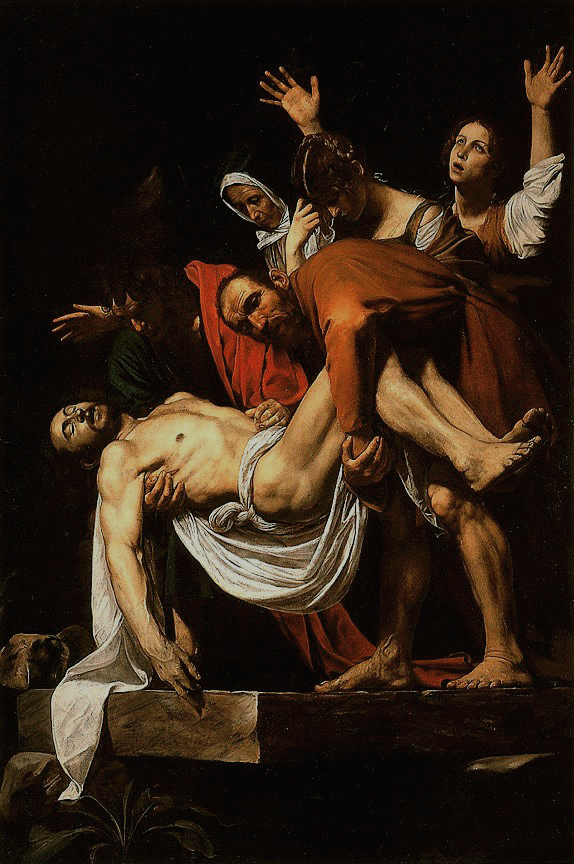
The time between Good Friday and Easter Sunday is one of waiting, in silence, as the world wonders – anticipates – what will happen, after the death of Christ. We re-live this time each year in the anamnesis of our liturgy, and in turn look forward to the glorious re-creation of all things at the[…]Continue reading→
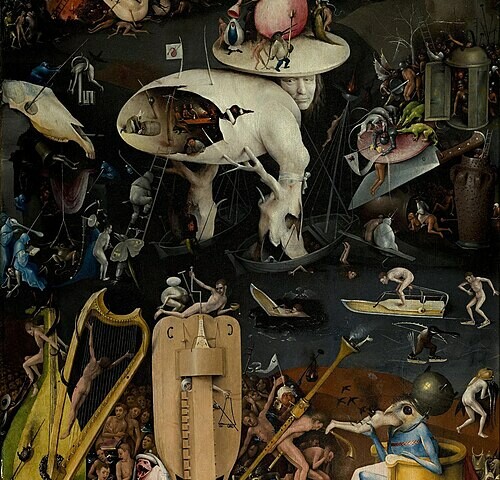
Europe’s Long Descent
(As we meditate on this day on Christ’s burial, and His descent into hell, it is fitting to ponder here with contributor Peter Marcus how the world seems to be heading there as well. The difference is that, although God cannot ‘redeem’ hell, nor those therein, He can and did redeem the world. There is[…]Continue reading→
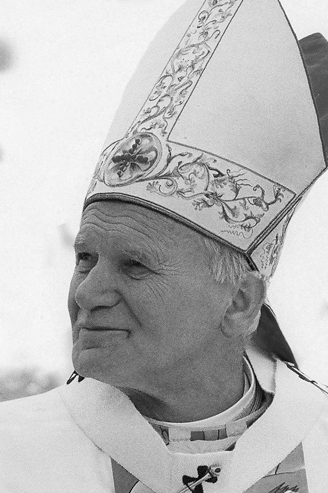
Pope Saint John Paul II’s First Good Friday Homily
ADDRESS OF HIS HOLINESS JOHN PAUL II AT THE CONCLUSION OF THE STATIONS OF THE CROSS AT THE COLOSSEUM Good Friday, 13 April 1979 When we make the Way of the Cross from one station to the next, in spirit we are always at the spot wherethis journey had its “historical” place: where it[…]Continue reading→
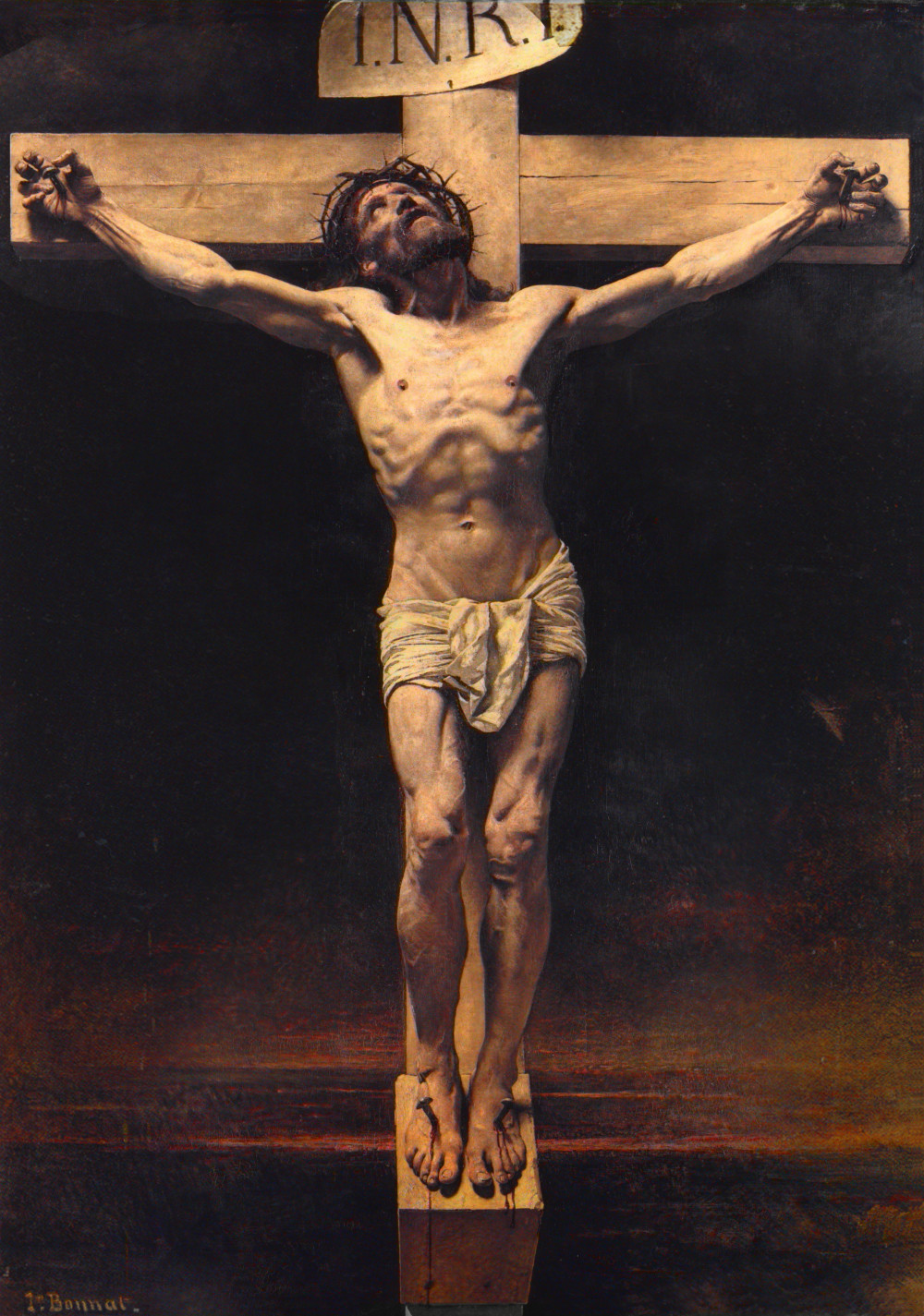
A Meditation for Good Friday: How To Undo the Effects of Sin?
Cardinal Newman, now Saint John Henry Newman, was a towering figure of nineteenth-century Catholicism who is almost universally admired. I say “almost” because not everyone likes him. I knew a priest once, Arthur Caulkins, who has become disenchanted with Newman. As an undergraduate Arthur had been enamoured of Newman, and this interest continued when he[…]Continue reading→
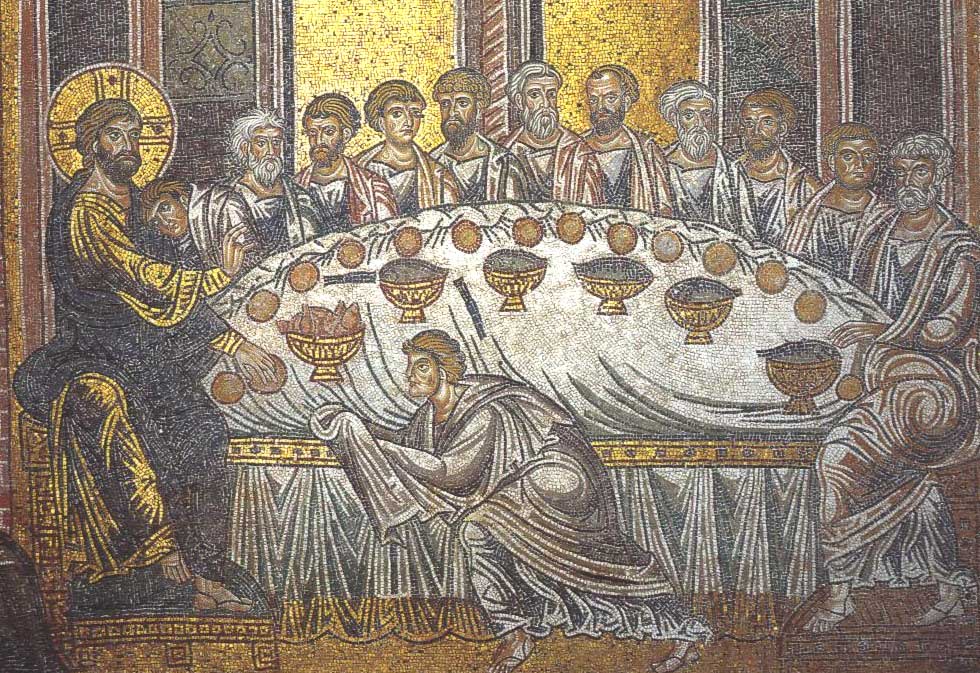
Pope Benedict’s Last Holy Thursday Homily
MASS OF THE LORD’S SUPPER HOMILY OF HIS HOLINESS BENEDICT XVI Basilica of St John Lateran Holy Thursday, 5 April 2012 Photo Gallery (Video) Dear Brothers and Sisters! Holy Thursday is not only the day of the institution of the Most Holy Eucharist, whose splendour bathes all else and in some ways draws it to[…]Continue reading→