
Rush, Entropy…And Electric Barchettas?
Canada, and various jurisdictions in Europe and the U.S., plan to make gasoline-powered vehicles, at least of the personal variety, more or less illegal. They will be phased out over time, of course, but ever-more difficult to find, and repair. The problem with everyone and everything going green – and electric vehicles in particular – is the same one that plagues any number of new-fangled hopeful inventions: The Second Law of Thermodynamics, also termed the law of entropy. It is perhaps the most inexorable of all the laws of physics, more so even than gravity, which can be to some extent transcended, if you will forgive the pun.
Here are the words of renowned astronomer Sir Arthur Eddington (+1944), as quoted in one of my favorite philosophy of science books, by Dr. David Foster:
The law that entropy always increases – the Second Law of Thermodynamics – holds, I think, the supreme position among the laws of Nature. If someone points out to you that your pet theory of the universe is in disagreement with Maxwell’s equations – then so much the worse for Maxwell’s equations…But if your theory is found to be against the Second Law of Thermodynamics I can give you no hope; there is nothing for it but to collapse in deepest humiliation.
Said ‘Second Law’ states that any closed system over time always moves towards a state of ever-greater disorder, and inability to do useful work. It is why houses, cities, bodies, galaxies, stars and, yes, cars, break down over time.
The more ‘ordered’ a system is – the more ‘specific’, in terms of physics – the more it is able to do useful, dynamic work.
We can apply this to any number of such systems: Why athletes must be in some state of youthfulness to compete – older bodies have more entropy, and why we want to buy new. (Of course, some things do get better with age, such as occurs with more learning and experience, and fine wines, but that is another topic).
How does this apply to combustion versus electric powered vehicles? The clue is in the terms themselves: Regular cars rely upon the controlled explosion – the combustion – of gasoline, which has a lot more specific energy than lithium-ion batteries, which depend upon the flow of electrons between dipoles. Simply put, batteries cannot muster nearly the same amount of power – the amount of work over a span of time – as gasoline.
Exhibit A: New York city just abandoned a plan to buy a fleet of electric-powered snowplows (purportedly costing $500,000 a piece) because they could not push the wet snow that falls on the city. Eddington could have told them that 70 years ago.
Try towing anything with an electric truck, especially uphill.
What is worse, besides having lower specificity, whatever energy batteries do have degrades over time. With each charge, they charge a little bit less, since the batteries get ever-more entropic over time and use. After a certain number of charges they simply cease to charge. The reader may have noticed this on their laptops and cellphones, and it is likely even worse in cars, which must do much more work, and be charged more often.
One need not search long to find stories of people buying electric SUV’s and minivans, which ride well for a while. Then the owner finds out, often a short time after the warranty runs out, that their lithium-ion battery is just dead-weight. For those with hybrids, they must drive around with this massive brick on their undercarriages, increasing their gas mileage. For those with just electric, the replacement cost is almost equivalent to the car itself.
This is exacerbated in cold climates, which drains the lives of batteries like nothing else. Frigid temperatures are a friend of entropy.
Exhibit B: Here is the travail of a brother and sister who rented an e-car to drive across Kansas:
They say they knew the electric car would need charging en route — and expected it to take longer after the weather turned so cold in late December — but what the siblings didn’t expect was just how often they’d need to plug it in.
Xaviar Steavenson told Insider it got to the point that the “battery would drain faster than it would charge.”
When they set off, Steavenson said, they could drive for at least 2 ½ hours before needing to charge the Tesla. “We ended up having to stop every one to 1 ½ hours to charge for an hour, then an hour and a half, then two hours,” he said.
“So beyond the lost time, it also got to the point it was between $25 and $30 to recharge,” Steavenson said. “Just in one day, we stopped six times to charge at that cost.”
Three final thoughts:
Where is all the electricity going to come from to charge up the millions of proposed electric vehicles? Wind and solar, to put it mildly and without laughing out loud, are not up to the task.
What is more, it takes a whole lot of gas-powered heavy machinery to extract lithium from mines, as well as to make the batteries and ship them across the world. President Biden recently seemed surprised by this; but, then, a lot seems to surprise him lately.
They are never going to mine enough lithium – and supplemental minerals such as cobalt – to replace all the gas-powered cars currently on the road.
Perhaps the scientific ingénues making such policies will realize this, unless, that is, they already do, and it’s all deliberate. My Irish realism, which some mistake for pessimism, fears that the powers-that-be simply want to get rid of personal vehicles. The elite will keep theirs, of course, perhaps even gas-powered jets, deemed ‘necessary’ for their crusading exploits to save the world. The hoi polloi will be reduced to mass transit, perhaps on a reduced scale, based, say, on one’s social score and carbon credits.
Part of me wouldn’t mind saying farewell to the automobile. We got along quite well without them for most of human history; there is much to be said against cars, and perhaps they are, and ought to be, an anomalous blip. I often wonder at the disproportion of using a 4,000-pound mass of metal and plastic to move a 150-pound human around. There is a lot of health, mental and physical, to be found in walking and cycling. Albeit, one can go a lot farther with a car than with legs (at least, over a reasonable time).
But that begs the question, for it is one thing to move by muscle alone (whether human or horse) in a world adapted to such transport, and quite another in a world where one needs a car to get around and live. It would be an heroic endeavour for a family of five to walk to the grocery store or the nearest TLM, to say nothing of dance and fiddle lessons, as well as family and friend get togethers. In the world we now inhabit, no cars would imply something akin to a perpetual lockdown, barring some real ingenuity and resilience on our part. Maybe that’s what God’s asking of us.
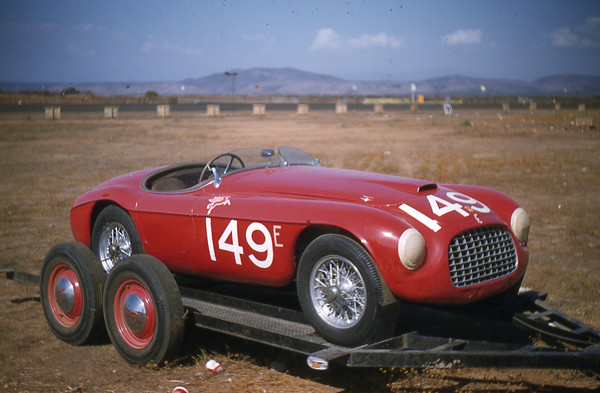
For now, to some 80’s nostalgia, for this was all predicted decades ago, by none other than the Canadian band Rush, in their 1981 rock ballad ‘Red Barchetta’.
Take a listen, and wonder. And keep that gas-guzzling vehicle under a tarp in your barn for the future generation, who years from now may turn their young eyes from an old storybook up to your grizzled visage and ask, ‘Dad, what’s a car?’. Well, son…

Carney’s Amoral Majority
After five defections – euphemistically described as ‘crossing the floor’ – and three by-elections, Mark Carney and his Liberals how have their coveted majority. One wonders what bowls of pottage were offered in back-room deals. In the archaic monarchical system that is the Dominion of Canada, this majority allows the newly-minted Prime Minister to rule[…]Continue reading→

Saint Kateri , Canada’s Protectress
This was the title given to Saint Kateri Tekakwitha, by Pope Benedict XVI, when he canonized her on October 28th, 2012, along with six others, in Saint Peter’ Square (she had been beatified by Pope John Paul II back in 1980). With Saint Joseph as our protector, along with the Canadian martyrs, we seem to[…]Continue reading→

A Tale of Two Benedicts
A grace-filled Holy Week to all our readers! As we await and prepare for the Resurrection about to dawn upon us, we might keep in mind two Benedicts: Pope Emeritus Benedict XVI, requiescat in pace, elected on this day in 2005; and today’s commemoration of the mystic pilgrim, Benedict Joseph Labre, who died on this[…]Continue reading→

My Name is Bernadette
April 16th is a propitious day, for besides the anniversary of Father de Valk’s death, who founded Catholic Insight in its print form decades ago, and the commemoration of the ‘two Benedicts’, mentioned in accompanying posts, today we also recall Saint Bernadette Soubirous, the young visionary to whom the Virgin Mary appeared numerous times at[…]Continue reading→

Saint Lydwina of Schiedam and Suffering Joyfully
Saint Lydwina of Schiedam (1380 – 1433) was one of the countless and glorious ‘victim souls’ in the history of the Church, those whose lives are filled with suffering, often of an unimaginable intensity, but who suffer joyfully. She was a fifteen-year old Dutch girl, out skating one day, when she fell and broke one[…]Continue reading→

The Glorious Martyrdoms of Martin and Maximus
As we enter into Eastertide, we recall on this 13th of April Pope Saint Martin I (+655), one of the noblest, if most tragic, of the successors of Saint Peter. Born in Umbria, Italy, he was of noble lineage, with great intelligence combined with charity and love of the poor and the Church. While still[…]Continue reading→

Saint Stanislaus of Szczepanów
We celebrate Saint Stanislaus today (+ April 11, 1079), in light of this Easter Octave, a bishop and martyr who accepted the episcopacy only at the direct order of Pope Alexander II. He proved a wise and courageous leader of his flock, put to death by his own king, Boleslaus, for rebuking the monarch’s ‘immoral[…]Continue reading→

Saint Gemma Galgani
On this April 11th, in 1903 – the same year that the Italian Guiseppe Sarto was elected Pope later that summer as Pius X – a lovely, young Italian woman died, by the name of Gemma Galgani. She lived a brief life of 24 years, as did a number of other young saints, including Pier[…]Continue reading→

An Ideological and Improper Translation
I noticed something odd with the psalm reading at Mass the other day. Our bishops’ conference here in Canada has decreed that the Mass in English – Novus Ordo – use the ‘NRSV’, the ‘New Revised Standard Version’, an ‘updated’ translation of the original RSV, first published in 1952. This ‘new translation’ has the tendency[…]Continue reading→
Saint Jean-Baptiste de la Salle: A Teacher for Teachers
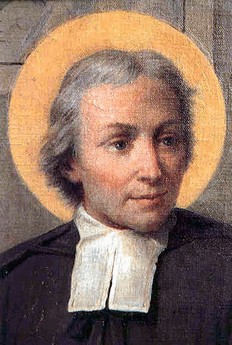
Jean-Baptiste de la Salle (1651 – 1719), a French nobleman, ordained a priest, founded the first order in the Church’s history entirely without priests, and this came about almost by accident. I say ‘almost’, for, of course, there are no accidents with God. Destined for ordination from an early age, Jean-Baptiste never looked back, even[…]Continue reading→