
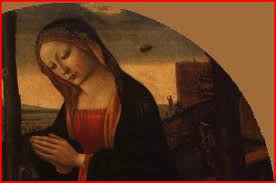
The Virgin Mary versus the Gorgon Medusa
Almost exactly two years ago, right in the heart of Manhattan, Luciano Garbati’s sculpture Medusa With the Head of Perseus was unveiled. The statue depicts exactly what is promised by its name: a 7-foot-tall bronze Gorgon, stark naked, holding up the Greek hero’s severed head in a rote inversion of the ancient tale. Inevitably, it was met with profound ambivalence; many claimed the triumphant lady of serpents as a #MeToo mascot (her glower is aimed directly at the courthouse where Harvey Weinstein stood trial), while others denounced the statue as pornographic. (Editor’s note: They’re right). What we couldn’t have known at the time was that it was merely a precursor to a now-accelerating movement in our society’s mythopoetic fabric—a movement which will shortly produce season 2 of Amazon’s Rings of Power, in which Galadriel (Tolkien’s analogue for the Blessed Virgin) will almost certainly become romantically involved with Sauron (his analogue for the father of lies).
According to Ovid, it was the Virgin Goddess Athena, Patroness of Wisdom, who transformed Medusa into the monstrosity we know today. The lady’s hair, once beautiful, became a nest of vipers; anyone who gazed upon her became trapped in her lair forever, hard as stone. Chastity and wisdom thus generate the enduring shadow-self of infohazard and lust—in short, pornography. The head, representing knowledge, becomes the seat of the very creature who deceived our first Mother in the Garden: a dark prophecy fulfilled by the universal library of the Internet. To investigate this subject, even with the holiest of intentions, is to open oneself to a deluge of temptation through the Palantir of one’s computer screen.
G.K. Chesterton once remarked,
“A young man may keep himself from vice by continually thinking of disease. He may keep himself from it also by continually thinking of the Virgin Mary. There may be question about which method is the more reasonable, or even about which is the more efficient. But surely there can be no question about which is the more wholesome.” (Heretics, John Lane Company, 1905.)
In the original myth, Perseus defeated Medusa by gazing only at her reflection in the Shield of Athena; likewise, treading in his sandal-prints, we can safely study the rising tide of cybernetic concupiscence only by its shadow in the visage of Our Lady. Medusa (or pornography) is, after all, only the hideously distorted reflection of Mary in the first place.
Evil can’t create. It relies entirely on the Good to produce fresh virtue in every generation—which, of course, it will then attempt to corrupt. Even the most cursory perusal of recent “academic” trends in North America will highlight the pervasion of this attempt, all the way down to the elementary-school level; and various pundits have been predicting this for half a decade. How did we know? Simply by looking at the Blessed Virgin. Every virtue that makes her who and what she is, will inevitably come under attack by the forces of perversion—wisdom, strength, mother-love, and piety—but above all, innocence. And by this time, only one demographic is still reliably innocent.
So: How do we fight? First of all, we need to know our enemy. No one has officially revealed that Galadriel and Sauron will become sexually involved in Rings of Power; this is simply a prediction. But make no mistake, the Blessed Virgin will come more and more under assault as the days go by, with less and less pretext. Consider this latest ripple of the coming tsunami: M&Ms have just released a limited edition series of candy wrappers, ostensibly in homage to country singer Kacey Musgraves, one of which very clearly depicts the green M&M as the Queen of Heaven—crown of stars, shining dove, and all. It’s only a silly little thing, why take offense? Well, because it’s the most insidious pincer in the Enemy’s attack, slipping in from below the rational level to undermine the instinct of reverence in our hearts.
We’d do well to pay attention to what’s coming.

Saint Kateri , Canada’s Protectress
This was the title given to Saint Kateri Tekakwitha, by Pope Benedict XVI, when he canonized her on October 28th, 2012, along with six others, in Saint Peter’ Square (she had been beatified by Pope John Paul II back in 1980). With Saint Joseph as our protector, along with the Canadian martyrs, we seem to[…]Continue reading→

Remembering Father Alphonse de Valk
(Today marks the sixth anniversary of the death of Father Alphonse de Valk, C.S.B., a faithful, courageous and indefatigable Basilian priest, pro-life-and-family apostle, and the founder of Catholic Insight magazine. Here is what we wrote those on his entering into eternity five years ago, as we continue to remember him in our prayers and thoughts)[…]Continue reading→
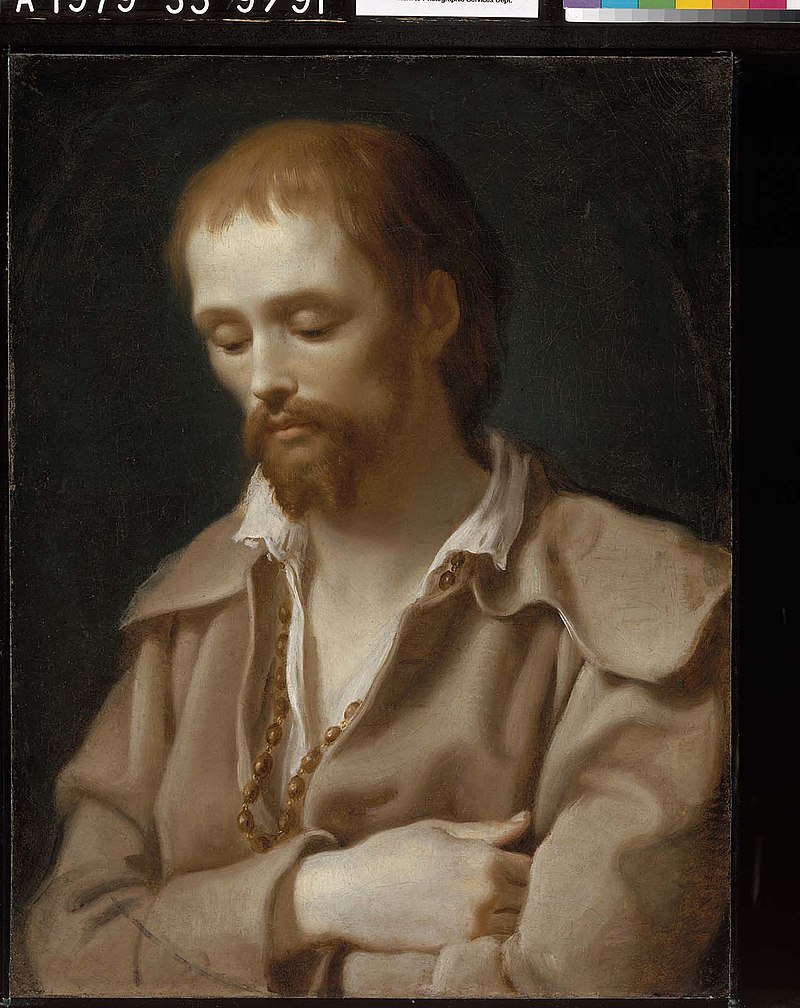
A Tale of Two Benedicts
A grace-filled Holy Week to all our readers! As we await and prepare for the Resurrection about to dawn upon us, we might keep in mind two Benedicts: Pope Emeritus Benedict XVI, requiescat in pace, elected on this day in 2005; and today’s commemoration of the mystic pilgrim, Benedict Joseph Labre, who died on this[…]Continue reading→

My Name is Bernadette
April 16th is a propitious day, for besides the anniversary of Father de Valk’s death, who founded Catholic Insight in its print form decades ago, and the commemoration of the ‘two Benedicts’, mentioned in accompanying posts, today we also recall Saint Bernadette Soubirous, the young visionary to whom the Virgin Mary appeared numerous times at[…]Continue reading→
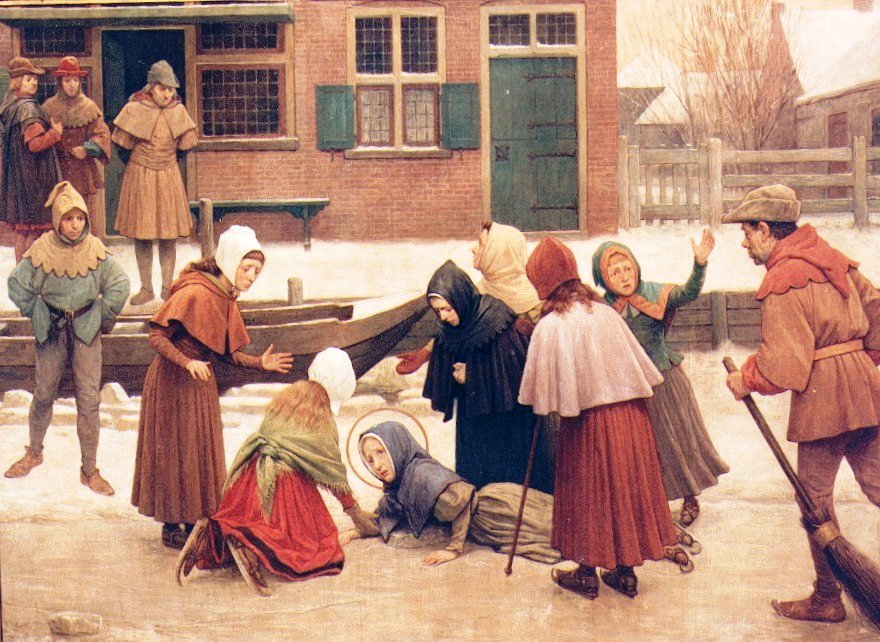
Saint Lydwina of Schiedam and Suffering Joyfully
Saint Lydwina of Schiedam (1380 – 1433) was one of the countless and glorious ‘victim souls’ in the history of the Church, those whose lives are filled with suffering, often of an unimaginable intensity, but who suffer joyfully. She was a fifteen-year old Dutch girl, out skating one day, when she fell and broke one[…]Continue reading→
The Glorious Martyrdoms of Martin and Maximus
As we enter into Eastertide, we recall on this 13th of April Pope Saint Martin I (+655), one of the noblest, if most tragic, of the successors of Saint Peter. Born in Umbria, Italy, he was of noble lineage, with great intelligence combined with charity and love of the poor and the Church. While still[…]Continue reading→

Canonizing Sister Faustina and Divine Mercy
HOMILY OF THE HOLY FATHER MASS IN ST PETER’S SQUARE FOR THE CANONIZATION OF SR MARY FAUSTINA KOWALSKA Sunday, 30 April 2000 1. “Confitemini Domino quoniam bonus, quoniam in saeculum misericordia eius”; “Give thanks to the Lord for he is good; his steadfast love endures for ever” (Ps 118: 1). So the Church sings on the Octave of[…]Continue reading→
Divine Mercy Sunday – An Echo of Every Mass
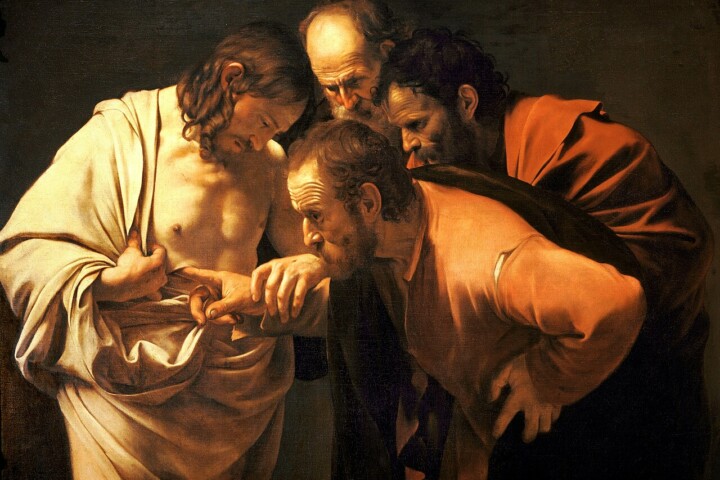
Reach out your hand and put it in my side. Do not doubt but believe’… ‘My Lord and my God!’ (Jn. 20:18)). Today is Divine Mercy Sunday, and as we celebrate the end of the Easter Octave, we contemplate the wounded side of our Saviour, the Church’s source of life. On Good Friday in the[…]Continue reading→

Saint Stanislaus of Szczepanów
We celebrate Saint Stanislaus today (+ April 11, 1079), in light of this Easter Octave, a bishop and martyr who accepted the episcopacy only at the direct order of Pope Alexander II. He proved a wise and courageous leader of his flock, put to death by his own king, Boleslaus, for rebuking the monarch’s ‘immoral[…]Continue reading→
Saint Gemma Galgani
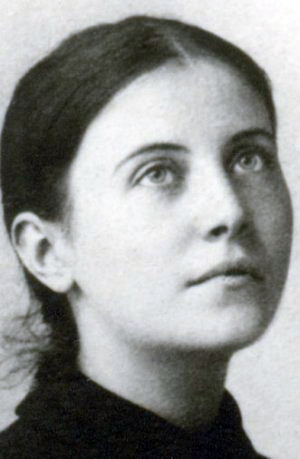
On this April 11th, in 1903 – the same year that the Italian Guiseppe Sarto was elected Pope later that summer as Pius X – a lovely, young Italian woman died, by the name of Gemma Galgani. She lived a brief life of 24 years, as did a number of other young saints, including Pier[…]Continue reading→