
Billionaire Bill and the Woeful Wages of Mammon
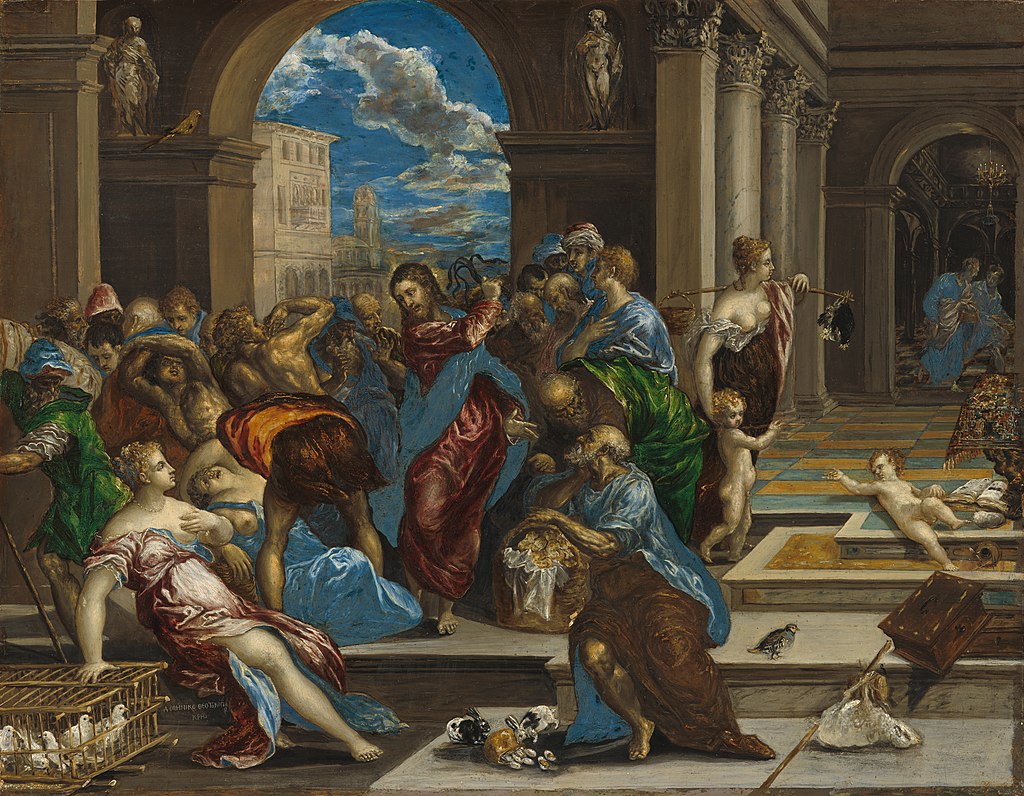
Sam Kriss has an intriguing take on Bill Gates, and what being that rich – I mean, really, unimaginably rich – does to someone. As Alec Baldwin says in the film The Edge, ‘rich people are different’, which is sort of ironic, coming from him, but it’s an aphorism of which I have my own evidence in the very few really rich people I’ve met. Mr. Kriss claims that having billions – not just millions, which is rather humdrum as things go nowadays – means that one lives in an unreal realm disconnected from the hoi polloi, and from reality itself. Being able to do anything means, in the end, that one does nothing, or very little, and that one’s riches not only take over one’s life, but take on a life of their – its – own. There is a reason Christ warns about the dangers of riches.
Saint Thomas puts this in philosophical terms, distinguishing avarice – the unnatural desire for artificial wealth, or money – is different from greed, the immoderate desire for natural goods, such as food, or houses. For one thing, there is no natural limit to how much money one might have, and how many zeroes are at the end of one’s bank account(s). So it becomes all-consuming. But there is a natural limit to how much one might eat, or how many houses one can live in, or how many cars one might drive (I suppose that one could treat cars or houses as ‘money’, and not use them, in which case we’re drifting to avarice, and not greed).
Although he doesn’t quote Saint Thomas, Mr. Kriss agrees with him in essence, that avarice is more dehumanizing, leading to the diminution of one’s natural desires, and very personhood. In the ‘love of money’, one dreams of what one might do with all that moola, and ends up never really doing anything with it. An acquaintance once related that he was building a mega-mansion for a rich man, who could have gone anywhere, and eaten pretty much whatever delicacies he desired. Instead, he sat in his basement watching television, drinking Coors light and munching Doritos, like a drifting, cash-strapped college student. And we may read of much the same towards the end of the tragic life of figures such as Howard Hughes.
In Mr. Kriss’ view, it’s not so much Bill Gates doing all that bad stuff with his money, but the money itself, God-less Mammon, like some animated, anarchic blob. Money does as money does.
Yet I think that something is missing in Mr. Kriss’ take , whose premise is that Bill Gates has become a sort of blank cypher, with no nefarious or conspiratorial tendencies, such as, say, culling the world’s population by whatever insidious means are at his disposal; and there are, as we have seen, any number of those.
Two things we might say in response.
Mr. Gates, still a rational, sentient individual by all accounts, seems quite clear that he does think there are too many people on the planet, and would like to see that number greatly reduced. Hence, his zealous and very generous funding of contraception and abortion, especially in poorer nations.
Also, we should keep in mind that our battle is not against only earthly potentates, but ‘principalities and powers’, as Saint Paul warns, with the eschatological war between heaven and hell coalescing into this world. The devil is the ultimate force behind much of our current malice and mayhem, and he will use what instruments he can find, witting or unwitting. And there is that warning of Christ about ‘swept and empty rooms’, vapid souls just waiting for whatever haunted guests might happen by.

Carney’s Amoral Majority
After five defections – euphemistically described as ‘crossing the floor’ – and three by-elections, Mark Carney and his Liberals how have their coveted majority. One wonders what bowls of pottage were offered in back-room deals. In the archaic monarchical system that is the Dominion of Canada, this majority allows the newly-minted Prime Minister to rule[…]Continue reading→

Saint Kateri , Canada’s Protectress
This was the title given to Saint Kateri Tekakwitha, by Pope Benedict XVI, when he canonized her on October 28th, 2012, along with six others, in Saint Peter’ Square (she had been beatified by Pope John Paul II back in 1980). With Saint Joseph as our protector, along with the Canadian martyrs, we seem to[…]Continue reading→

A Tale of Two Benedicts
A grace-filled Holy Week to all our readers! As we await and prepare for the Resurrection about to dawn upon us, we might keep in mind two Benedicts: Pope Emeritus Benedict XVI, requiescat in pace, elected on this day in 2005; and today’s commemoration of the mystic pilgrim, Benedict Joseph Labre, who died on this[…]Continue reading→

My Name is Bernadette
April 16th is a propitious day, for besides the anniversary of Father de Valk’s death, who founded Catholic Insight in its print form decades ago, and the commemoration of the ‘two Benedicts’, mentioned in accompanying posts, today we also recall Saint Bernadette Soubirous, the young visionary to whom the Virgin Mary appeared numerous times at[…]Continue reading→

Saint Lydwina of Schiedam and Suffering Joyfully
Saint Lydwina of Schiedam (1380 – 1433) was one of the countless and glorious ‘victim souls’ in the history of the Church, those whose lives are filled with suffering, often of an unimaginable intensity, but who suffer joyfully. She was a fifteen-year old Dutch girl, out skating one day, when she fell and broke one[…]Continue reading→

The Glorious Martyrdoms of Martin and Maximus
As we enter into Eastertide, we recall on this 13th of April Pope Saint Martin I (+655), one of the noblest, if most tragic, of the successors of Saint Peter. Born in Umbria, Italy, he was of noble lineage, with great intelligence combined with charity and love of the poor and the Church. While still[…]Continue reading→

Saint Stanislaus of Szczepanów
We celebrate Saint Stanislaus today (+ April 11, 1079), in light of this Easter Octave, a bishop and martyr who accepted the episcopacy only at the direct order of Pope Alexander II. He proved a wise and courageous leader of his flock, put to death by his own king, Boleslaus, for rebuking the monarch’s ‘immoral[…]Continue reading→

Saint Gemma Galgani
On this April 11th, in 1903 – the same year that the Italian Guiseppe Sarto was elected Pope later that summer as Pius X – a lovely, young Italian woman died, by the name of Gemma Galgani. She lived a brief life of 24 years, as did a number of other young saints, including Pier[…]Continue reading→
An Ideological and Improper Translation
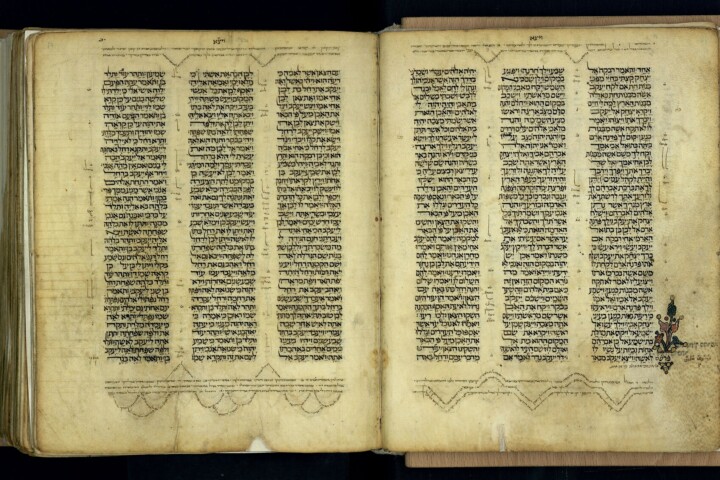
I noticed something odd with the psalm reading at Mass the other day. Our bishops’ conference here in Canada has decreed that the Mass in English – Novus Ordo – use the ‘NRSV’, the ‘New Revised Standard Version’, an ‘updated’ translation of the original RSV, first published in 1952. This ‘new translation’ has the tendency[…]Continue reading→
Saint Jean-Baptiste de la Salle: A Teacher for Teachers
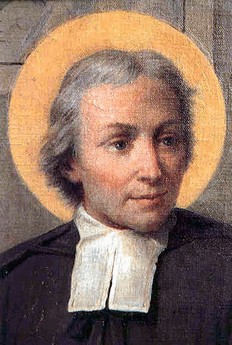
Jean-Baptiste de la Salle (1651 – 1719), a French nobleman, ordained a priest, founded the first order in the Church’s history entirely without priests, and this came about almost by accident. I say ‘almost’, for, of course, there are no accidents with God. Destined for ordination from an early age, Jean-Baptiste never looked back, even[…]Continue reading→