

The Vatican, Paris and Climate Follies
The Vatican has signed on to the problematical Paris Accord on Climate Change, apparently without reservations. Here are some thoughts.
We’ve written before on the vague and uncertain nature of ‘climate change’, not least since the term itself is tautological, explaining everything, and, ergo, nothing. If someone could explain precisely what is meant by climate change, I might be more amenable, for, of course, the climate is by definition always changing. Is it changing too violently? If so, when will success be determined?
Might not some level of global warming – or at least climatological variations through epochs – be a good thing? After all, in geological terms, we just emerged from an ice age, with mile-thick glaciers covering much of North America.
Yes, there are bad environmental practices, usually with regional deleterious effects. But will any of these draconian policies instantiated do anything, especially with China, perhaps the worst polluter in human history, unaffected? Wreaking havoc with the economy – and, as we see with the Dutch farmers, food production – seems rather imprudent, if not plain evil, as people’s lives and livelihoods are destroyed. How much are they willing to sacrifice?
The worst aspect of this, however, is the Malthusian anti-human element, that there are just too many of us, and the population must be culled, passively or actively.
The Church has ended up with egg on her face in linking herself to uncertain science (and all empirical science is to some extent uncertain – and see the scandal of the Pontifical Academy for Life advocating for contraception and artificial reproduction, claiming that ‘science can change’, comparing Humane Vitae’s moral teachings to Ptolemy’s outmoded geocentrism! Oh, the folly and hubris!).
Yes, dear reader, the greater scandal is the silence of the Vatican on the embedded population control agenda – abortion, sterilization, child limits – advanced by ‘climate change’ zealots. Where are our shepherds?
Go forth and multiply, said the Lord, and there is plenty of room and resources at the inn of the Earth for us all, if we but trust in Him, and use science and technology wisely.

Carney’s Amoral Majority
After five defections – euphemistically described as ‘crossing the floor’ – and three by-elections, Mark Carney and his Liberals how have their coveted majority. One wonders what bowls of pottage were offered in back-room deals. In the archaic monarchical system that is the Dominion of Canada, this majority allows the newly-minted Prime Minister to rule[…]Continue reading→

Saint Kateri , Canada’s Protectress
This was the title given to Saint Kateri Tekakwitha, by Pope Benedict XVI, when he canonized her on October 28th, 2012, along with six others, in Saint Peter’ Square (she had been beatified by Pope John Paul II back in 1980). With Saint Joseph as our protector, along with the Canadian martyrs, we seem to[…]Continue reading→

A Tale of Two Benedicts
A grace-filled Holy Week to all our readers! As we await and prepare for the Resurrection about to dawn upon us, we might keep in mind two Benedicts: Pope Emeritus Benedict XVI, requiescat in pace, elected on this day in 2005; and today’s commemoration of the mystic pilgrim, Benedict Joseph Labre, who died on this[…]Continue reading→

My Name is Bernadette
April 16th is a propitious day, for besides the anniversary of Father de Valk’s death, who founded Catholic Insight in its print form decades ago, and the commemoration of the ‘two Benedicts’, mentioned in accompanying posts, today we also recall Saint Bernadette Soubirous, the young visionary to whom the Virgin Mary appeared numerous times at[…]Continue reading→

Saint Lydwina of Schiedam and Suffering Joyfully
Saint Lydwina of Schiedam (1380 – 1433) was one of the countless and glorious ‘victim souls’ in the history of the Church, those whose lives are filled with suffering, often of an unimaginable intensity, but who suffer joyfully. She was a fifteen-year old Dutch girl, out skating one day, when she fell and broke one[…]Continue reading→

The Glorious Martyrdoms of Martin and Maximus
As we enter into Eastertide, we recall on this 13th of April Pope Saint Martin I (+655), one of the noblest, if most tragic, of the successors of Saint Peter. Born in Umbria, Italy, he was of noble lineage, with great intelligence combined with charity and love of the poor and the Church. While still[…]Continue reading→

Saint Stanislaus of Szczepanów
We celebrate Saint Stanislaus today (+ April 11, 1079), in light of this Easter Octave, a bishop and martyr who accepted the episcopacy only at the direct order of Pope Alexander II. He proved a wise and courageous leader of his flock, put to death by his own king, Boleslaus, for rebuking the monarch’s ‘immoral[…]Continue reading→
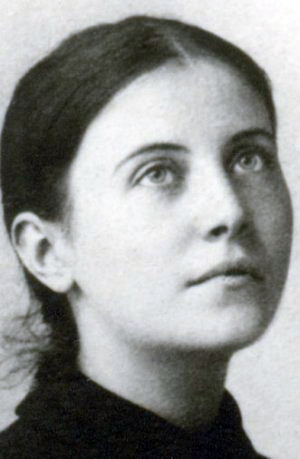
Saint Gemma Galgani
On this April 11th, in 1903 – the same year that the Italian Guiseppe Sarto was elected Pope later that summer as Pius X – a lovely, young Italian woman died, by the name of Gemma Galgani. She lived a brief life of 24 years, as did a number of other young saints, including Pier[…]Continue reading→
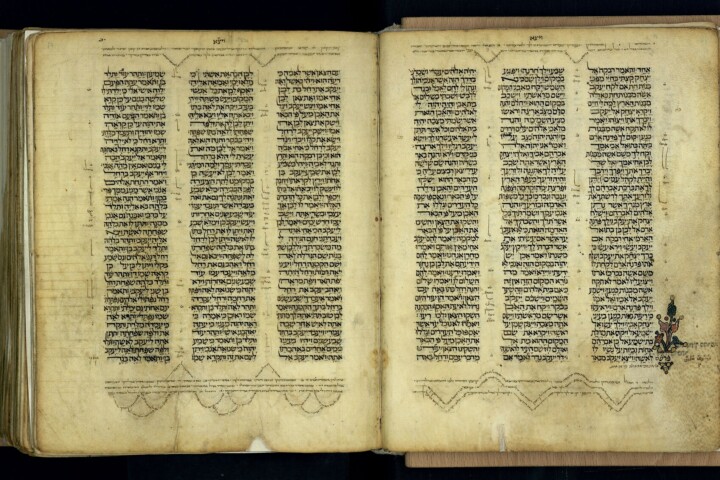
An Ideological and Improper Translation
I noticed something odd with the psalm reading at Mass the other day. Our bishops’ conference here in Canada has decreed that the Mass in English – Novus Ordo – use the ‘NRSV’, the ‘New Revised Standard Version’, an ‘updated’ translation of the original RSV, first published in 1952. This ‘new translation’ has the tendency[…]Continue reading→
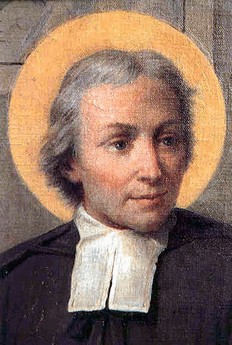
Saint Jean-Baptiste de la Salle: A Teacher for Teachers
Jean-Baptiste de la Salle (1651 – 1719), a French nobleman, ordained a priest, founded the first order in the Church’s history entirely without priests, and this came about almost by accident. I say ‘almost’, for, of course, there are no accidents with God. Destined for ordination from an early age, Jean-Baptiste never looked back, even[…]Continue reading→