
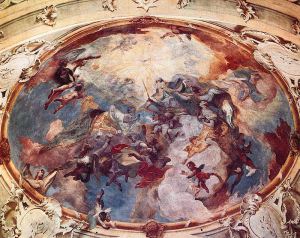
Defending the Holy Trinity
The doctrine of the Trinity is the defining dogma of Christianity: “The grace of our Lord, Jesus Christ, the love of God, the communion of the Holy Spirit be with you all.” Nevertheless, the preservation and then the articulation of our trinitarian belief in the early Church was not a simple matter. On the contrary, it required thought, experience, and even courage because the doctrine was anti-pathetic to the thinking of the times—and not only to Jews, but also to pagans. They both had strong convictions about the absolute singleness and transcendence of God. Thus, the Nicene Creed back in the year A.D. 325 resounded like a battle cry. Still today, some of the phrases have a ring to them, resonating with the conflicts of a bygone age:
God from God, Light from Light, true God from True God, begotten, not made, consubstantial with the Father. . . .
There were even Christians did not wholeheartedly accept it, and not a few who vigorously rejected it. For one thing, the word “consubstantial” (òmoousios), adopted at the Council of Nicaea in 325 to describe the relationship between the Father and the Son, was regarded with suspicion because it is not found in the Bible; it even had some unpleasant connotations because of its use by non-Christians. Politically, too, the creed was strong stuff. The Roman emperor of the time—remember, we’re talking about the fourth century, 1,700 years ago—was the supreme ruler of the known world, and to give his reign divine authority he wanted a single supreme divine reality. The God he preferred was remote, inaccessible, mysterious in himself, and known to man only by absolute decrees that were to be followed blindly, whether or not one could understand them. You can see that this “God” was a projection of his own method of rule: absolute, arbitrary, and binding, with no possibility of redress. A Trinity was too “democratic” for his taste. Accepting one God, without division or distinction, was the best assurance of his unique and absolute powers.
The emperors after Nicaea, all Christians—of a sort, but of an Arian variety—persecuted their fellow Christians, especially those bishops who defended the doctrine homoousios (for not all did), such as Athanasius of Alexandria, Hillary of Potiers, Pope Liberius, and so on.
The debate was widespread, even affecting ordinary people, who were as enthusiastic for their side as any fan of the Maple Leafs or the Blue Jays today.
Saint Gregory Nazianzen described the situation in Constantinople:
Garment sellers, money changers, food vendors, they are all at it. If you ask for change, they philosophize about the begotten and the unbegotten. If you inquire about the price of bread, the answer is that the Father is greater and the Son inferior. If you say to the attendant, “Is my bath ready?” He tells you that the Son was made out of nothing.
Even at the Hippodrome, one rider would wear colours for Nicaea and other against. This bit of history highlights the role of the laity, the ordinary believers, like ourselves, who, as Cardinal Newman demonstrated[1] were instrumental in preserving the traditional and authentic Catholic teaching at a time when many bishops failed to do so.
It’s of value to compare the past with the present. People are just as involved in religious and theological subjects as they were in the fourth century. But now, instead of theology, properly speaking, it’s social issues that are on everyone’s mind. As G K. Chesterton noted a century ago, “The next great heresy is going to be simply an attack on morality; and especially on sexual morality.”[2] Buy a newspaper, and the vendor will have a strong opinion on separate schools; go to a restaurant and the waiter will tell you what to think about homophobia; pick up a newspaper or turn on the television and you will learn a new definition of chauvinism—not extreme patriotism, as it used to be, but the suppression of women. Or consider the numerous implications of the term “pro-choice.”
Our “emperors,” alias prime ministers and members of parliament, have eagerly embraced the new morality, to the point that they use the language of religion to describe their change in conviction, “conversion” would not be too strong a term: “Now I see,” “I’ve learned,” I’ve grown,” “I repent.” And with all the zeal of a convert, they now aggressively enforce the new order of things. There are bishops who have shown himself unafraid of being countercultural; it remains to be seen how the laity will conduct themselves because, ultimately, now as 1,700 years ago, it all depends on them, . . . i.e., on us.
[1] On Consulting the Laity in Matters of Doctrine.
[2] G. K.‘s Weekly, 19 June 1926.

Saint Kateri , Canada’s Protectress
This was the title given to Saint Kateri Tekakwitha, by Pope Benedict XVI, when he canonized her on October 28th, 2012, along with six others, in Saint Peter’ Square (she had been beatified by Pope John Paul II back in 1980). With Saint Joseph as our protector, along with the Canadian martyrs, we seem to[…]Continue reading→

Remembering Father Alphonse de Valk
(Today marks the sixth anniversary of the death of Father Alphonse de Valk, C.S.B., a faithful, courageous and indefatigable Basilian priest, pro-life-and-family apostle, and the founder of Catholic Insight magazine. Here is what we wrote those on his entering into eternity five years ago, as we continue to remember him in our prayers and thoughts)[…]Continue reading→

My Name is Bernadette
April 16th is a propitious day, for besides the anniversary of Father de Valk’s death, who founded Catholic Insight in its print form decades ago, and the commemoration of the ‘two Benedicts’, mentioned in accompanying posts, today we also recall Saint Bernadette Soubirous, the young visionary to whom the Virgin Mary appeared numerous times at[…]Continue reading→
Canonizing Sister Faustina and Divine Mercy
HOMILY OF THE HOLY FATHER MASS IN ST PETER’S SQUARE FOR THE CANONIZATION OF SR MARY FAUSTINA KOWALSKA Sunday, 30 April 2000 1. “Confitemini Domino quoniam bonus, quoniam in saeculum misericordia eius”; “Give thanks to the Lord for he is good; his steadfast love endures for ever” (Ps 118: 1). So the Church sings on the Octave of[…]Continue reading→

Divine Mercy Sunday – An Echo of Every Mass
Reach out your hand and put it in my side. Do not doubt but believe’… ‘My Lord and my God!’ (Jn. 20:18)). Today is Divine Mercy Sunday, and as we celebrate the end of the Easter Octave, we contemplate the wounded side of our Saviour, the Church’s source of life. On Good Friday in the[…]Continue reading→

Saint Stanislaus of Szczepanów
We celebrate Saint Stanislaus today (+ April 11, 1079), in light of this Easter Octave, a bishop and martyr who accepted the episcopacy only at the direct order of Pope Alexander II. He proved a wise and courageous leader of his flock, put to death by his own king, Boleslaus, for rebuking the monarch’s ‘immoral[…]Continue reading→
First Holy Communion: Sermon from May 16, 1943
Here is a sermon from the good old days by +Rev. Msgr. Vincent Nicholas Foy (August 14, 1915 – March 13, 2017), from 1943. Readers may recall that Pope Saint Pius X, by the decree Quam Singulari in 1910, lowered the customary age of reception of Holy Communion – after the rigours of the plague[…]Continue reading→
In the Glorious Light of Easter, Alleluia!
Set your minds on things that are above, not on things that are on earth, for you have died, and your life is hidden with Christ in God. When Christ who is your life is revealed, then you also will be revealed with him in glory (Col. 3:3-4). The Resurrection of Our Lord and Saviour[…]Continue reading→
An Ancient Homily for Holy Saturday
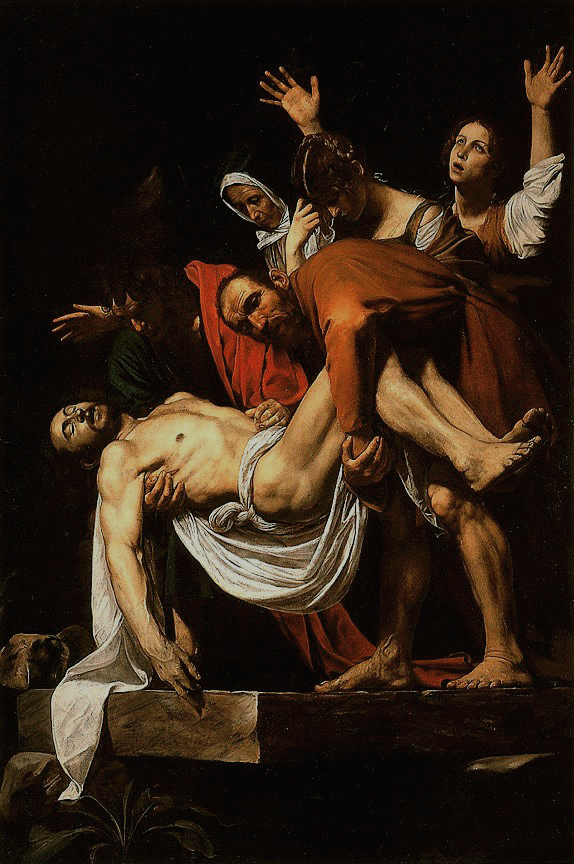
The time between Good Friday and Easter Sunday is one of waiting, in silence, as the world wonders – anticipates – what will happen, after the death of Christ. We re-live this time each year in the anamnesis of our liturgy, and in turn look forward to the glorious re-creation of all things at the[…]Continue reading→
Europe’s Long Descent
(As we meditate on this day on Christ’s burial, and His descent into hell, it is fitting to ponder here with contributor Peter Marcus how the world seems to be heading there as well. The difference is that, although God cannot ‘redeem’ hell, nor those therein, He can and did redeem the world. There is[…]Continue reading→