
A Few More Good (Gentle) Men
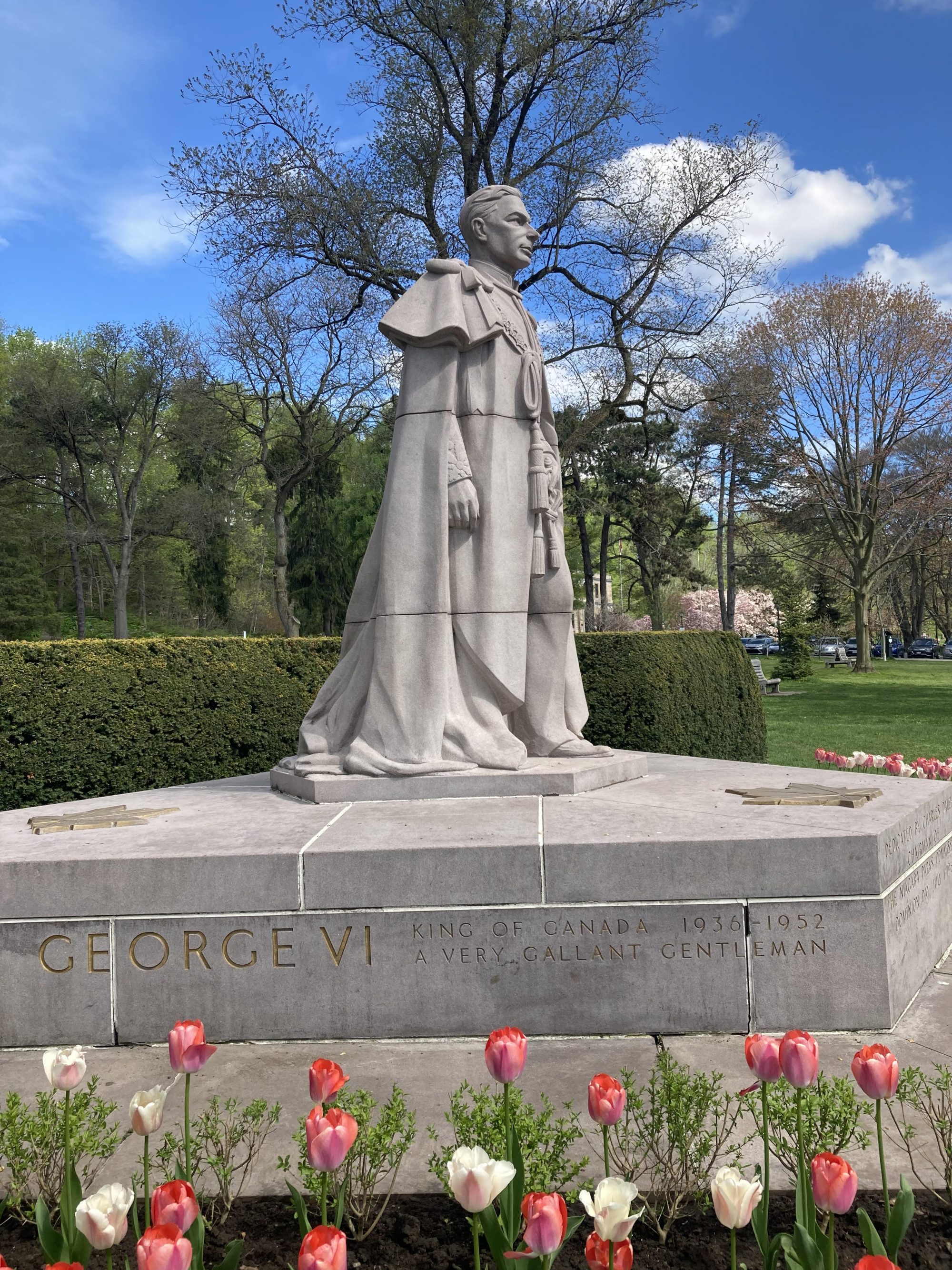
I was in the Niagara region for a wedding last weekend, and, cycling around, I came across this statue of George VI overlooking the falls. I liked the ring of ‘King of Canada’, and a monarchy might well work better than what passes for democracy in this fair land. But what struck me even more was the notion of a gentleman, not far from Plato’s notion of a philosopher king.
Cardinal Newman wrote that the purpose of an education was not so much to produce a ‘Catholic’ – a formation that’s primarily between God and the soul – but a gentleman, cultivating in our minds, souls and bodies all the best that has been thought or said in our civilization. The reader may peruse a more complete description, but here is a brief excerpt:
If he engages in controversy of any kind, his disciplined intellect preserves him from the blundering discourtesy of better, perhaps, but less educated minds; who, like blunt weapons, tear and hack instead of cutting clean, who mistake the point in argument, waste their strength on trifles, misconceive their adversary, and leave the question more involved than they find it. He may be right or wrong in his opinion, but he is too clear-headed to be unjust; he is as simple as he is forcible, and as brief as he is decisive. Nowhere shall we find greater candor, consideration, indulgence: he throws himself into the minds of his opponents, he accounts for their mistakes. He knows the weakness of human reason as well as its strength, its province and its limits.
We could use not only a few (more) good men, but good gentlemen.
As the saying goes, manners maketh the man, and we have lost so many of our manners, which derive from our customs, which in turn depend on our culture, which, is founded on our religion. We act as we think, and we think as we believe. As we lose our Christian moorings, we are reverting also to a barbarism, which begins with little things, but ends quite tragically. As Pope John Paul says, abortion begins with the trivialization of sexuality, and the mistreatment, especially of the fairer sex.
So here are some tips, which I write for the less-fair sex:
- Always stand up when a woman or an elder than you enters a room. Offer your seat to them, and hold open doors.
- Always subdue your emotions to the dictates of reason. Be decisive, but not hasty.
- Speak in moderation, and listen to others, not interrupting, and never praising yourself, even in jest.
- Never use salacious or scatological speech, especially in the presence of women. Pornography or any unchaste behaviour is anathema to a gentleman.
- Eat also in moderation, with proper use of utensils. Ensure that others are served first, especially if you are the host.
- Never imbibe alcohol past the point of hilarity – which means, again, always having a hold on our reason.
- Dress appropriately for each occasion, and always modestly.
- Respond to correspondence in a timely, and courteous, manner.
- Keep fit, and know how to defend yourself and others, but don’t display your strength. ‘Bodybuilding’ and any overt display of musculature are non decet.
- Cultivate your mind, with apt principles for our own thought, growth and for conversation with others, using your time well. This is where a liberal arts education helps immensely, and why Newman connected such with becoming a gentleman.
- Always strive to instill virtue not only in ourselves, but in others, and act in such a way that they see goodness and truth as attractive.
- Think well of others, as Newman says, as possible future friends. Lead others, if you are called to do so, as you would have yourself be led, suaviter et fortiter, sweetly, but boldly.
More could be said, but I hope this is a helpful start. I’m not sure how much George VI lived out Newman’s notion of a gentleman, but he seems to have done a better job of it than many of our current crop of leaders. We should all strive to be saints living in perfect charity, but we can begin with being courteous, and, yes, gentle.

Carney’s Amoral Majority
After five defections – euphemistically described as ‘crossing the floor’ – and three by-elections, Mark Carney and his Liberals how have their coveted majority. One wonders what bowls of pottage were offered in back-room deals. In the archaic monarchical system that is the Dominion of Canada, this majority allows the newly-minted Prime Minister to rule[…]Continue reading→

Saint Kateri , Canada’s Protectress
This was the title given to Saint Kateri Tekakwitha, by Pope Benedict XVI, when he canonized her on October 28th, 2012, along with six others, in Saint Peter’ Square (she had been beatified by Pope John Paul II back in 1980). With Saint Joseph as our protector, along with the Canadian martyrs, we seem to[…]Continue reading→

A Tale of Two Benedicts
A grace-filled Holy Week to all our readers! As we await and prepare for the Resurrection about to dawn upon us, we might keep in mind two Benedicts: Pope Emeritus Benedict XVI, requiescat in pace, elected on this day in 2005; and today’s commemoration of the mystic pilgrim, Benedict Joseph Labre, who died on this[…]Continue reading→

My Name is Bernadette
April 16th is a propitious day, for besides the anniversary of Father de Valk’s death, who founded Catholic Insight in its print form decades ago, and the commemoration of the ‘two Benedicts’, mentioned in accompanying posts, today we also recall Saint Bernadette Soubirous, the young visionary to whom the Virgin Mary appeared numerous times at[…]Continue reading→

Saint Lydwina of Schiedam and Suffering Joyfully
Saint Lydwina of Schiedam (1380 – 1433) was one of the countless and glorious ‘victim souls’ in the history of the Church, those whose lives are filled with suffering, often of an unimaginable intensity, but who suffer joyfully. She was a fifteen-year old Dutch girl, out skating one day, when she fell and broke one[…]Continue reading→

The Glorious Martyrdoms of Martin and Maximus
As we enter into Eastertide, we recall on this 13th of April Pope Saint Martin I (+655), one of the noblest, if most tragic, of the successors of Saint Peter. Born in Umbria, Italy, he was of noble lineage, with great intelligence combined with charity and love of the poor and the Church. While still[…]Continue reading→

Saint Stanislaus of Szczepanów
We celebrate Saint Stanislaus today (+ April 11, 1079), in light of this Easter Octave, a bishop and martyr who accepted the episcopacy only at the direct order of Pope Alexander II. He proved a wise and courageous leader of his flock, put to death by his own king, Boleslaus, for rebuking the monarch’s ‘immoral[…]Continue reading→
Saint Gemma Galgani
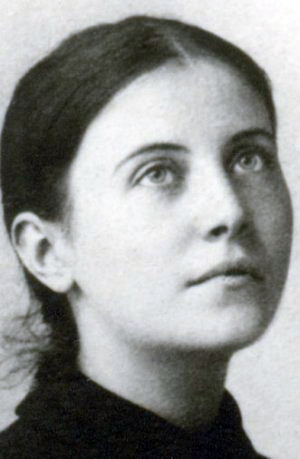
On this April 11th, in 1903 – the same year that the Italian Guiseppe Sarto was elected Pope later that summer as Pius X – a lovely, young Italian woman died, by the name of Gemma Galgani. She lived a brief life of 24 years, as did a number of other young saints, including Pier[…]Continue reading→
An Ideological and Improper Translation
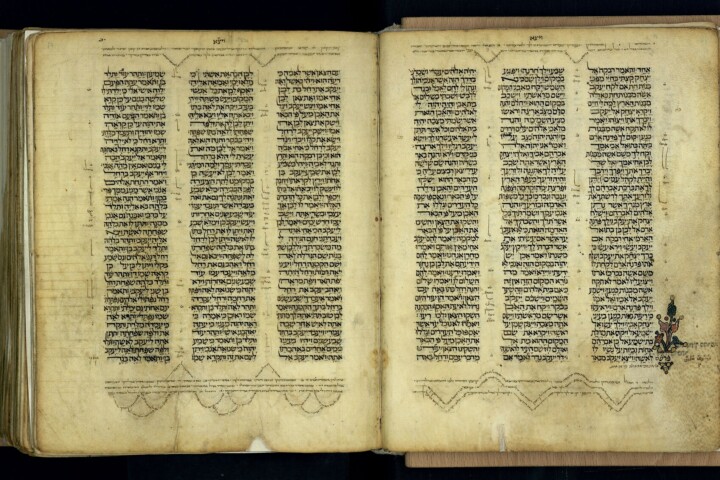
I noticed something odd with the psalm reading at Mass the other day. Our bishops’ conference here in Canada has decreed that the Mass in English – Novus Ordo – use the ‘NRSV’, the ‘New Revised Standard Version’, an ‘updated’ translation of the original RSV, first published in 1952. This ‘new translation’ has the tendency[…]Continue reading→
Saint Jean-Baptiste de la Salle: A Teacher for Teachers
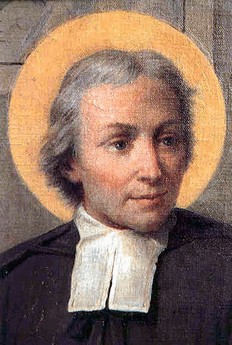
Jean-Baptiste de la Salle (1651 – 1719), a French nobleman, ordained a priest, founded the first order in the Church’s history entirely without priests, and this came about almost by accident. I say ‘almost’, for, of course, there are no accidents with God. Destined for ordination from an early age, Jean-Baptiste never looked back, even[…]Continue reading→