
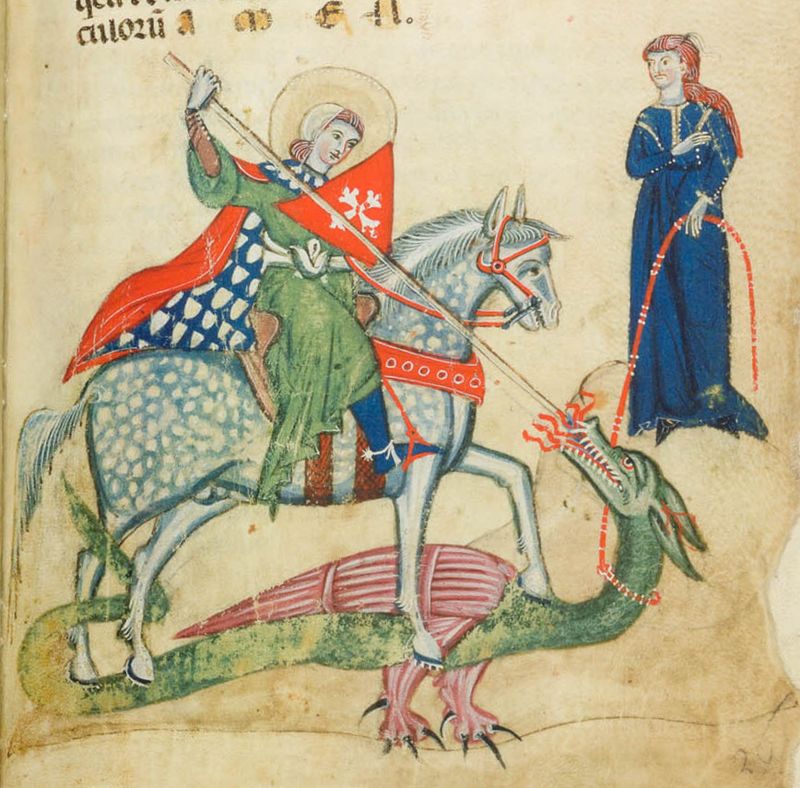
Saint George, Shakespeare and the Millennium
Today is a national holiday in England – as they commemorate the semi-legendary Saint George, martyr for the Faith, slayer of the dragon and rescuer of princesses. This is also, by one of those remarkable coincidences of providence, the birth and death of their greatest playwright, yes, the inimitable William Shakespeare, who both entered and departed this life on this very English day, April 23rd, in 1564.
From all evidence, Shakespeare was a staunch and believing Catholic, a Faith he had to partly hide to maintain appearances, but whose truths he embedded, often not even so subtly, in many of his plays. He seems to have been a foe of the Church-hating-and-dismantling-and-martyr-producing Tudors, Henry and daughter Elizabeth, even though the Bard is forever linked with the fable of ‘good’ Queen Bess’ bloody reign. He likely died with an ironic smile on his lips that they – the powers that be – never even knew how he had parodied them. Strange how history works, and how God works through His witnesses, great and small.
Saint George (+303) is the patron not only of England (after the saintly King Edward the Confessor was dropped during the Protestant Reformation), but also of all the Crusaders in the Middle Ages.
From what we know with some degree of certainty, George was a Roman soldier, a convert to Christianity, put to death under Diocletian at the dawn of the fourth century, just before Constantine took over the whole Empire, and legalized the Catholic religion. George’s red cross on a white background, signifying shedding one’s blood for Christ, the crusader symbol, is now incorporated into the Union Jack.
Merrie England could do with a bit more of the Crusader spirit, that whole thing that helped defeat any and all invaders of the island kingdom, rather than the all-too wan, socialist, dependent, pusillanimous nation it has, with Canada, by and large become, a sad and bitter fruit of the loss of the one, true, Catholic and Apostolic Faith, and her, and our, descent into agnosticism, hedonism and new, and more insidious, kind of paganism. Yes, there yet be many dragons, metaphorical and otherwise – but so few now willing to fight them.
Curious that the newest royal, fifth in line to the throne, a boy, of course named George, was also born to Prince William and Princess Katherine. Perhaps the lad will eventually realize, like many of his fellow Englishmen and inspired by his patron saint, the folly of the Henry and his daughter Elizabeth’s Tudor ‘Anglicanism’, and return to the Faith of his ancestors, which made England great. One can hope, supernaturally; but methinks, with my more pessimistic, natural Irish hope, that be a long shot. But God likes long shots, and working against expectations, like a mere mortal, even a humble Jewish maiden, defeating Satan himself.
While we’re on dragons and millennia, a good read for today’s times is Etienne Gilson’s brief treatise on the Terrors of the Year Two Thousand which was published in 1949, a few years after the end of the Second World War, when it seemed the Anti-Christ had nearly triumphed. As Wellington remarked of a previous momentous battle a hundred years earlier, ‘it was the nearest-run thing you ever saw in your life’.
Yet, as Gilson warned with the rubble of the blitz still strewn about London, the horrors of the war were but a sign of things to come, and the prescience of the Thomistic professor’s clear words give one a bit of chill, as what he prophesies has by and large come to pass.
We are now in the ‘terrors’ of the new millennium, but we must not, with George of old, let fear and anxiety overwhelm us. If we are on the side of God, truth and goodness, who can be against, even if, with Saints George, Brian Boru and Thomas More, the best of England and Ireland, in different epochs and against different dragons, our very heads might roll?
Saint George, ora pro nobis!
Carney’s Amoral Majority
After five defections – euphemistically described as ‘crossing the floor’ – and three by-elections, Mark Carney and his Liberals how have their coveted majority. One wonders what bowls of pottage were offered in back-room deals. In the archaic monarchical system that is the Dominion of Canada, this majority allows the newly-minted Prime Minister to rule[…]Continue reading→

Saint Kateri , Canada’s Protectress
This was the title given to Saint Kateri Tekakwitha, by Pope Benedict XVI, when he canonized her on October 28th, 2012, along with six others, in Saint Peter’ Square (she had been beatified by Pope John Paul II back in 1980). With Saint Joseph as our protector, along with the Canadian martyrs, we seem to[…]Continue reading→
A Tale of Two Benedicts
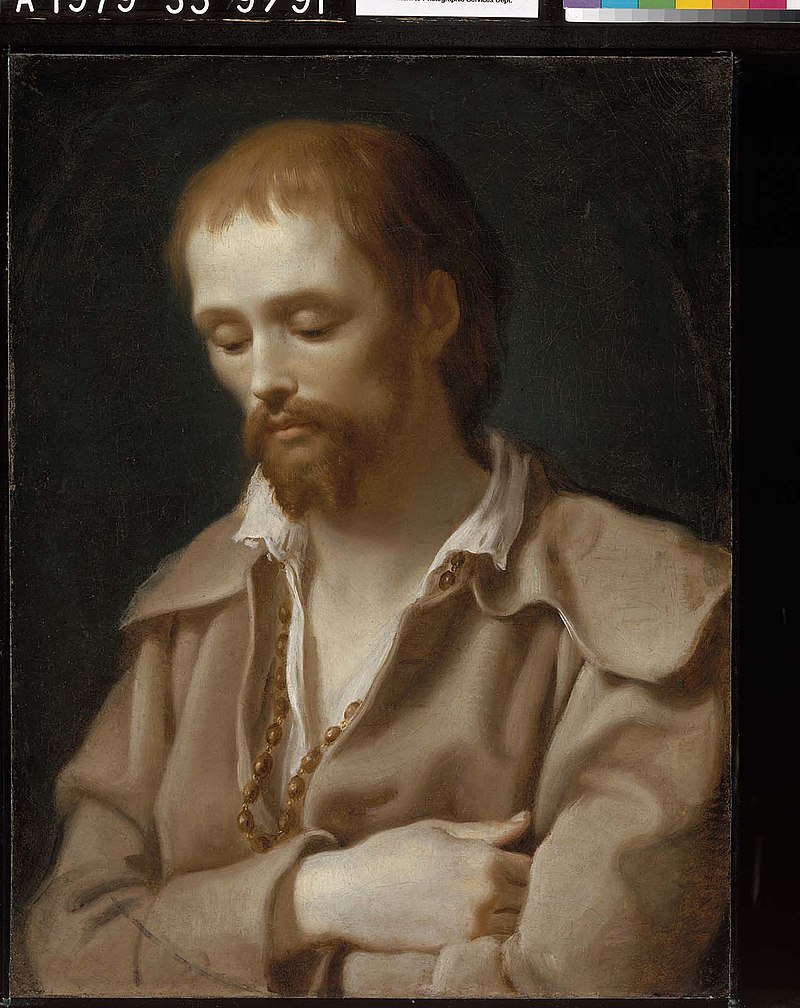
A grace-filled Holy Week to all our readers! As we await and prepare for the Resurrection about to dawn upon us, we might keep in mind two Benedicts: Pope Emeritus Benedict XVI, requiescat in pace, elected on this day in 2005; and today’s commemoration of the mystic pilgrim, Benedict Joseph Labre, who died on this[…]Continue reading→

My Name is Bernadette
April 16th is a propitious day, for besides the anniversary of Father de Valk’s death, who founded Catholic Insight in its print form decades ago, and the commemoration of the ‘two Benedicts’, mentioned in accompanying posts, today we also recall Saint Bernadette Soubirous, the young visionary to whom the Virgin Mary appeared numerous times at[…]Continue reading→
Saint Lydwina of Schiedam and Suffering Joyfully
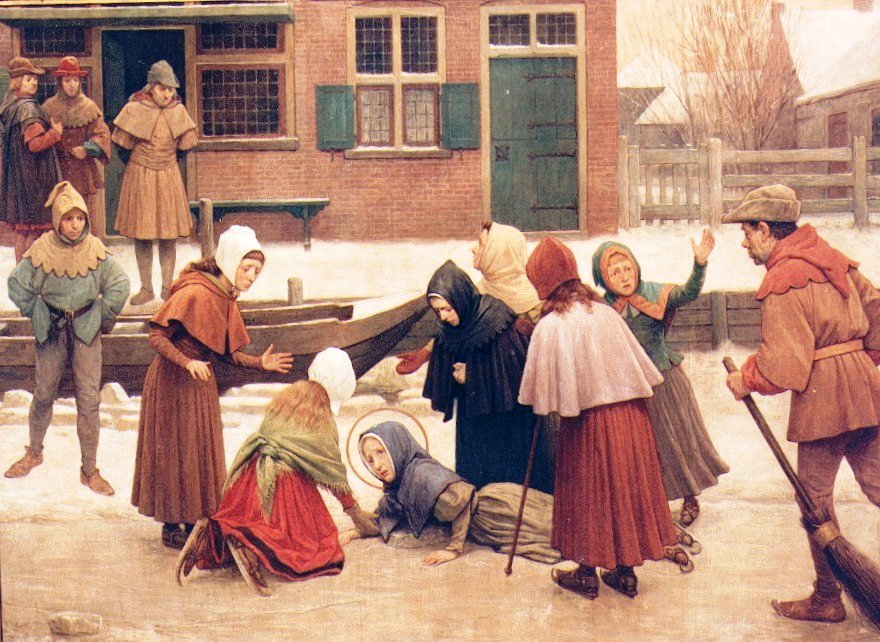
Saint Lydwina of Schiedam (1380 – 1433) was one of the countless and glorious ‘victim souls’ in the history of the Church, those whose lives are filled with suffering, often of an unimaginable intensity, but who suffer joyfully. She was a fifteen-year old Dutch girl, out skating one day, when she fell and broke one[…]Continue reading→
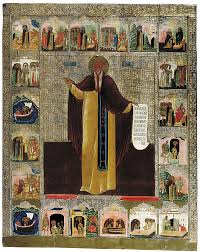
The Glorious Martyrdoms of Martin and Maximus
As we enter into Eastertide, we recall on this 13th of April Pope Saint Martin I (+655), one of the noblest, if most tragic, of the successors of Saint Peter. Born in Umbria, Italy, he was of noble lineage, with great intelligence combined with charity and love of the poor and the Church. While still[…]Continue reading→
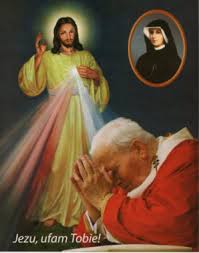
Canonizing Sister Faustina and Divine Mercy
HOMILY OF THE HOLY FATHER MASS IN ST PETER’S SQUARE FOR THE CANONIZATION OF SR MARY FAUSTINA KOWALSKA Sunday, 30 April 2000 1. “Confitemini Domino quoniam bonus, quoniam in saeculum misericordia eius”; “Give thanks to the Lord for he is good; his steadfast love endures for ever” (Ps 118: 1). So the Church sings on the Octave of[…]Continue reading→

Saint Stanislaus of Szczepanów
We celebrate Saint Stanislaus today (+ April 11, 1079), in light of this Easter Octave, a bishop and martyr who accepted the episcopacy only at the direct order of Pope Alexander II. He proved a wise and courageous leader of his flock, put to death by his own king, Boleslaus, for rebuking the monarch’s ‘immoral[…]Continue reading→
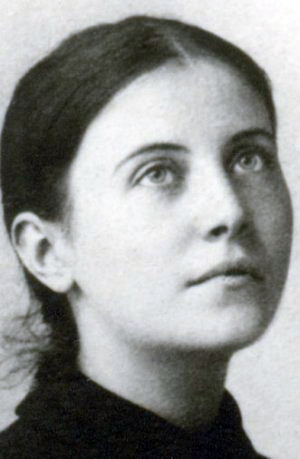
Saint Gemma Galgani
On this April 11th, in 1903 – the same year that the Italian Guiseppe Sarto was elected Pope later that summer as Pius X – a lovely, young Italian woman died, by the name of Gemma Galgani. She lived a brief life of 24 years, as did a number of other young saints, including Pier[…]Continue reading→
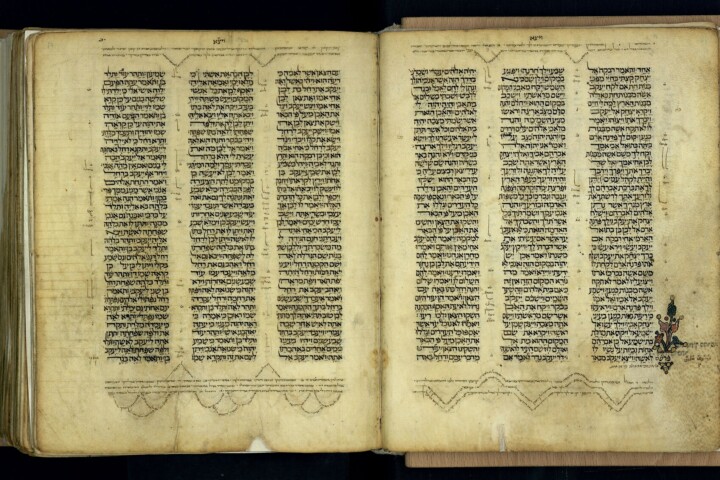
An Ideological and Improper Translation
I noticed something odd with the psalm reading at Mass the other day. Our bishops’ conference here in Canada has decreed that the Mass in English – Novus Ordo – use the ‘NRSV’, the ‘New Revised Standard Version’, an ‘updated’ translation of the original RSV, first published in 1952. This ‘new translation’ has the tendency[…]Continue reading→