
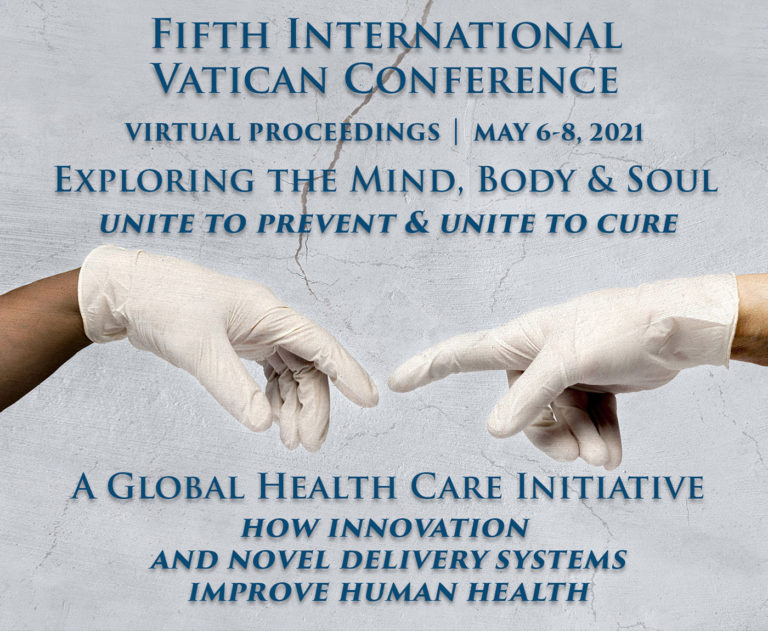
The Pope, Pharma, and Moral Imperatives
What’s the difference between God and a doctor?
God doesn’t think He’s a doctor.
That used to be funny…
God, of course, knows medicine, having made the human body in its innermost parts. As omniscient and omnipotent, He can do anything, far better than we. But in His goodness, God apportions His authority to each of us, according to our talents, gifts and, most of all, our vocation.
We wrote recently on Pope Francis, who described being vaccinated as an ‘act of love’. The ante has now been upped, with his more recent claim that vaccination is a ‘moral imperative’.
In both cases, the Pope has ventured outside his authority, even if he is not speaking in a properly authoritative mode. Catholics should not feel bound in conscience by these words, and they certainly should not be used as a basis for secular vaccine mandates.
Papal authority, as Lumen Gentium, the Dogmatic Constitution of the Church, makes clear, extends as far as the deposit of revelation, and other matters necessarily connected to those truths, which means faith, morals, and certain aspects of discipline.
Hence, the Pope might exhort us in a general way to respond to a given pandemic or enemy or crisis, as he did for the Crusades and the Black Death. He might urge, even command, specific prayers, acts of piety, penances, pilgrimages.
What he cannot do, qua Vicar of Christ, is command any specific course of action that belongs to secular or individual expertise or prudence, contingencies that do not belong to revealed truth. Pope Urban II, calling for the knights of Europe to fight to free the Holy Land in 1095 – Deus vult! – could not, and did not, advocate what sorts of weapons or stratagems to use. Imagine the embarrassment if some of the papally-approved crossbows aimed badly, or ended up misfiring their bolts back into the chests of their wielders. Even with the crusades themselves, given their oft-disastrous outcome, perhaps Deus non vult. The Pope’s will is not always God’s, and, pace Machiavelli, neither is it law.
More to our point at hand, Pope Clement VI in 1348 refrained from advocating specific medical treatments against the bubonic plague then decimating Europe, most of which were useless, or worse. The Pope’s own physician suggested isolation inside the papal apartments at Avignon, seated between two flaming torches, which advice Clement followed for a time. But his conscience soon got the better of him, and he returned to his spiritual duties, overseeing the care of the sick, burial of the dead, prayers, and condemning in no uncertain terms theories that blamed the pestilence on the Jews, and the pogroms that followed. I will leave the reader to draw what analogies he will from this.
Medicine has come a long way from the 14th century, its complexity such that even experts disagree. Far less is it within the papal authority to advocate for specific medical interventions, whether for Covid, cancer or carbuncles. To plug for such products – and I think here of the infomercial the Pope did a few months ago with some South American bishops – reduces the papal office, and compromises the rightful freedom of Catholics, and all people of good will, to choose or refuse this, and any other, treatment.
There may be darker and more insidious issues at play here, with the strange alliance between the Vatican and Big Pharma wrapped up in these vaccines, fraught with moral and medical problems. What may be going on behind the scenes is disconcerting, an eye-opening summary of which the reader may peruse here. I leave such entanglements to God, before whom we all, the Pope included, must give an account for what we have done, and not done, in our conscience.
And that conscience is your own, dear reader, formed by official Magisterial teaching, properly promulgated, which makes it quite clear that we are free to decide. We all have a duty to insist on such fundamental human rights, regardless of what else is at stake, or what choice we make. Pray for light and grace, to choose well, and stand firm in the truth.
Deus vult!

Carney’s Amoral Majority
After five defections – euphemistically described as ‘crossing the floor’ – and three by-elections, Mark Carney and his Liberals how have their coveted majority. One wonders what bowls of pottage were offered in back-room deals. In the archaic monarchical system that is the Dominion of Canada, this majority allows the newly-minted Prime Minister to rule[…]Continue reading→

Saint Kateri , Canada’s Protectress
This was the title given to Saint Kateri Tekakwitha, by Pope Benedict XVI, when he canonized her on October 28th, 2012, along with six others, in Saint Peter’ Square (she had been beatified by Pope John Paul II back in 1980). With Saint Joseph as our protector, along with the Canadian martyrs, we seem to[…]Continue reading→

A Tale of Two Benedicts
A grace-filled Holy Week to all our readers! As we await and prepare for the Resurrection about to dawn upon us, we might keep in mind two Benedicts: Pope Emeritus Benedict XVI, requiescat in pace, elected on this day in 2005; and today’s commemoration of the mystic pilgrim, Benedict Joseph Labre, who died on this[…]Continue reading→

My Name is Bernadette
April 16th is a propitious day, for besides the anniversary of Father de Valk’s death, who founded Catholic Insight in its print form decades ago, and the commemoration of the ‘two Benedicts’, mentioned in accompanying posts, today we also recall Saint Bernadette Soubirous, the young visionary to whom the Virgin Mary appeared numerous times at[…]Continue reading→

Saint Lydwina of Schiedam and Suffering Joyfully
Saint Lydwina of Schiedam (1380 – 1433) was one of the countless and glorious ‘victim souls’ in the history of the Church, those whose lives are filled with suffering, often of an unimaginable intensity, but who suffer joyfully. She was a fifteen-year old Dutch girl, out skating one day, when she fell and broke one[…]Continue reading→

The Glorious Martyrdoms of Martin and Maximus
As we enter into Eastertide, we recall on this 13th of April Pope Saint Martin I (+655), one of the noblest, if most tragic, of the successors of Saint Peter. Born in Umbria, Italy, he was of noble lineage, with great intelligence combined with charity and love of the poor and the Church. While still[…]Continue reading→

Saint Stanislaus of Szczepanów
We celebrate Saint Stanislaus today (+ April 11, 1079), in light of this Easter Octave, a bishop and martyr who accepted the episcopacy only at the direct order of Pope Alexander II. He proved a wise and courageous leader of his flock, put to death by his own king, Boleslaus, for rebuking the monarch’s ‘immoral[…]Continue reading→
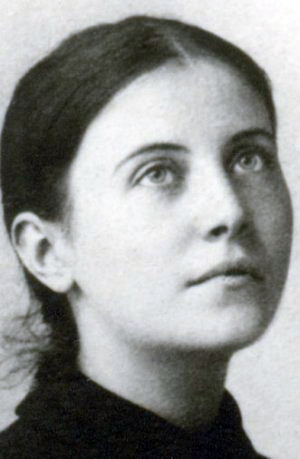
Saint Gemma Galgani
On this April 11th, in 1903 – the same year that the Italian Guiseppe Sarto was elected Pope later that summer as Pius X – a lovely, young Italian woman died, by the name of Gemma Galgani. She lived a brief life of 24 years, as did a number of other young saints, including Pier[…]Continue reading→
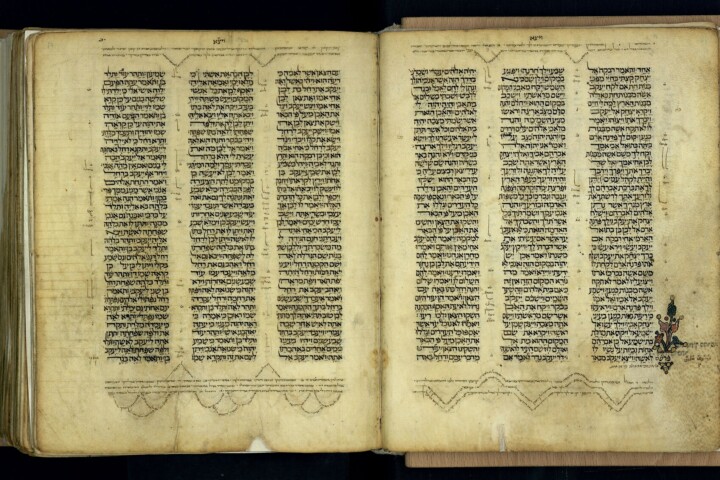
An Ideological and Improper Translation
I noticed something odd with the psalm reading at Mass the other day. Our bishops’ conference here in Canada has decreed that the Mass in English – Novus Ordo – use the ‘NRSV’, the ‘New Revised Standard Version’, an ‘updated’ translation of the original RSV, first published in 1952. This ‘new translation’ has the tendency[…]Continue reading→
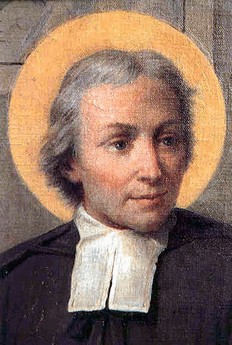
Saint Jean-Baptiste de la Salle: A Teacher for Teachers
Jean-Baptiste de la Salle (1651 – 1719), a French nobleman, ordained a priest, founded the first order in the Church’s history entirely without priests, and this came about almost by accident. I say ‘almost’, for, of course, there are no accidents with God. Destined for ordination from an early age, Jean-Baptiste never looked back, even[…]Continue reading→