
Is Vaccination an Act of Love?
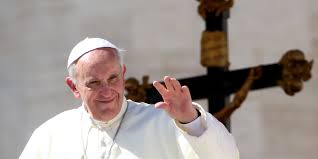
The Vatican has just reiterated its support for the vaccine, or, I should say, vaccines, with the Holy Father’s claim that receiving the inoculation, without offering any distinctions, is an ‘act of love…’.
Let us unpack this exhortation from Pope Francis, beginning with a definition: Love, as Thomas puts it, is to ‘will the good of someone’. By ‘good’, he means the ‘true good’, what is good for this person, in these specific circumstances, and not just a good in general.
Is the vaccine good for one and all, a universal panacea that will cure our ills?
There is, of course, the connection of the various vaccines – which are really genetic therapies – to abortion, and should only be taken for grave and proportionate reasons, with objections raised, as well as other options actively sought. Has the Pope ever mentioned these caveats?
There is evidence is that the vaccine may be a limited good, purported to attenuate symptoms in some, but this is still uncertain. After all, how does one know a priori how ‘bad’ one will get Covid, until one gets it?
What of their efficacy as a prophylactic? From what we have seen, the vaxxed can still get and transmit Covid, apparently at equivalent rates to the un-vaxxed. What efficacy they do have wanes over time; hence, the need for boosters. So the argument that people should get vaccinated to protect others does not hold much water. If they are ‘willing the good’, it seems they are willing whatever good there be, for themselves.
But what of the not so good? There are reported deleterious side-effects to the vaccine, ranging from myocarditis, to palsy, strokes, blood clots, neurological deficiencies, and we don’t know what else down the line. These may (so far) be rare, but then so is death from Covid. The symptoms of the ‘Omicron’ variant are, so far, relatively mild in comparison to the first waves, as happens with such viruses: They attenuate, and fade into the background with other coronaviruses, with which we must all eventually live and somehow get along.
Should people not be free to exercise prudence, to decide, based on a cost-benefit analysis, the ‘good’ for themselves? This is especially pertinent to the young, and not least to children, who can neither consent, nor put up even token resistance. They are at the least risk from Covid, and at most risk from whatever short or long term side effects of these vaccines.
Does ‘love’ extend to injecting five year-olds, or five month-olds, with this genetic therapy? Distinctions, please, Holy Father! There are reports of minors being inoculated in California and Australia without parental consent, which breaks just about every law out there, natural and civil. Where is the Church’s outcry?
And, while we’re at it, whatever happened to natural immunity, which most children, even the general population, may at this point already have? There is mounting evidence that getting this virus, in whatever ‘variant’, makes one immune indefinitely, as well as unable to transmit the disease. For these, vaccinating seems unnecessary and even deleterious.
And, finally, for love to be an act of love, it must be voluntary. A forced act of love is an act of violence – one might even provocatively call it a sort of rape. The Vatican is mute on the increasingly coercive mandates to receive this vaccine – to this author’s mind, scandalously so. Their instruction from December 2020, via the Congregation for the Doctrine of the Faith, makes it quite clear that the vaccines should be voluntary. Yet they are anything but, as people face increasing coercion, low-level in some locales (no restaurants and sports, loss of employment in some spheres), all the way to being barred from grocery stores, crushing fines, jail time, and internment camps in Italy, Austria and Australia. What’s next? Kicking in doors and injecting children while they dream of sugar plums?
I hope that all manner of things shall be well. But they may not be. Perhaps this is a giant medical boondoggle, with good intentions. But as things heat up, one loses hope in such ‘good intentions’. If – and I say if – something more sinister underlies all of this, the Vatican, and many Catholics, will have been complicit – one should presume in charity unwittingly so – in what may turn out to be a most profound evil, with unforeseeable consequences. A disconcerting thought.
In the end, we can only hope, with Virgil, that amor vincit omnia. Love, the divine sort, in the end does conquer all. As Saint Paul cried out: I consider that the sufferings of this present time are not worth comparing with the glory that is to be revealed to us.
We may take some Christmas comfort in that. But only if we strive truly to love God, and our neighbour, in freedom, in truth. +

Carney’s Amoral Majority
After five defections – euphemistically described as ‘crossing the floor’ – and three by-elections, Mark Carney and his Liberals how have their coveted majority. One wonders what bowls of pottage were offered in back-room deals. In the archaic monarchical system that is the Dominion of Canada, this majority allows the newly-minted Prime Minister to rule[…]Continue reading→

Saint Kateri , Canada’s Protectress
This was the title given to Saint Kateri Tekakwitha, by Pope Benedict XVI, when he canonized her on October 28th, 2012, along with six others, in Saint Peter’ Square (she had been beatified by Pope John Paul II back in 1980). With Saint Joseph as our protector, along with the Canadian martyrs, we seem to[…]Continue reading→

A Tale of Two Benedicts
A grace-filled Holy Week to all our readers! As we await and prepare for the Resurrection about to dawn upon us, we might keep in mind two Benedicts: Pope Emeritus Benedict XVI, requiescat in pace, elected on this day in 2005; and today’s commemoration of the mystic pilgrim, Benedict Joseph Labre, who died on this[…]Continue reading→

My Name is Bernadette
April 16th is a propitious day, for besides the anniversary of Father de Valk’s death, who founded Catholic Insight in its print form decades ago, and the commemoration of the ‘two Benedicts’, mentioned in accompanying posts, today we also recall Saint Bernadette Soubirous, the young visionary to whom the Virgin Mary appeared numerous times at[…]Continue reading→

Saint Lydwina of Schiedam and Suffering Joyfully
Saint Lydwina of Schiedam (1380 – 1433) was one of the countless and glorious ‘victim souls’ in the history of the Church, those whose lives are filled with suffering, often of an unimaginable intensity, but who suffer joyfully. She was a fifteen-year old Dutch girl, out skating one day, when she fell and broke one[…]Continue reading→

The Glorious Martyrdoms of Martin and Maximus
As we enter into Eastertide, we recall on this 13th of April Pope Saint Martin I (+655), one of the noblest, if most tragic, of the successors of Saint Peter. Born in Umbria, Italy, he was of noble lineage, with great intelligence combined with charity and love of the poor and the Church. While still[…]Continue reading→

Saint Stanislaus of Szczepanów
We celebrate Saint Stanislaus today (+ April 11, 1079), in light of this Easter Octave, a bishop and martyr who accepted the episcopacy only at the direct order of Pope Alexander II. He proved a wise and courageous leader of his flock, put to death by his own king, Boleslaus, for rebuking the monarch’s ‘immoral[…]Continue reading→

Saint Gemma Galgani
On this April 11th, in 1903 – the same year that the Italian Guiseppe Sarto was elected Pope later that summer as Pius X – a lovely, young Italian woman died, by the name of Gemma Galgani. She lived a brief life of 24 years, as did a number of other young saints, including Pier[…]Continue reading→
An Ideological and Improper Translation
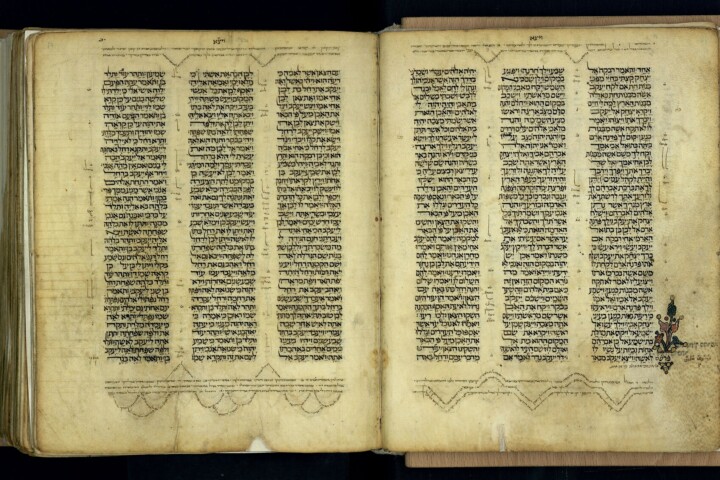
I noticed something odd with the psalm reading at Mass the other day. Our bishops’ conference here in Canada has decreed that the Mass in English – Novus Ordo – use the ‘NRSV’, the ‘New Revised Standard Version’, an ‘updated’ translation of the original RSV, first published in 1952. This ‘new translation’ has the tendency[…]Continue reading→
Saint Jean-Baptiste de la Salle: A Teacher for Teachers
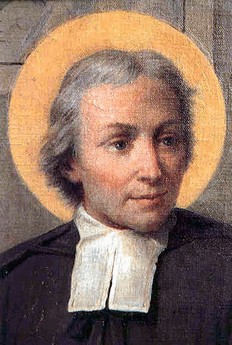
Jean-Baptiste de la Salle (1651 – 1719), a French nobleman, ordained a priest, founded the first order in the Church’s history entirely without priests, and this came about almost by accident. I say ‘almost’, for, of course, there are no accidents with God. Destined for ordination from an early age, Jean-Baptiste never looked back, even[…]Continue reading→