
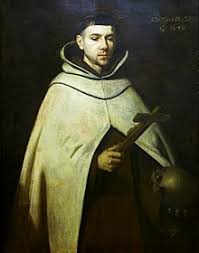
Saint John of the Cross and the Path to the Heights of Holiness
What does Saint John of the Cross, whose memorial we celebrate in these ides of the dark days of December, saint stand for? Before replying to this question it is important to give a context regarding his life and the times he lived in.
John was born in the vicinity of Avila, in Spain, in 1542. At the age of twenty-five, precisely in 1567, he was ordained to the priesthood in the ancient Carmelite Order. It was on that very special day that the good Lord allowed him to meet a fellow Carmelite, a great woman in the history of the Church, St Teresa of Avila. The life of these two saints in the life of the Carmelite charism were to be united together so that a new reform of the Carmelite order might emerge and leave abundant good fruit for the Church and the world.
It was during the 1570’s that Fra John of the Cross started serving Teresa’s convent and ended up being her both confessor as well as spiritual director. With Christ being at the centre of their relationship, the two collaborated closely together and grew profusely in the Lord. It was at this time too that Teresa wrote her great mystical works. Their close collaboration as well as spiritual friendship not only helped John overcome the trauma of the unjust suffering and torture with which he had to contend, but also motivated him to start writing and go deeper into his mystical doctrine.
After serving his brethren throughout central and southern Spain, he was designated to embark on a Mexico mission in 1591, John of the Cross was seriously ill and passed away when he was preparing to set sail for the voyage to the Americas. On his death bed he confided the following to his Carmelite brothers: “Today, I’m going to sing the Office in heaven.”
It was Pope Benedict XIII who canonized St John of the Cross in 1726, and Pope Pius XI, in 1926, chose him as Doctor of the Church by conferring on him the title Doctor Mysticus, the mystical doctor. Thanks to his experience of pain and suffering, when his faith was harshly put to the test, prompted John to delve deeper into the Dark Night of the Soul, wherein the soul is purified by God in view of the complete union with God by means of the Holy Trinity. John of the Cross highlighted God’s outstanding initiative through the power of grace. He wrote: Human effort alone, in fact, is incapable of reaching the deepest roots of a person’s bad inclinations and habits. It can halt them but not eradicate them completely. Thus, he continues: To do this, a special action is needed from God which radically purifies the spirit and disposes it to the union of love with Him.
It is the Holy Spirit the prime author of this great purification of the soul from every sort of impurity that may stand in the way. God permits the soul to undergo any kind of trial up to the point when it sees itself in a dark night. The ultimate end of his immense and deep mystical doctrine is that of attaining holiness. The soul is called by God to embrace this state of perfection, which is holiness. And this call is universal.
Although both in its active as well as passive forms, this process demands our determined commitment, God remains the key player of it all. As human beings we are called to open our hearts and wills and make ourselves ready to fully collaborate with God’s Spirit. Such is a powerful way of what it means to be humble and let God be God in our lives. Hence, our spiritual maturity decisively depends on our humble dedication as well as faithful perseverance.
Personally speaking I find Pope Benedict XVI’s reflection on St John of the Cross quite extraordinary. Speaking about this very important 16th-century saint and mystic during his general audience of Wednesday,16 February 2011, Pope Emeritus Benedict XVI said:
To find the answer we must first of all bear in mind that the life of St John of the Cross did not “float on mystical clouds”; rather he had a very hard life, practical and concrete, both as a reformer of the Order, in which he came up against much opposition and from the Provincial Superior as well as in his confreres’ prison where he was exposed to unbelievable insults and physical abuse.
His life was hard yet it was precisely during the months he spent in prison that he wrote one of his most beautiful works. And so we can understand that the journey with Christ, travelling with Christ, “the Way”, is not an additional burden in our life, it is not something that would make our burden even heavier but something quite different. It is a light, a power that helps us to bear it.
Then he added: If a person bears great love in himself, this love gives him wings, as it were, and he can face all life’s troubles more easily because he carries in himself this great light; this is faith: being loved by God and letting oneself be loved by God in Jesus Christ. Letting oneself be loved in this way is the light that helps us to bear our daily burden. And holiness is not a very difficult action of ours but means exactly this “openness”: opening the windows of our soul to let in God’s light, without forgetting God because it is precisely in opening oneself to his light that one finds strength, one finds the joy of the redeemed. Let us pray the Lord to help us discover this holiness, to let ourselves be loved by God who is our common vocation and the true redemption.
John gives us some very profound and down-to-earth insights for our spiritual journey.
First, God is our spouse and friend throughout our spiritual journey. He recommends to us: Take God for your spouse and friend and walk with him continually, and you will not sin and will learn to love, and the things you must do will work out prosperously for you. Second, in our spiritual journey we are not to let great opportunities that can help us grow escape us. St John says: He who loses an opportunity is like the man who lets a bird fly from his hand, for he will never recover it. Third, our spiritual journey helps us to be united with the Crucified Christ even when things go wrong for us. John encourages us with the following words: Whenever anything disagreeable or displeasing happens to you, remember Christ crucified and be silent.
St John of the Cross, pray for us!

Saint Kateri , Canada’s Protectress
This was the title given to Saint Kateri Tekakwitha, by Pope Benedict XVI, when he canonized her on October 28th, 2012, along with six others, in Saint Peter’ Square (she had been beatified by Pope John Paul II back in 1980). With Saint Joseph as our protector, along with the Canadian martyrs, we seem to[…]Continue reading→

Remembering Father Alphonse de Valk
(Today marks the sixth anniversary of the death of Father Alphonse de Valk, C.S.B., a faithful, courageous and indefatigable Basilian priest, pro-life-and-family apostle, and the founder of Catholic Insight magazine. Here is what we wrote those on his entering into eternity five years ago, as we continue to remember him in our prayers and thoughts)[…]Continue reading→
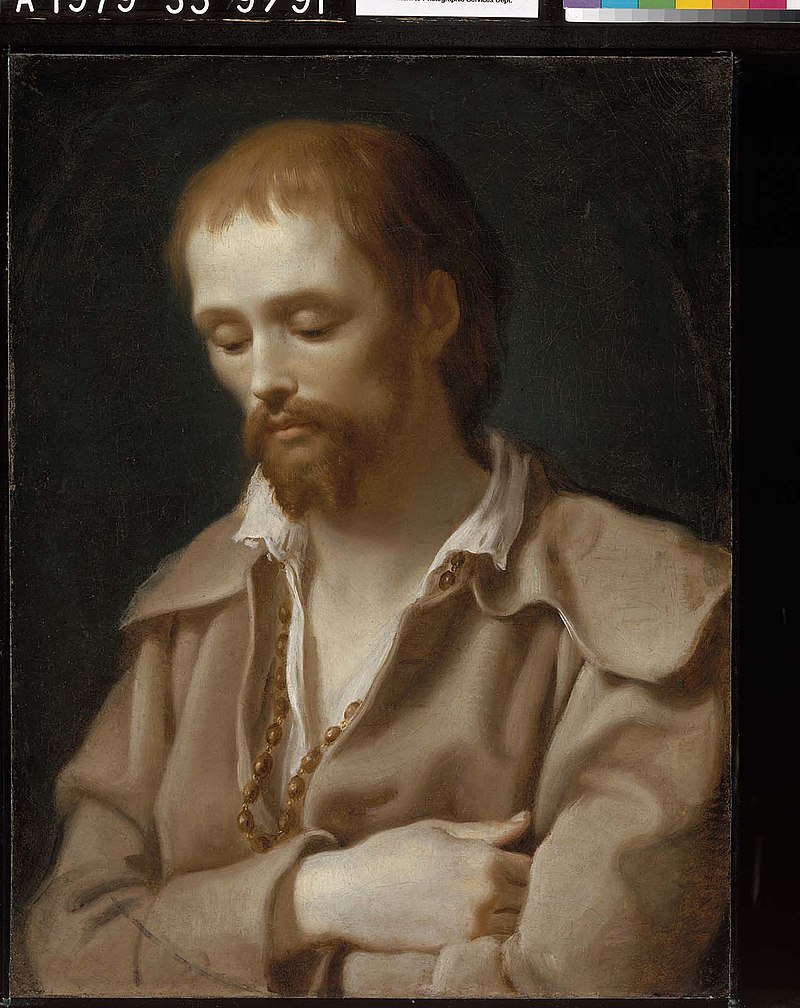
A Tale of Two Benedicts
A grace-filled Holy Week to all our readers! As we await and prepare for the Resurrection about to dawn upon us, we might keep in mind two Benedicts: Pope Emeritus Benedict XVI, requiescat in pace, elected on this day in 2005; and today’s commemoration of the mystic pilgrim, Benedict Joseph Labre, who died on this[…]Continue reading→

My Name is Bernadette
April 16th is a propitious day, for besides the anniversary of Father de Valk’s death, who founded Catholic Insight in its print form decades ago, and the commemoration of the ‘two Benedicts’, mentioned in accompanying posts, today we also recall Saint Bernadette Soubirous, the young visionary to whom the Virgin Mary appeared numerous times at[…]Continue reading→
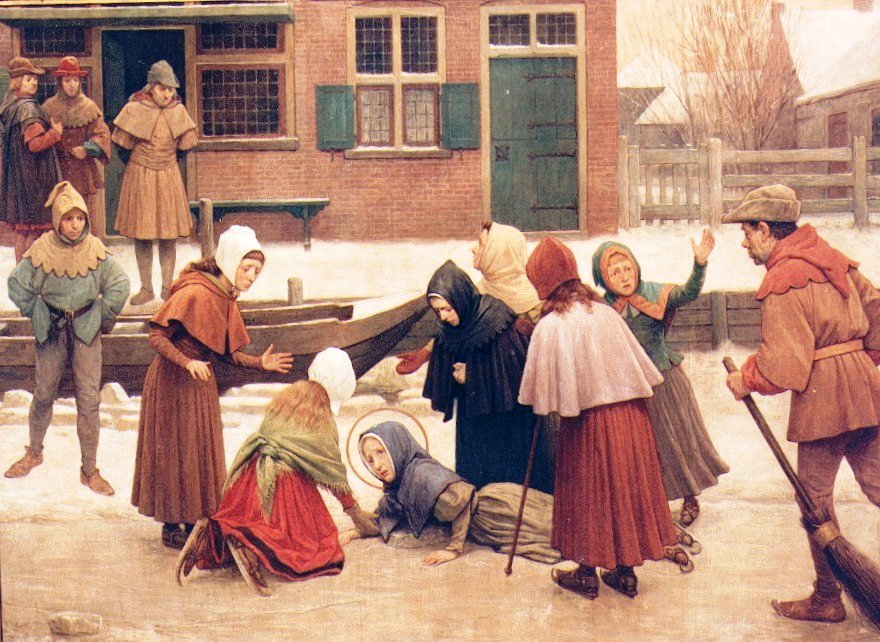
Saint Lydwina of Schiedam and Suffering Joyfully
Saint Lydwina of Schiedam (1380 – 1433) was one of the countless and glorious ‘victim souls’ in the history of the Church, those whose lives are filled with suffering, often of an unimaginable intensity, but who suffer joyfully. She was a fifteen-year old Dutch girl, out skating one day, when she fell and broke one[…]Continue reading→
The Glorious Martyrdoms of Martin and Maximus
As we enter into Eastertide, we recall on this 13th of April Pope Saint Martin I (+655), one of the noblest, if most tragic, of the successors of Saint Peter. Born in Umbria, Italy, he was of noble lineage, with great intelligence combined with charity and love of the poor and the Church. While still[…]Continue reading→
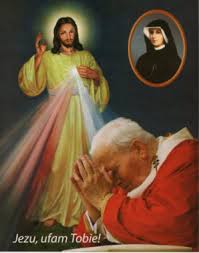
Canonizing Sister Faustina and Divine Mercy
HOMILY OF THE HOLY FATHER MASS IN ST PETER’S SQUARE FOR THE CANONIZATION OF SR MARY FAUSTINA KOWALSKA Sunday, 30 April 2000 1. “Confitemini Domino quoniam bonus, quoniam in saeculum misericordia eius”; “Give thanks to the Lord for he is good; his steadfast love endures for ever” (Ps 118: 1). So the Church sings on the Octave of[…]Continue reading→

Divine Mercy Sunday – An Echo of Every Mass
Reach out your hand and put it in my side. Do not doubt but believe’… ‘My Lord and my God!’ (Jn. 20:18)). Today is Divine Mercy Sunday, and as we celebrate the end of the Easter Octave, we contemplate the wounded side of our Saviour, the Church’s source of life. On Good Friday in the[…]Continue reading→
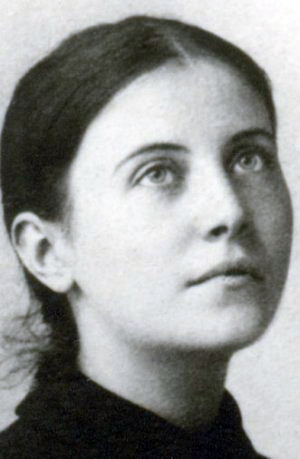
Saint Gemma Galgani
On this April 11th, in 1903 – the same year that the Italian Guiseppe Sarto was elected Pope later that summer as Pius X – a lovely, young Italian woman died, by the name of Gemma Galgani. She lived a brief life of 24 years, as did a number of other young saints, including Pier[…]Continue reading→

First Holy Communion: Sermon from May 16, 1943
Here is a sermon from the good old days by +Rev. Msgr. Vincent Nicholas Foy (August 14, 1915 – March 13, 2017), from 1943. Readers may recall that Pope Saint Pius X, by the decree Quam Singulari in 1910, lowered the customary age of reception of Holy Communion – after the rigours of the plague[…]Continue reading→