
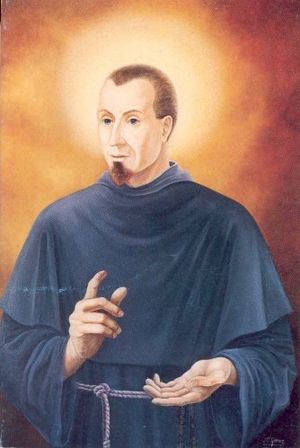
Saint Francis Anthony Fasani: A Man Transformed in the Transfigured Christ
It was the year 1681, precisely at Lucera in Apulia, wherein Francis Anthony was born on this day of November 27th. His father was Giuseppe Fasani, and his his mother Isabella Della Monaca. They could thank the Lord seeing their Giovanniello, (his baptismal name) growing up demonstrating spiritual and intellectual gifts. When he initiated his studies at the Franciscan friary of the Friars Conventual at Lucera it became clear to him that God wanted to follow that way of holiness. Thus, he entered the Order of the Friars Minor Conventual and was given the names of both St Francis and St Anthony. Their names showed him that he was to lead both an evangelical and apostolic life. After professing his vows in 1696 he did his philosophical studies. When he finished his courses he moved to this theological studies in Agnone and in the General Study Centre at Assisi near St Francis’ tomb. Francis Anthony was ordained to the priesthood in Assisi in 1705 and finished his studies there too.
Padre Francis Anthony studied with diligence and with a passion to assimilate the mysteries of faith. Such an attitude rendered him “profound in philosophy and learned in theology”. Spiritually Francis Anthony progressed alot in spiritual life thanks to good spiritual masters. For him his religious consecration and priestly charism were sources of his personal holiness.
Francis Anthony remained in Lucera for some thirty-five years from 1707 until his death living the gospel life expressed in a zealous pastoral ministry. He was a respected teacher of scholastic philosophy, master of novices and the professed, local superior and provincial minister. Charity and wisdom were two legs on which he could fulfill these special responsibilities assigned to him. In 1707 Francis Anthony received a graduate degree in theology, and from that time he was simply referred to as “Padre Maestro” (Father Master).
Among the virtues that helped him be like his Seraphic Father St Francis one finds his generous participation in the mysteries of Christ through the faithful living out of the evangelical counsels; his fervent devotion to the Immaculate Mother of the Lord; his marvellous commitment at preaching the word of God through retreats, popular missions, Lenten devotions and novenas; the sacrament of the confessional, as well as the celebration of the Holy Eucharist. Francis Anthony also promoted the daily communion.
Prayer led him to meet the mystical Christ as present in the poor, the sick as well as the imprisoned. Following his own dictum that we must be charitable, Francis Anthony distributed personally the alms to the poor of his fraternity. Furthermore, he offered them the special goods gathered from benefactors. To the sick Padre Francis Anthony encouraged them to trust in God’s goodness whereas to the imprisoned he urged them to trust in God’s merciful love for each and every one of them. He even had the grace of assisting those condemned to death and being with them during their last moments of their lives.
In 1742 he fell sick. He offered his sickness to the Lord in the Franciscan spirit of perfect joy. He used to say: The Will of God: that is my Paradise, and in that spirit he died on November 2, All Souls’ Day. Thanks to the countless graces that were obtained through his intercession Padre Francis Anthony Fasani was beatified by Pope Pius XII on April 15, 1951, and canonized by Pope St John Paul II on 13 April 1986.
Let us savour his teaching on Our Lady Immaculate. In this speech he is talking about the fact that in Mary, nature and grace were in remarkable harmony:
In the Immaculate Virgin, a model of sanctity outstanding in its radiant brightness is put before us. From the very first moment of her conception. She appeared to the world like a boundless ocean of perfection and virtues. First-born of all creatures, she was always peerless in her purity and perfection; her thoughts, affections and desires, as well as her actions, were always adorned with admirable virtues, their all-pervading perfume like that of the most fragrant flowers, with never a breath of profanity to tarnish their beauty. Throughout her life her whole being was perfectly ordered, with nature and grace in marvellous harmony, and spirit and flesh, the higher powers and the lower, in perfect harmony with original justice.
As for you, in your life you have been stained by many sins. How great the carelessness in observing the divine law; how many the precepts transgressed, the duties neglected! Observe the bitter battle being fought within you, as the senses rebel against reason and the flesh against the spirit. How many times you have rendered fruitless the precious gift of grace. For how long has the Lord been repeating to you his burning desire for your salvation, and you contradict his wishes, reject his inspirations and resist his grace. And if at times you do indulge his invitations, you still fail to respond to the highest aims of his Providence.
All this results from a lack of the spirit of prayer. Even ecclesiastics study God, preach about God, teach about God, debate about God; and yet the spirit remains dry, there is no devotion in it. Lots of knowledge, but no prayer; all the nourishment is for the intellect, with nothing for the will.
Reflect on the fact that your dependence on the Lord is fundamental, absolute, constant. Why then do you not keep your eyes on heaven, to praise, bless, and glorify the divine Goodness? If you were to direct everything to God, you would become a saint. Get up now, put your intentions right, do good, love what is good, but only for God’s sake and for him alone. Strive to imitate the most perfect and Immaculate Virgin Mary, always “ambitious for the higher gifts”.
If you spoke the language of angels, if you knew the hidden depths of God’s mind, if the dead rose to life at the nod of your head, all of this would be worth no more than a single degree of sanctifying grace. The cardinal virtues are to be highly esteemed, but much more so are the theological virtues. Faith is precious, and hope is precious, but the greatest of them is charity, which brings with it the gifts of the Spirit.
O God, in St Francis Anthony you have given us a model of seraphic perfection and an ardent apostle of your word. Grant through his merits and intercession that we may be always steadfast in the faith and active in charity, so that we may merit an eternal reward. We ask this through our Lord Jesus Christ, you Son, who lives and reigns with you and the Holy Spirit, one God, forever and ever. Amen.

Saint Kateri , Canada’s Protectress
This was the title given to Saint Kateri Tekakwitha, by Pope Benedict XVI, when he canonized her on October 28th, 2012, along with six others, in Saint Peter’ Square (she had been beatified by Pope John Paul II back in 1980). With Saint Joseph as our protector, along with the Canadian martyrs, we seem to[…]Continue reading→

Remembering Father Alphonse de Valk
(Today marks the sixth anniversary of the death of Father Alphonse de Valk, C.S.B., a faithful, courageous and indefatigable Basilian priest, pro-life-and-family apostle, and the founder of Catholic Insight magazine. Here is what we wrote those on his entering into eternity five years ago, as we continue to remember him in our prayers and thoughts)[…]Continue reading→
A Tale of Two Benedicts
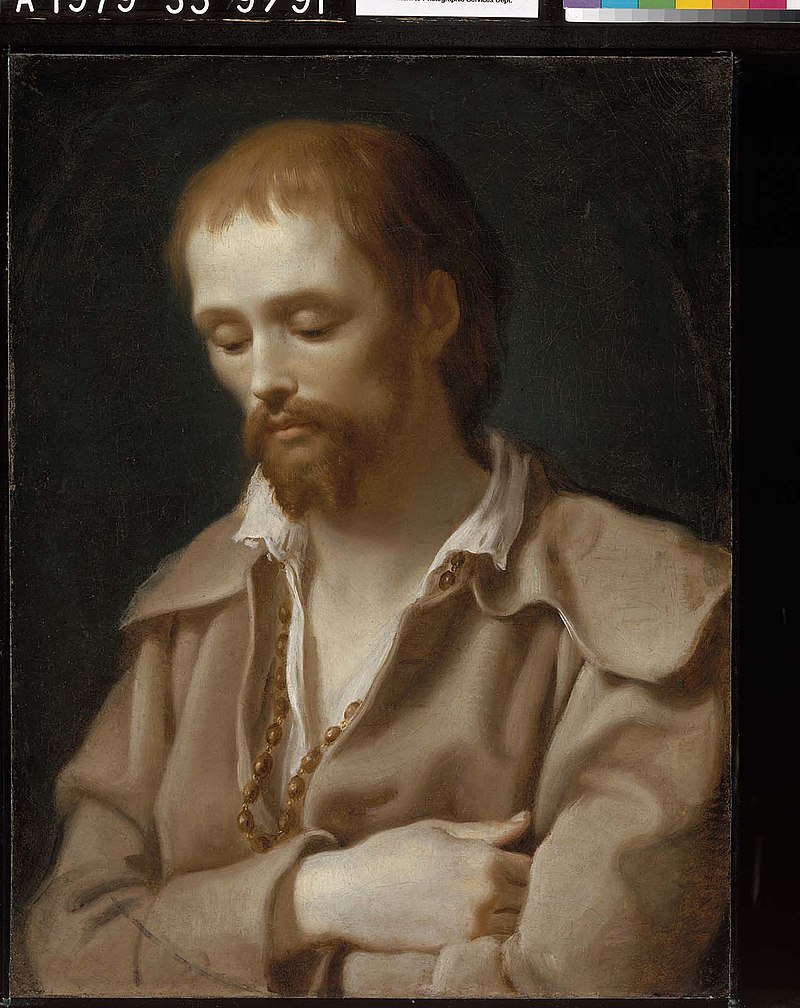
A grace-filled Holy Week to all our readers! As we await and prepare for the Resurrection about to dawn upon us, we might keep in mind two Benedicts: Pope Emeritus Benedict XVI, requiescat in pace, elected on this day in 2005; and today’s commemoration of the mystic pilgrim, Benedict Joseph Labre, who died on this[…]Continue reading→

My Name is Bernadette
April 16th is a propitious day, for besides the anniversary of Father de Valk’s death, who founded Catholic Insight in its print form decades ago, and the commemoration of the ‘two Benedicts’, mentioned in accompanying posts, today we also recall Saint Bernadette Soubirous, the young visionary to whom the Virgin Mary appeared numerous times at[…]Continue reading→
Saint Lydwina of Schiedam and Suffering Joyfully
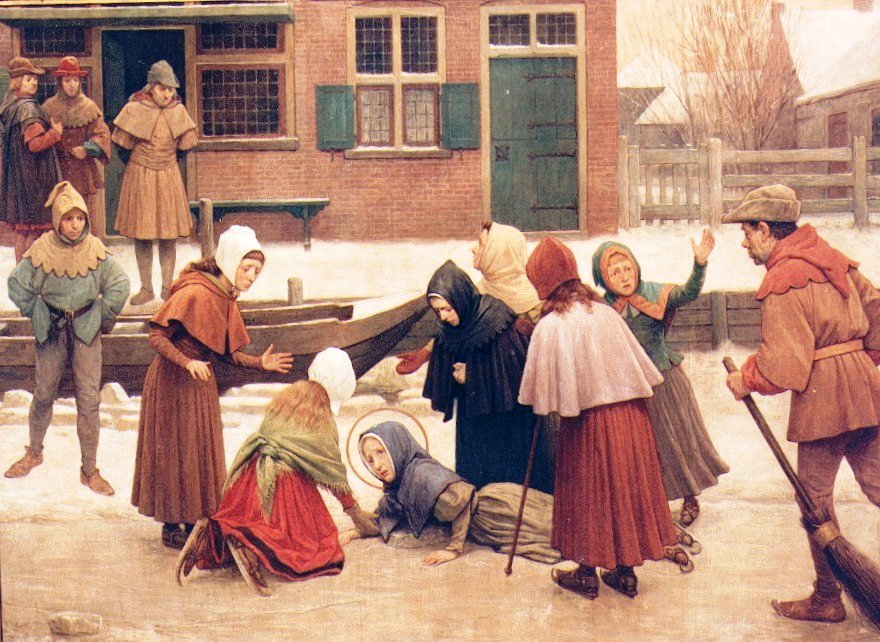
Saint Lydwina of Schiedam (1380 – 1433) was one of the countless and glorious ‘victim souls’ in the history of the Church, those whose lives are filled with suffering, often of an unimaginable intensity, but who suffer joyfully. She was a fifteen-year old Dutch girl, out skating one day, when she fell and broke one[…]Continue reading→
The Glorious Martyrdoms of Martin and Maximus
As we enter into Eastertide, we recall on this 13th of April Pope Saint Martin I (+655), one of the noblest, if most tragic, of the successors of Saint Peter. Born in Umbria, Italy, he was of noble lineage, with great intelligence combined with charity and love of the poor and the Church. While still[…]Continue reading→
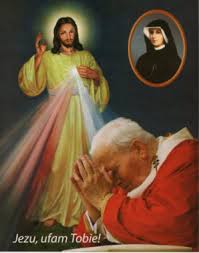
Canonizing Sister Faustina and Divine Mercy
HOMILY OF THE HOLY FATHER MASS IN ST PETER’S SQUARE FOR THE CANONIZATION OF SR MARY FAUSTINA KOWALSKA Sunday, 30 April 2000 1. “Confitemini Domino quoniam bonus, quoniam in saeculum misericordia eius”; “Give thanks to the Lord for he is good; his steadfast love endures for ever” (Ps 118: 1). So the Church sings on the Octave of[…]Continue reading→

Divine Mercy Sunday – An Echo of Every Mass
Reach out your hand and put it in my side. Do not doubt but believe’… ‘My Lord and my God!’ (Jn. 20:18)). Today is Divine Mercy Sunday, and as we celebrate the end of the Easter Octave, we contemplate the wounded side of our Saviour, the Church’s source of life. On Good Friday in the[…]Continue reading→
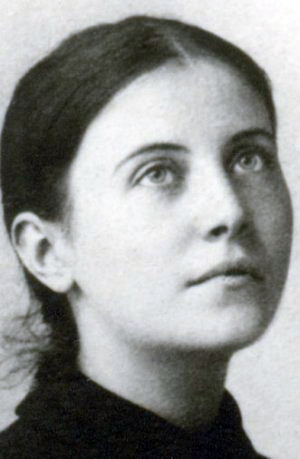
Saint Gemma Galgani
On this April 11th, in 1903 – the same year that the Italian Guiseppe Sarto was elected Pope later that summer as Pius X – a lovely, young Italian woman died, by the name of Gemma Galgani. She lived a brief life of 24 years, as did a number of other young saints, including Pier[…]Continue reading→

First Holy Communion: Sermon from May 16, 1943
Here is a sermon from the good old days by +Rev. Msgr. Vincent Nicholas Foy (August 14, 1915 – March 13, 2017), from 1943. Readers may recall that Pope Saint Pius X, by the decree Quam Singulari in 1910, lowered the customary age of reception of Holy Communion – after the rigours of the plague[…]Continue reading→