
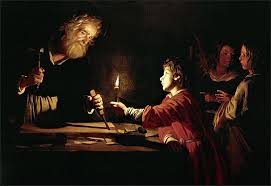
Saint Joseph: Foster Father, Virginal Father, Real Father?
As I do more reading into what various theologians and josephologists have written about the fatherhood of Saint Joseph, I notice that there is a common pattern in respect to the use of the title of “Foster Father.” More and more, I see that some are becoming more and more uncomfortable and dissatisfied with the use of this title of “Foster Father” to describe the fatherhood of Saint Joseph.
For example, Dr. Scott Hahn in his book Joy to the World expresses this same hesitancy with this title,[1] as does Saint Josemaría Escrivá.[2] Another theologian by the name of Msgr. Joseph A. Cirrincione also notes this new tendency in Josephology when he writes that “recently there are Catholic writers who are not happy with this term [of Foster Father].”[3] The reason being is that when the term “Foster Father” is applied to Saint Joseph, this title sometimes has the connotation of a false paternity, despite the fact that foster and adopted fathers are fathers in the true sense.[4] While it is true that calling Saint Joseph the “Foster Father” of Jesus Christ is a legitimate title for the Image of God the Father,[5] the problem here is that when this title is the only title used to describe the paternity of Joseph of Nazareth, it in point and fact detracts from the reality of the great Patriarch’s fatherhood by falsely confining fatherhood to its physicality. Thus, as Hahn notes, the primary reason that Christians will use the term “Foster Father” to describe Joseph’s paternity is through an effort “to build a rhetorical wall around Mary’s virginity and God’s fatherhood [of Jesus].”[6] Once again, the problem here is that Catholics are too fixated on the physical dimension of human fatherhood, and forget that adopted or foster fathers are just as real fathers as natural fathers are for the very reason that both types of fathers raise, educate and nourish the children entrusted to their care, and thus Hahn observes that this title of “Foster Father” as a title for Saint Joseph’s fatherhood is a term that “can sometimes hinder as much as it helps.”[7]
Further, the inadequacy of this title of describing Saint Joseph’s paternity is rooted in a mistranslation of the original Latin term for “Foster Father.” Father Donald Calloway in his book Consecration to Saint Joseph notes that the Latin title from which we get the poor translation of “Foster Father” is Filii Dei Nutricie, which literally translates into English to “Nurturer of the Son of God.”[8] Thus, the title of “Foster Father” actually very poorly conveys the meaning of Filii Dei Nutricie, because this original Latin title for Saint Joseph conveys that it is not only the vocation of a father to merely beget a child, but also to raise, educate, and nurture the child into manhood, as Saint Thomas Aquinas notes in various places.[9] Thus, because the English title of “Foster Father” seems insufficient to express the veracity of Saint Joseph’s paternity, Cirrincione observes that Catholic writers “have come to agree that the more appropriate title for St. Joseph would be the ‘Virgin father’ of Jesus. For as we shall see, he was very truly the father of Jesus.”[10] Thus, Cirrincione here states the position of the Doctor of Grace, the great Saint Augustine of Hippo himself, who maintained with great eloquence and captivating rhetoric the reality of Saint Joseph’s fatherhood through the Just Man’s perpetual virginity, precisely because Holy Joseph not only raised, educated, and nurtured the Son of God, but also because the Son of God and Son of Mary was born within the marriage of Mary and Saint Joseph. Augustine’s eloquent explanation deserves to be quoted at length here:
A Son was born of the Virgin Mary to the piety and love of Joseph, and that son was the Son of God. Thus, should not the husband accept virginally what the wife brought forth virginally? For just as she was a virginal wife, so was he a virginal husband; just as she was a virginal mother so was he a virginal father. Therefore, whoever says, “He should not have been called father because he did not generate the son” looks to concupiscence in the procreation of children, not to the inner sentiments of love. Let his greater purity confirm his fatherhood; let not holy Mary reprehend us, for she was unwilling to place her name before that of her husband but said, “Thy father and I have been seeking thee sorrowing.” Therefore, let no perverse murmurers do what the virginal wife did not do. As he was a virginal husband, so was he a virginal father. Just as was the man, just so was the woman. The Holy Spirit, resting in the justice of both, gave a son to both.[11]
Thus, when the Doctor of Grace writes, “whoever says, ‘He should not have been called father because he did not generate the son’ looks to concupiscence in the procreation of children, not to the inner sentiments of love,” Augustine criticizes the very problem with limiting the paternity of Saint Joseph through the use of the title “Foster Father”; it is that this notion of paternity confines fatherhood to purely its physical dimension — that is, “to concupiscence in the procreation of children,” — and not to the broader notion of paternity, which is the raising, educating, and nurturing of the children — that is, “to the inner sentiments of love.” Not only does Saint Augustine hold this perspective, but Saint Thomas Aquinas early in his theology career also echoes the same position of Saint Augustine when the ‘Dumb Ox’ wrote of the “moral bond” that existed between the hearts of Jesus and Saint Joseph on account of both the fact that Jesus was conceived inside the marriage of Mary and Saint Joseph virginally, and because Joseph indeed did raise, educate, and nurture the Son of God into His most sacred manhood.[12]
Therefore, if Catholics wish to please Jesus Christ, His Most Holy Mother, and His Most Just Father Joseph, they would do well to follow the theological trend that many theologians and josephologists have taken in the last hundred years and even earlier than that in the times of Saint Augustine and Saint Thomas Aquinas by calling Joseph the Virginal Father of the Son of God instead of the Foster Father of the Savior and Redeemer. In this Year of Saint Joseph proclaimed by Pope Francis, there is perhaps an extra incentive to do so; for the more that Catholics know Joseph for what and who he truly is and love and honor him so, then the Age of Peace promised at Fatima will come more swiftly[13] and the numerous problems that we are currently experiencing and beset by in the Church and in the world will be eradicated when that “historic release of grace” emitted from this Reign of Peace occurs,[14] because the prerequisite to this Age of Peace, to this Triumph of the Immaculate Heart of Mary — which is the universal love and devotion for Joseph, the Patron of the Triumph of Mary’s Immaculate Heart — is finally being fulfilled.[15] For it is indeed true that Joseph was more than the Foster Father of Jesus Christ; the Image of God the Father was indeed the real father of Christ — precisely because he was the Virginal Father of Jesus his only-begotten Son.
[1] Scott Hahn, Joy to the World: How Christ’s Coming Changed Everything (and Still Does) (New York: Image, 2014), 69-70.
[2] Donald H. Calloway, MIC, Consecration to St. Joseph: The Wonders of Our Spiritual Father (Stockbridge: Marian Press, 2020), 101-102.
[3] Msgr. Joseph A Cirrincione with Thomas A. Nelson, St. Joseph, Fatima and Fatherhood: Reflections on the “Miracle of the Sun” (Charlotte: TAN, 1989), 14.
[4] Mark I. Miravalle, STD, Meet Your Spiritual Father: A Brief Introduction to St. Joseph (Lighthouse Catholic Media and Marian Press, 2015), 53-59; Saint Thomas Aquinas, Summa Theologiae, trans. Fr. Laurence Shapcote, O.P., ed. John Mortensen and Enrique Alarcon (Lander: The Aquinas Institute for the Study of Sacred Doctrine, 2012), III, q. 28, a. 1, ad 1, https://aquinas.cc/la/en/~ST.I, emphasis added: “Vel, sicut Augustinus dicit, in libro de bono coniugali, eo modo pater Christi dicitur Ioseph quo et vir Mariae intelligitur, sine commixtione carnis, ipsa copulatione coniugii, multo videlicet coniunctius quam si esset aliunde adoptatus. Neque enim propterea non erat appellandus Ioseph pater Christi quia non eum concumbendo genuerat, quandoquidem pater esset etiam ei quem, non ex sua coniuge procreatum, aliunde adoptasset.”
[5] Calloway, Consecration to St. Joseph, 37 and 102.
[6] Hahn, Joy to the World, 70.
[7] Ibid.
[8] Calloway, Consecration to St. Joseph, 37.
[9] Saint Thomas Aquinas, Summa Contra Gentiles, trans. Fr. Laurence Shapcote, O.P. (Green Bay, WI: Aquinas Institute Inc., 2018), III, c. 122, https://aquinas.cc/la/en/~SCG3; Saint Thomas Aquinas, Commentary on the Sentences, trans. Beth Mortensen, STD, ed. and annot. Michael Bolin, PHD, Jeremy Holmes, PHD, and Peter Kwasniewski, PHD (Aquinas Institute for the Study of Sacred Doctrine), IV, d. 30, q. 2, a. 2, ad 4, https://aquinas.cc/la/en/~Sent.I; Aquinas, Summa Theologiae, II-II, q. 154, a. 2, co.
[10] Cirrincione, St. Joseph, Fatima and Fatherhood, 14, emphasis added.
[11] Saint Augustine of Hippo, Sermo. 51, Nos. 16, 20, 26, 30 (MPL 38, 342 ff.) as quoted in Miravalle, Meet Your Spiritual Father, 55-56 and as quoted in Calloway, Consecration to St. Joseph, 134, emphasis added.
[12] Miravalle, Meet Your Spiritual Father, 55-56; Aquinas, Commentary on the Sentences, IV, d. 30, q. 2, a. 2, ad 4: “[P]roles non dicitur bonum matrimonii solum inquantum per matrimonium generatur, sed inquantum in matrimonio suscipitur et educatur; et sic bonum illius matrimonii fuit proles illa et non primo modo. Nec tamen de adulterio natus, nec filius adoptivus qui in matrimonio educatur, est bonum matrimonii: quia matrimonium non ordinatur ad educationem illorum, sicut hoc matrimonium fuit ad hoc ordinatum specialiter quod proles illa susciperetur in eo, et educaretur.”
[13] “St. Joseph: Patron of the Triumph of Mary’s Immaculate Heart,” YouTube, September 20, 2015, https://www.youtube.com/watch?v=eu-DVXd7PtU.
[14] Miravalle, Meet Your Spiritual Father, 88.
[15] “St. Joseph: Patron of the Triumph of Mary’s Immaculate Heart,” YouTube, September 20, 2015, https://www.youtube.com/watch?v=eu-DVXd7PtU; Cirrincione, St. Joseph, Fatima and Fatherhood, back of front cover.

Saint Kateri , Canada’s Protectress
This was the title given to Saint Kateri Tekakwitha, by Pope Benedict XVI, when he canonized her on October 28th, 2012, along with six others, in Saint Peter’ Square (she had been beatified by Pope John Paul II back in 1980). With Saint Joseph as our protector, along with the Canadian martyrs, we seem to[…]Continue reading→

Remembering Father Alphonse de Valk
(Today marks the sixth anniversary of the death of Father Alphonse de Valk, C.S.B., a faithful, courageous and indefatigable Basilian priest, pro-life-and-family apostle, and the founder of Catholic Insight magazine. Here is what we wrote those on his entering into eternity five years ago, as we continue to remember him in our prayers and thoughts)[…]Continue reading→
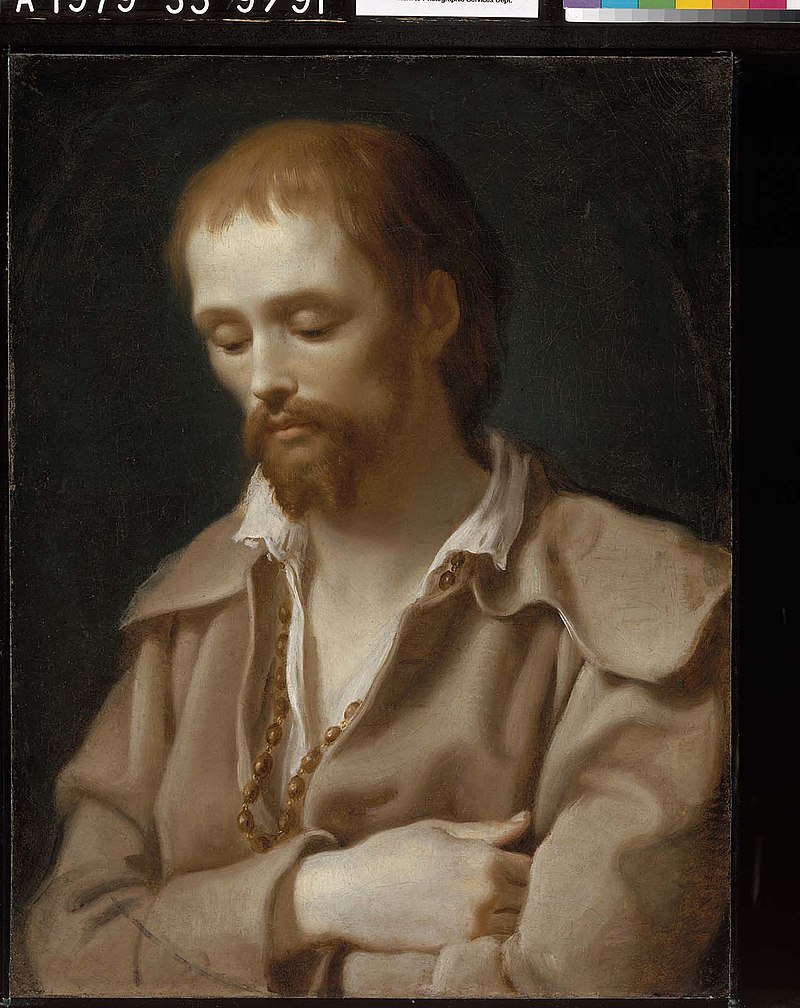
A Tale of Two Benedicts
A grace-filled Holy Week to all our readers! As we await and prepare for the Resurrection about to dawn upon us, we might keep in mind two Benedicts: Pope Emeritus Benedict XVI, requiescat in pace, elected on this day in 2005; and today’s commemoration of the mystic pilgrim, Benedict Joseph Labre, who died on this[…]Continue reading→

My Name is Bernadette
April 16th is a propitious day, for besides the anniversary of Father de Valk’s death, who founded Catholic Insight in its print form decades ago, and the commemoration of the ‘two Benedicts’, mentioned in accompanying posts, today we also recall Saint Bernadette Soubirous, the young visionary to whom the Virgin Mary appeared numerous times at[…]Continue reading→
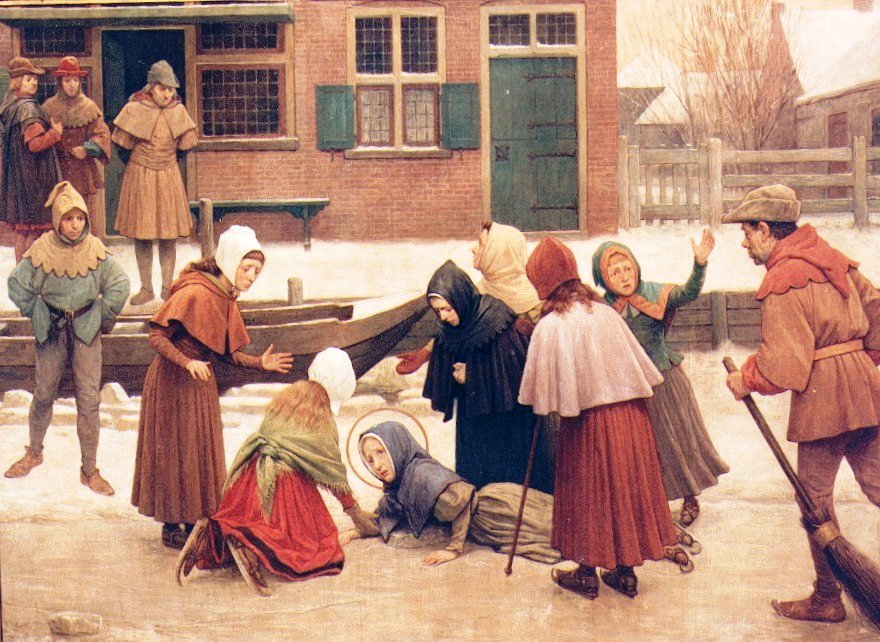
Saint Lydwina of Schiedam and Suffering Joyfully
Saint Lydwina of Schiedam (1380 – 1433) was one of the countless and glorious ‘victim souls’ in the history of the Church, those whose lives are filled with suffering, often of an unimaginable intensity, but who suffer joyfully. She was a fifteen-year old Dutch girl, out skating one day, when she fell and broke one[…]Continue reading→
The Glorious Martyrdoms of Martin and Maximus
As we enter into Eastertide, we recall on this 13th of April Pope Saint Martin I (+655), one of the noblest, if most tragic, of the successors of Saint Peter. Born in Umbria, Italy, he was of noble lineage, with great intelligence combined with charity and love of the poor and the Church. While still[…]Continue reading→

Canonizing Sister Faustina and Divine Mercy
HOMILY OF THE HOLY FATHER MASS IN ST PETER’S SQUARE FOR THE CANONIZATION OF SR MARY FAUSTINA KOWALSKA Sunday, 30 April 2000 1. “Confitemini Domino quoniam bonus, quoniam in saeculum misericordia eius”; “Give thanks to the Lord for he is good; his steadfast love endures for ever” (Ps 118: 1). So the Church sings on the Octave of[…]Continue reading→

Divine Mercy Sunday – An Echo of Every Mass
Reach out your hand and put it in my side. Do not doubt but believe’… ‘My Lord and my God!’ (Jn. 20:18)). Today is Divine Mercy Sunday, and as we celebrate the end of the Easter Octave, we contemplate the wounded side of our Saviour, the Church’s source of life. On Good Friday in the[…]Continue reading→

Saint Stanislaus of Szczepanów
We celebrate Saint Stanislaus today (+ April 11, 1079), in light of this Easter Octave, a bishop and martyr who accepted the episcopacy only at the direct order of Pope Alexander II. He proved a wise and courageous leader of his flock, put to death by his own king, Boleslaus, for rebuking the monarch’s ‘immoral[…]Continue reading→
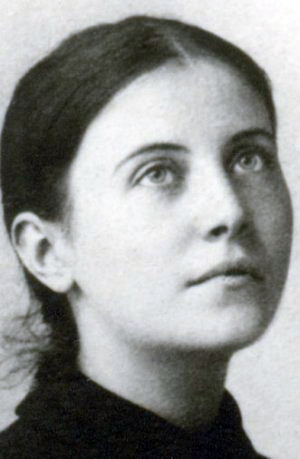
Saint Gemma Galgani
On this April 11th, in 1903 – the same year that the Italian Guiseppe Sarto was elected Pope later that summer as Pius X – a lovely, young Italian woman died, by the name of Gemma Galgani. She lived a brief life of 24 years, as did a number of other young saints, including Pier[…]Continue reading→