
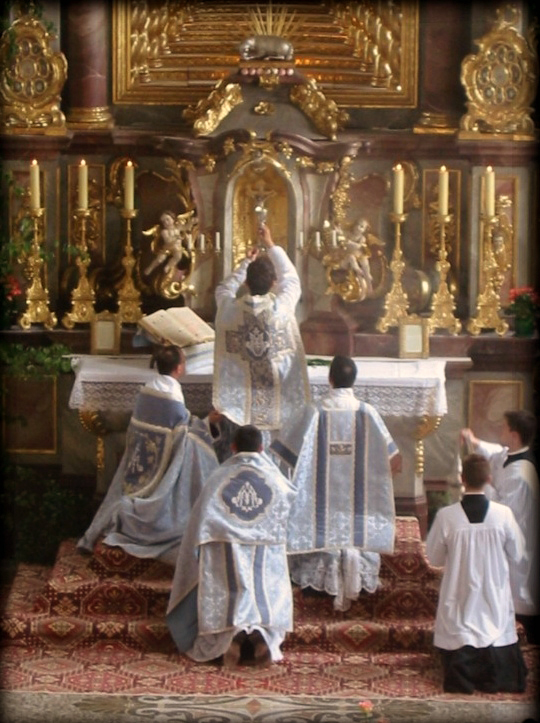
The Holy Mass Part VII: The Culmination of the Sacrifice
This Sunday’s reflection is the seventh in a series of meditations on the Holy Sacrifice of the Mass, with specific references to the Ancient Rite of the Mass, the Usus Antiquior. There are many books in circulation that illustrate the theological and spiritual cohesion of the Ancient Rite of the Mass. It is the Rite that sustained and nourished the spiritual life of countless saints and which gave birth to Christian culture. It is my hope that these meditations may help us to appreciate and to understand that the ultimate purpose of the sacred liturgy is to form our souls in the beauty of holiness; so that we in our time, like those who have gone before us may be ‘the aroma of Christ to God…a fragrance from life to life’ (2 Cor. 2:15-16) for Go d’s greater glory and the salvation of souls.⧾
Simon Peter answered him, ‘Lord, to whom can we go? You have the words of eternal life. We have come to believe and know that you are the Holy One of God’ (Jn. 6:69).
We have come to the end Our Lord’s Eucharistic discourse and the end also of our meditations on the Holy Sacrifice of the Mass. Our knowledge and understanding of the sacred actions that are part of the celebration of the Mass enable us to follow the ritual intelligently, actively and devoutly, and to approach every Mass with awe and wonder. Knowledge increases and deepens; and our growth in the knowledge and love of the Mystery of the Eucharist deepens our love for the Mass. We could look at the Church’s long history and see that sadly, over the ages, there have been individuals like the disciples who turned back and no longer went about with Our Lord, and who have betrayed the Church’s Eucharistic doctrine, reducing the Eucharist to a mere symbol. The words of Our Lord however, are clear enough: ‘Very truly, I tell you, unless you eat the flesh of the Son of Man and drink his blood, you have no life in you.’ St. John remarks, when many of his disciples heard this, they said: ‘This teaching is difficult: who can accept it?’ (Jn. 6:60). Our Lord does not argue with those who left Him. Neither does He change His teaching to make it acceptable or palatable or relevant to them. What is true cannot change. He simply says: The words that I have spoken to you are spirit and life (Jn. 6:63). The Mystery of the Eucharist is revealed not by arguments but by Son of God Himself, which is to say that the truth of this wondrous Mystery is bound to the truth of His Incarnation; that He became man and dwelt among us. Throughout the ages, especially in relation to this mystery though it is true of all the mysteries of God; these are revealed not by arguments but by people. This is why it is essential that we recognise the need to appropriate the mysteries that we celebrate. This is most especially true of the Mystery of the Eucharist. Simply stated, authentic Christian life is Eucharistic. Authentic Christian life is Eucharistic because it is in the Eucharist that Our Lord continues to abide in our midst; in the Tabernacle of our churches and in the hearts and minds of those who receive the Eucharist. This mutual indwelling (perichoresis); Christ in us, and we in Christ is the experience of Christian life in its fullness. As this life deepens and matures we understand what it means to say that our life is hidden with Christ in God (Col. 3:3).
Our Lord left us the Eucharist as the memorial of His Passion. Holy Communion is the fruit of Our Lord’s Sacrifice and the consummation of our prayerful union with Him in His saving work. Nevertheless, the essence or the central aspect of the Mass is the Sacrifice itself, for it is from this font that all needed graces flow. Our participation in this sacred action is not a matter of vocal responses or even of sacramental communion, but of an interior disposition that enables us to be one with Christ Our Lord in His self-offering to the Father. When we live the Eucharistic Mystery, our reverent reception of this Sacrament as well as our adoration of the Blessed Sacrament, become love towards our neighbour – in this order. What does it mean to live the Mystery of the Eucharist? First and foremost, it means that our weekly attendance at the Holy Sacrifice of the Mass becomes the single most important activity of our week. It is here, in the celebration of the sacred liturgy that we learn Christ (Eph. 4:20), to use an expression from St. Paul. We do so that we might in turn, live Christ. We are familiar with the ancient Christian adage: lex orandi, lex credendi, lex vivendi. Integrating our life of prayer with our life generally speaking is the work of a lifetime; and out of this wholeness we begin to understand and experience something of holiness, the perfection of charity.
In our meditations on the Holy Sacrifice of the Mass we have noted that the sacred liturgy nourishes our human nature since it addresses the totality of our being; mind and body, intellect, memory and will. The Eucharist specifically nourishes the seed of immortality which is an undeniable aspect of our personhood. Whoever eats of this bread will live forever; and the bread that I will give for the life of the world is my flesh (Jn. 6:51). All of this however, takes place for us today, in a culture that is gripped by a willful misunderstanding of human nature (Fr. James Schall, s.j.). This is one of the most succinct and insightful assessments of our contemporary culture. The result is a culture of death that increasingly and brazenly disregards the rights and dignity of the individual. When human beings are not seen to be in the image and likeness of God they lose their meaning. If nothing else, the Holy Eucharist is a bold affirmation of our meaning and dignity; that the Son of God who died for our salvation nourishes us with His own life, and that human life, created in the image of God, is destined to share in the divine life by grace, here and for all eternity. The Christian faithful, both clergy and laity who have endeavoured to celebrate the Eucharistic Mystery during the lockdowns of our dystopian health dictatorship are not adolescent, but firm believers in the necessity of the Eucharist. By living an intensely Eucharistic life, each one of us can become a powerful witness to the profound mystery of human life. Every act of adoration, every celebration of Holy Mass, every visit to the Blessed Sacrament, is an act of defiance against the godlessness of our times. The mysteries of God as well as His truths are best revealed not by arguments but by people. If we make the celebration of the Eucharistic Mystery the centre of our life, the effects of this will manifest themselves in the beauty of holiness and in the perfection of Christian charity which defines holiness.
The Eucharist is also the Sacrament of unity which brings about what it signifies. As we have noted, our prayer like the prayer of Our Lord embraces the whole world. We who know the true faith and by God’s Providence belong to His People are called to give direction to the world and our efforts in this regard have never been as needed as they are today. The reverent worship of God in the Church’s sacred liturgy orients our hearts and minds towards God who alone can satisfy the longing of every human heart. Here we learn the love of God and love of neighbour and so become single-minded about the Kingdom of God. The Mass which is truly the most beautiful thing this side of Heaven, ends with a dismissal: Go forth, the Mass is ended. We are sent out into the world to bring to it the truth, light and love of Our Lord; ever mindful as we face the temptations and falsehoods therein, of the words spoken by the Apostle Peter: ‘Lord, to whom can we go? You have the words of eternal life. We have come to believe and know that you are the Holy One of God’ (Jn. 6:69). In its context, this question is an affirmation of belief in the truth of Our Lord. There is no one else to whom we can go. Alone, it is a question that asks simply: ‘Where would you have us go?’ Our Lord Himself answers this question: ‘Go therefore and make disciples of all nations, baptising them in the name of the Father and of the Son and of the Holy Spirit, teaching them to observe all that I have commanded you; and lo, I am with you always, to the end of the age’ (Mt. 28:19-20). So we go forth in the knowledge and love of Our Saviour, mindful that the Mystery of Christ is a Mystery believed, celebrated and lived. In the celebration of the sacred liturgy the mysteries are realized in our very midst and in our very selves; and so we receive our own commission: Go forth in peace. May our devout assistance at the celebration of the Holy Sacrifice be the pattern of both our prayer and of our life.

Remembering Father Alphonse de Valk
(Today marks the sixth anniversary of the death of Father Alphonse de Valk, C.S.B., a faithful, courageous and indefatigable Basilian priest, pro-life-and-family apostle, and the founder of Catholic Insight magazine. Here is what we wrote those on his entering into eternity five years ago, as we continue to remember him in our prayers and thoughts)[…]Continue reading→

Divine Mercy Sunday – An Echo of Every Mass
Reach out your hand and put it in my side. Do not doubt but believe’… ‘My Lord and my God!’ (Jn. 20:18)). Today is Divine Mercy Sunday, and as we celebrate the end of the Easter Octave, we contemplate the wounded side of our Saviour, the Church’s source of life. On Good Friday in the[…]Continue reading→

Saint Stanislaus of Szczepanów
We celebrate Saint Stanislaus today (+ April 11, 1079), in light of this Easter Octave, a bishop and martyr who accepted the episcopacy only at the direct order of Pope Alexander II. He proved a wise and courageous leader of his flock, put to death by his own king, Boleslaus, for rebuking the monarch’s ‘immoral[…]Continue reading→

First Holy Communion: Sermon from May 16, 1943
Here is a sermon from the good old days by +Rev. Msgr. Vincent Nicholas Foy (August 14, 1915 – March 13, 2017), from 1943. Readers may recall that Pope Saint Pius X, by the decree Quam Singulari in 1910, lowered the customary age of reception of Holy Communion – after the rigours of the plague[…]Continue reading→

In the Glorious Light of Easter, Alleluia!
Set your minds on things that are above, not on things that are on earth, for you have died, and your life is hidden with Christ in God. When Christ who is your life is revealed, then you also will be revealed with him in glory (Col. 3:3-4). The Resurrection of Our Lord and Saviour[…]Continue reading→

An Ancient Homily for Holy Saturday
The time between Good Friday and Easter Sunday is one of waiting, in silence, as the world wonders – anticipates – what will happen, after the death of Christ. We re-live this time each year in the anamnesis of our liturgy, and in turn look forward to the glorious re-creation of all things at the[…]Continue reading→

Europe’s Long Descent
(As we meditate on this day on Christ’s burial, and His descent into hell, it is fitting to ponder here with contributor Peter Marcus how the world seems to be heading there as well. The difference is that, although God cannot ‘redeem’ hell, nor those therein, He can and did redeem the world. There is[…]Continue reading→
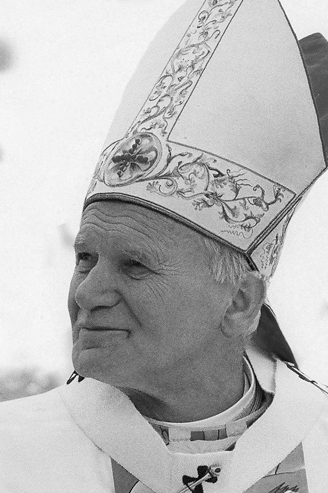
Pope Saint John Paul II’s First Good Friday Homily
ADDRESS OF HIS HOLINESS JOHN PAUL II AT THE CONCLUSION OF THE STATIONS OF THE CROSS AT THE COLOSSEUM Good Friday, 13 April 1979 When we make the Way of the Cross from one station to the next, in spirit we are always at the spot wherethis journey had its “historical” place: where it[…]Continue reading→
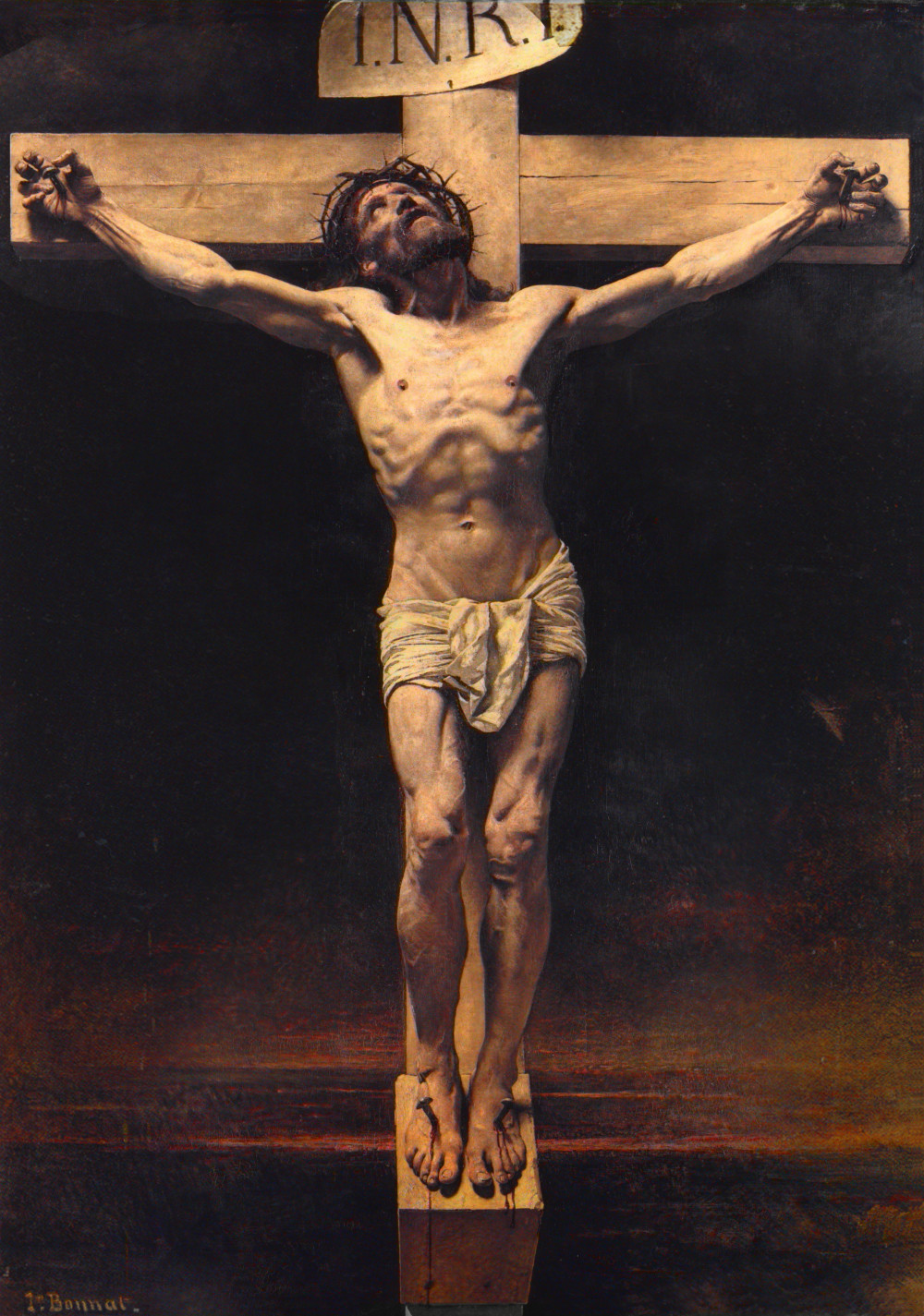
A Meditation for Good Friday: How To Undo the Effects of Sin?
Cardinal Newman, now Saint John Henry Newman, was a towering figure of nineteenth-century Catholicism who is almost universally admired. I say “almost” because not everyone likes him. I knew a priest once, Arthur Caulkins, who has become disenchanted with Newman. As an undergraduate Arthur had been enamoured of Newman, and this interest continued when he[…]Continue reading→
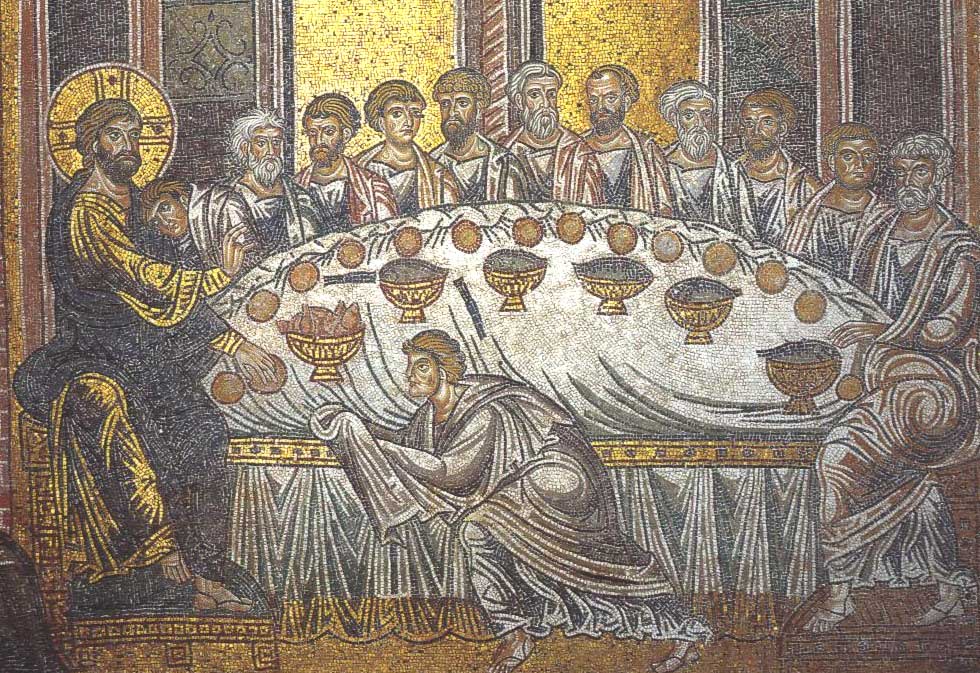
Pope Benedict’s Last Holy Thursday Homily
MASS OF THE LORD’S SUPPER HOMILY OF HIS HOLINESS BENEDICT XVI Basilica of St John Lateran Holy Thursday, 5 April 2012 Photo Gallery (Video) Dear Brothers and Sisters! Holy Thursday is not only the day of the institution of the Most Holy Eucharist, whose splendour bathes all else and in some ways draws it to[…]Continue reading→