
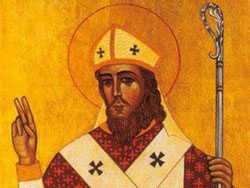
Saints Hilary and Mungo Against the Arians
On this 13th day of January, in bleak midwinter, we celebrate two saints. The first, in the public calendar, is the great Saint Hilary (+367), Bishop of Poitiers, proclaimed a Doctor of the Church by Pope Pius IX in 1851 for his clear and incisive writings against the pernicious heresy of Arianism, which denied the divinity of Christ, a heresy which would in turn have dissolved the Church (and very nearly did so, as the near-contemporary Saint Jerome would soon lament). His zeal earned him the epithet ‘Malleus Arianorum‘, the ‘Hammer of Arians’. With his contemporary, Athanasius in the East, Hilary is considered one of the most pre-eminent theologians of the fourth century in the West, leaving behind a corpus of profound treatises, laying the foundation for the full doctrine of the Trinity and of Christ. Upon his work, Augustine, Athanasius, the Councils of Nicaea, Ephesus, Chalcedon would build, and on into the Middle Ages, the Scholastics, Thomas Aquinas, and the modern era, the whole ‘living Tradition’ of the Church. We stand on the shoulders of giants!
Hilary did much in his relatively brief life (going to his reward at the tender age of 52), raising a family, converting to the faith after reading the Bible, ordained to the priesthood and then episcopacy, standing firm in the truth, suffering four years of exile for his orthodox teachings by the Arian Emperor Constantius II (a much more serious punishment then than now). Returning to his diocese in triumph, Hilary was a living martyr for the faith, but, we may presume from his name, joyful all the while, a joy that the world could not give. We will leave you with his words on our Blessed Mother, devotion to whom goes back to the earliest days of the Church:
No matter how sinful one may have been, if he has devotion to Mary, it is impossible that he be lost.
Just so. Dust off that Rosary for this new year, if it’s just hanging from your windshield or tucked in a drawer. Our Lady shows the way to Christ, Who is the way, the truth and the life.
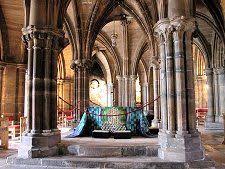
This is also the memorial of Saint Mungo (+614), whose birth and baptismal name was Kentigern, (Mungo was his common name, meaning in Celtic, ‘dear one’). He is close to my own heart, as the patron saint of the city where I happened to be born, Glasgow, evangelizing the area now known as Strathclyde, in the south of Scotland. His mother was Thenaw, daugther of a British prince; we know not who his father was (according to one legend, his mother was violated by King Uwen mab Urien, but she raised the child alone).
Mungo eventually settled in what came to be known as Clasgu, ‘dear family’ in Gaelic, now, of course, Glasgow, or, in the common dialect, Gles’gah. Exiled for a time to Wales as the pagans and Christians battled for control of Scotland, Mungo eventually returned to his native, and now Catholic, land, and became renowned for his goodness and holiness. He is buried in the crypt of the beautiful cathedral that bears his name – originally Catholic as well, but usurped in the 16th century ‘Reformation’ by the fiery, apostate priest John Knox. I visited his tomb on my pilgrimage through Scotland in 2018. His stone sarcophagus was surrounded by a ‘Lego display’. So I knelt and said a Rosary in that stolen cathedral, praying that Mungo intercede to make bonnie Scotland a Catholic nation once again. We must always hope.
Saints Hilary and Mungo, orate pro nobis!
Carney’s Amoral Majority
After five defections – euphemistically described as ‘crossing the floor’ – and three by-elections, Mark Carney and his Liberals how have their coveted majority. One wonders what bowls of pottage were offered in back-room deals. In the archaic monarchical system that is the Dominion of Canada, this majority allows the newly-minted Prime Minister to rule[…]Continue reading→

Saint Kateri , Canada’s Protectress
This was the title given to Saint Kateri Tekakwitha, by Pope Benedict XVI, when he canonized her on October 28th, 2012, along with six others, in Saint Peter’ Square (she had been beatified by Pope John Paul II back in 1980). With Saint Joseph as our protector, along with the Canadian martyrs, we seem to[…]Continue reading→

A Tale of Two Benedicts
A grace-filled Holy Week to all our readers! As we await and prepare for the Resurrection about to dawn upon us, we might keep in mind two Benedicts: Pope Emeritus Benedict XVI, requiescat in pace, elected on this day in 2005; and today’s commemoration of the mystic pilgrim, Benedict Joseph Labre, who died on this[…]Continue reading→

My Name is Bernadette
April 16th is a propitious day, for besides the anniversary of Father de Valk’s death, who founded Catholic Insight in its print form decades ago, and the commemoration of the ‘two Benedicts’, mentioned in accompanying posts, today we also recall Saint Bernadette Soubirous, the young visionary to whom the Virgin Mary appeared numerous times at[…]Continue reading→

Saint Lydwina of Schiedam and Suffering Joyfully
Saint Lydwina of Schiedam (1380 – 1433) was one of the countless and glorious ‘victim souls’ in the history of the Church, those whose lives are filled with suffering, often of an unimaginable intensity, but who suffer joyfully. She was a fifteen-year old Dutch girl, out skating one day, when she fell and broke one[…]Continue reading→

The Glorious Martyrdoms of Martin and Maximus
As we enter into Eastertide, we recall on this 13th of April Pope Saint Martin I (+655), one of the noblest, if most tragic, of the successors of Saint Peter. Born in Umbria, Italy, he was of noble lineage, with great intelligence combined with charity and love of the poor and the Church. While still[…]Continue reading→
Canonizing Sister Faustina and Divine Mercy
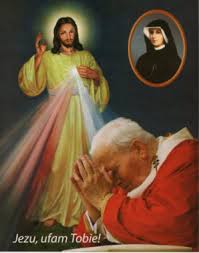
HOMILY OF THE HOLY FATHER MASS IN ST PETER’S SQUARE FOR THE CANONIZATION OF SR MARY FAUSTINA KOWALSKA Sunday, 30 April 2000 1. “Confitemini Domino quoniam bonus, quoniam in saeculum misericordia eius”; “Give thanks to the Lord for he is good; his steadfast love endures for ever” (Ps 118: 1). So the Church sings on the Octave of[…]Continue reading→

Saint Stanislaus of Szczepanów
We celebrate Saint Stanislaus today (+ April 11, 1079), in light of this Easter Octave, a bishop and martyr who accepted the episcopacy only at the direct order of Pope Alexander II. He proved a wise and courageous leader of his flock, put to death by his own king, Boleslaus, for rebuking the monarch’s ‘immoral[…]Continue reading→
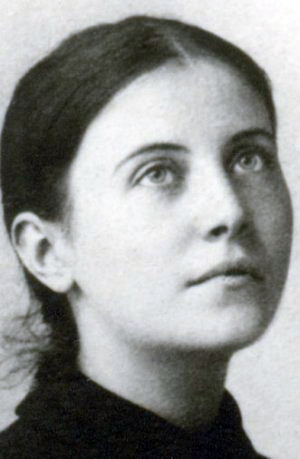
Saint Gemma Galgani
On this April 11th, in 1903 – the same year that the Italian Guiseppe Sarto was elected Pope later that summer as Pius X – a lovely, young Italian woman died, by the name of Gemma Galgani. She lived a brief life of 24 years, as did a number of other young saints, including Pier[…]Continue reading→
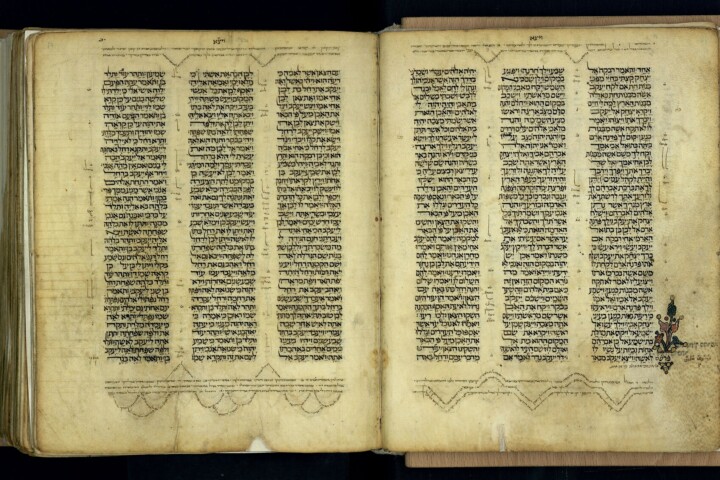
An Ideological and Improper Translation
I noticed something odd with the psalm reading at Mass the other day. Our bishops’ conference here in Canada has decreed that the Mass in English – Novus Ordo – use the ‘NRSV’, the ‘New Revised Standard Version’, an ‘updated’ translation of the original RSV, first published in 1952. This ‘new translation’ has the tendency[…]Continue reading→