
A Panoply of Four Saints
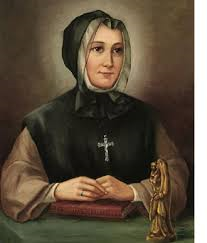
We celebrate a veritable panoply of saints today: In Canada, we have the memorial of Saint Marguerite D’Youville (+1771), the first Canadian-born saint. She was a lovely Quebecoise, who married young to a dissolute man, Francois d’Youville, a dissipated bootlegger who sold liquor to the easily-addicted Natives, and would disappear for long periods. He did not live long, but they did have six children together, before his untimely death.
By the time she was 30, Marguerite had lost her husband, her father, and four of her children, who died in infancy. She could have despaired, and lost herself in the bottle like her erstwhile husband, but there was no victim mentality with this fine woman. Instead, she corresponded with the grace of God, renewed her faith, worked to pay off the debts of her husband, then – after providing for her two sons, who went on to become priests – founded an Order, Les Souers Grises, the ‘Grey Sisters’, who worked with the poor, sick and abandoned – and there were any number of them in those days with no social safety net. There is a story that she chose the name in defiance of a calumny against the fledgling Order, that they were themselves addicted to drink – ‘grise‘ can also mean drunk en francais. The Grey Sisters have done incalculable good – we may recall the halcyonic days not that long ago when nursing and other health care was provided by those consecrated to God, with no interest in money, ambition and the world. May their reward be great in heaven. (See also the Vatican’s biography here.)
Margaret Mary Alacoque (+1690) was a contemplative nun in France, who from childhood devoted herself to God, with some rather intense asceticism, and entered the Order of the Visitation in 1671. She was subject to various humiliations, including the delaying of her profession; she was assigned to work in the infirmary, the other Sisters being impatient at times with her perceived incompetence, but the good Sister persevered, and her patience, piety and zeal eventually won her acceptance. Soon afterward, starting in December 1673, and continuing for a year and a half, Sister Margaret began to receive remarkable visions and revelations of the Sacred Heart of Jesus, emphasizing the very human love the Son of God has for us, a necessary antidote to the rigorous and cold Jansenism which was then infecting hearts and souls. The devotion to Christ’s human heart – symbolic of His infinite and always available love and mercy – met with much opposition from a France mired in the rigoristic heresy of Jansenism, but, with the help of her confessor, also canonized, the Jesuit priest Claude de la Colombiere, soon spread throughout the world.
A third consecrated woman is also today, Saint Hedwig of Silesia (+1243), who, like D’Youville, married young, at what we would consider the too-tender age of twelve, but things were different back then (not least, lives were considerably shorter). Unlike Mrs. D’Youville four centuries hence, Hedwig’s match was a relatively happy one, to Henry the Bearded, son and heir to the Duke of Silesia, who helped his wife in her apostolic way of life. Henry supported Hedwig’s hosting of banquets for the poor, and giving away much in alms, not least to monasteries and schools. Upon her husband’s death in 1238, Hedwig, who had always lived an ascetical life, joined the Cistercian monastery at Trzebnica that she had persuaded her husband to found back in 1202, and it was there she died after five years of religious life, in 1243. Providentially, Saint Hedwig is the patroness of the parish where I live, so I have a special devotion to this Polish saint, except that the parish moves her feast to the 20th.
Not least, we have Gerard Majella (+1726), a Redemptorist lay brother. After a difficult apprenticeship as a tailor, he worked for some time before joining in 1749 the Order dedicated to Christ the Redeemer, the ‘Redemptorists’, founded by Saint Alphonsus Ligouri in 1732. Gerard was known during his life for his instant obedience, constant cheerfulness and doing all the work that needed doing, from sacristan, to gardener, to cook and cleaner, without complaint. On his door, he had the phrase “Here the will of God is done, as God wills, and as long as God wills”. People say he could read souls, bilocate, cure the sick, even, purportedly, raise the dead. When the rather handsome lay-brother was accused, falsely need we point out, of a illicit liason by and with a young woman, Gerard remained silent, even when confronted by Saint Alphonsus himself who, when discovering the truth after the girl recanted, was astounded, and remonstrated with Gerard for not defending himself. But Gerard replied that he trusted in God to vindicate him. As with any number of other very holy young people, Gerard went to his reward early after a bout with tuberculosis, at the age of 29.
Saint Gerard is the patron saint of expectant mothers, due to a story that he once dropped his handkerchief in front of a house; a girl noticed, and wanted to give it back, but he replied, ‘Keep it…You might need it some day’. Years later, when the girl, now a married woman, was in deadly peril giving birth to her child, she remembered the nearly-forgotten bit of cloth, placed it on herself, and all went miraculously well, as a healthy new life entered the world. Saint Gerard has performed any number of other miracles since, from his well-deserved place in heaven. As the good saint would say: Consider the shortness of time, the length of eternity and reflect how everything here below comes to an end and passes by. Of what use is it to lean upon that which cannot give support.
Words to ponder in our fractious and fragile age.
Orate pro nobis, omnes sancti! +
Carney’s Amoral Majority
After five defections – euphemistically described as ‘crossing the floor’ – and three by-elections, Mark Carney and his Liberals how have their coveted majority. One wonders what bowls of pottage were offered in back-room deals. In the archaic monarchical system that is the Dominion of Canada, this majority allows the newly-minted Prime Minister to rule[…]Continue reading→

Saint Kateri , Canada’s Protectress
This was the title given to Saint Kateri Tekakwitha, by Pope Benedict XVI, when he canonized her on October 28th, 2012, along with six others, in Saint Peter’ Square (she had been beatified by Pope John Paul II back in 1980). With Saint Joseph as our protector, along with the Canadian martyrs, we seem to[…]Continue reading→
A Tale of Two Benedicts
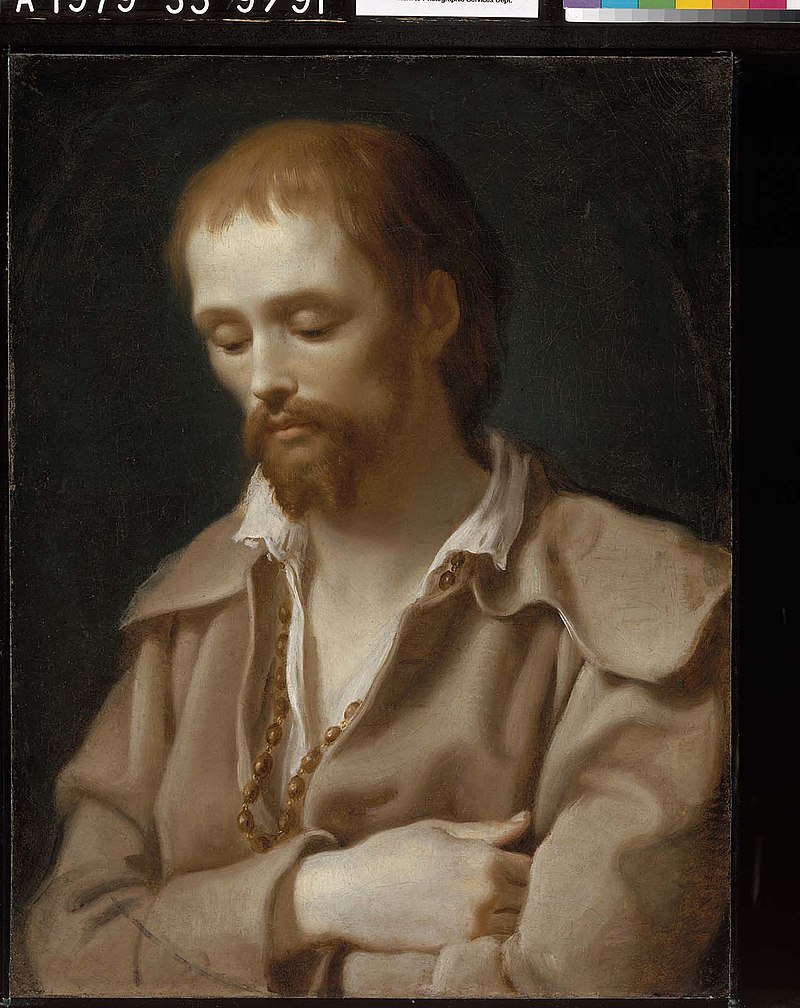
A grace-filled Holy Week to all our readers! As we await and prepare for the Resurrection about to dawn upon us, we might keep in mind two Benedicts: Pope Emeritus Benedict XVI, requiescat in pace, elected on this day in 2005; and today’s commemoration of the mystic pilgrim, Benedict Joseph Labre, who died on this[…]Continue reading→

My Name is Bernadette
April 16th is a propitious day, for besides the anniversary of Father de Valk’s death, who founded Catholic Insight in its print form decades ago, and the commemoration of the ‘two Benedicts’, mentioned in accompanying posts, today we also recall Saint Bernadette Soubirous, the young visionary to whom the Virgin Mary appeared numerous times at[…]Continue reading→
Saint Lydwina of Schiedam and Suffering Joyfully
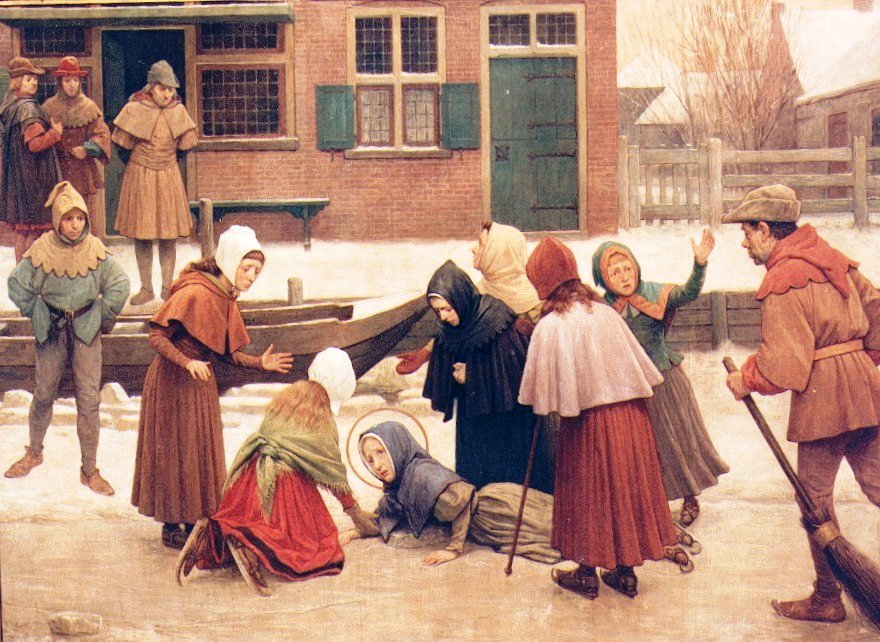
Saint Lydwina of Schiedam (1380 – 1433) was one of the countless and glorious ‘victim souls’ in the history of the Church, those whose lives are filled with suffering, often of an unimaginable intensity, but who suffer joyfully. She was a fifteen-year old Dutch girl, out skating one day, when she fell and broke one[…]Continue reading→
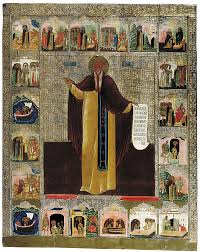
The Glorious Martyrdoms of Martin and Maximus
As we enter into Eastertide, we recall on this 13th of April Pope Saint Martin I (+655), one of the noblest, if most tragic, of the successors of Saint Peter. Born in Umbria, Italy, he was of noble lineage, with great intelligence combined with charity and love of the poor and the Church. While still[…]Continue reading→

Canonizing Sister Faustina and Divine Mercy
HOMILY OF THE HOLY FATHER MASS IN ST PETER’S SQUARE FOR THE CANONIZATION OF SR MARY FAUSTINA KOWALSKA Sunday, 30 April 2000 1. “Confitemini Domino quoniam bonus, quoniam in saeculum misericordia eius”; “Give thanks to the Lord for he is good; his steadfast love endures for ever” (Ps 118: 1). So the Church sings on the Octave of[…]Continue reading→

Saint Stanislaus of Szczepanów
We celebrate Saint Stanislaus today (+ April 11, 1079), in light of this Easter Octave, a bishop and martyr who accepted the episcopacy only at the direct order of Pope Alexander II. He proved a wise and courageous leader of his flock, put to death by his own king, Boleslaus, for rebuking the monarch’s ‘immoral[…]Continue reading→
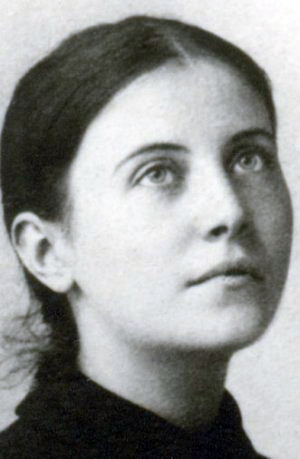
Saint Gemma Galgani
On this April 11th, in 1903 – the same year that the Italian Guiseppe Sarto was elected Pope later that summer as Pius X – a lovely, young Italian woman died, by the name of Gemma Galgani. She lived a brief life of 24 years, as did a number of other young saints, including Pier[…]Continue reading→
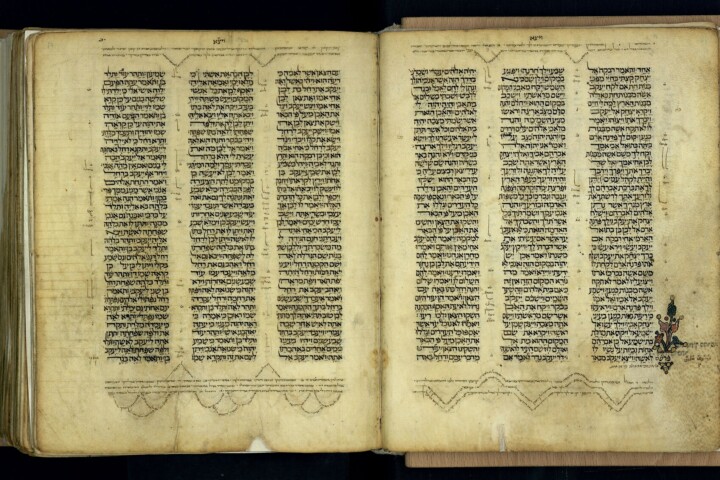
An Ideological and Improper Translation
I noticed something odd with the psalm reading at Mass the other day. Our bishops’ conference here in Canada has decreed that the Mass in English – Novus Ordo – use the ‘NRSV’, the ‘New Revised Standard Version’, an ‘updated’ translation of the original RSV, first published in 1952. This ‘new translation’ has the tendency[…]Continue reading→