
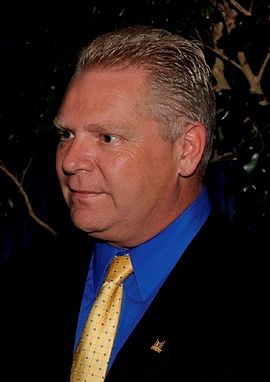
Friendless Ford’s Nation
Doug Ford has apparently said that we must learn to live without friends, and with this, he is on par with his erstwhile-fellow-lockdown leader, Boris Johnson. Besides the obvious differences between the two, there is a similarity: Both overweight, blond-haired bon-vivants, or so we once thought, and so they were once portrayed. Of course, Mr. Johnson is of a more intellectual and educated sort, with an Etonian accent and pedigree, able to quote Thucydides and Cicero, who has studied Greek and Latin, while Mr. Ford, well, he seems a product of our sub-standard socialist educational system, and the less said about that, the better.
Do they have friends? One would imagine they do, and quite rightly, for the need for friendship is taught in no uncertain terms by Aristotle, followed by Aelred of Rivaulx, Thomas Aquinas, John Paul II, with many points in-between. Even Cicero, who was forced to commit suicide by his erstwhile friend-turned-enemy, waxed eloquent about friendship. And need we remind our benighted leaders that the very Word-made-flesh, the Incarnate God, said ‘I call you friends…’, and felt the ineffable pain of betrayal? Nay, even the most Blessed Trinity is a ‘communion of Persons’, and of Love?
Aristotle distinguishes three types of friendship, categorized in Latin under the aspect of ‘amor’, or love, in the general senses: Amor concupiscentiae, love based on the pleasure a friend may give –and such need not be sexual, or the modern ‘friends with benefits’, but any sort of enjoyment, humour, attractiveness, and so on. Then there is amor utilitatis, a friendship based on utility – your friend has a car, and you do not; or a waterfront cottage; or is handy about the house, or can bake scrumptious pies. And, finally, most perfect of all, amor amicitiae, friendship for friendship’s sake, the being loved for one’s own good.
All three are requisite for perfect friendship, found, one would hope, most perfectly in marriage. But they are found to one degree or another in all our friendships – that is, if the Fords and Borises allow us to have friends – or at least to see them, to sing and dance and break bread together.
The things is, no one can live without friendship. To turn back to Aristotle, who said that only a beast or a god can live alone – and we are neither. Or, more properly, most of us would devolve into beasts of one variety or another if left alone too long.
To put this into practical terms, these continued lockdowns and concomitant social isolation are inhuman. Stayin’ home and stayin’ safe is no way to live, at least not long term, and by ‘long term’, we mean much longer than this has been the mantra.
Doug Ford has a family and Boris, his mistress – and, anyway, the ‘elites’ tend not to feel too constrained by the heavy burdens they lay upon the backs of the hoi polloi.
But what of all those – especially older people – who live alone, isolated, lonely? What of the sick, the dying, the depressed and desolate, those who have no one ‘at home’ with whom to ‘stay safe’?
So be with friends; make friends; visit those with none, and find your circle – all in all, be with those you love. Amor vincit omnia, wrote Virgil in his Eclogues, Love conquers all, and the first thing this most perfect of virtues casts out, is fear.
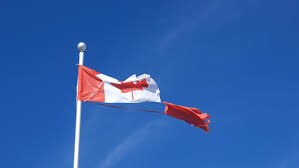
Carney’s Amoral Majority
After five defections – euphemistically described as ‘crossing the floor’ – and three by-elections, Mark Carney and his Liberals how have their coveted majority. One wonders what bowls of pottage were offered in back-room deals. In the archaic monarchical system that is the Dominion of Canada, this majority allows the newly-minted Prime Minister to rule[…]Continue reading→

Saint Kateri , Canada’s Protectress
This was the title given to Saint Kateri Tekakwitha, by Pope Benedict XVI, when he canonized her on October 28th, 2012, along with six others, in Saint Peter’ Square (she had been beatified by Pope John Paul II back in 1980). With Saint Joseph as our protector, along with the Canadian martyrs, we seem to[…]Continue reading→

A Tale of Two Benedicts
A grace-filled Holy Week to all our readers! As we await and prepare for the Resurrection about to dawn upon us, we might keep in mind two Benedicts: Pope Emeritus Benedict XVI, requiescat in pace, elected on this day in 2005; and today’s commemoration of the mystic pilgrim, Benedict Joseph Labre, who died on this[…]Continue reading→

My Name is Bernadette
April 16th is a propitious day, for besides the anniversary of Father de Valk’s death, who founded Catholic Insight in its print form decades ago, and the commemoration of the ‘two Benedicts’, mentioned in accompanying posts, today we also recall Saint Bernadette Soubirous, the young visionary to whom the Virgin Mary appeared numerous times at[…]Continue reading→

Saint Lydwina of Schiedam and Suffering Joyfully
Saint Lydwina of Schiedam (1380 – 1433) was one of the countless and glorious ‘victim souls’ in the history of the Church, those whose lives are filled with suffering, often of an unimaginable intensity, but who suffer joyfully. She was a fifteen-year old Dutch girl, out skating one day, when she fell and broke one[…]Continue reading→

The Glorious Martyrdoms of Martin and Maximus
As we enter into Eastertide, we recall on this 13th of April Pope Saint Martin I (+655), one of the noblest, if most tragic, of the successors of Saint Peter. Born in Umbria, Italy, he was of noble lineage, with great intelligence combined with charity and love of the poor and the Church. While still[…]Continue reading→

Saint Stanislaus of Szczepanów
We celebrate Saint Stanislaus today (+ April 11, 1079), in light of this Easter Octave, a bishop and martyr who accepted the episcopacy only at the direct order of Pope Alexander II. He proved a wise and courageous leader of his flock, put to death by his own king, Boleslaus, for rebuking the monarch’s ‘immoral[…]Continue reading→
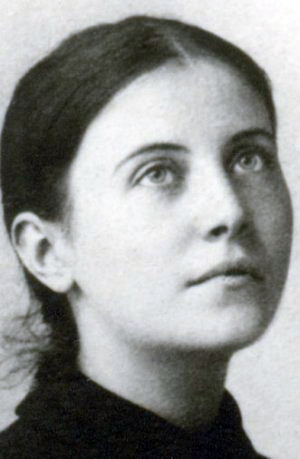
Saint Gemma Galgani
On this April 11th, in 1903 – the same year that the Italian Guiseppe Sarto was elected Pope later that summer as Pius X – a lovely, young Italian woman died, by the name of Gemma Galgani. She lived a brief life of 24 years, as did a number of other young saints, including Pier[…]Continue reading→
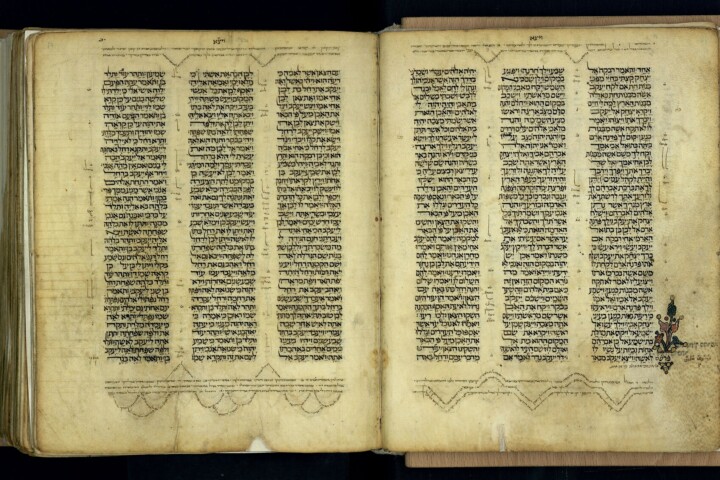
An Ideological and Improper Translation
I noticed something odd with the psalm reading at Mass the other day. Our bishops’ conference here in Canada has decreed that the Mass in English – Novus Ordo – use the ‘NRSV’, the ‘New Revised Standard Version’, an ‘updated’ translation of the original RSV, first published in 1952. This ‘new translation’ has the tendency[…]Continue reading→
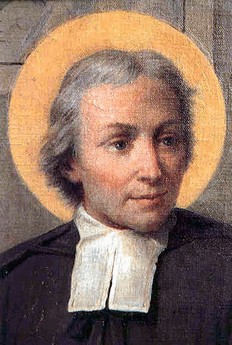
Saint Jean-Baptiste de la Salle: A Teacher for Teachers
Jean-Baptiste de la Salle (1651 – 1719), a French nobleman, ordained a priest, founded the first order in the Church’s history entirely without priests, and this came about almost by accident. I say ‘almost’, for, of course, there are no accidents with God. Destined for ordination from an early age, Jean-Baptiste never looked back, even[…]Continue reading→