
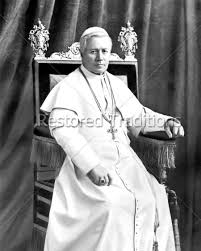
Instaurare Omnia in Christo
Saint Pius X (+1914), born Guiseppe Sarto, was a peasant, he was the first such in centuries, the custom being that popes were chosen from the ‘nobility’ – it is a true rags to riches story, even if he rejected all the potential riches. He brought his simple ways into the papal office, rescinding the custom, amongst others, of Popes eating alone, established by Urban VIII in the early 17th century – yes, the same one who condemned Galileo, but also sent the Jesuit missionaries to the New World. Perhaps if the touchy and vain Urban had broken bread and a swilled a fine bottle of Chianti with the irascible scientist, history would have been a whole lot different.
From childhood, he was formed in hard work and discipline, which he brought into his priesthood, his episcopacy as bishop of Mantua, and eventually the papacy, elected on August 4th in the conclave of 1903 after the death of Leo XIII July 20th – large shoes to fill, taking the name Pius.
For all that he stood his ground unflinchingly for orthodoxy, with no toleration for heretics or liturgical innovators, Pope Pius was known for his holiness, patience, kindness, which shines forth even in old photographs, in which his eyes seem still to pierce one’s soul – what must he have been like as a confessor? There were even reports of miracles performed through his intercession.
Instaurare omnia in Christo was Pius’ chosen motto – to restore all things in Christ – one to which he lived up admirably, reforming the Church from the inside out: Soon after being elected he penned Tra le Sollecitudini, (Nov. 22, 1903), reinstating Gregorian chant and polyphony and the solemn splendour of liturgy and the Mass. Against the dour rigorism of Jansenism, he promoted daily reception of Holy Communion – nearly unheard of – and clarified the simple requirements to receive – at the age of reason, and being free from mortal sin, that the Bread of Life is medicine for sin and supernatural sustenance for eternal life, and not a reward for being virtuous.
He began the monumental task of summarizing and codifying canon law, and reformed the breviary and seminary instruction. And he penned numerous encyclicals on a variety of topics. He is perhaps best remembered for his attempt to root our ‘modernism’, which he described in Pascendi Dominici Gregis (Sept 8th, 1907) as the ‘synthesis of all heresies’, an insidious, agnostic doctrine, undermining the very basis of the Faith – still with us in various forms – all the while masking as rational, and even, ironically, pious. Beware of those who do evil under the cloak of good.
It is said the holy Pontiff died of a broken heart on August 20th, when he heard of the outbreak of World War I, for, in a mystical way, he perhaps foresaw what human and societal carnage it would wreak.
A century on, may Pope Pius intercede for us in our own fractious times, keeping the barque of Peter not just afloat, but well on course towards the eschaton. He knew that the Pope was not Christ, only His vicar. And if the omnipotent God is in charge of the Church, even though she be tossed like the Apostles in that first storm-tossed boat, why should we be afraid? With one word the wind and the sea obey Him.
Carney’s Amoral Majority
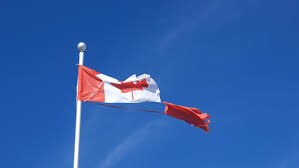
After five defections – euphemistically described as ‘crossing the floor’ – and three by-elections, Mark Carney and his Liberals how have their coveted majority. One wonders what bowls of pottage were offered in back-room deals. In the archaic monarchical system that is the Dominion of Canada, this majority allows the newly-minted Prime Minister to rule[…]Continue reading→

Saint Kateri , Canada’s Protectress
This was the title given to Saint Kateri Tekakwitha, by Pope Benedict XVI, when he canonized her on October 28th, 2012, along with six others, in Saint Peter’ Square (she had been beatified by Pope John Paul II back in 1980). With Saint Joseph as our protector, along with the Canadian martyrs, we seem to[…]Continue reading→
A Tale of Two Benedicts
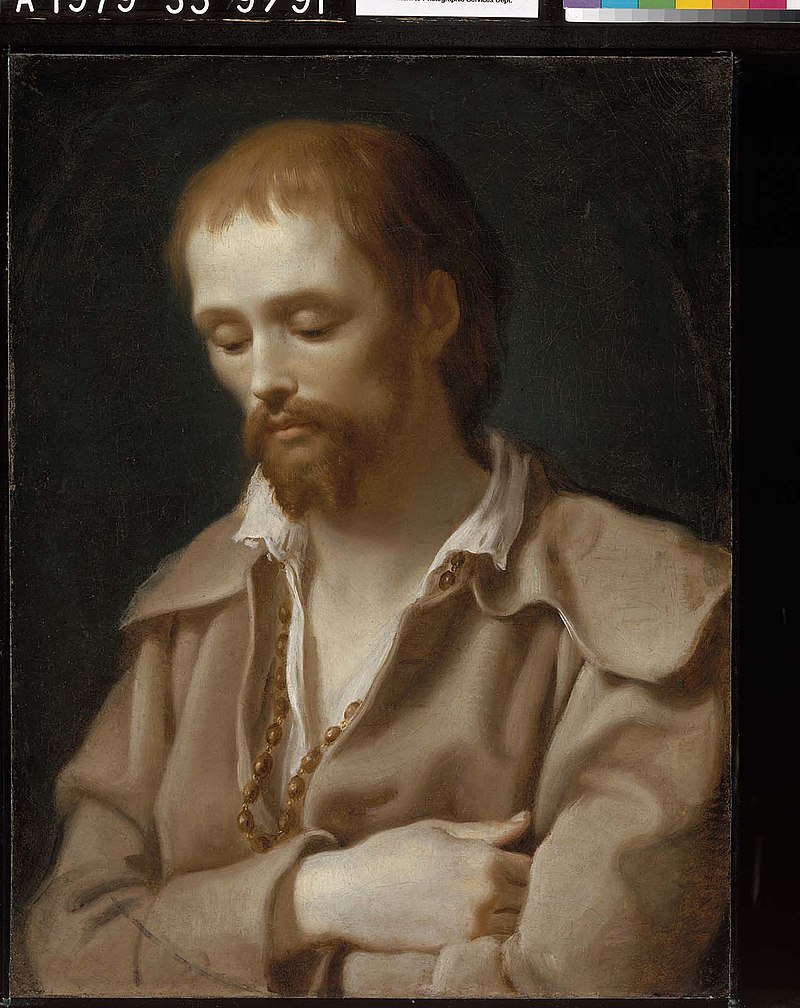
A grace-filled Holy Week to all our readers! As we await and prepare for the Resurrection about to dawn upon us, we might keep in mind two Benedicts: Pope Emeritus Benedict XVI, requiescat in pace, elected on this day in 2005; and today’s commemoration of the mystic pilgrim, Benedict Joseph Labre, who died on this[…]Continue reading→

My Name is Bernadette
April 16th is a propitious day, for besides the anniversary of Father de Valk’s death, who founded Catholic Insight in its print form decades ago, and the commemoration of the ‘two Benedicts’, mentioned in accompanying posts, today we also recall Saint Bernadette Soubirous, the young visionary to whom the Virgin Mary appeared numerous times at[…]Continue reading→
Saint Lydwina of Schiedam and Suffering Joyfully
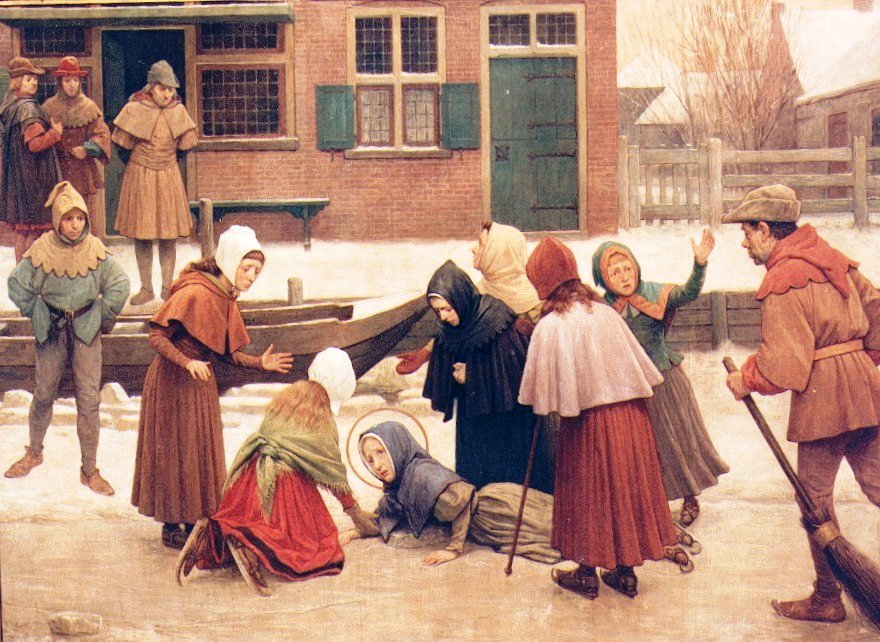
Saint Lydwina of Schiedam (1380 – 1433) was one of the countless and glorious ‘victim souls’ in the history of the Church, those whose lives are filled with suffering, often of an unimaginable intensity, but who suffer joyfully. She was a fifteen-year old Dutch girl, out skating one day, when she fell and broke one[…]Continue reading→
The Glorious Martyrdoms of Martin and Maximus
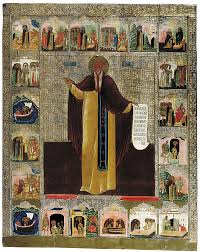
As we enter into Eastertide, we recall on this 13th of April Pope Saint Martin I (+655), one of the noblest, if most tragic, of the successors of Saint Peter. Born in Umbria, Italy, he was of noble lineage, with great intelligence combined with charity and love of the poor and the Church. While still[…]Continue reading→

Saint Stanislaus of Szczepanów
We celebrate Saint Stanislaus today (+ April 11, 1079), in light of this Easter Octave, a bishop and martyr who accepted the episcopacy only at the direct order of Pope Alexander II. He proved a wise and courageous leader of his flock, put to death by his own king, Boleslaus, for rebuking the monarch’s ‘immoral[…]Continue reading→
Saint Gemma Galgani
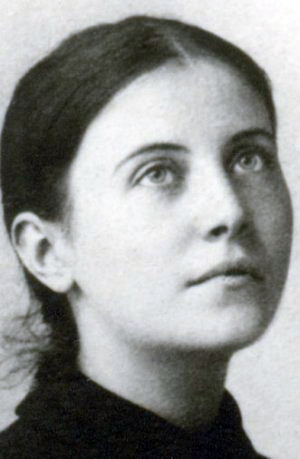
On this April 11th, in 1903 – the same year that the Italian Guiseppe Sarto was elected Pope later that summer as Pius X – a lovely, young Italian woman died, by the name of Gemma Galgani. She lived a brief life of 24 years, as did a number of other young saints, including Pier[…]Continue reading→
An Ideological and Improper Translation
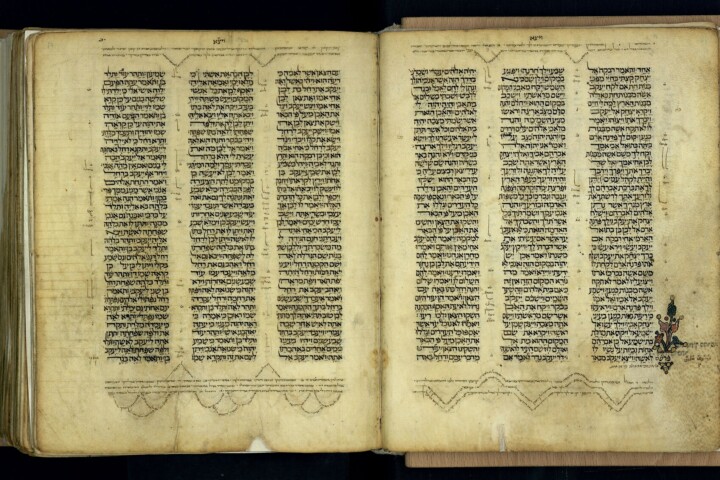
I noticed something odd with the psalm reading at Mass the other day. Our bishops’ conference here in Canada has decreed that the Mass in English – Novus Ordo – use the ‘NRSV’, the ‘New Revised Standard Version’, an ‘updated’ translation of the original RSV, first published in 1952. This ‘new translation’ has the tendency[…]Continue reading→
Saint Jean-Baptiste de la Salle: A Teacher for Teachers
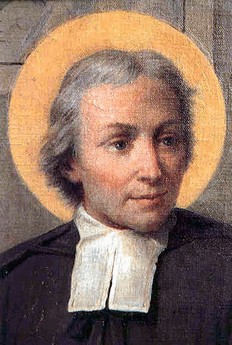
Jean-Baptiste de la Salle (1651 – 1719), a French nobleman, ordained a priest, founded the first order in the Church’s history entirely without priests, and this came about almost by accident. I say ‘almost’, for, of course, there are no accidents with God. Destined for ordination from an early age, Jean-Baptiste never looked back, even[…]Continue reading→