
The Psalms as Prayer
We hear a lot of the Bible at Sunday Mass. There are four readings every week, although the fourth one is usually ignored. Everyone remembers the Old Testament reading and the Gospel because they are always linked, as they are today—the nineteenth Sunday of ordinary time—in that God showed himself to Elijah only after a high wind and an earthquake, just as Jesus was recognized and honoured by the disciples after he had calmed the storm.
The second reading, usually from Saint Paul, is not connected to the others, being a more-or-less continuous reading from one of his weighty epistles; today it’s from his letter to the Romans. That’s three. “Where,” you may be wondering “is the fourth?”
Well, it’s the responsorial psalm, that no one much adverts to. And yet the Psalms have been more prominent in the Church’s life than any other part of the Bible, including even the Gospels. For every monk and nun, and every priest, from the beginning of Christianity, has found in the Psalter the source of his daily round of prayers. The book of Psalms was the prayer book of the Jewish people and it continued to serve Christians in the same way.
What we find in the Psalter is not only divinely inspired poetry, but also a manual of prayer. Let spend a moment in demonstrating how by examining the Psalms, we can learn to pray in a way that God will be sure to hearken to. We begin with Psalm 84/85, which has provided the text for this nineteenth Sunday of year A. The few verses used at Mass inform us how God relates to his people. All good things come from him, for the psalmist reports that God is the source of our peace and our salvation, and that he is steadfast in his love and fidelity. Other Psalms are similar, describing God’s bounty in creating the world, in choosing his people, and in speaking to the individual—to console him in time of difficulty or to rebuke him when he sins. Occasionally, it is the very voice of God we hear, as in this famous line from Psalm 94/95: It begins in the words of the psalmist: “O that today you would hear his voice,” and then God speaks: “Harden not your hears as you did at Meribah. . . .”
We find, therefore, that the Psalms inform us as to what God has done, or will do for his people, and then, on occasion, we may hear the voice of God himself. But they have another characteristic, and it is that they teach us how to pray. For as well as the two I have mentioned, there’s a third, when the psalmist responds to God, our creator and protector, who has spoken to us directly or through his prophet. And that is the secret of prayer in that, when we consider what God has told us or what sacred history relates, our response will be to pray, praising him or asking for what we need. Psalm 84/85 provides a good instance of what I mean should we examine more than the few, final verses used in today’s liturgy. At the beginning we find the psalmist addressing God, on other words, praying. He begins by reminding God of his past care for the nation:
You once favoured your land, O Lord,
and restored the good fortune of Jacob.
You forgave the guilt of your people
and pardoned all their sins.
Do you recognize his method? He’s telling God that his favours to Israel were not only a benefit to the people in the past, but they also represent a pledge that he will be available in the future. That is why the Psalm continues in this fashion:
Restore us once more, God our Saviour . . .
give us life again that your people may rejoice in you. . . .
And there you have the teaching of the Psalms on prayer. Begin by reflecting on some benefit received or some need experienced. Gratitude for blessings—spiritual or material—for example, or regret for some evil done and then a heartfelt prayer that we may thank God in the first instance or receive his forgiveness in the second.
We can discern this pattern in the Our Father, which opens the Communion part of the Mass. It begins with a strong statement of our privileged place before God, in that we can address the Lord of heaven as “Father”: “Our Father, who are in heaven . . .” Then, having claimed God for ourselves, so to speak, we proceed to make a series of petitions with the confidence of a favourite son: “Hallowed be thy name,” etc. Thus, we praise God—as we should—but we also use our position of influence to have our needs met: “Give us this day, our daily bread. . . .” Not surprisingly, the same pattern can be found in the opening prayer of today’s Mass and, indeed, of every Mass:
Almighty, ever-living God, whom, taught by the Holy Spirit we dare to call our Father—we are here establishing our right to invoke his aid—bring, we pray, to perfection in our hearts the spirit of adoption as your sons and daughters, that we may merit to enter into the inheritance which you have promised.—such are the requests which, as acceptable to God are certain to be answered Through Christ, Our Lord.
Amen.

Remembering Father Alphonse de Valk
(Today marks the sixth anniversary of the death of Father Alphonse de Valk, C.S.B., a faithful, courageous and indefatigable Basilian priest, pro-life-and-family apostle, and the founder of Catholic Insight magazine. Here is what we wrote those on his entering into eternity five years ago, as we continue to remember him in our prayers and thoughts)[…]Continue reading→

Divine Mercy Sunday – An Echo of Every Mass
Reach out your hand and put it in my side. Do not doubt but believe’… ‘My Lord and my God!’ (Jn. 20:18)). Today is Divine Mercy Sunday, and as we celebrate the end of the Easter Octave, we contemplate the wounded side of our Saviour, the Church’s source of life. On Good Friday in the[…]Continue reading→

Saint Stanislaus of Szczepanów
We celebrate Saint Stanislaus today (+ April 11, 1079), in light of this Easter Octave, a bishop and martyr who accepted the episcopacy only at the direct order of Pope Alexander II. He proved a wise and courageous leader of his flock, put to death by his own king, Boleslaus, for rebuking the monarch’s ‘immoral[…]Continue reading→
First Holy Communion: Sermon from May 16, 1943
Here is a sermon from the good old days by +Rev. Msgr. Vincent Nicholas Foy (August 14, 1915 – March 13, 2017), from 1943. Readers may recall that Pope Saint Pius X, by the decree Quam Singulari in 1910, lowered the customary age of reception of Holy Communion – after the rigours of the plague[…]Continue reading→
In the Glorious Light of Easter, Alleluia!
Set your minds on things that are above, not on things that are on earth, for you have died, and your life is hidden with Christ in God. When Christ who is your life is revealed, then you also will be revealed with him in glory (Col. 3:3-4). The Resurrection of Our Lord and Saviour[…]Continue reading→
An Ancient Homily for Holy Saturday
The time between Good Friday and Easter Sunday is one of waiting, in silence, as the world wonders – anticipates – what will happen, after the death of Christ. We re-live this time each year in the anamnesis of our liturgy, and in turn look forward to the glorious re-creation of all things at the[…]Continue reading→
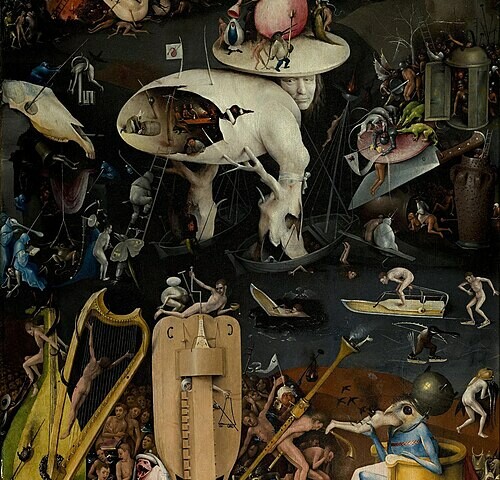
Europe’s Long Descent
(As we meditate on this day on Christ’s burial, and His descent into hell, it is fitting to ponder here with contributor Peter Marcus how the world seems to be heading there as well. The difference is that, although God cannot ‘redeem’ hell, nor those therein, He can and did redeem the world. There is[…]Continue reading→
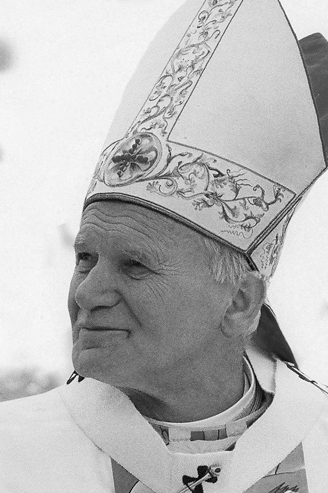
Pope Saint John Paul II’s First Good Friday Homily
ADDRESS OF HIS HOLINESS JOHN PAUL II AT THE CONCLUSION OF THE STATIONS OF THE CROSS AT THE COLOSSEUM Good Friday, 13 April 1979 When we make the Way of the Cross from one station to the next, in spirit we are always at the spot wherethis journey had its “historical” place: where it[…]Continue reading→
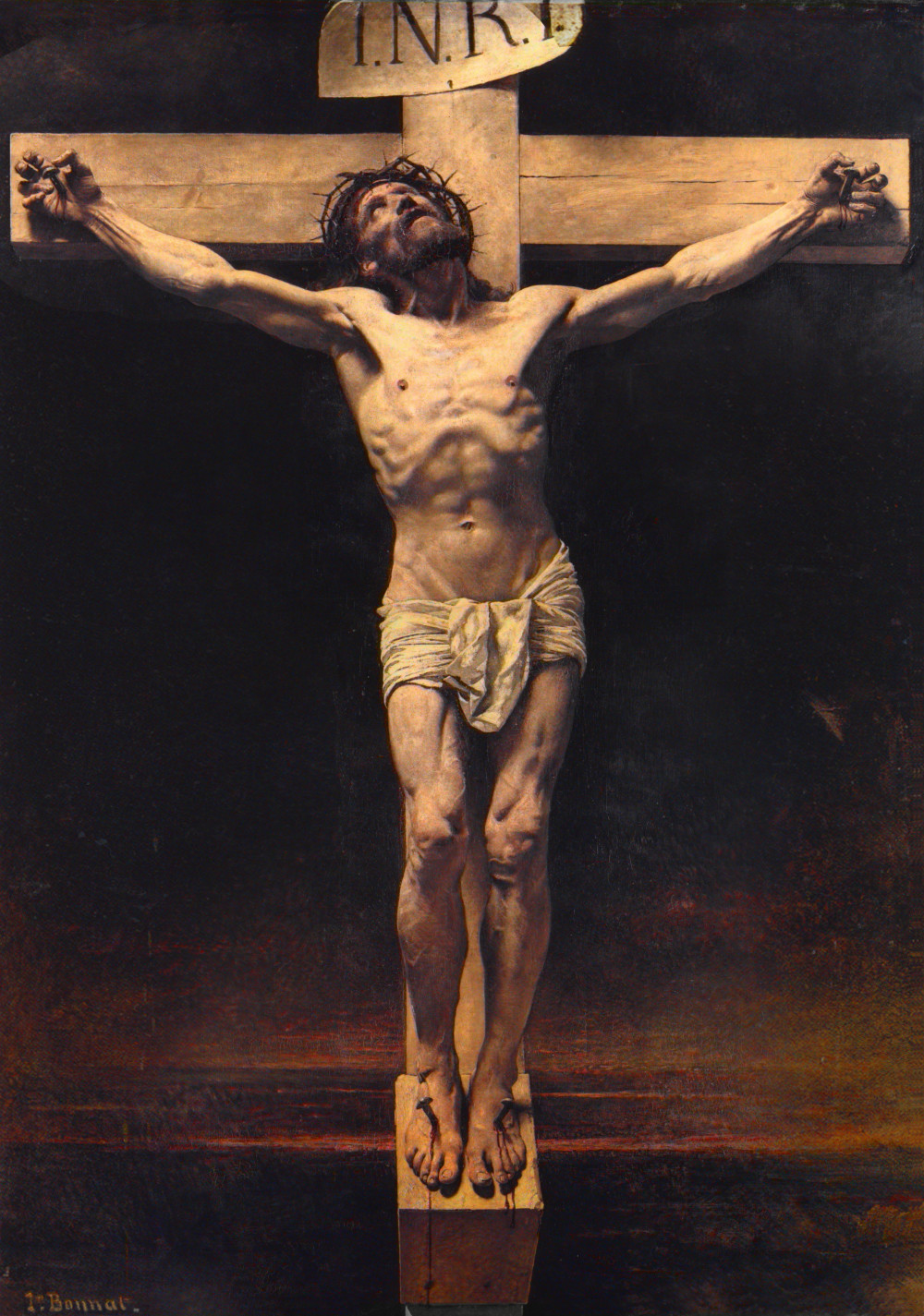
A Meditation for Good Friday: How To Undo the Effects of Sin?
Cardinal Newman, now Saint John Henry Newman, was a towering figure of nineteenth-century Catholicism who is almost universally admired. I say “almost” because not everyone likes him. I knew a priest once, Arthur Caulkins, who has become disenchanted with Newman. As an undergraduate Arthur had been enamoured of Newman, and this interest continued when he[…]Continue reading→
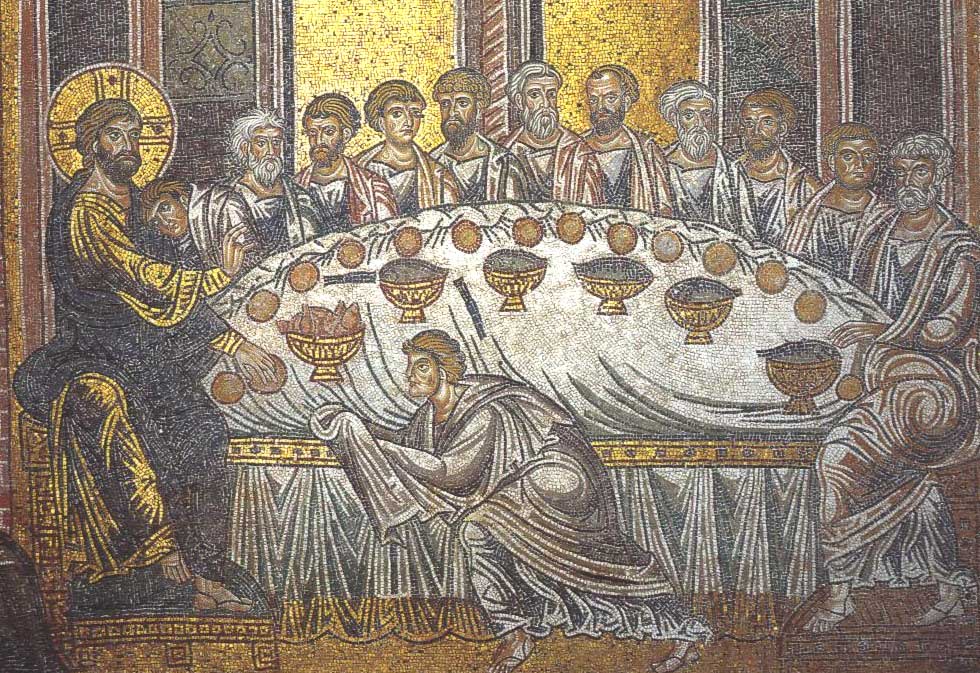
Pope Benedict’s Last Holy Thursday Homily
MASS OF THE LORD’S SUPPER HOMILY OF HIS HOLINESS BENEDICT XVI Basilica of St John Lateran Holy Thursday, 5 April 2012 Photo Gallery (Video) Dear Brothers and Sisters! Holy Thursday is not only the day of the institution of the Most Holy Eucharist, whose splendour bathes all else and in some ways draws it to[…]Continue reading→