
The Science of the Cross
When they got into the boat, the wind ceased. And those in the boat worshipped him, saying, ‘Truly you are the Son of God’ (Mt. 14:33). ⧾
‘Truly you are the Son of God’ (Mt. 14:33). This is a belief that we hold firmly and truly because it is the very essence of the Christian faith. Last Sunday, in our meditation we noted that our times are such that the spectre of persecution looms over us and we are faced with existential choices. The forces of this world are arrayed against the Church as they often have been in history. In our times however, and this should cause all of us to be concerned, the overreach of the state, coupled with the cooperation of some of the highest authorities in the Church with secular and patently anti-Catholic ideologues, have resulted in the infiltration of the Church by her enemies. The attempted fusion of our Catholic faith with secular preoccupations of dubious merit and validity such as environmentalism, sustainable development, and social justice – to name but a few, points to what the Catechism of the Catholic Church describes as the supreme religious deception … of the Antichrist, a pseudomessianism by which man glorifies himself in place of God and of His Messiah come in the flesh (675). Our bishops may be silent as all of this unfolds; but I will not be silent and I will do everything I can to safeguard the integrity of our faith for it determines the manner of our life and our ultimate destiny.
The surest way to preserve and to defend our faith is the unequivocal affirmation of our belief in Our Lord’s divinity. ‘Truly you are the Son of God’ (Mt. 14:33). We can do this most effectively by fostering in ourselves a love for the Mass and a deep and firm devotion to the Most Sacred Heart of Jesus. I have spoken often to you about this devotion, of its importance and of its power to help us to overcome the madness and persecution of our times; just as it aided the faithful of France at the height of the terror unleashed by the French Revolution in 1789. That revolution and all subsequent revolutions inspired by it, especially the Communist uprisings and tyranny that spread throughout the world and threaten the world even now, perhaps especially now, were and are an affront to the sovereignty of God and the Kingship of Christ Our Saviour, the Messiah come in the flesh. A revolution however, was also unleashed in the Church– and this is the assertion of some of the most influential participants in what has come to be popularly known as Vatican II. The heirs of these revolutionaries in our time propose a church that dialogues with and conforms to worldly ideologies but such a church is counterfeit and indeed is an antichurch. As a result, we are now faced with a stark choice. Will we submit to the overreach of the state and its tyranny? Will we espouse religious relativism? Or will we remain faithful to Christ our King?
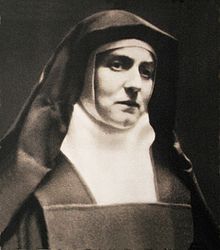
Today in the Martyrology , the Church’s book of Saints, memory is made of St. Teresa Benedicta of the Cross, a martyr to truth who as a Jewish convert to Catholicism was caught up in the Nazi persecutions of the Jews and of the Church and who on this very date was murdered at Auschwitz, that infamous place that along with Communist gulags exemplify the horrors that man can perpetrate when he seeks to establish a world without God, a world like the one being fashioned by the architects of the new world order. St. Teresa Benedicta is one the millions of victims of state totalitarianism, a phenomenon increasingly evident even in our own country. I make mention of her because her profound understanding of the Cross of Our Saviour which I will endeavour to share with you in the limited time allotted to us, will help us to keep our sanity and our faith as we face the overreach of the state and the effects of a diabolical disorientation afflicting both the Church and the world.
In the aftermath of the First Word War, as a young scholar the non-religious Edith Stein as she was known in the world earned her doctorate after writing a highly-regarded thesis on the phenomenon of empathy. In 1921, while visiting friends, Edith spent an entire night reading the autobiography of the sixteenth century Carmelite nun St. Teresa of Avila. She later recalled: ‘When I had finished the book, I said to myself: This is the truth’. She was baptized into the Catholic Church on the first day of January, 1922. In 1932, she took a university teaching position but in 1933, the rise of Nazism, combined with her Jewish ethnicity, put an end to her teaching career. Jewish academics were not permitted to teach in universities. After a painful parting with her mother, who did not understand her Christian conversion, she entered a Carmelite convent in 1934, taking the name Teresa Benedicta of the Cross as a symbol of her acceptance of suffering.
She wrote: I felt that those who understood the Cross of Christ should take upon themselves on everybody’s behalf to intercede with God for everyone. Understandably, she prayed especially for the Jews of Germany whose tragic fate was becoming clear. In 1939, as the war began, she wrote: I ask the Lord to accept my life and my death, so that the Lord will be accepted by his people and that his kingdom may come in glory, for the salvation of Germany and the peace of the world. On August 2nd, 1942, she and her sister Rosa were picked up by the Gestapo at their Carmelite monastery in Echt, Holland, where they had fled for safety; because twelve days earlier the Dutch Catholic bishops had issued a pastoral letter denouncing Nazi racism. On August 7th, she and her sister Rosa were among the 987 Jews deported to Auschwitz from the transit camp of Westerbork. Upon arrival on August 9th, they were murdered.
When she was hastily taken away from her monastery, she had been editing her final book. The nuns found the manuscript open on her desk. The title of this book is The Science of the Cross, (Kreuzeswissenschaft) a study of the great Carmelite mystic St. John of the Cross. I felt that those who understood the Cross of Christ should take upon themselves on everybody’s behalf to intercede with God for everyone.
I believe that we understand the Cross of Christ because we know and believe firmly that the celebration of the Holy Sacrifice of the Mass is Calvary here and now, the one sacrifice that has redeemed the world; and so our prayer excludes no one. Our work as disciples of Christ is to unite ourselves to this Mystery and live the truth of it with all that it implies. Our conformity to this Mystery is at the heart of our worship and life; and our union with the Sacrifice of the Cross in the Mass enables us to worship the Father in spirit and truth (Jn. 4:23), and to bear witness to the truth of God and man before the world – our confused and broken world, before the rulers of this world and sadly even before those who govern the Church and who seem to have forgotten that God is the King. For the word of the cross is folly to those who are perishing but to us who are being saved, it is the power of God (1 Cor. 1:18).
We are faced with existential choices. There is a lot of fear and uncertainty about the immediate future; and the purpose of fear is submission. What will we do if our churches are closed again? We must draw strength from the Cross of Our Saviour. We must never despair of the help of God’s grace. He is always faithful and never leaves us without the graces we need. The great Carmelite mystic St. John of the Cross helps us to understand what power we possess because we acknowledge Our Saviour Jesus Christ as Lord and God. We can only appreciate the depth of this teaching however, if we are endeavoring to live a devout life. Through our union with Christ through grace, imitation and love, our Heavenly Father bestows on us the same goods that Our Lord possesses by nature. He explains: So the soul, in this union which God has ordained, joins in the work of the Trinity, not yet fully as in the life to come, but nonetheless even now in a real and perceptible way (From a Spiritual Canticle, Liturgy of the Hours, Vol. IV, p.82). The work of the Trinity is creation, redemption and sanctification. So in the midst of a culture of death we will foster and sustain life. We will continue to intrepidly confess that salvation is found in Christ alone. ‘Truly you are the Son of God’ (Mt. 14:33). We will continue to grow in the saving knowledge of the Cross and glory in the Cross of Our Saviour; and we will school our children in this saving knowledge by instilling in them a spirit of sacrifice. We will continue to receive the Sacraments and indeed, to make the Sacraments readily available for they are the means of sanctification left to us by the Redeemer.
May the memory of St. Teresa Benedicta of the Cross today be a blessing; may it deepen our faith in the Messiah come in the flesh and strengthen us in our witness to truth about God and man.. We who are schooled in the science of the Cross must intercede with God for everyone; especially those who do not yet know Christ Our Lord as Messiah and Saviour, and also and most especially for the enemies of the Cross. ⧾

Remembering Father Alphonse de Valk
(Today marks the sixth anniversary of the death of Father Alphonse de Valk, C.S.B., a faithful, courageous and indefatigable Basilian priest, pro-life-and-family apostle, and the founder of Catholic Insight magazine. Here is what we wrote those on his entering into eternity five years ago, as we continue to remember him in our prayers and thoughts)[…]Continue reading→

Divine Mercy Sunday – An Echo of Every Mass
Reach out your hand and put it in my side. Do not doubt but believe’… ‘My Lord and my God!’ (Jn. 20:18)). Today is Divine Mercy Sunday, and as we celebrate the end of the Easter Octave, we contemplate the wounded side of our Saviour, the Church’s source of life. On Good Friday in the[…]Continue reading→

Saint Stanislaus of Szczepanów
We celebrate Saint Stanislaus today (+ April 11, 1079), in light of this Easter Octave, a bishop and martyr who accepted the episcopacy only at the direct order of Pope Alexander II. He proved a wise and courageous leader of his flock, put to death by his own king, Boleslaus, for rebuking the monarch’s ‘immoral[…]Continue reading→

First Holy Communion: Sermon from May 16, 1943
Here is a sermon from the good old days by +Rev. Msgr. Vincent Nicholas Foy (August 14, 1915 – March 13, 2017), from 1943. Readers may recall that Pope Saint Pius X, by the decree Quam Singulari in 1910, lowered the customary age of reception of Holy Communion – after the rigours of the plague[…]Continue reading→

In the Glorious Light of Easter, Alleluia!
Set your minds on things that are above, not on things that are on earth, for you have died, and your life is hidden with Christ in God. When Christ who is your life is revealed, then you also will be revealed with him in glory (Col. 3:3-4). The Resurrection of Our Lord and Saviour[…]Continue reading→

An Ancient Homily for Holy Saturday
The time between Good Friday and Easter Sunday is one of waiting, in silence, as the world wonders – anticipates – what will happen, after the death of Christ. We re-live this time each year in the anamnesis of our liturgy, and in turn look forward to the glorious re-creation of all things at the[…]Continue reading→

Europe’s Long Descent
(As we meditate on this day on Christ’s burial, and His descent into hell, it is fitting to ponder here with contributor Peter Marcus how the world seems to be heading there as well. The difference is that, although God cannot ‘redeem’ hell, nor those therein, He can and did redeem the world. There is[…]Continue reading→
Pope Saint John Paul II’s First Good Friday Homily
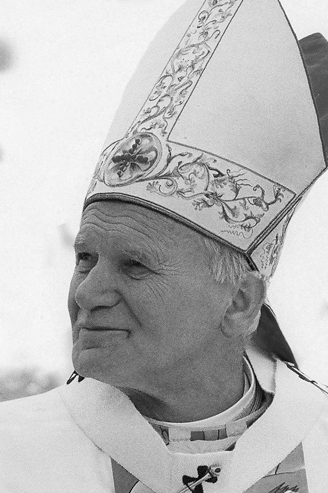
ADDRESS OF HIS HOLINESS JOHN PAUL II AT THE CONCLUSION OF THE STATIONS OF THE CROSS AT THE COLOSSEUM Good Friday, 13 April 1979 When we make the Way of the Cross from one station to the next, in spirit we are always at the spot wherethis journey had its “historical” place: where it[…]Continue reading→
A Meditation for Good Friday: How To Undo the Effects of Sin?
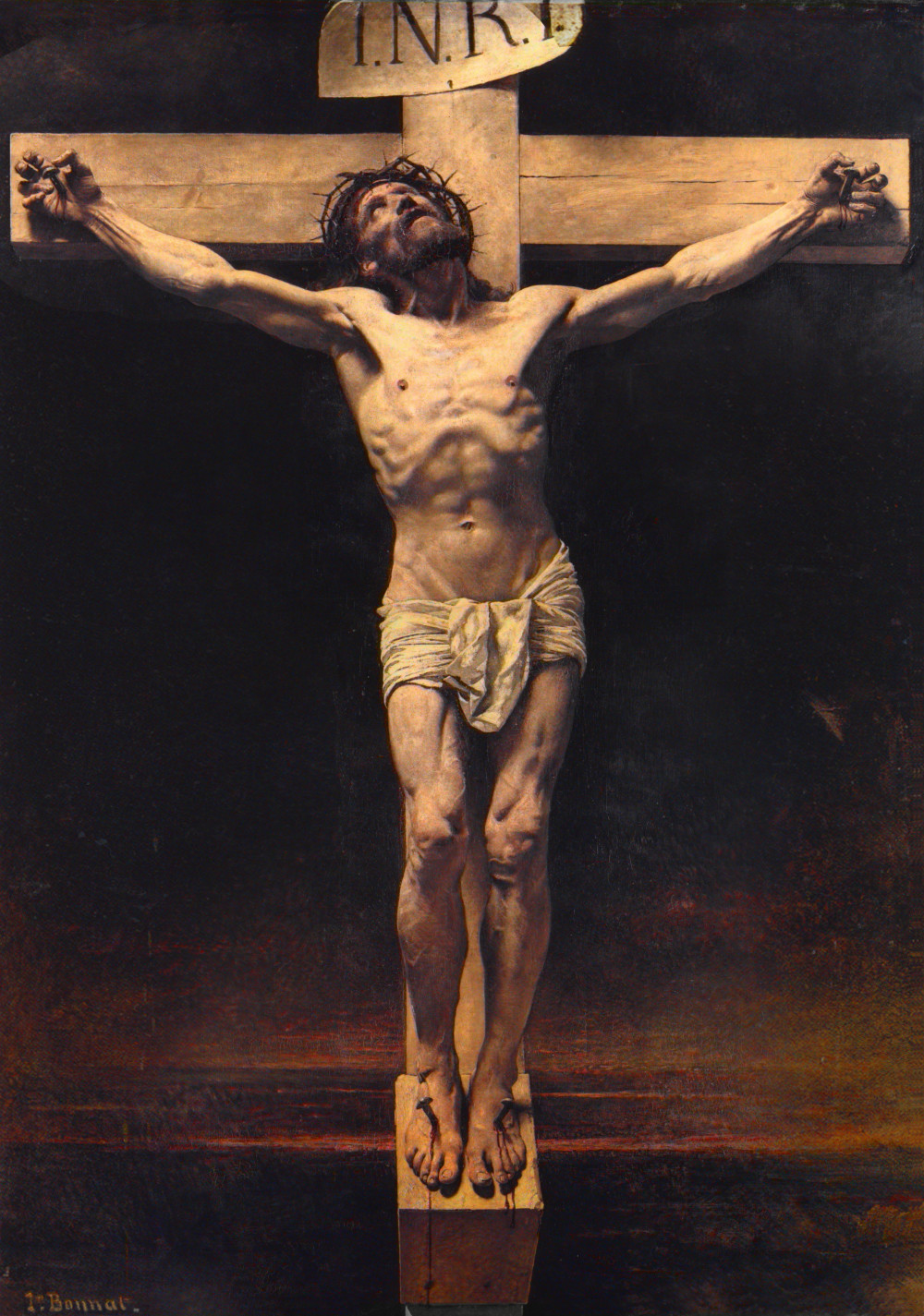
Cardinal Newman, now Saint John Henry Newman, was a towering figure of nineteenth-century Catholicism who is almost universally admired. I say “almost” because not everyone likes him. I knew a priest once, Arthur Caulkins, who has become disenchanted with Newman. As an undergraduate Arthur had been enamoured of Newman, and this interest continued when he[…]Continue reading→
Pope Benedict’s Last Holy Thursday Homily
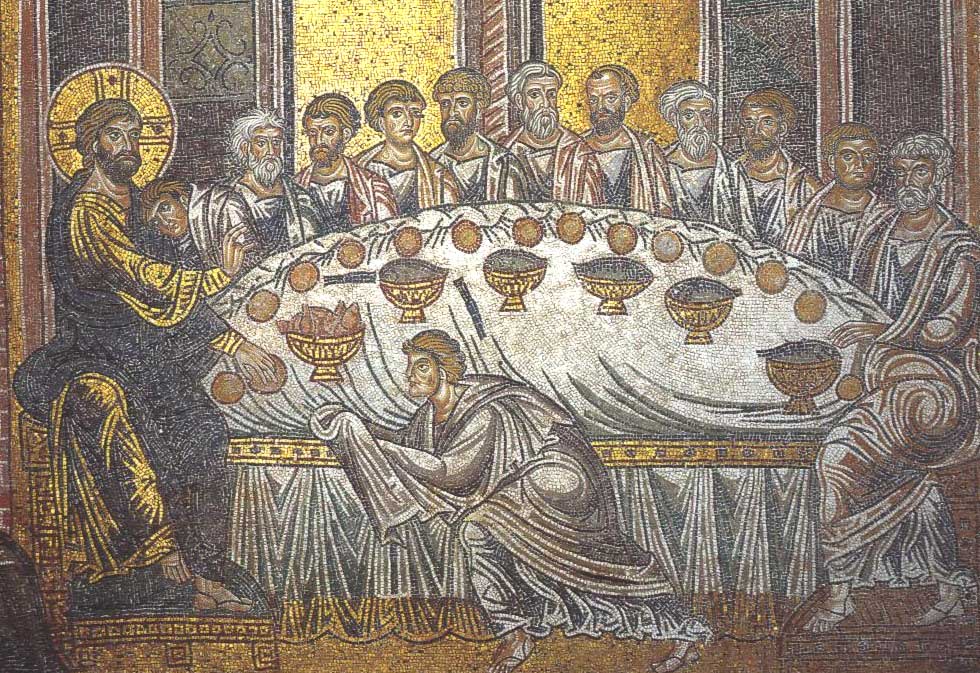
MASS OF THE LORD’S SUPPER HOMILY OF HIS HOLINESS BENEDICT XVI Basilica of St John Lateran Holy Thursday, 5 April 2012 Photo Gallery (Video) Dear Brothers and Sisters! Holy Thursday is not only the day of the institution of the Most Holy Eucharist, whose splendour bathes all else and in some ways draws it to[…]Continue reading→