
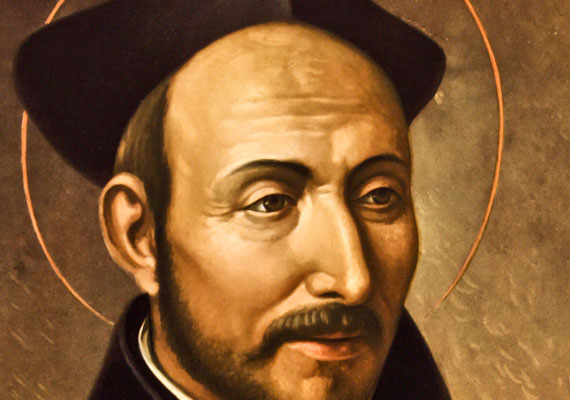
Ignatius and the Companions of Jesus
When we read the life of Saint Ignatius of Loyola (1491-1556) he at first glance seems to belong more to the early days of the desert Fathers, or, perhaps, to the mediaeval ‘fools for Christ’, who gave up all to follow Him – begging for alms, sleeping outside, pilgrimaging from place to place. Saint Ignatius is quite different from the many urbane, uber-educated and, sadly, not often orthodox Jesuits of the modern day. I will name no names, as the reader perhaps knows more of them than I. Yet, as the largest Order in the Church – the Franciscans would be bigger, but they are so fissiparous, dividing so often in search of reform, that they are now a myriad of Orders – the Jesuits also have had and still have many who are conservative, well-read, on-fire-for-the-truth, with sharp minds honed by their long formation , and the ‘fine steel of the thought of Saint Thomas’, as one of them put it. Peruse, as examples, the writings of Fathers Joseph Koterski, Joseph Fessio, James Schall, or Paul Mankowski, all recently deceased. We may include the early saints of the Order, Francis Xavier, Peter Canisius, the myriads of missionaries and martyrs. There were more than a few good and saintly men.
Until the present epoch – say, 1950’s or so – that was what one expected to find in a Jesuit. The nature of the institution that Ignatius founded inculcates a paradoxical spirit of independence in its members, while also a deep methodical training, formation and obedience, taking a fourth vow of such to the Holy Father, which has been interpreted in different ways through the ages. Peruse Saint Ignatius’ timeless rules for ‘thinking with the Church’ – sentire cum ecclesia – a pious exercise even for lay Catholics.
Of course, it is the joy, as well as the cross, of many a founder to see the institution into which they have poured their blood, sweat and tears, and upon which they have impressed their very personality, to grow beyond, or, at time, even against, them. But such are the ways of God, which are most definitely not the ways of men, and Who brings good out of all things in the end. As Pope Benedict exhorts in today’s posted address, ‘keep the spirit of your founder unchanged’.
Ignatius’ life is well known: He started off as a highly-disciplined soldier, quite aware of his own virtues and exploits, mired in the spiritus mundi, in all of its pomp and circumstances. But all that was shattered, quite literally, when, in the midst of the battle of Pamplona, a cannonball fractured his leg on May 20th, 1521, at the biblical age of thirty, when Christ began his own public mission.
As Ignatius painfully convalesced – they had to set the leg without anaesthesia, and he ever afterward limped – the only books available to pass the time was a life of Christ in Latin, and some lives of the saints in his native Spanish. Ignatius e had always loved chivalrous fictions of derring-do, but, he thought, oh well. He listlessly perused a life of Christ and a few on the saints.
Then he was intrigued, then astounded, at their biographies, marveling at the momentous decisions made by such figures as Abbot Anthony and Friar Francis and Brother Dominic, all the while reflecting on his own life, and life in the broader sense: What was it all about? What was the purpose, the end, the point not only of all his military victories, but of this transitory existence itself? Ignatius had this strange sensation that the joy of adventure and military prowess and all the delights of this temporal life were passing and ephemeral, while the peace he felt when he read of the deeper and more spiritual battles of the saints did not fade away.
As Ignatius, the future saint, put it (referring to himself in the third person, as was his wont):
While reading the life of Christ our Lord or the lives of the saints, he would reflect and reason with himself: What if I should do what Saint Francis or Saint Dominic did? In this way he let his mind dwell on many thoughts; they lasted a while until other things took their place. Then those vain and worldly images would come into his mind and remain a long time. This sequence of thoughts persisted with him for a long time.
But there was a difference. When Ignatius reflected on worldly thoughts, he felt intense pleasure; but when he gave them up out of weariness, he felt dry and depressed. Yet when he thought of living the rigorous sort of life he knew the saints had lived, he not only experienced pleasure when he actually thought about it, but even after he dismissed these thoughts, he still experienced great joy.
And as he came to conclude:
Then he understood his experience: thoughts of one kind left him sad, the others full of joy.
Thus was the beginning of the ‘discernment of spirits’, and the Spiritual Exercises of Saint Ignatius – a very profitable means of discovering one’s vocation. It certainly helped Ignatius discover his own spiritual journey, to give all as a ‘soldier for Christ’. at first lived as a pilgrim, begging and wandering to various holy sites, with a desire to go the Holy Land, which he eventually did (another story in itself, as are many episodes in his remarkable life). His conversion was completed, however, at Monstserrat. He tells the story that a Moor – a Spanish Muslim – insulted our Lady. Ignatius pondered whether or not to challenge him to a duel as reparation for the blasphemy – the ‘old man’ and the ‘soldier’ were not quite mortified in him – so dropped the reins and let his mule decide. If the mule followed the Moor, well, poor Moor. If the mule went on to the shrine – well, God was leading him on a higher path. And that is just what God, through the mule, did.
Ignatius still had a lot to learn, so, after a protracted time in retreat and labour, God inspired him to go to the centre of learning, Paris, where, in his thirties, he began studies for the priesthood, with freshmen much younger than he. But Ignatius’ charism and zeal soon attracted like-minded men to form a solid group – Francis of Xavier, Peter Claver and others – which they named after their Saviour, ‘The Companions of Jesus’ (later, the ‘Society’). The merry band took their first vows at the Church of Saint Peter on Montmartre in Paris, on the solemnity of the Assumption, August 15th, 1534, the date taken as the beginning of the Order, which was formally approved by Pope Paul III in 1540.
After Ignatius’ and the rest of his companions’ ordination to the priesthood on June 24, 1537, the Society grew by leaps and bounds, their history a highly varied one, but dedicated primarily to teaching (at all levels), preaching, missionary work, research, pilgrimage sites, innumerable martyrdoms, and anything else the Church would have them do, through the will of the Holy Father, to whom they took their famous ‘fourth vow’ of obedience. They were a bulwark of orthodoxy during the tumultuous times of the Protestant Reformation, more or less composing the documents of the Council of Trent, fought the errors of the Enlightenment, and brought the Faith to nascent nations across the globe, including our own here in Canada. Thousands lived and died for the Faith, a testament to what a missionary should be, striving to follow Saint Paul’s exhortation to become ‘all things to all men’.
Saint Ignatius spent the latter part of his life in Rome, guiding the Order, now grown to thousands of members across the planet, and died on in this day, July 31st, 1556, at the age of 65, meriting quite a fine eternal retirement. He was canonized on March 22, 1622, by Pope Gregory XV.
Sadly, as mentioned, all too many Jesuits have strayed from their original charism, but many also, like their founder, remain faithful, zealous and ready to work, suffer and even die for the Faith. A list of their names would be too numerous for this brief reflection. A number of years ago, I had a group of Jesuit scholastics – those studying for the priesthood – at my house for dinner, and was impressed by their fidelity, their humour, love for the Church, and desire to do good in the truth. Saint Ignatius isn’t quite finished with his work, yet. We should have confidence that he’s watching over the Order from heaven, and that through his prayers, may the Society of Jesus, semper reformanda, become once again what they were meant to be, and strive in all things, in fidelity to the Church, ad maiorem Dei gloriam
Saint Ignatius, ora pro nobis!
Carney’s Amoral Majority
After five defections – euphemistically described as ‘crossing the floor’ – and three by-elections, Mark Carney and his Liberals how have their coveted majority. One wonders what bowls of pottage were offered in back-room deals. In the archaic monarchical system that is the Dominion of Canada, this majority allows the newly-minted Prime Minister to rule[…]Continue reading→

Saint Kateri , Canada’s Protectress
This was the title given to Saint Kateri Tekakwitha, by Pope Benedict XVI, when he canonized her on October 28th, 2012, along with six others, in Saint Peter’ Square (she had been beatified by Pope John Paul II back in 1980). With Saint Joseph as our protector, along with the Canadian martyrs, we seem to[…]Continue reading→

A Tale of Two Benedicts
A grace-filled Holy Week to all our readers! As we await and prepare for the Resurrection about to dawn upon us, we might keep in mind two Benedicts: Pope Emeritus Benedict XVI, requiescat in pace, elected on this day in 2005; and today’s commemoration of the mystic pilgrim, Benedict Joseph Labre, who died on this[…]Continue reading→

My Name is Bernadette
April 16th is a propitious day, for besides the anniversary of Father de Valk’s death, who founded Catholic Insight in its print form decades ago, and the commemoration of the ‘two Benedicts’, mentioned in accompanying posts, today we also recall Saint Bernadette Soubirous, the young visionary to whom the Virgin Mary appeared numerous times at[…]Continue reading→

Saint Lydwina of Schiedam and Suffering Joyfully
Saint Lydwina of Schiedam (1380 – 1433) was one of the countless and glorious ‘victim souls’ in the history of the Church, those whose lives are filled with suffering, often of an unimaginable intensity, but who suffer joyfully. She was a fifteen-year old Dutch girl, out skating one day, when she fell and broke one[…]Continue reading→

The Glorious Martyrdoms of Martin and Maximus
As we enter into Eastertide, we recall on this 13th of April Pope Saint Martin I (+655), one of the noblest, if most tragic, of the successors of Saint Peter. Born in Umbria, Italy, he was of noble lineage, with great intelligence combined with charity and love of the poor and the Church. While still[…]Continue reading→
Canonizing Sister Faustina and Divine Mercy
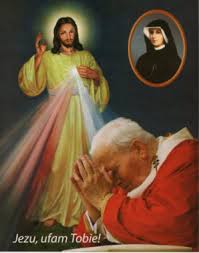
HOMILY OF THE HOLY FATHER MASS IN ST PETER’S SQUARE FOR THE CANONIZATION OF SR MARY FAUSTINA KOWALSKA Sunday, 30 April 2000 1. “Confitemini Domino quoniam bonus, quoniam in saeculum misericordia eius”; “Give thanks to the Lord for he is good; his steadfast love endures for ever” (Ps 118: 1). So the Church sings on the Octave of[…]Continue reading→

Saint Stanislaus of Szczepanów
We celebrate Saint Stanislaus today (+ April 11, 1079), in light of this Easter Octave, a bishop and martyr who accepted the episcopacy only at the direct order of Pope Alexander II. He proved a wise and courageous leader of his flock, put to death by his own king, Boleslaus, for rebuking the monarch’s ‘immoral[…]Continue reading→
Saint Gemma Galgani
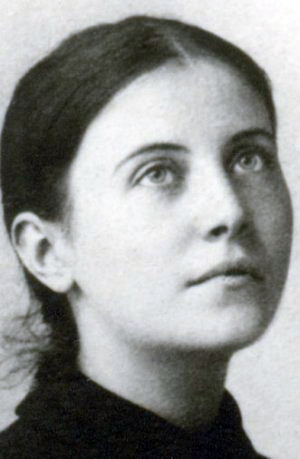
On this April 11th, in 1903 – the same year that the Italian Guiseppe Sarto was elected Pope later that summer as Pius X – a lovely, young Italian woman died, by the name of Gemma Galgani. She lived a brief life of 24 years, as did a number of other young saints, including Pier[…]Continue reading→
An Ideological and Improper Translation
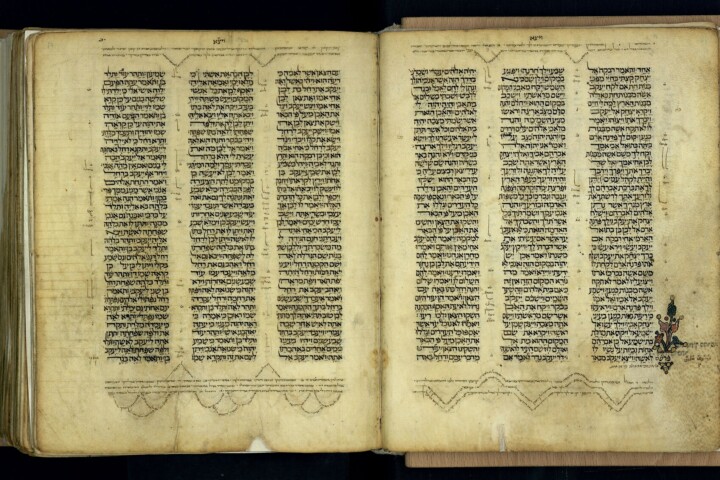
I noticed something odd with the psalm reading at Mass the other day. Our bishops’ conference here in Canada has decreed that the Mass in English – Novus Ordo – use the ‘NRSV’, the ‘New Revised Standard Version’, an ‘updated’ translation of the original RSV, first published in 1952. This ‘new translation’ has the tendency[…]Continue reading→