
Saint Lawrence of Brindisi: Bible and Cappucino
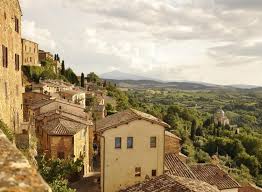
Guilio Cesare Russo was born to a family of Venetian merchants, but not in Venice, but rather far to the south, in the village of Brindisi, right down on the heel of the boot of Italy. He took the name Lawrence when he entered the Order of the Capuchins, a strict reform of the Franciscans, so-called after the distinctive hood – capuccia – of their habit. (The capuchin monkey, which also appear sort of hooded, are named after the friars – and keep reading to see how we got cappuccino).
Guilio was one of the brightest students of his age, his genius recognized very early on, far advanced of his confreres. He was also one of the most ‘pious’, in the best sense of that term. He seems to have seen from his earliest days that life is all about eternity, and he did not have much time for usual games and pastimes. There is nothing wrong with such, and much right, but God gives the grace to some to see further, as part of that ‘eschatological’ purpose of the religious life, reminding the rest of us that we will all face judgment for what we have done with our own talents and time.
So Guilio joined the strictest Order he could find, the reformed Franciscans, and took the name of the early martyr of Rome. His talents recognized, he became much involved in the ecclesiastical and political affairs of the age, but always maintained his deep personal devotion, and would often fall into ecstasy while saying Mass. By the time he was finished his studies, he could fluently read, speak and understand Latin, Hebrew, Greek, German, Bohemian, Spanish, and French, along with his native Italian. Preaching to the Jews in Italy, the rabbis thought the friar must be a Jewish convert, so fluently could he converse in their language like a native-born speaker. I read once that the saint, when the question was put to him ‘What would happen if all the Bibles in the world were destroyed?’, replied ‘Well, I would write it out again’. He likely meant the Latin Vulgate, which he seems to have memorized (!), but one wonders about their original languages also. Grace does build on nature, and saints are capable of some remarkable things.
Preaching missions throughout Italy and Europe, the saint, with his simple, direct, yet profound sermons, converted untold numbers, with even his mere presence leading to repentance. All his words flowed from the Word, that is, Christ and Scripture, which are in some ways the same, as our saint wrote:
For the word of God is light to the mind and fire to the will, enabling man to know and to love God. To the interior man who lives by grace for the Spirit of God, it is bread and water; but it is a bread sweeter than honey from the comb, a water better than milk or wine. For the soul it is a spiritual treasure-house of merits, and so is called gold and very precious stones. For the heart that is obstinately hardened in vice it is a hammer; and against the devil, the world and the flesh it is a sword that slays every sin.
Friar Lawrence was eventually elected to the highest level of his Order, as Vicar-General, and was also employed as an ambassador for the Vatican. He preached and spiritually led crusades against the ‘Turks’, zealous Muslims still waging their centuries-long jihad against Christendom. At one famous battle, in the assault upon Szekes-Fehervar in Hungary in September of 1601, at the very gateway to Europe, the Christian defenders, a mere 18,000, faced seemingly impossible odds against 80,000 Muslims. But Father Lawrence roused the troops, going up and down the field of battle, unscathed. It was said he was a whole platoon unto himself, and the Christians won handily, with up to 30,000 of the invaders lost. This was a prelude to the later miraculous defeat of Islamic jihadists in 1683, at the gates of Vienna by Jan Sobieski, which broke the back of Turkish military might. (Even if they are now making a comeback by dint of demography without need of a military invasion, but that’s another story).
As an aside, it was after that battle that another Capuchin friar discovered amongst the scattered and abandoned provisions of the Turks, who had made a frantic retreat, a curious granular substance which, when mixed with hot water, produced a lovely, rich brew that soon became quite the sensation They called it ‘cappuccino‘ – little Capuchin – in honour of Lawrence and the sons of Saint Francis, who had helped win the day.
After a fruitful life well lived, Saint Lawrence died on his 60th birthday, July 22nd, 1619. He was canonized in 1881 by Pope Leo XIII, with his works, sermons and erudition earning him the title of Doctor of the Church. A few more saints like him, and, as the Devil confessed to the Curé D’Ars two centuries later, his kingdom would be destroyed, and the whole world converted.
Well, why not?
Saint Lawrence of Brindisi, ora pro nobis!
Carney’s Amoral Majority
After five defections – euphemistically described as ‘crossing the floor’ – and three by-elections, Mark Carney and his Liberals how have their coveted majority. One wonders what bowls of pottage were offered in back-room deals. In the archaic monarchical system that is the Dominion of Canada, this majority allows the newly-minted Prime Minister to rule[…]Continue reading→

Saint Kateri , Canada’s Protectress
This was the title given to Saint Kateri Tekakwitha, by Pope Benedict XVI, when he canonized her on October 28th, 2012, along with six others, in Saint Peter’ Square (she had been beatified by Pope John Paul II back in 1980). With Saint Joseph as our protector, along with the Canadian martyrs, we seem to[…]Continue reading→

A Tale of Two Benedicts
A grace-filled Holy Week to all our readers! As we await and prepare for the Resurrection about to dawn upon us, we might keep in mind two Benedicts: Pope Emeritus Benedict XVI, requiescat in pace, elected on this day in 2005; and today’s commemoration of the mystic pilgrim, Benedict Joseph Labre, who died on this[…]Continue reading→

My Name is Bernadette
April 16th is a propitious day, for besides the anniversary of Father de Valk’s death, who founded Catholic Insight in its print form decades ago, and the commemoration of the ‘two Benedicts’, mentioned in accompanying posts, today we also recall Saint Bernadette Soubirous, the young visionary to whom the Virgin Mary appeared numerous times at[…]Continue reading→

Saint Lydwina of Schiedam and Suffering Joyfully
Saint Lydwina of Schiedam (1380 – 1433) was one of the countless and glorious ‘victim souls’ in the history of the Church, those whose lives are filled with suffering, often of an unimaginable intensity, but who suffer joyfully. She was a fifteen-year old Dutch girl, out skating one day, when she fell and broke one[…]Continue reading→

The Glorious Martyrdoms of Martin and Maximus
As we enter into Eastertide, we recall on this 13th of April Pope Saint Martin I (+655), one of the noblest, if most tragic, of the successors of Saint Peter. Born in Umbria, Italy, he was of noble lineage, with great intelligence combined with charity and love of the poor and the Church. While still[…]Continue reading→

Canonizing Sister Faustina and Divine Mercy
HOMILY OF THE HOLY FATHER MASS IN ST PETER’S SQUARE FOR THE CANONIZATION OF SR MARY FAUSTINA KOWALSKA Sunday, 30 April 2000 1. “Confitemini Domino quoniam bonus, quoniam in saeculum misericordia eius”; “Give thanks to the Lord for he is good; his steadfast love endures for ever” (Ps 118: 1). So the Church sings on the Octave of[…]Continue reading→

Saint Stanislaus of Szczepanów
We celebrate Saint Stanislaus today (+ April 11, 1079), in light of this Easter Octave, a bishop and martyr who accepted the episcopacy only at the direct order of Pope Alexander II. He proved a wise and courageous leader of his flock, put to death by his own king, Boleslaus, for rebuking the monarch’s ‘immoral[…]Continue reading→

Saint Gemma Galgani
On this April 11th, in 1903 – the same year that the Italian Guiseppe Sarto was elected Pope later that summer as Pius X – a lovely, young Italian woman died, by the name of Gemma Galgani. She lived a brief life of 24 years, as did a number of other young saints, including Pier[…]Continue reading→
An Ideological and Improper Translation
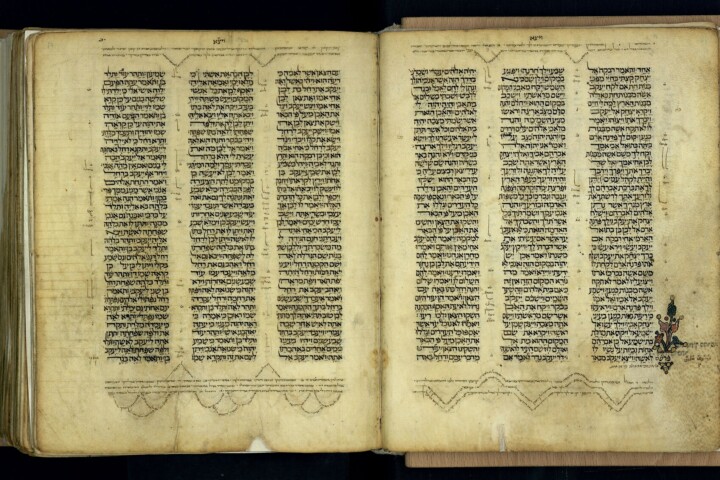
I noticed something odd with the psalm reading at Mass the other day. Our bishops’ conference here in Canada has decreed that the Mass in English – Novus Ordo – use the ‘NRSV’, the ‘New Revised Standard Version’, an ‘updated’ translation of the original RSV, first published in 1952. This ‘new translation’ has the tendency[…]Continue reading→