
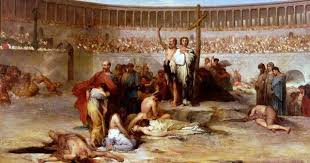
The Protomartyrs of Rome
The blood of martyrs is the seed of the Church – Tertullian (+240 A.D.)
The first, or proto-, martyrs of the Church of Rome commemorate the untold number of Christians put to death under the reign of Nero, in the very first days of the Church, when to be a Christian meant more or less either to be a martyr, or prepare for that swift and noble path to heaven. They preceded not long before the deaths of saints Peter and Paul, and both under the reign of the same tyrant, so their feast follows theirs. Hence, along with the two pillars of the Church, we have the legions of incogniti, martyrs whose names are unknown to history, but known to God, Who rewarded their witness with an eternity of ineffable happiness.
Nero’s persecution was the beginning of many in the years and centuries to follow: Domitian, Trajan, Hadrian, Marcus Aurelius, Decius, Valerian, Galerius, Diocletian, then, when Rome as it was known collapsed, there was the rise of the pagan religion of Mohammad from the Arabic deserts, Islam – which Belloc describes as a Christian heresy. Add to these were the northern pagan persecutors, the Norse and Vikings, which leads us into the Middle Ages, and the separation of the various Protestants sects from the Church. They in turn persecuted Catholics, before the rise of the neo-paganism of the modern era, with the French Revolution, before we get into the era of atheistic Communism under its various guises, which has produced more martyrs than all the rest combined, and counting…
It has never really been ‘easy or ‘safe’ to practise Catholicism, but such was predicted by Christ Himself. For kings and potentates who seek unbridled power have seen and will always see Christ as a rival to their absolute authority over their citizens, soul and body, a secular totalitarianism that brooks no opposition. Constantine legalized the Christian religion in 313, but persecution persisted, into our own day in subtler and more insidious ways, and will until the end of time. There have been many ‘types’ of anti-Christ from Nero, to Henry VIII, Napoleon, Hitler, Stalin, all attempting either to destroy, or at least dominate and absorb, the Church that Christ had founded, one that no earthly power could subdue.
As Pope Saint John Paul II would make clear two thousand years after Nero’s reign had perished in the fires of Rome:
The culture and praxis of totalitarianism also involve a rejection of the Church. The State or the party which claims to be able to lead history towards perfect goodness, and which sets itself above all values, cannot tolerate the affirmation of an objective criterion of good and evil beyond the will of those in power, since such a criterion, in given circumstances, could be used to judge their actions. This explains why totalitarianism attempts to destroy the Church, or at least to reduce her to submission, making her an instrument of its own ideological apparatus. (Centesimus Annus, #45)
The tyrants have all failed. Little did Nero know that in slaughtering Christians he was in fact undermining his own power, for the blood of those very martyrs, as Tertullian would write a century and half later, would be the seed of the Church, whose spiritual and transcendent authority would supersede and defy the rights of tyrants to dominate and rule ‘like gods’.
Absolute power and authority corrupted Nero; as a spoiled brat with too much power too young, he was already predisposed to such, as it has gone to the heads of greater and lesser rulers in the intervening Christian centuries (peruse, if you will, contemporary accounts of his deviancies, which make for intriguing, if disturbing, reading).
In his fevered soul, which may have been demonically possessed, Nero wanted to enlarge his palace, build ‘bigger barns’ so to speak, and in the process started a fire, whether accidentally or not, one which quickly spread through the city, which, unlike rebuilt Rome, was constructed largely of wood. For whatever reason, fear of backlash, or out of spite, or as an excuse to begin his barbarous persecution, Nero blamed the new sect of the ‘Christians’, whom he proceeded to put to death in horrific, even satanic, ways. As the Roman historian Tacitus, not a Christian, but one who saw the injustice of it all, describes their torments (which are also recounted by Saint Clement, the third Pope, in his letters).
Covered with the skins of beasts, they were torn by dogs and perished, or were nailed to crosses, or were doomed to the flames and burnt, to serve as a nightly illumination, when daylight had expired. Nero offered his gardens for the spectacle, and was exhibiting a show in the circus, while he mingled with the people in the dress of a charioteer or stood aloft on a car. Hence, even for criminals who deserved extreme and exemplary punishment, there arose a feeling of compassion; for it was not, as it seemed, for the public good, but to glut one man’s cruelty, that they were being destroyed.
Vita brevis, aeternitas longa. Life is short, along with the sorrows thereof, but eternity is long, and Saint Paul, as he was about to pour out his life, saw clearly that the sufferings of this present time are not worth comparing with the glory that is to be revealed to us.
We will have our own persecutions, perhaps not like those Nero offered, but there is more than one way to be thrown to the lions, and they may come upon us like a thief in the night. But noli timere. In the Gospel account, in the midst of the violent storm, Christ comforts His Apostles: ‘Why are you afraid, O men of little faith?” Then he rose and rebuked the winds and the sea; and there was a great calm. And the men marveled, saying, “What sort of man is this, that even winds and sea obey him?
We must trust and keep our interior peace, but Christ also warns us to keep our loins girded and our lamps lit, with our eyes always on the end and purpose of all creation, the Alpha and Omega, which, after all is said and done, is all that really matters.
Holy Martyrs of Rome, orate pro nobis!

Carney’s Amoral Majority
After five defections – euphemistically described as ‘crossing the floor’ – and three by-elections, Mark Carney and his Liberals how have their coveted majority. One wonders what bowls of pottage were offered in back-room deals. In the archaic monarchical system that is the Dominion of Canada, this majority allows the newly-minted Prime Minister to rule[…]Continue reading→

Saint Kateri , Canada’s Protectress
This was the title given to Saint Kateri Tekakwitha, by Pope Benedict XVI, when he canonized her on October 28th, 2012, along with six others, in Saint Peter’ Square (she had been beatified by Pope John Paul II back in 1980). With Saint Joseph as our protector, along with the Canadian martyrs, we seem to[…]Continue reading→

A Tale of Two Benedicts
A grace-filled Holy Week to all our readers! As we await and prepare for the Resurrection about to dawn upon us, we might keep in mind two Benedicts: Pope Emeritus Benedict XVI, requiescat in pace, elected on this day in 2005; and today’s commemoration of the mystic pilgrim, Benedict Joseph Labre, who died on this[…]Continue reading→

My Name is Bernadette
April 16th is a propitious day, for besides the anniversary of Father de Valk’s death, who founded Catholic Insight in its print form decades ago, and the commemoration of the ‘two Benedicts’, mentioned in accompanying posts, today we also recall Saint Bernadette Soubirous, the young visionary to whom the Virgin Mary appeared numerous times at[…]Continue reading→

Saint Lydwina of Schiedam and Suffering Joyfully
Saint Lydwina of Schiedam (1380 – 1433) was one of the countless and glorious ‘victim souls’ in the history of the Church, those whose lives are filled with suffering, often of an unimaginable intensity, but who suffer joyfully. She was a fifteen-year old Dutch girl, out skating one day, when she fell and broke one[…]Continue reading→

The Glorious Martyrdoms of Martin and Maximus
As we enter into Eastertide, we recall on this 13th of April Pope Saint Martin I (+655), one of the noblest, if most tragic, of the successors of Saint Peter. Born in Umbria, Italy, he was of noble lineage, with great intelligence combined with charity and love of the poor and the Church. While still[…]Continue reading→
Canonizing Sister Faustina and Divine Mercy
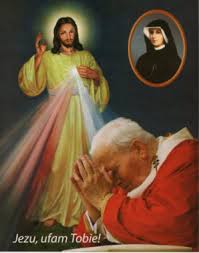
HOMILY OF THE HOLY FATHER MASS IN ST PETER’S SQUARE FOR THE CANONIZATION OF SR MARY FAUSTINA KOWALSKA Sunday, 30 April 2000 1. “Confitemini Domino quoniam bonus, quoniam in saeculum misericordia eius”; “Give thanks to the Lord for he is good; his steadfast love endures for ever” (Ps 118: 1). So the Church sings on the Octave of[…]Continue reading→

Saint Stanislaus of Szczepanów
We celebrate Saint Stanislaus today (+ April 11, 1079), in light of this Easter Octave, a bishop and martyr who accepted the episcopacy only at the direct order of Pope Alexander II. He proved a wise and courageous leader of his flock, put to death by his own king, Boleslaus, for rebuking the monarch’s ‘immoral[…]Continue reading→
Saint Gemma Galgani
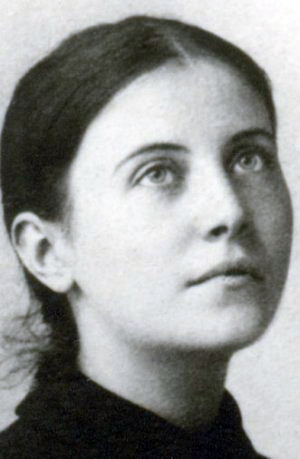
On this April 11th, in 1903 – the same year that the Italian Guiseppe Sarto was elected Pope later that summer as Pius X – a lovely, young Italian woman died, by the name of Gemma Galgani. She lived a brief life of 24 years, as did a number of other young saints, including Pier[…]Continue reading→
An Ideological and Improper Translation
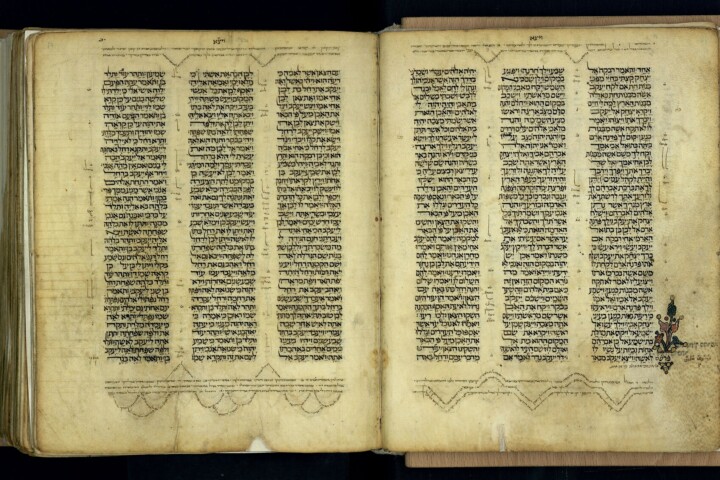
I noticed something odd with the psalm reading at Mass the other day. Our bishops’ conference here in Canada has decreed that the Mass in English – Novus Ordo – use the ‘NRSV’, the ‘New Revised Standard Version’, an ‘updated’ translation of the original RSV, first published in 1952. This ‘new translation’ has the tendency[…]Continue reading→