
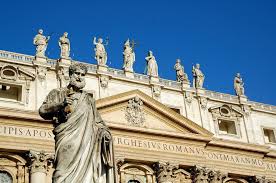
Erastianism and a Free Church
Thomas Erastus (1524 – 1583) was a Swiss physician and theologian who adopted the newfangled heretical doctrines of Ulrich Zwingli, a sort of extreme Calvinist, who rejected most of the sacraments, and believed the ‘Lord’s Supper’ was a but a symbol. However, his name has gone down in history as ‘Erastianism’, for his apparent doctrine that the Church should be subservient to the State, with civil authority commandeering and trumping the ecclesiastical. There are other versions and names for this erroneous doctrine with different flavour and emphases – Febronianism, Gallicanism, Caesaropapism – but they all have in common that the secular authority can tell the bishops, and along with them, the priests and laity, what they may or may not do, not just in the secular domain, but the ecclesial and even liturgical.
The headlines for many dioceses have it: ‘The Church will re-open when the secular authority decrees that it is safe to do so’. More than that, the church’s liturgical practices are also governed by civil decree: After a three-month closure of all of our churches, shuttered and locked (while many stores were not), they are only now opening, slowly, but with differing protocols to keep people ‘safe’, again, under the advice – one would use a stronger word – from secular authorities: In many, if not most, dioceses, it is now requisite to wear a mask, to receive Holy Communion on the hand – in one place I read of, there is to be Plexiglas wall, with an opening into which one puts one’s hand to receive from the minister, like receiving a ticket for a film – never to sing, no choirs, no hymnals or missalettes, no holy water, no touching anyone or anything, six feet spacing.
To say the least, Liturgy – the perennial and traditional Holy Sacrifice of the Mass – will not quite be the same.
We should be clear where all this is coming from: Not so much from the governing authorities themselves, but from the ‘experts’ they have hired, or been forced to hire, to give them advice, which they pass along to our own pastors, who acquiesce, most without the least hint of questioning, resistance or demurring – in fact, dioceses have often gone beyond what was eventually decreed. There have been exceptions, with bishops in Minnesota of all places defying their own governor’s extreme lockdown. An spark of the parrhesia of the Apostles, which one hopes soon fans into a flame.
These experts are usually epidemiologists, specialists who track the spread of diseases within a population, using mathematical modeling – think climate change – to predict what a given illness (virus, bacteria, or other vector) will do. They are often wrong, and their predictions of the magnitude of this current Covidian crisis have been off by several orders of magnitude. In other words, there is some risk, especially for the elderly and those with severe respiratory conditions, but for the vast majority of people, it seems to be minimal.
We might debate the level of risk all day long, but what of it? Did the early Christians wait for the green light from Nero to start celebrating Mass? And, when they did so, attendance was a decidedly risky endeavour, punishable by a horrific death, right up to the time of Constantine, and beyond. Under the reign of Elizabeth I, ‘Good Queen Bess’, celebrating or attending Mass, or even hiding priests, was a capital offense. And we haven’t even started with the Communists, continuing into our own day.
Yes, this is a bit different, with the evil of a virus and not the evil of persecuting tyrants, but there are similarities that must be pondered, namely, what sort of ‘risk’ is requisite to shut down the sacramental economy, and, not only that, but ever-after, to alter the way Liturgy is celebrated, to say nothing of the broader society, all in the name of an rather extreme notion of ‘safety’, which is impossible in this world. Are we not always on the brink of death and eternity, a few missed heartbeats or breaths away, and what really is life without some element of risk?
There have been times in the past when churches were decreed closed due to pestilence and other dangers, but, it should be the Church which decides this, along all other Church matters, and not the state. Not only that, but following a point made in a recent post, the faithful should see that it is the Church – that is, their own bishop – deciding, and not the government, nor even the bishop being coerced by the state. That way, we as a laity at least we know whom we are being asked to obey (and more on that soon).
We are in perilous times, and the slide towards Erastianism and a secular Church – the phrase is deliberately oxymoronic – is a subtle and insidious one, the perennial temptation of the lure of the world, which must be resisted by might and main, for the freedom to worship God, to receive the sacraments, to live a liturgical life, so that we might resist the world, the flesh and the devil.
Render to Caesar what is Caesar’s, and to God, what is God’s.
This may not be the path to safety and comfort, but it is certainly the path to heaven.
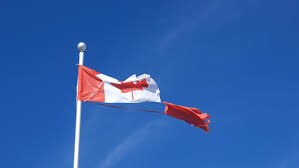
Carney’s Amoral Majority
After five defections – euphemistically described as ‘crossing the floor’ – and three by-elections, Mark Carney and his Liberals how have their coveted majority. One wonders what bowls of pottage were offered in back-room deals. In the archaic monarchical system that is the Dominion of Canada, this majority allows the newly-minted Prime Minister to rule[…]Continue reading→

Saint Kateri , Canada’s Protectress
This was the title given to Saint Kateri Tekakwitha, by Pope Benedict XVI, when he canonized her on October 28th, 2012, along with six others, in Saint Peter’ Square (she had been beatified by Pope John Paul II back in 1980). With Saint Joseph as our protector, along with the Canadian martyrs, we seem to[…]Continue reading→
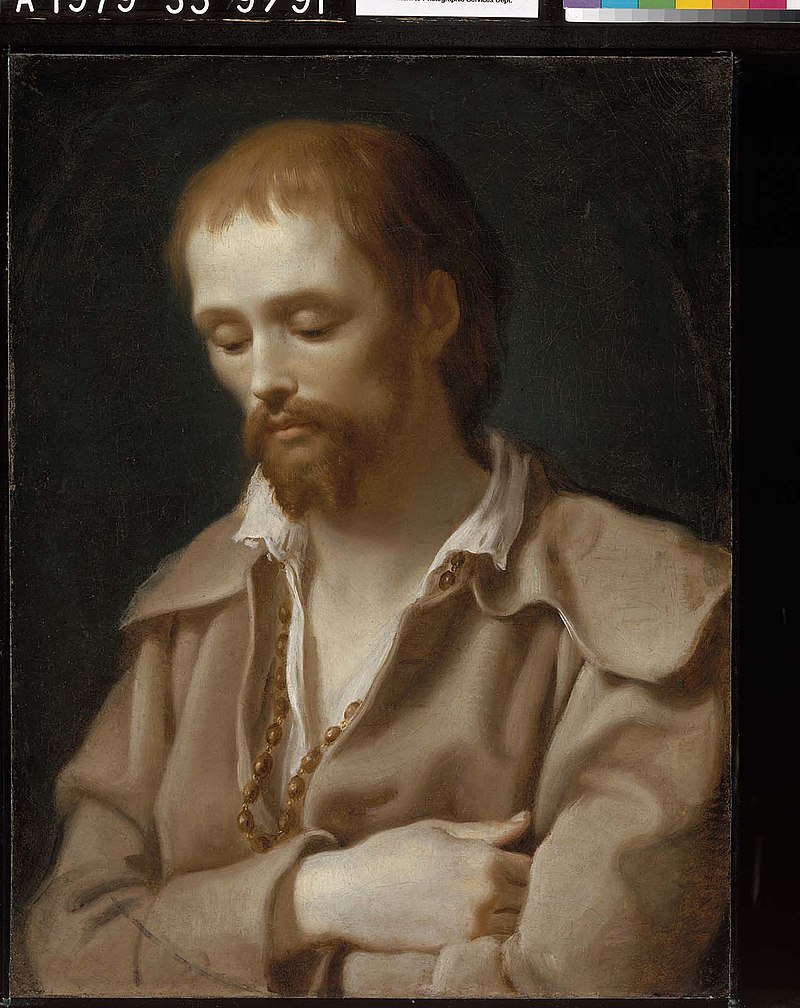
A Tale of Two Benedicts
A grace-filled Holy Week to all our readers! As we await and prepare for the Resurrection about to dawn upon us, we might keep in mind two Benedicts: Pope Emeritus Benedict XVI, requiescat in pace, elected on this day in 2005; and today’s commemoration of the mystic pilgrim, Benedict Joseph Labre, who died on this[…]Continue reading→

My Name is Bernadette
April 16th is a propitious day, for besides the anniversary of Father de Valk’s death, who founded Catholic Insight in its print form decades ago, and the commemoration of the ‘two Benedicts’, mentioned in accompanying posts, today we also recall Saint Bernadette Soubirous, the young visionary to whom the Virgin Mary appeared numerous times at[…]Continue reading→
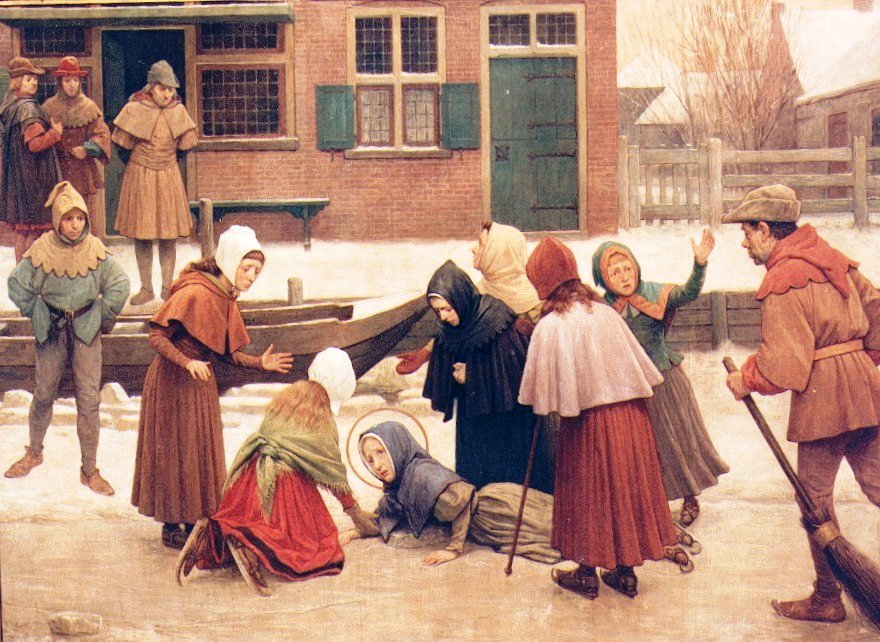
Saint Lydwina of Schiedam and Suffering Joyfully
Saint Lydwina of Schiedam (1380 – 1433) was one of the countless and glorious ‘victim souls’ in the history of the Church, those whose lives are filled with suffering, often of an unimaginable intensity, but who suffer joyfully. She was a fifteen-year old Dutch girl, out skating one day, when she fell and broke one[…]Continue reading→
The Glorious Martyrdoms of Martin and Maximus
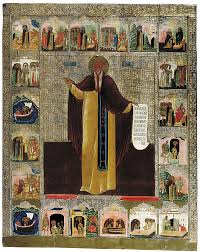
As we enter into Eastertide, we recall on this 13th of April Pope Saint Martin I (+655), one of the noblest, if most tragic, of the successors of Saint Peter. Born in Umbria, Italy, he was of noble lineage, with great intelligence combined with charity and love of the poor and the Church. While still[…]Continue reading→

Saint Stanislaus of Szczepanów
We celebrate Saint Stanislaus today (+ April 11, 1079), in light of this Easter Octave, a bishop and martyr who accepted the episcopacy only at the direct order of Pope Alexander II. He proved a wise and courageous leader of his flock, put to death by his own king, Boleslaus, for rebuking the monarch’s ‘immoral[…]Continue reading→
Saint Gemma Galgani
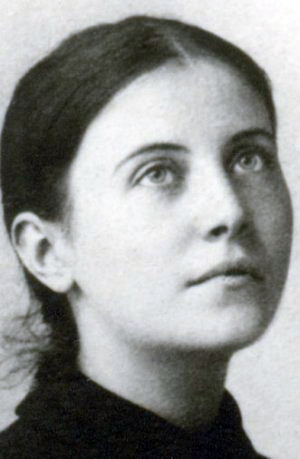
On this April 11th, in 1903 – the same year that the Italian Guiseppe Sarto was elected Pope later that summer as Pius X – a lovely, young Italian woman died, by the name of Gemma Galgani. She lived a brief life of 24 years, as did a number of other young saints, including Pier[…]Continue reading→
An Ideological and Improper Translation
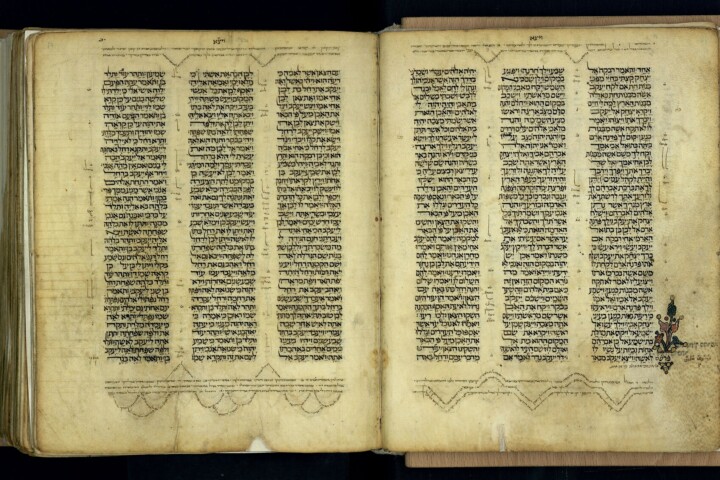
I noticed something odd with the psalm reading at Mass the other day. Our bishops’ conference here in Canada has decreed that the Mass in English – Novus Ordo – use the ‘NRSV’, the ‘New Revised Standard Version’, an ‘updated’ translation of the original RSV, first published in 1952. This ‘new translation’ has the tendency[…]Continue reading→
Saint Jean-Baptiste de la Salle: A Teacher for Teachers
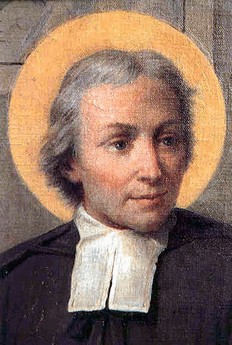
Jean-Baptiste de la Salle (1651 – 1719), a French nobleman, ordained a priest, founded the first order in the Church’s history entirely without priests, and this came about almost by accident. I say ‘almost’, for, of course, there are no accidents with God. Destined for ordination from an early age, Jean-Baptiste never looked back, even[…]Continue reading→