
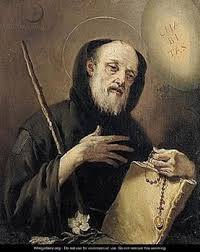
A Minimal Friar and the Death of a Great Pope
This April the second- overshadowed by Holy Thursday this year – marks the memorial of Saint Francis of Paola (1417-1507), founder of the ‘Minim’ friars, so called for their humility and poverty, who interpreted the rule of Saint Francis of Assisi in quite a literal sense: extreme poverty, trust in God, foregoing all animal and animal-derived products – true vegans for God! But Francis did so for spiritual, ascetic and redemptive reasons, which makes all the difference.
His parents, who had not had children and were getting older, had conceived Francis of Paola by the intercessory prayers of the original Saint Francis’, and the boy was later healed of an eye-ailment in a similar manner – hence, his name.
At the age of 13, Francis was sent to live and be educated with the local Franciscans, where his nascent love of prayer and solitude grew; the next year, after a pilgrimage with his parents to the Portiuncula and Rome, the Francis received permission from his parents to live as a hermit in a cave by the sea (!), where he lived on herbs and what people brought him, sleeping on a bed of stone. This was in 1432.
As in the age of the desert fathers, others joined Francis, and they adopted a ‘way of life’, reciting the Divine Office, meditating, and doing good works, being known as the Hermits of Saint Francis of Assisi. They were amongst the most ascetic of Orders, abstaining from meat throughout the year. In 1454, Francis and his friars, helped by the local townspeople, built a large monastery and church out of the local stones.
The Hermits grew and became established, by various Popes, not least Alexander VI and Julius II, themselves, ironically, themselves rather worldly and immersed in the politics of their day, almost the contrary of Francis. Julius, armoured and on horseback, would lead his own papal troops into battle, but it was he who began the re-construction of Saint Peter’s basilica, and his own struggle with the headstrong artist Michelangelo is recounted in the 1965 film The Agony and the Ecstasy, with Charlton Heston and Rex Harrison.
Alexander VI was one of the Borgia popes, who had the Dominican preacher and prophet Savonarola burned at the stake (see the intriguing account of their conflict in the The Meddlesome Friar and the Wayward Pope by Michael de la Bedoyere (1958)). Yet it was also Alexander who changed the name of the Order to the ‘Minims’ – due to their hallmark for humility and hiddenness.
Saint Francis of Paola’s love for life and all God’s creatures was legendary, even raising to life, apparently, a half-eaten fish and fully eaten lamb. Like many of those saints who practised what seem to our eyes extreme mortifications, Francis’ thaumaturgic life was filled with miracles – often a charism of ascetics and mystics, signifying their deep, liminal connection with the divine. To him are attributed any number of healings and raisings from the dead, foretelling the future, prophesying his own death on this day in his 91st year, on Good Friday that year, while he had the Passion according to Saint John read to him. In 1562, five decades afterwards, a group of Huguenots opened his tomb and, finding his body incorrupt – something inconvenient to their own ‘narrative’, dragged it out, burned it, and scattered the bones. Catholics recovered these precious relics, and blessed is the reader if he manages to venerate one.
Francis never allowed himself to be troubled by the travails of his time. As he wrote to his brethren:
Brothers, I most strongly urge you to work for the salvation of your souls with prudence and diligence. Death is certain, and life is short and vanishes like smoke. Therefore you must fix your minds on the passion of our Lord Jesus Christ, who so burned with love for us that he came down from heaven to redeem us. For our sakes he suffered all the agonies of body and mind, and did not shrink from any torment. He gave us a perfect example of patience and love. For our part, we too must be patient when things go against us.
Francis was never ordained a priest, unlike most founders of religious orders. Like his namesake of Assisi, he kept himself far removed from the intrigues of the hierarchical Church, spending most of his life in prayer and good works in his beloved Italia – a fitting intercessor for that beleaguered nation. Towards the end, at the direct order of the Pope, the humble friar spent his final days advising the King of France, Louis XI, as well as the young Dauphin, Charles VIII. On his way to Paris from the Mediterranean coast, Francis healed many, including scores of those afflicted with the plague. A very fitting intercessor for our times.
In one incident, Francis used his cloak to ‘float’ cross a body of water – it seems the coat was both a boat and a sail – when the boatman refused him passage, a feat commemorated in the second of Franz Liszt’s Legendes for piano, ‘Saint Francois de Paule marchant sur les flots’, a sort of miracle for the piano itself, as is much of Liszt’s music.
Life is full of such miracles, if we had but eyes to see, and ears to hear…
Saint Francis of Paola died on this April 2nd, in 1571, in his 91st year, exhorting his brethren not to relax their way of life, which had borne such immense fruit.
And speaking of holy deaths, it was twenty-one years ago today that Pope Saint John Paul II went to his eternal reward. Here was a man who displayed in his final years, months and especially days his truly heroic soul, as well as the value, even the joy, of redemptive and ‘salvific suffering’, on which he writes eloquently, even prophetically, in his Apostolic letter of 1984, Salvifici Doloris, promulgated on the feast of Our Lady of Lourdes. Well worth a read, even if you just read my inferior summary of the Holy Father’s reflections.
Saints Francis of Paola and John Paul II, orate pro nobis! +
Carney’s Amoral Majority
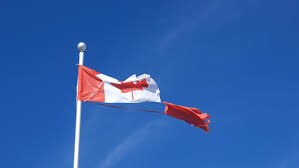
After five defections – euphemistically described as ‘crossing the floor’ – and three by-elections, Mark Carney and his Liberals how have their coveted majority. One wonders what bowls of pottage were offered in back-room deals. In the archaic monarchical system that is the Dominion of Canada, this majority allows the newly-minted Prime Minister to rule[…]Continue reading→

Saint Kateri , Canada’s Protectress
This was the title given to Saint Kateri Tekakwitha, by Pope Benedict XVI, when he canonized her on October 28th, 2012, along with six others, in Saint Peter’ Square (she had been beatified by Pope John Paul II back in 1980). With Saint Joseph as our protector, along with the Canadian martyrs, we seem to[…]Continue reading→
A Closed, Unsustainable, Descending Loop
As a follow-up to my thoughts on Payette’s payout, here be a stark image of where are here in Canada. As the graph shows in, well, graphic terms, since 2025, the public sector has contributed to 95.5% of economic growth. The private sector – which funds the public sector, or is supposed to – has[…]Continue reading→

A Tale of Two Benedicts
A grace-filled Holy Week to all our readers! As we await and prepare for the Resurrection about to dawn upon us, we might keep in mind two Benedicts: Pope Emeritus Benedict XVI, requiescat in pace, elected on this day in 2005; and today’s commemoration of the mystic pilgrim, Benedict Joseph Labre, who died on this[…]Continue reading→

My Name is Bernadette
April 16th is a propitious day, for besides the anniversary of Father de Valk’s death, who founded Catholic Insight in its print form decades ago, and the commemoration of the ‘two Benedicts’, mentioned in accompanying posts, today we also recall Saint Bernadette Soubirous, the young visionary to whom the Virgin Mary appeared numerous times at[…]Continue reading→
Presidential Pardon of Weronika Krawczyk
As a good news, follow-up to our story from Poland, of the persecution of Weronika Krawczyk for her pro-life views, we heard that she has been granted a presidential pardon. One might still wonder why one needs a presidential pardon for simply holding the long-held belief that the child within the womb is a child,[…]Continue reading→

Saint Lydwina of Schiedam and Suffering Joyfully
Saint Lydwina of Schiedam (1380 – 1433) was one of the countless and glorious ‘victim souls’ in the history of the Church, those whose lives are filled with suffering, often of an unimaginable intensity, but who suffer joyfully. She was a fifteen-year old Dutch girl, out skating one day, when she fell and broke one[…]Continue reading→

The Glorious Martyrdoms of Martin and Maximus
As we enter into Eastertide, we recall on this 13th of April Pope Saint Martin I (+655), one of the noblest, if most tragic, of the successors of Saint Peter. Born in Umbria, Italy, he was of noble lineage, with great intelligence combined with charity and love of the poor and the Church. While still[…]Continue reading→

Canonizing Sister Faustina and Divine Mercy
HOMILY OF THE HOLY FATHER MASS IN ST PETER’S SQUARE FOR THE CANONIZATION OF SR MARY FAUSTINA KOWALSKA Sunday, 30 April 2000 1. “Confitemini Domino quoniam bonus, quoniam in saeculum misericordia eius”; “Give thanks to the Lord for he is good; his steadfast love endures for ever” (Ps 118: 1). So the Church sings on the Octave of[…]Continue reading→
Pope Leo and a Rosary for Peace
Pope Leo XIV has asked Catholics across the world to join him in a Rosary for peace today, at 18:00 Rome time (6 pm), which would be noon from where I write (EST). If you are able, whether at that time or another, and in whatever way you pray, to join in intercession with the[…]Continue reading→