
Desolation, Death and Resurrection
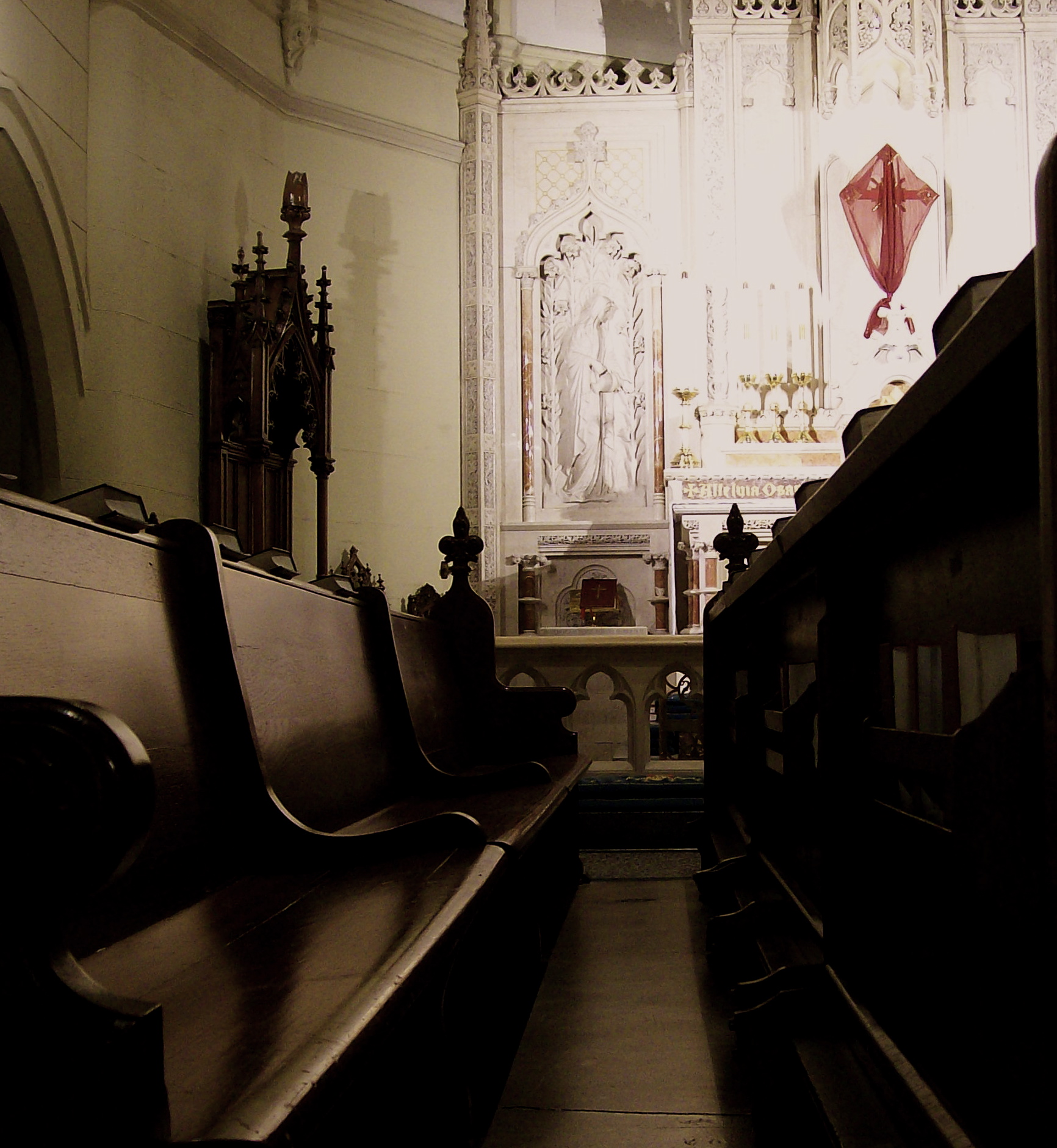
The fifth Sunday in Lent marks the beginning of Passiontide. It is customary in churches to veil all statues and images until the celebration of the Lord’s Resurrection. In the Traditional Roman Rite, this is also marked by the omission of the doxology in both the Mass and the Divine Office.
The suspension of the public celebration of Mass and Sacraments, and the shuttering of our churches is like a huge veil covering the Church as a whole. The first words of the Lamentations of Jeremiah come to mind: How lonely sits the city that was full of people! How like a widow she has become, she that was great among the nations! She that was a princess among the cities has become a vassal (1:1). These sacred texts, five distinct poems, four of which are written in acrostics, are used extensively in the liturgy of Holy Week. In the Jewish liturgy, the book is traditionally recited on the fast day of Tisha B’Av (Ninth of Av), mourning the destruction of both the First and Second Temple. They give voice to our anguish as we experience the reduction and desertification of the Church. It would seem that the Church is experiencing her own passion.
Composers have created beautiful music for the sacred texts of the Lamentations that comprise much of the Divine Office of the last three days of Holy Week; namely, Matins and Lauds, knows as Tenebrae. In view of the collective trial the Church is experiencing these sacred texts are more than appropriate also for our own private prayer. The pandemic that has gripped the world, whatever our thoughts on its severity and impact, continues to have unprecedented deleterious effects on the life of the Church. Our times are apocalyptic and we must fortify ourselves through prayer and penance. The liturgy of this Sunday is nevertheless an invitation to hope in the ultimate victory of Christ Our Lord and King, the conqueror of sin and death. ‘Fear not, I am the first and the last, and the living one: I died and behold I am alive for evermore, and I have the keys of Death and Hades’ (Rev. 1:17-18).
——————————————————————————————————
Untie him and let him go (Jn. 11:44) ⧾
On this fifth Sunday in Lent the Gospel proclaims the resurrection of Lazarus; and we are faced with the ultimate mystery of our existence. I am the resurrection and the life…Do you believe this? (Jn. 11:25- 26). With Martha we also place our faith and hope in Jesus our Saviour: Yes, Lord, I believe that you are the Christ, the Son of God, the one who was to come into this world (Jn. 11:27). This act of faith which we make individually and collectively establishes us in a communion with Christ our Saviour in this life. Consequently, we make a serious and purposeful commitment to Christian discipleship that prepares us to overcome the barrier of death not only at the moment of death but even as we live our lives here and now; for faith in the resurrection of the dead and the hope of eternal life open our eyes to the ultimate meaning of human existence. God created us for resurrection and life; and this truth gives an authentic and definitive meaning to human history, to the personal and social lives of men and women, to culture, to politics and even the economy. This is the culture of life. Without the light of faith, the entire universe finishes shut within a tomb, devoid of any future, any hope. This, by contrast, is the culture of death.
We have then a definitive perspective on human existence and this perspective encompasses the totality of who we are and who we become because life, we well know, is not static. Christian life is a journey into the mystery of God Himself. This is how St John Henry Newman described the dynamic nature of our Christian life: Christ himself vouchsafes to repeat in each of us in figure and in mystery all that He did and suffered in the flesh. He is formed in us, born in us, suffers in us, rises again in us, lives in us….We are ever receiving our birth, our justification, our renewal, ever dying to sin, ever rising to righteousness (Sermon 10, “Righteousness Not of Us, But in Us” in Parochial and Plain Sermons, p. 1048). These words capture the nature and purpose of our Christian commitment and because of this truth we affirm the beauty and purpose of life, of sacrifice and even suffering; because all these contribute to our transformation in Christ. In this process nature and grace work in concert and we experience the truth of Our Lord’s own words: Live in me, and I in you (Jn. 15:4). God is present in our joys and in our sorrows, in our life and even in our death, when it comes. Every stage of our human life has been sanctified and consecrated by the presence of the Son of God.
God created us for resurrection and life. This is a truth that we must often call to mind as the spectre of death hangs over the world during this pandemic. Yes, Lord, I believe that you are the Christ, the Son of God, the one who was to come into this world (Jn. 11:27). The God whom we adore and serve is the God of the living. Untie him and let him go (Jn. 11:44). Though these words were spoken by Our Lord of Lazarus, they are no less applicable to each one of us personally and to all of humanity collectively. In Lazarus we can see humanity freed and no longer bound by the finality and darkness of the tomb. All that we are and become in the course of our earthly life has value and meaning and purpose. Jesus Christ is the Lord of history, the one who was to come into this world precisely because each human person is of infinite value; and that is why in choosing to live life with our ultimate purpose in mind we are united with the disciples of Christ Our Lord who throughout history have endeavoured to foster the culture of life. This is the culture that sees the protection of persons in their moral, intellectual and spiritual development as the defining goals of society; namely, our daily lives, education, culture, politics, and the economy.
Evidently, this is not the perspective of individuals, governments and ideologies that violate the sanctity of life. These appear to have the upper hand in our day but we must not allow ourselves to be influenced by the spirit of the world especially as the world experiences confusion; lest we risk losing our way. Our Lord has chosen us to be the light of the world at this particular time in history and His grace is our strength. If you were of the world, the word would love its own; but because you are not of the world, but I chose you out of the world, therefore the world hates you. Remember the word that I said to you, ‘A servant is not greater than his master.’ If they persecuted me, they will persecute you (Jn. 15: 19-20). The dark forces of this world seek to destroy the Church or at the very least to alter the Church’s mission as the Mystical Body of Christ on earth. Lest we be deceived, it is essential that we make no distinction between Christ and His Church. The Church cannot be reduced to just another institution subject to the same forces and tides of human thought and events. In His sacred Passion Our Lord witnessed to the Truth; in her own passion now, the Church must remain equally steadfast; certain in the hope of the victory of the One who has conquered sin and death, hatred and unbelief. In the world you have tribulation; but be of good cheer, I have overcome the world (Jn. 16:33).
Holy Week and the Paschal Triduum, soon to be upon us, will be marked by a profound silence and sorrow this year. Priests will celebrate these rites in solitude and the faithful will assist from a distance, separated; sheep deprived of their shepherds and shepherds deprived of their flocks. Still, it is possible for all of us both clergy and laity to derive spiritual benefit nonetheless from these unusual circumstances. These remind us that the sacred liturgy is the action of Christ the High Priest. The silence and sobriety of an empty church will benefit the priest and remind him that it is Christ Our Lord who is always the agent of the sacred rites. The essence of the priest’s role in the sacred rites is his personal union with Christ so that Christ may truly be seen and heard. The words of John the Baptist come to mind. He must increase, but I must decrease (Jn. 3:30). In the physical absence of the faithful, the priest will realise all the more that he stands before God on behalf of his flock in prayer, sacrifice and supplication. The prayerful union of the scattered flock will also help all of us to appreciate perhaps for the first time that our active participation in the sacred rites is principally a matter of the heart and mind united to the sacred action of Christ the High Priest.
The sacred liturgy of this fifth Sunday in Lent reminds us that the Resurrection of Jesus Christ from dead, which the resurrection of Lazarus prefigures, is the event that gives ultimate meaning to our human existence; and not only our existence but also to our suffering and most especially to our death. Our present struggles and trials remind us that we are engaged in a spiritual combat: for we are not contending against flesh and blood, but against the principalities, against the powers, against the world rulers of this present darkness, against the spiritual hosts of wickedness in the heavenly places (Eph. 6:12). All the more then, do we claim as our very own the victory of Christ Crucified and Risen in whom is manifested the power of God and His love for us His children. His victory is our victory and the truth and splendour of His resurrection enlighten our lives especially in our struggles and in the desolation that the Church is now enduring; and even and most especially, at the hour of our death.
This Saviour, the Lord of history is not far from each one of us, for ‘In Him we live and move and have our being…for we are indeed his offspring’ (Acts 17:28). His presence is at once cosmic and intimately personal to each of His faithful disciples. Our Saviour sustains each one of us, and He bids us never to lose sight of His glorious Resurrection. We humbly beseech Him today to bring an end to our present trial, to grant to all the grace of true repentance and a deepening faith and fidelity to all that He taught us; that we may be freed from all error and pride, all fear and anxiety. ⧾

Remembering Father Alphonse de Valk
(Today marks the sixth anniversary of the death of Father Alphonse de Valk, C.S.B., a faithful, courageous and indefatigable Basilian priest, pro-life-and-family apostle, and the founder of Catholic Insight magazine. Here is what we wrote those on his entering into eternity five years ago, as we continue to remember him in our prayers and thoughts)[…]Continue reading→

Divine Mercy Sunday – An Echo of Every Mass
Reach out your hand and put it in my side. Do not doubt but believe’… ‘My Lord and my God!’ (Jn. 20:18)). Today is Divine Mercy Sunday, and as we celebrate the end of the Easter Octave, we contemplate the wounded side of our Saviour, the Church’s source of life. On Good Friday in the[…]Continue reading→

Saint Stanislaus of Szczepanów
We celebrate Saint Stanislaus today (+ April 11, 1079), in light of this Easter Octave, a bishop and martyr who accepted the episcopacy only at the direct order of Pope Alexander II. He proved a wise and courageous leader of his flock, put to death by his own king, Boleslaus, for rebuking the monarch’s ‘immoral[…]Continue reading→

First Holy Communion: Sermon from May 16, 1943
Here is a sermon from the good old days by +Rev. Msgr. Vincent Nicholas Foy (August 14, 1915 – March 13, 2017), from 1943. Readers may recall that Pope Saint Pius X, by the decree Quam Singulari in 1910, lowered the customary age of reception of Holy Communion – after the rigours of the plague[…]Continue reading→

In the Glorious Light of Easter, Alleluia!
Set your minds on things that are above, not on things that are on earth, for you have died, and your life is hidden with Christ in God. When Christ who is your life is revealed, then you also will be revealed with him in glory (Col. 3:3-4). The Resurrection of Our Lord and Saviour[…]Continue reading→

An Ancient Homily for Holy Saturday
The time between Good Friday and Easter Sunday is one of waiting, in silence, as the world wonders – anticipates – what will happen, after the death of Christ. We re-live this time each year in the anamnesis of our liturgy, and in turn look forward to the glorious re-creation of all things at the[…]Continue reading→

Europe’s Long Descent
(As we meditate on this day on Christ’s burial, and His descent into hell, it is fitting to ponder here with contributor Peter Marcus how the world seems to be heading there as well. The difference is that, although God cannot ‘redeem’ hell, nor those therein, He can and did redeem the world. There is[…]Continue reading→
Pope Saint John Paul II’s First Good Friday Homily
ADDRESS OF HIS HOLINESS JOHN PAUL II AT THE CONCLUSION OF THE STATIONS OF THE CROSS AT THE COLOSSEUM Good Friday, 13 April 1979 When we make the Way of the Cross from one station to the next, in spirit we are always at the spot wherethis journey had its “historical” place: where it[…]Continue reading→
A Meditation for Good Friday: How To Undo the Effects of Sin?
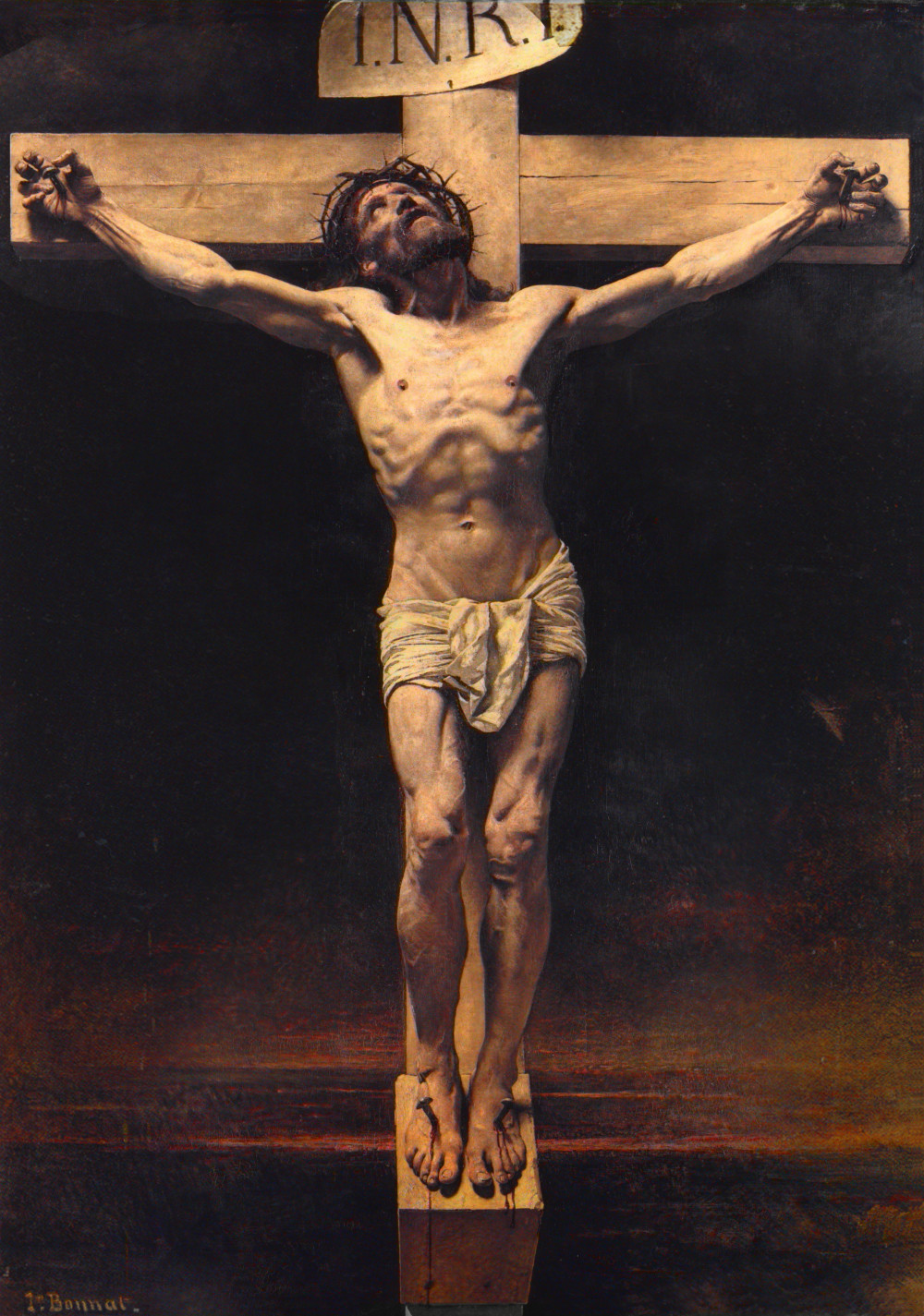
Cardinal Newman, now Saint John Henry Newman, was a towering figure of nineteenth-century Catholicism who is almost universally admired. I say “almost” because not everyone likes him. I knew a priest once, Arthur Caulkins, who has become disenchanted with Newman. As an undergraduate Arthur had been enamoured of Newman, and this interest continued when he[…]Continue reading→
Pope Benedict’s Last Holy Thursday Homily
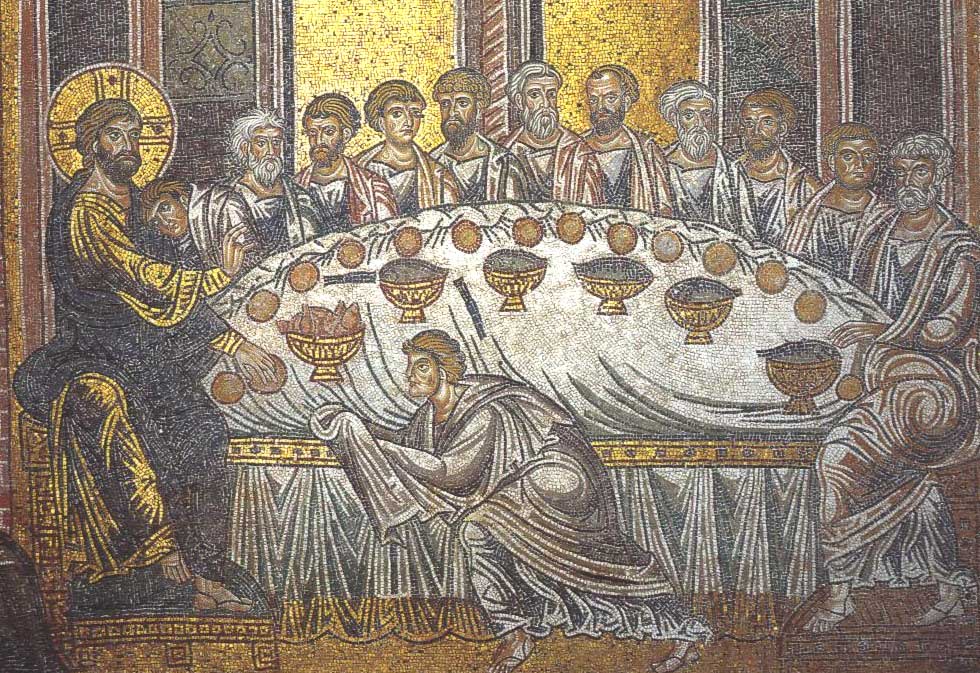
MASS OF THE LORD’S SUPPER HOMILY OF HIS HOLINESS BENEDICT XVI Basilica of St John Lateran Holy Thursday, 5 April 2012 Photo Gallery (Video) Dear Brothers and Sisters! Holy Thursday is not only the day of the institution of the Most Holy Eucharist, whose splendour bathes all else and in some ways draws it to[…]Continue reading→