
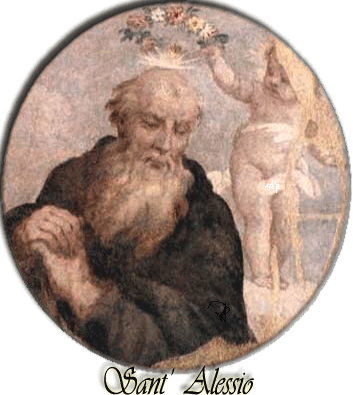
The Seven Servite Saints of the Virgin Mary
The Seven Founders of the Servite Order commemorate the group of merchants who in 1233 left everything to follow Christ, with a special devotion to the Virgin Mary, particularly in her own union in the Passion of her Son under the title of Our Lady of Sorrows. They each received an independent vision from Our Lady, confirming their charism and spirituality – they even developed their own special rosary meditating on her ‘seven sorrows’.
All the founders hailed from the historical city of Florence – which also gave us such notables as Dante Alighieri, da Vinci, Savonarola, Saint Philip Neri, Michelangelo, Galileo, to name but a few. They retreated from the world to live in community on the nearby Mount Senario overlooking the city, where this first monastery still stands.
After some initial travails and setbacks – the Second Council of Lyons in 1274 had forbidden any new orders, but such disciplinary decrees can be waived. The Servites were eventually approved by Pope Benedict XI on the propitious day of February 11, 1304 – the future first visit of the Mother of God to Bernadette Soubirous, and the memorial of Our Lady of Lourdes. Their official name is Ordo Servorum Beatae Mariae Virginis, the Order of the Servants of the Blessed Virgin Mary.
As today’s Office describes their founding:
They climbed the heights of Monte Senario and built on its summit a little house that would suit their purpose, and there they lived in common. As time passed, they began to realise that they were called not simply to sanctify themselves but to receive others into their community, and so increase the membership of this new order our Lady had inspired them to found. They recruited new members; some they accepted, and thus established our present order. In the beginning our Lady was the chief architect of this new order which was founded on the humility of its members, built up by their mutual love, and preserved by their poverty.
The Seven Holy Founders were canonized by Pope Leo XIII in 1888. Saint Philip Benizi da Damiana (+1285) propagated the Order as their first general. Their initial feast was February 11th, but when Our Lady of Lourdes was placed on that day, the commemoration of the Servites was moved to the 17th, the day that their longest-lived founder, Alexis Falconieri, died at the age of 110 (!). (His niece, Juliana, who consecrated her own life to God inspired by her uncle’s example, founding the Third Order of the Servites, and was instrumental in instituting the feast of Corpus Christi). The Servites, which includes both men’s and women’s branches, now have houses throughout the world, with a number beautiful churches dedicated to Our Lady, counted amongst the most beautiful in the world.
These men who left everything were seeking a ‘utopia’, a term coined by Saint Thomas More in his eponymous 1516 book, describing a quasi-ideal society (although whether he meant it as a kind of ironic and veiled critique of Henry VIII’s England is another question). The word literally means ‘no place’, but is itself a play on words, with the homophonous ‘eu-topia’, which means a ‘good place’. Attempts at secular utopias – think hippie communes and attempts at communism – eventually fail. Only when bound together by true charity, and with few ties and attachments to this world, can they really succeed. As in, something like the Servites.
Behold, how good and pleasant it is
when brothers dwell in unity! (Psalm 133:1)
We could use more true ‘service’ in the world, those who do good not for what accrues to themselves, but to others. And not just one’s own vague, emotive notion, but the true good, in light of revelation and eternity.
Our Lady will show us the way, if we but ask.
Holy Servites, orate pro nobis!
Carney’s Amoral Majority
After five defections – euphemistically described as ‘crossing the floor’ – and three by-elections, Mark Carney and his Liberals how have their coveted majority. One wonders what bowls of pottage were offered in back-room deals. In the archaic monarchical system that is the Dominion of Canada, this majority allows the newly-minted Prime Minister to rule[…]Continue reading→

Saint Kateri , Canada’s Protectress
This was the title given to Saint Kateri Tekakwitha, by Pope Benedict XVI, when he canonized her on October 28th, 2012, along with six others, in Saint Peter’ Square (she had been beatified by Pope John Paul II back in 1980). With Saint Joseph as our protector, along with the Canadian martyrs, we seem to[…]Continue reading→
A Tale of Two Benedicts
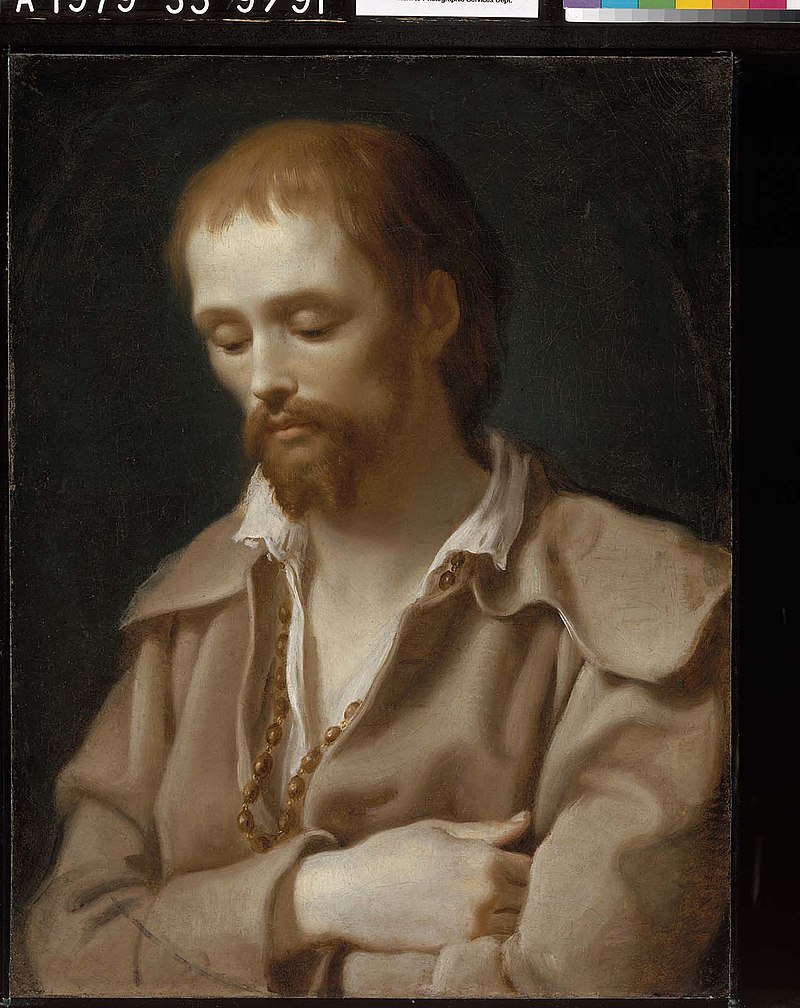
A grace-filled Holy Week to all our readers! As we await and prepare for the Resurrection about to dawn upon us, we might keep in mind two Benedicts: Pope Emeritus Benedict XVI, requiescat in pace, elected on this day in 2005; and today’s commemoration of the mystic pilgrim, Benedict Joseph Labre, who died on this[…]Continue reading→

My Name is Bernadette
April 16th is a propitious day, for besides the anniversary of Father de Valk’s death, who founded Catholic Insight in its print form decades ago, and the commemoration of the ‘two Benedicts’, mentioned in accompanying posts, today we also recall Saint Bernadette Soubirous, the young visionary to whom the Virgin Mary appeared numerous times at[…]Continue reading→
Saint Lydwina of Schiedam and Suffering Joyfully
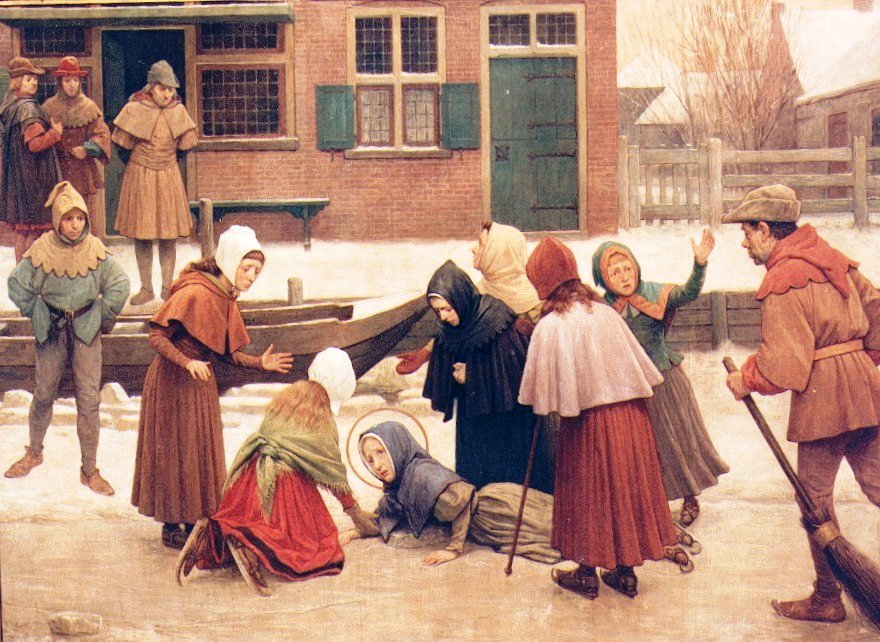
Saint Lydwina of Schiedam (1380 – 1433) was one of the countless and glorious ‘victim souls’ in the history of the Church, those whose lives are filled with suffering, often of an unimaginable intensity, but who suffer joyfully. She was a fifteen-year old Dutch girl, out skating one day, when she fell and broke one[…]Continue reading→
The Glorious Martyrdoms of Martin and Maximus
As we enter into Eastertide, we recall on this 13th of April Pope Saint Martin I (+655), one of the noblest, if most tragic, of the successors of Saint Peter. Born in Umbria, Italy, he was of noble lineage, with great intelligence combined with charity and love of the poor and the Church. While still[…]Continue reading→
Canonizing Sister Faustina and Divine Mercy
HOMILY OF THE HOLY FATHER MASS IN ST PETER’S SQUARE FOR THE CANONIZATION OF SR MARY FAUSTINA KOWALSKA Sunday, 30 April 2000 1. “Confitemini Domino quoniam bonus, quoniam in saeculum misericordia eius”; “Give thanks to the Lord for he is good; his steadfast love endures for ever” (Ps 118: 1). So the Church sings on the Octave of[…]Continue reading→

Saint Stanislaus of Szczepanów
We celebrate Saint Stanislaus today (+ April 11, 1079), in light of this Easter Octave, a bishop and martyr who accepted the episcopacy only at the direct order of Pope Alexander II. He proved a wise and courageous leader of his flock, put to death by his own king, Boleslaus, for rebuking the monarch’s ‘immoral[…]Continue reading→
Saint Gemma Galgani
On this April 11th, in 1903 – the same year that the Italian Guiseppe Sarto was elected Pope later that summer as Pius X – a lovely, young Italian woman died, by the name of Gemma Galgani. She lived a brief life of 24 years, as did a number of other young saints, including Pier[…]Continue reading→
An Ideological and Improper Translation
I noticed something odd with the psalm reading at Mass the other day. Our bishops’ conference here in Canada has decreed that the Mass in English – Novus Ordo – use the ‘NRSV’, the ‘New Revised Standard Version’, an ‘updated’ translation of the original RSV, first published in 1952. This ‘new translation’ has the tendency[…]Continue reading→