
Salvation is a Gift, to Those Who Seek It
For the Son of Man came to seek out and to save what the lost. (Lk. 19:10) ⧾
The conversion of Zacchaeus may be said to be a consequence of our Lord’s preaching. Last Sunday we heard the parable of the tax collector and the Pharisee and given the sequence in the narrative, it is possible that Zacchaeus had been told of this parable or perhaps, he had heard it himself. Jesus had addressed that parable to those who were convinced of their own righteousness and despised everyone else (Lk. 18:9). Perhaps the heart of Zacchaeus had been touched by the hearing of this parable and for this reason, as Jesus was passing through the town of Jericho, he now was seeking to see who Jesus was (Lk. 19:3). It is possible that as an outcast, Zacchaeus had come to despise others, just as he was despised. This is sometimes the sad consequence of hatred and ostracism; though it needn’t be. When for whatever reason people are excluded and even just ignored, this isolation can easily result in an attitude of resentment and hostility. The salvation that Our Lord offers us also delivers us from attitudes and behaviours that hurt our own selves as much as they can hurt others. How liberating it must have been for Zacchaeus to hear these words: ‘Today salvation has come to this house, because Zacchaeus too is a son of Abraham. For the Son of Man came to seek out and to save the lost’ (Lk. 19:10).
Yet before this declaration could be made, Zacchaeus had to acknowledge that he had despised others through extortion. Zacchaeus was very wealthy: ‘Behold, half of my possessions, Lord, I shall give to the poor, and if I have extorted anything from anyone, I shall repay it four times over’ (Lk. 19:9). If his hurrying to climb a sycamore tree so that he could see Jesus gives us a visual image of his desire for mercy, then his coming down to encounter Jesus represents a liminal moment, a threshold as it were, as he accepts the offer of forgiveness and mercy. ‘Zacchaeus, come down quickly, for today I must stay at your house’ (Lk. 19:5). What was it that took place in the heart of Zacchaeus as he responded to the offer of mercy? We can only surmise, but it cannot be much different than what took place in the heart of another tax collector, the Evangelist St. Matthew, who left everything and followed Jesus (Lk. 5:27). There is something dramatic about their response to God’s offer of mercy and salvation. The dynamic however is logical. First there is the proclamation of the good news, the preaching; then there is the response, repentance, and at last, the fruit, mercy and forgiveness. I am reminded of a saying I heard long ago: The preacher beats the bushes but the confessor catches the birds.
Salvation is always a gift. The initiative on God’s part, addresses the misery and insufficiency of the human condition. God first comes to us as a judge and upholder of His own right order. Only then does He come as forgiving. Mercy without judgment bypasses free will. Were this the case, everything concerning us would be completely unintelligible. There would only be chaos. Our Lord came to teach the world of its sins, but also why and how to repent of them. God’s mercy begins when the sins stop and they are judged by the sinner and by God for what they are. Sin, even the worst, can be forgiven; but nothing unacknowledged and not properly repented is forgiven. Were this not so, we could never in grace be fit for God’s Kingdom. God does not prefer us weak and sinful. He doesn’t want us to make a mess. His gift of salvation is an offer of freedom and joy in the Holy Spirit. By His grace we are made worthy of His call and as we grow in grace we produce the fruits of the Spirit in abundance: love, joy, peace, patience, kindness, goodness, faithfulness, gentleness, self-control (Gal. 5:22-23). God wants us good and holy; strong in grace and radiant in holiness.
The Son of Man came to seek and to save what was lost (Lk. 19:10). This is what we learn from the story of Zacchaeus and from our own stories. In the exercise of our free will we respond to God’s saving truth and rightly we acknowledge that there are standards of conduct and truthfulness to which all of us must conform. This is not arbitrary or cruel or lacking in mercy. Indeed, these standards are written in the heart of every man by God Himself (Cf. Rom. 2:15). Zacchaeus received the offer of mercy; an offer which excludes no one but can only include those who submit to judgment. His encounter with Jesus, the Way, Truth and Life was a moment of truth and judgment. Not only did he acknowledge the evil of his ways; he made reparation, that it might be clearly seen that this work of salvation had truly been wrought in God.
So it must be for each one of us if we wish to accept and receive the offer of salvation. The Saviour comes to us and with mercy confronts us with the truth that tears away the veil of self-deception. Then and only then do we become capable of knowing the God of mercy and salvation; and ourselves as sons and daughters of this mercy. Zacchaeus was surprised by his encounter with Christ, the Son of God; and Our Lord stayed at his house. So it is for us who receive Our Lord in the intimacy of our lives. This indwelling of God through grace is what we must guard and cherish above all else – the state of grace.
In this light, the history of the Church is comprised of individual histories or stories; of encounters and conversions, some gradual some dramatic, of repentance and transformation in Christ. This month of November is dedicated to the memory of the Holy Souls in Purgatory undergoing their purification so as to achieve the holiness necessary to enter the joy of heaven (Catechism of the Catholic Church, 1030). We can assist them by our prayers, Masses and almsgiving. In this great communion that is the Church, our prayers, especially our prayer of reparation can assist them and others as well as ourselves in our transformation in Christ. Our Saviour is the Way that leads to our Heavenly Father, the God of truth and mercy who in the words of our first reading, gently corrects little by little those who trespass (Wis. 12:2); supporting all who are falling and raising up all who are bowed down. (Ps. 145). In this same mercy may God hasten the triumph of Our Lady’s Immaculate Heart. ⧾

Remembering Father Alphonse de Valk
(Today marks the sixth anniversary of the death of Father Alphonse de Valk, C.S.B., a faithful, courageous and indefatigable Basilian priest, pro-life-and-family apostle, and the founder of Catholic Insight magazine. Here is what we wrote those on his entering into eternity five years ago, as we continue to remember him in our prayers and thoughts)[…]Continue reading→

Divine Mercy Sunday – An Echo of Every Mass
Reach out your hand and put it in my side. Do not doubt but believe’… ‘My Lord and my God!’ (Jn. 20:18)). Today is Divine Mercy Sunday, and as we celebrate the end of the Easter Octave, we contemplate the wounded side of our Saviour, the Church’s source of life. On Good Friday in the[…]Continue reading→

Saint Stanislaus of Szczepanów
We celebrate Saint Stanislaus today (+ April 11, 1079), in light of this Easter Octave, a bishop and martyr who accepted the episcopacy only at the direct order of Pope Alexander II. He proved a wise and courageous leader of his flock, put to death by his own king, Boleslaus, for rebuking the monarch’s ‘immoral[…]Continue reading→
First Holy Communion: Sermon from May 16, 1943
Here is a sermon from the good old days by +Rev. Msgr. Vincent Nicholas Foy (August 14, 1915 – March 13, 2017), from 1943. Readers may recall that Pope Saint Pius X, by the decree Quam Singulari in 1910, lowered the customary age of reception of Holy Communion – after the rigours of the plague[…]Continue reading→
In the Glorious Light of Easter, Alleluia!
Set your minds on things that are above, not on things that are on earth, for you have died, and your life is hidden with Christ in God. When Christ who is your life is revealed, then you also will be revealed with him in glory (Col. 3:3-4). The Resurrection of Our Lord and Saviour[…]Continue reading→
An Ancient Homily for Holy Saturday
The time between Good Friday and Easter Sunday is one of waiting, in silence, as the world wonders – anticipates – what will happen, after the death of Christ. We re-live this time each year in the anamnesis of our liturgy, and in turn look forward to the glorious re-creation of all things at the[…]Continue reading→

Europe’s Long Descent
(As we meditate on this day on Christ’s burial, and His descent into hell, it is fitting to ponder here with contributor Peter Marcus how the world seems to be heading there as well. The difference is that, although God cannot ‘redeem’ hell, nor those therein, He can and did redeem the world. There is[…]Continue reading→
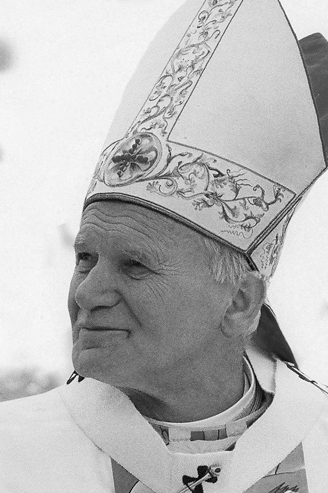
Pope Saint John Paul II’s First Good Friday Homily
ADDRESS OF HIS HOLINESS JOHN PAUL II AT THE CONCLUSION OF THE STATIONS OF THE CROSS AT THE COLOSSEUM Good Friday, 13 April 1979 When we make the Way of the Cross from one station to the next, in spirit we are always at the spot wherethis journey had its “historical” place: where it[…]Continue reading→
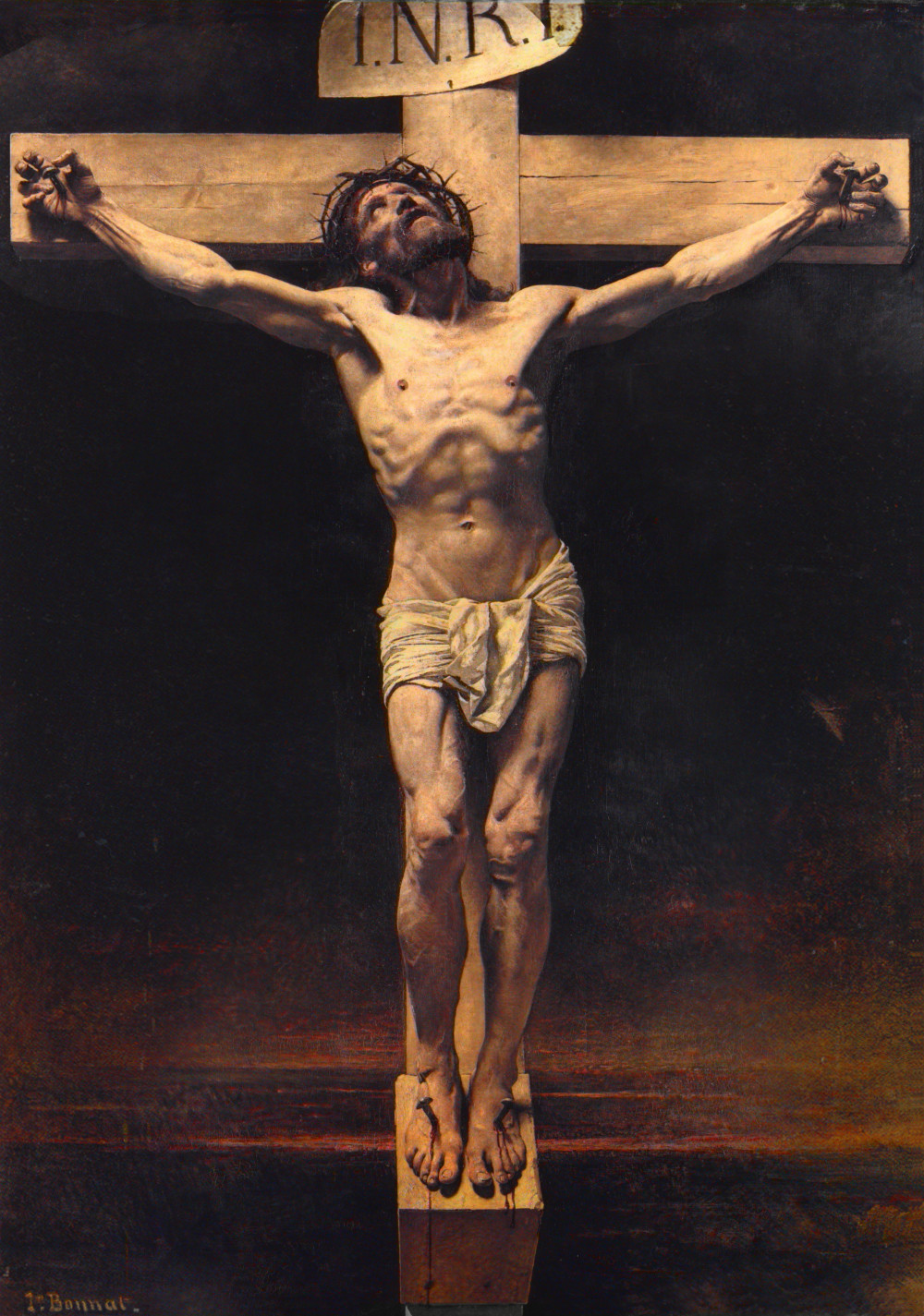
A Meditation for Good Friday: How To Undo the Effects of Sin?
Cardinal Newman, now Saint John Henry Newman, was a towering figure of nineteenth-century Catholicism who is almost universally admired. I say “almost” because not everyone likes him. I knew a priest once, Arthur Caulkins, who has become disenchanted with Newman. As an undergraduate Arthur had been enamoured of Newman, and this interest continued when he[…]Continue reading→
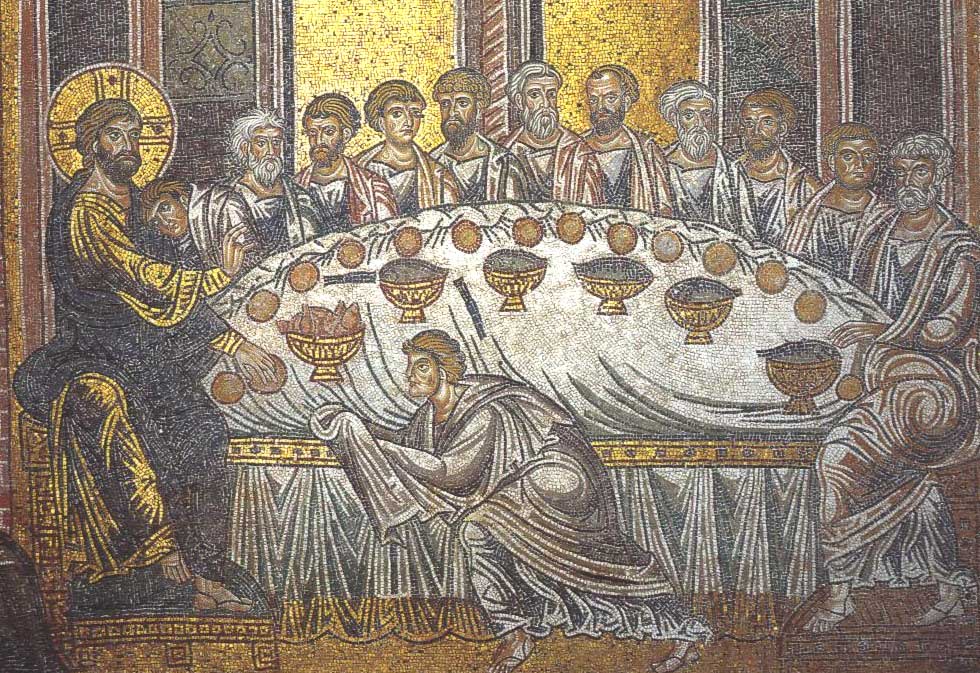
Pope Benedict’s Last Holy Thursday Homily
MASS OF THE LORD’S SUPPER HOMILY OF HIS HOLINESS BENEDICT XVI Basilica of St John Lateran Holy Thursday, 5 April 2012 Photo Gallery (Video) Dear Brothers and Sisters! Holy Thursday is not only the day of the institution of the Most Holy Eucharist, whose splendour bathes all else and in some ways draws it to[…]Continue reading→