
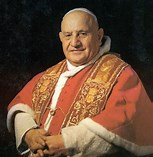
Good Pope John and His Council
Today marks the anniversary of the opening of the Second Vatican Council, now more than six decades back to those heady days of the early sixties, the future, to many eyes, full of promise and hope, throwing off the shackles of their own ancien regime, the bourgeois suburbia of the post-war era giving way to the hoary hedonism of the hippies.
This is also the day chosen by the Church to commemorate the Pontiff who called the Council, John XXIII, chosen as an elderly ‘caretaker’ Pope as a portly septuagenarian upon the death of the austere Pius XII in 1958. Few expected him to call an ecumenical Council, which are rather rare, the last one – Vatican I – being interrupted by the Franco-Prussian war in 1870, and the one before that was the Council of Trent (1545 – 1563). As Pope John later said, the idea for the Council came to him as a sudden inspiration. When he announced his intention to the cardinals assembled at Saint Paul’s basilica, he was met at first with stunned silence.
We may all have our opinions of the Second Vatican Council (1962 – 65), whose fruits have been, shall we say, mixed, but we should keep in mind that much of the post-conciliar mayhem had little to do with the conciliar texts, which are overall quite conservative, especially if read in their original and official Latin (the English translations are often tendentious in their translation, in which much is lost). The Council overall prescribes continuing the Tradition: Latin in the Mass, Gregorian chant (to be given ‘pride of place’), the organ, Saint Thomas Aquinas (the only person named besides Christ and Our Lady, and perhaps the Father and Holy Spirit), the value of priestly celibacy and chastity, the power of the consecrated and contemplative life (‘as effective as it is hidden’), the religious habit, the historical truth of Scripture, especially the Gospels, the divinity of Christ and devotion to His mother and all the saints, and the necessity of the one, true Church for salvation, and on it goes.
Pope John himself was traditional and conservative, as his journal and sayings testify, and devoted to the Church:
Before everything else, fidelity to the Church: One, Holy, Catholic, and Apostolic. Jesus did not found several churches, but one single Church.
One of his last teachings was the Apostolic Constitution Veterum Sapienta, on the need to maintain Latin in the Church, even firing seminary professors who were not proficient enough to teach in the official language of the Church (!). They resisted, and he relented.
Born Angelo Roncalli, he was steeped in the piety of his peasant upbringing, always hopeful and jovial, fourth in a family of thirteen, disciplining himself to see the good in all and everyone, striving for personal sanctity. Ordained a priest on the feast of Saint Lawrence, August 10th, 1904, he moved up through the ranks of the Church without ambition. As nuncio to Turkey, he worked tirelessly for the Jews during the Second World War, even giving them, according to some reports, false baptismal certificates to help them escape. Padre Giovanni strove to see the good in all men, and that salvation was open to all, if only each soul would accept the fullness of truth as they were given the grace to perceive it, or, more properly, Him. The personal journal that he left us is filled with applicable piety, signifying a soul serious about holiness, but also filled with humour, as all saints should so be. As he once quipped:
It often happens that I wake up at night and begin to think about a serious problem and decide I must tell the Pope about it. Then I wake up completely and remember that I am the Pope.
His desire as Pope was to open the ‘windows of the Church’ to the world, so that we as Catholics ‘might see out, and others see in’. He perhaps did not see – and did not live to see, dying of stomach cancer on June 3, 1963, less than a year into the Council – that the world, even the ‘smoke of Satan’, might enter enter the Church through one of those cracks opened a little too wide, as the future Paul VI would lament.
In his first Christmas address in 2005, Benedict XVI warned against what he termed the ‘hermeneutic of rupture’, interpreting the Council to mean a break from the Church’s Tradition, her morals and liturgy. Rather, as he continued, we must follow a ‘hermeneutic of continuity’, reading the Council, as it should be read, as embedded in and flowing from the preceding two millennia of Church teaching and practice.
But various and nefarious ‘spirits of Vatican II’ now lumber or prowl about the world, depending on their degree of malice, seeking what and whom they may devour. Many no longer even care about what the documents actually taught, and few, I fear, have even read them.
The day the Council began, this October 11th, was in the pre-1969 calendar the solemnity of Mary Mother of God (still celebrated in the usus antiquior, it was moved to the octave day of Christmas, January 1st). So we may entrust to our Blessed Mother that good fruit may be born, as we journey towards our final end, choosing what sides we might, the wheat and the tares, inextricably linked, now being divided – or, rather dividing themselves – by an ever-wider chasm. We must choose what side we are on – rupture or continuity – and persevere thereon.
He who is not with me, is against me. And the Church and Christ are one.
Good Pope John knew and lived that. And so should we. Ora pro nobis. +
Carney’s Amoral Majority
After five defections – euphemistically described as ‘crossing the floor’ – and three by-elections, Mark Carney and his Liberals how have their coveted majority. One wonders what bowls of pottage were offered in back-room deals. In the archaic monarchical system that is the Dominion of Canada, this majority allows the newly-minted Prime Minister to rule[…]Continue reading→

Saint Kateri , Canada’s Protectress
This was the title given to Saint Kateri Tekakwitha, by Pope Benedict XVI, when he canonized her on October 28th, 2012, along with six others, in Saint Peter’ Square (she had been beatified by Pope John Paul II back in 1980). With Saint Joseph as our protector, along with the Canadian martyrs, we seem to[…]Continue reading→
A Tale of Two Benedicts
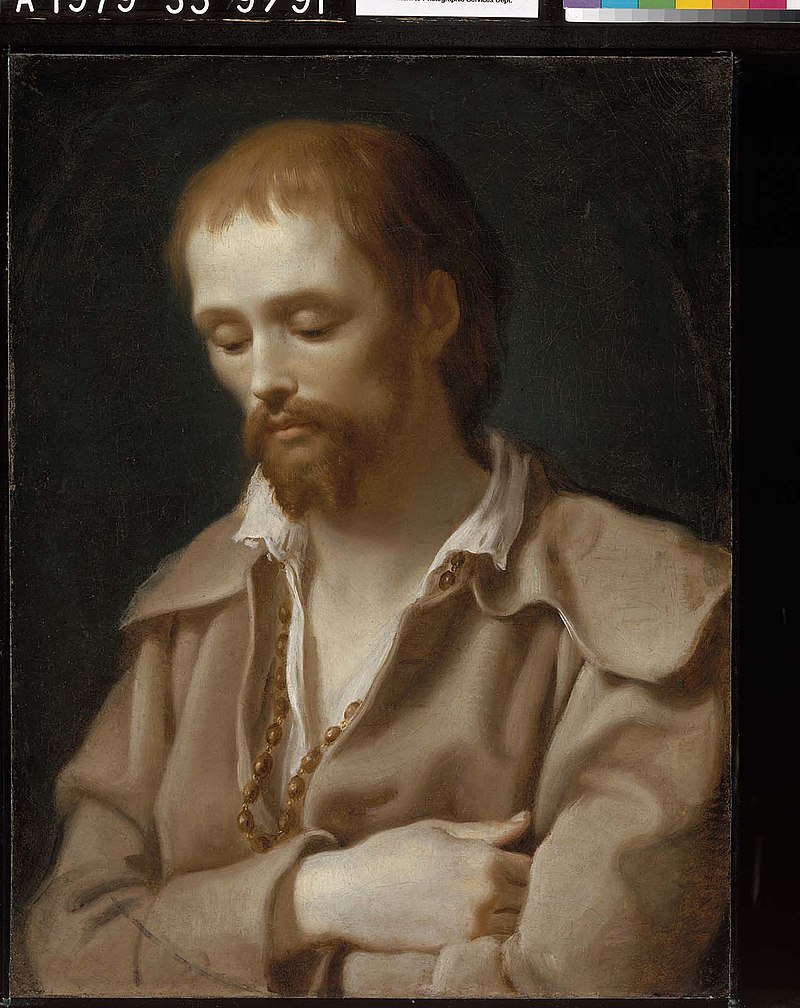
A grace-filled Holy Week to all our readers! As we await and prepare for the Resurrection about to dawn upon us, we might keep in mind two Benedicts: Pope Emeritus Benedict XVI, requiescat in pace, elected on this day in 2005; and today’s commemoration of the mystic pilgrim, Benedict Joseph Labre, who died on this[…]Continue reading→

My Name is Bernadette
April 16th is a propitious day, for besides the anniversary of Father de Valk’s death, who founded Catholic Insight in its print form decades ago, and the commemoration of the ‘two Benedicts’, mentioned in accompanying posts, today we also recall Saint Bernadette Soubirous, the young visionary to whom the Virgin Mary appeared numerous times at[…]Continue reading→
Saint Lydwina of Schiedam and Suffering Joyfully
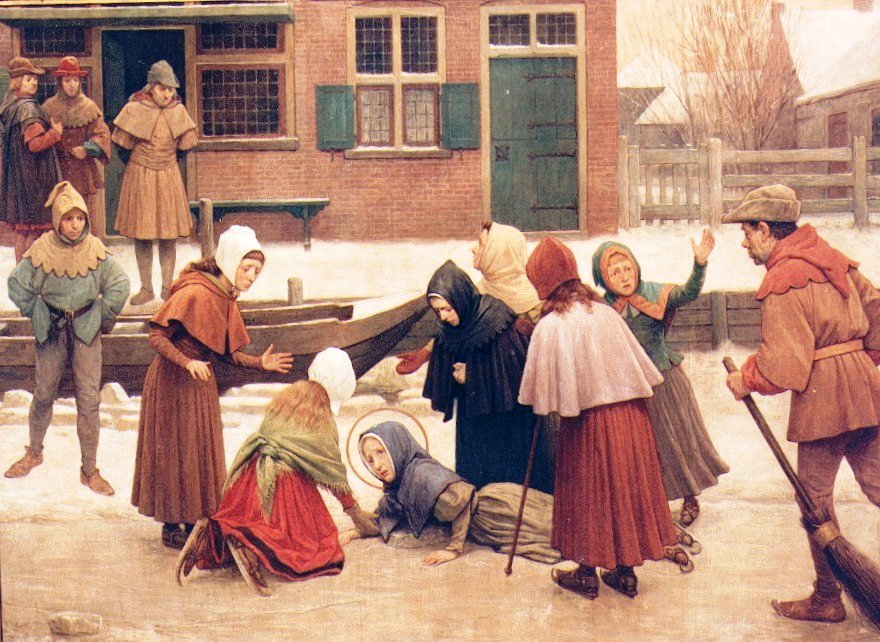
Saint Lydwina of Schiedam (1380 – 1433) was one of the countless and glorious ‘victim souls’ in the history of the Church, those whose lives are filled with suffering, often of an unimaginable intensity, but who suffer joyfully. She was a fifteen-year old Dutch girl, out skating one day, when she fell and broke one[…]Continue reading→
The Glorious Martyrdoms of Martin and Maximus
As we enter into Eastertide, we recall on this 13th of April Pope Saint Martin I (+655), one of the noblest, if most tragic, of the successors of Saint Peter. Born in Umbria, Italy, he was of noble lineage, with great intelligence combined with charity and love of the poor and the Church. While still[…]Continue reading→
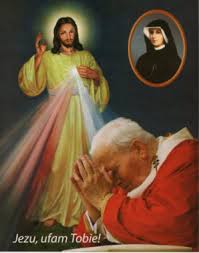
Canonizing Sister Faustina and Divine Mercy
HOMILY OF THE HOLY FATHER MASS IN ST PETER’S SQUARE FOR THE CANONIZATION OF SR MARY FAUSTINA KOWALSKA Sunday, 30 April 2000 1. “Confitemini Domino quoniam bonus, quoniam in saeculum misericordia eius”; “Give thanks to the Lord for he is good; his steadfast love endures for ever” (Ps 118: 1). So the Church sings on the Octave of[…]Continue reading→

Saint Stanislaus of Szczepanów
We celebrate Saint Stanislaus today (+ April 11, 1079), in light of this Easter Octave, a bishop and martyr who accepted the episcopacy only at the direct order of Pope Alexander II. He proved a wise and courageous leader of his flock, put to death by his own king, Boleslaus, for rebuking the monarch’s ‘immoral[…]Continue reading→
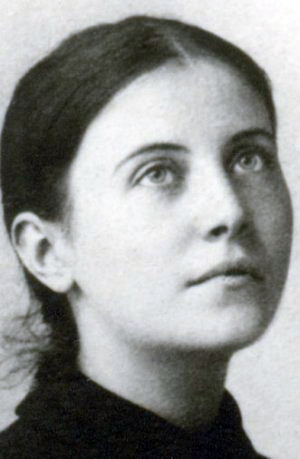
Saint Gemma Galgani
On this April 11th, in 1903 – the same year that the Italian Guiseppe Sarto was elected Pope later that summer as Pius X – a lovely, young Italian woman died, by the name of Gemma Galgani. She lived a brief life of 24 years, as did a number of other young saints, including Pier[…]Continue reading→
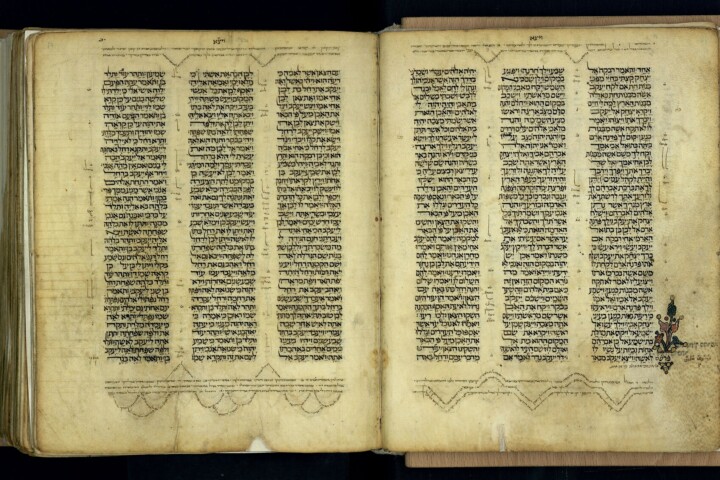
An Ideological and Improper Translation
I noticed something odd with the psalm reading at Mass the other day. Our bishops’ conference here in Canada has decreed that the Mass in English – Novus Ordo – use the ‘NRSV’, the ‘New Revised Standard Version’, an ‘updated’ translation of the original RSV, first published in 1952. This ‘new translation’ has the tendency[…]Continue reading→