
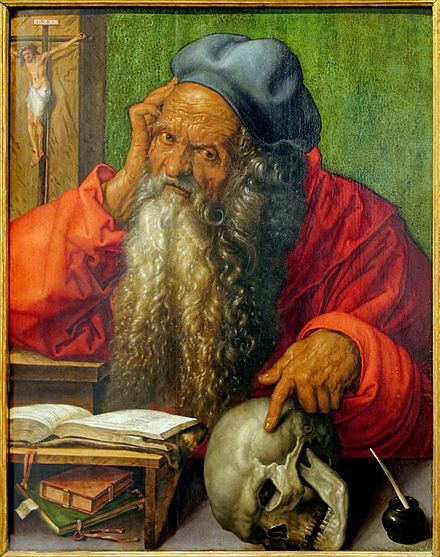
Saint Jerome’s Holy Vulgarity
All saints change history, often in ways that are mysterious and opaque, but at times more obviously. Such is Saint Jerome (347 – 420), to whom we may attribute the first truly ‘critical’ version of the Bible, the edito typica, the official, Catholic version of the Holy Word of God. He was a contemporary of Saint Augustine, who was brought to conversion by his own personal struggle with Scripture, but that’s another story.
As a youth, Jerome – Hieronmyous, as he would have been known – seems to have been dissipated, indulging, or at least experimenting in the usual hedonistic student pastimes; but he would always repent, visiting the catacombs, meditating on death, eternity and the possibility of hell. As a classicist, the words of Virgil would haunt him: Horror ubique animos, simul ipsa silentia terrent.
At first, Catholicism repulsed him, but the truth of the Church’s teachings eventually won out his logical mind, and his conversion is dated to about 366, give or take, when he received Baptism, around the age of 20, leaving him many decades to labour in the Lord’s vineyard: And work he did, for after years of intense study, prayer and penance, Pope Saint Damasus I in 382 commissioned Jerome, then his secretary, to translate the New Testament into Latin – then, eventually, the whole Bible, using the best Greek and Hebrew manuscripts. This task became Jerome’s life, a project that both consumed and sanctified him. As he put it in his famous quotation from his commentary on Isaiah: For if, as Paul says, Christ is the power of God and the wisdom of God, and if the man who does not know Scripture does not know the power and wisdom of God, then ignorance of Scripture is ignorance of Christ.
Although Jerome wrote much, commentaries, letters, treatises against heretics, not least the Pelagians who saw no need of God’s grace, it was the Vulgate – so called for it was written in what was becoming the ‘vulgar’ or ‘common’ language, well after the days of Greek in the early Church – that became his magnum opus, for which he is best known. Jerome’s vigorous letters often signify what we would now mean by ‘vulgarity’, and he was polarising, not loathe to use vivid epithets to describe his opponents and their heresies, but all, we may believe, in the spirit of charity and truth. Saint Jerome is often depicted in art holding a stone with which he would beat himself, to quell his rebellious spirit, one may presume; as one Pope put it, were it not for that rock, the disputatious Jerome, perhaps too aware of his own genius and gifts, would not have been canonized.
Whatever the case, the Vulgate was the work of a lifetime. Jerome eventually retreated to a cave in Bethlehem – an underground suite of monastic workrooms – surrounded by his manuscripts and books. He followed a strict regimen, supported by his benefactors, the holy women whom he helped spiritually direct. The ascetic hermit laboured tirelessly with an intensity rarely equaled in the annals of history, dying on this day, September 30th, anno Domini 420, as a septuagenarian.
The Bible that resulted, and as we now know it, really is a Catholic book, as Pope Benedict says in his own reflection. Its origins are divine, the versions and translations that come down to us require careful scholarship, research and Magisterial authority. We owe much indeed to Saint Jerome. Luther would not have a Bible to translate (and truncate and mangle) were it not for Jerome. It was his version, more or less still the same, that the Council of Trent proclaimed in one of its first acts in 1546 as the official Bible which, with a further revision under Popes Paul VI and John Paul II, remains so to this day.
To return to the point, ignorance of Scripture is ignorance of Christ, for it is the very word of God Himself, adumbrating and manifesting the Word, in Whom all truth, all that God willed to reveal for our salvation, is found.
Carney’s Amoral Majority
After five defections – euphemistically described as ‘crossing the floor’ – and three by-elections, Mark Carney and his Liberals how have their coveted majority. One wonders what bowls of pottage were offered in back-room deals. In the archaic monarchical system that is the Dominion of Canada, this majority allows the newly-minted Prime Minister to rule[…]Continue reading→

Saint Kateri , Canada’s Protectress
This was the title given to Saint Kateri Tekakwitha, by Pope Benedict XVI, when he canonized her on October 28th, 2012, along with six others, in Saint Peter’ Square (she had been beatified by Pope John Paul II back in 1980). With Saint Joseph as our protector, along with the Canadian martyrs, we seem to[…]Continue reading→
A Tale of Two Benedicts
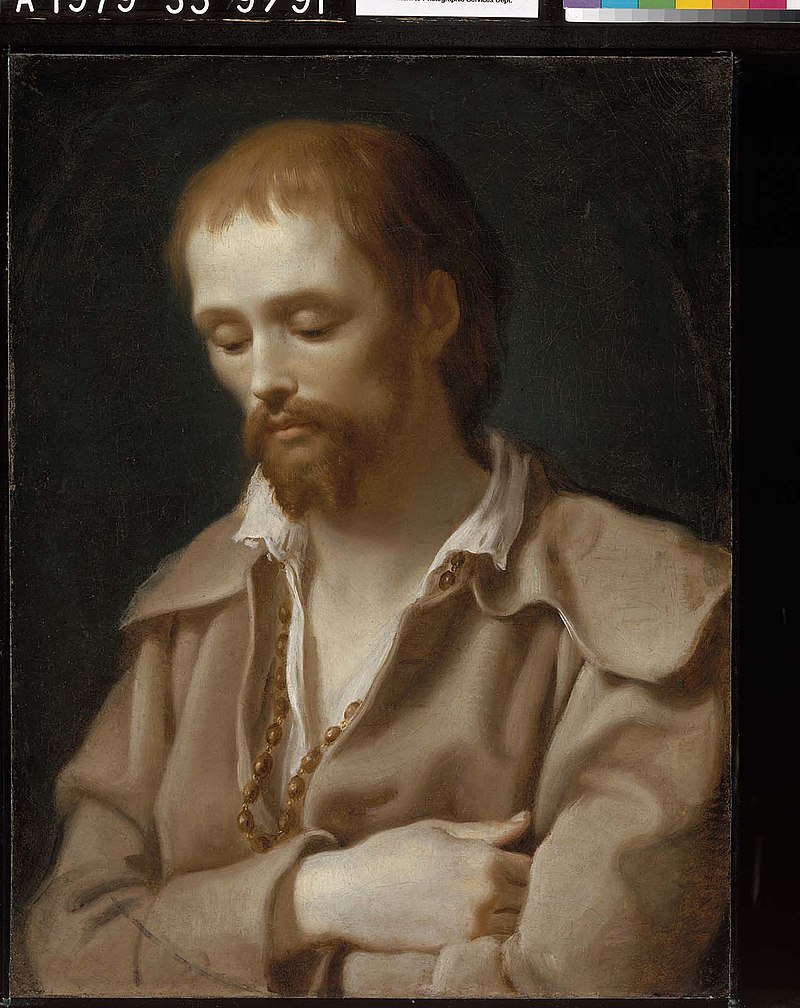
A grace-filled Holy Week to all our readers! As we await and prepare for the Resurrection about to dawn upon us, we might keep in mind two Benedicts: Pope Emeritus Benedict XVI, requiescat in pace, elected on this day in 2005; and today’s commemoration of the mystic pilgrim, Benedict Joseph Labre, who died on this[…]Continue reading→

My Name is Bernadette
April 16th is a propitious day, for besides the anniversary of Father de Valk’s death, who founded Catholic Insight in its print form decades ago, and the commemoration of the ‘two Benedicts’, mentioned in accompanying posts, today we also recall Saint Bernadette Soubirous, the young visionary to whom the Virgin Mary appeared numerous times at[…]Continue reading→
Saint Lydwina of Schiedam and Suffering Joyfully
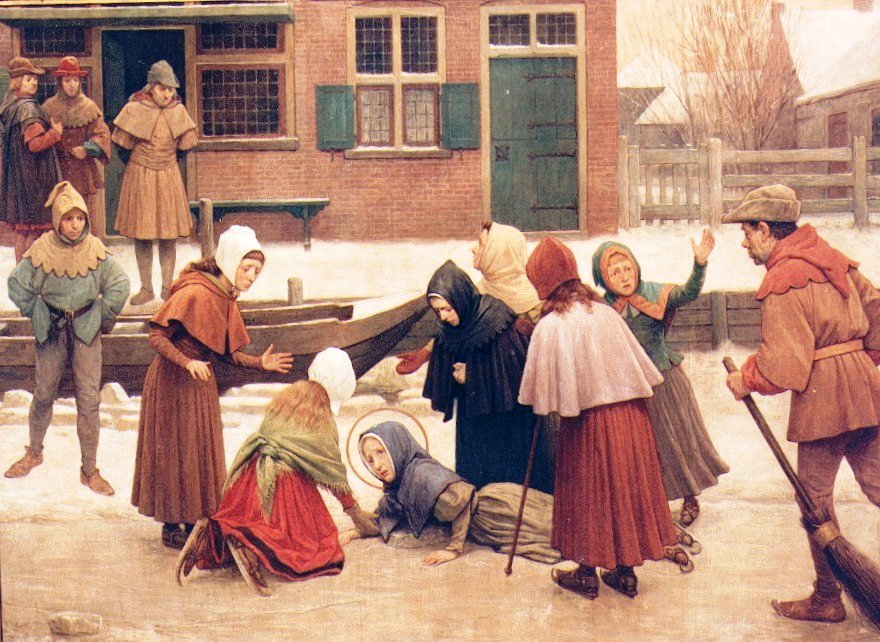
Saint Lydwina of Schiedam (1380 – 1433) was one of the countless and glorious ‘victim souls’ in the history of the Church, those whose lives are filled with suffering, often of an unimaginable intensity, but who suffer joyfully. She was a fifteen-year old Dutch girl, out skating one day, when she fell and broke one[…]Continue reading→
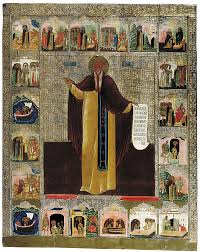
The Glorious Martyrdoms of Martin and Maximus
As we enter into Eastertide, we recall on this 13th of April Pope Saint Martin I (+655), one of the noblest, if most tragic, of the successors of Saint Peter. Born in Umbria, Italy, he was of noble lineage, with great intelligence combined with charity and love of the poor and the Church. While still[…]Continue reading→
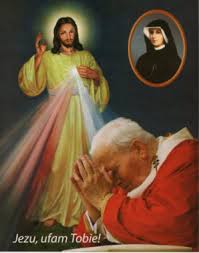
Canonizing Sister Faustina and Divine Mercy
HOMILY OF THE HOLY FATHER MASS IN ST PETER’S SQUARE FOR THE CANONIZATION OF SR MARY FAUSTINA KOWALSKA Sunday, 30 April 2000 1. “Confitemini Domino quoniam bonus, quoniam in saeculum misericordia eius”; “Give thanks to the Lord for he is good; his steadfast love endures for ever” (Ps 118: 1). So the Church sings on the Octave of[…]Continue reading→

Saint Stanislaus of Szczepanów
We celebrate Saint Stanislaus today (+ April 11, 1079), in light of this Easter Octave, a bishop and martyr who accepted the episcopacy only at the direct order of Pope Alexander II. He proved a wise and courageous leader of his flock, put to death by his own king, Boleslaus, for rebuking the monarch’s ‘immoral[…]Continue reading→
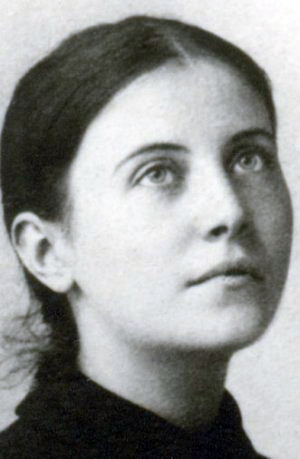
Saint Gemma Galgani
On this April 11th, in 1903 – the same year that the Italian Guiseppe Sarto was elected Pope later that summer as Pius X – a lovely, young Italian woman died, by the name of Gemma Galgani. She lived a brief life of 24 years, as did a number of other young saints, including Pier[…]Continue reading→
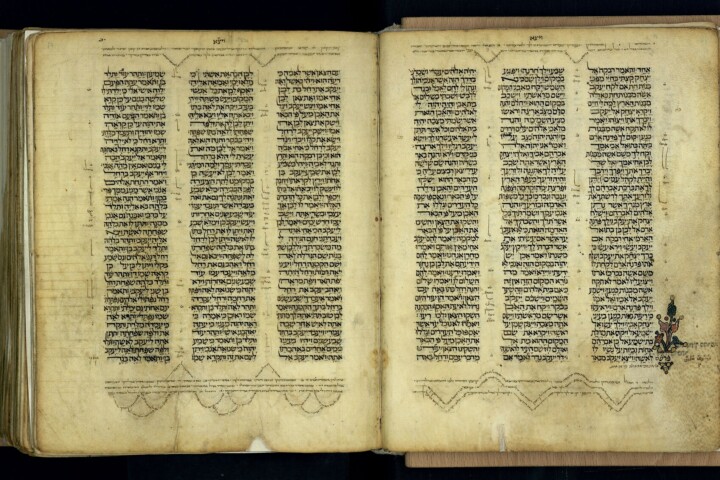
An Ideological and Improper Translation
I noticed something odd with the psalm reading at Mass the other day. Our bishops’ conference here in Canada has decreed that the Mass in English – Novus Ordo – use the ‘NRSV’, the ‘New Revised Standard Version’, an ‘updated’ translation of the original RSV, first published in 1952. This ‘new translation’ has the tendency[…]Continue reading→