
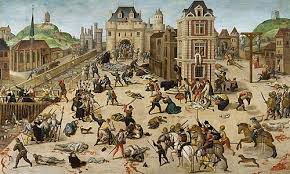
Saint Bartholomew’s Day Massacre
It is an unfortunate accident of history – insofar as we may speak of accidents, when all things are guided in their providential design by a good and provident God – that today’s feast is connected with one of the more scandalous events in the history of the Church, the massacre that goes by the name of this Apostle, which he would have abhorred.
The sixteenth century, following upon the chaos unleashed by the Protestant revolt against the unity of Christendom, saw a series of brutal ‘wars of religion’, which also involved territorial, national and ethnic claims. As Chesterton once quipped, it is not as though religion is not worth fighting for; rather, it is in the end the only thing worth fighting for. If religion be that which is ‘master of our affections’, as Saint Thomas put it, that in which we put our faith and from which we direct all our lives: God, hearth, home, family, kith, kin, property, life and limb. What else would we fight for, if these realities most near and dear are attacked in their very roots?
It is thus that we should see the massacre on this day – one of those historical cudgels with which many beat the Catholic Church. On August 24th, 1572, a momentous wedding took place – Margaret of Valois, sister of the French King, Charles IX, daughter of the powerful Catherine de Medici, was set to marry the handsome. Bourbon prince, Henry of Navarre. Now, Henry was a Protestant Huguenot – the term for a French Calvinist.
Catherine thought that the match would help heal tensions between the Catholics and Huguenots, which were running high – just over a month before, on July 2, 1572, Calvinist troops had tortured and murdered nineteen innocent priests in Gorkum, Holland, their bodies left hanging from the rafters.
The effect, alas, was opposite to what Catherine hoped, and the Catholics in Paris – a city then staunchly attached to and protective of the Faith, thought that the Huguenot elite, concentrated in great numbers in the capital city for the upcoming nuptials, would take the opportunity to launch a dastardly surprise attack upon them. Perhaps, perhaps not.
One way or the other, the Catholics decided to strike first, and what makes this even more distressing is that Catherine de Medici, along with her weak, vacillating kingly son, Charles, both seem to have been murkily implicated in urging the attack.
Whatever the details – and you may read of them at length, but caveat lector – not long after midnight in the early morning of this day, the bells struck Matins, and Catholics began massacring what Huguenots they could find, beginning with Admiral Coligny, their leader, and proceeding from there; the slaughter continued for days, and the number of dead unknown, but estimated at least in the thousands, men, women and children.
Henry Navarre, Catherine’s new son-in-law, and the future King Henry IV, barely escaped with his life, after promising to convert to Catholicism, a promise he quickly abjured when safely away from the city with his new bride.
The Pope, Gregory XIII, not aware of the reality, somehow thought this some victory in a religious war – this was not yet a year after the defeat of the Muslim fleet at Lepanto in October, 1571, which quite literally saved Western civilization and Christendom. The Pontiff had a Te Deum sung and a commemorative medal struck, adding fodder to the anti-Catholic polemics. If only he had known the full truth, but news got distorted in those days of slow communication, filled with innuendo and intrigue. Many are the fake news and accounts of this tragedy.
The problem is that once base passions are unleashed, they are difficult, if not impossible, to restrain, and best to avoid war – not at all costs, but at most.
Henry, who became king of France in 1589, did eventually become a Catholic in 1593, with what deep motives we know not, as he purportedly declared, ‘Paris is well worth a Mass’. He did issue the Edict of Nantes in 1598, offering religious freedom and protection for both Catholics and Calvinists in France, which held more or less peaceably until its revocation under Louis XIV in 1685.
We should pray for toleration in those things we should tolerate, and only fight, or at least being willing to die, for those things that are most necessary, and the prudence and wisdom to know the difference.
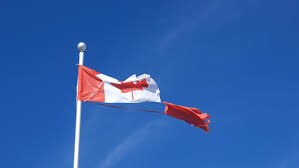
Carney’s Amoral Majority
After five defections – euphemistically described as ‘crossing the floor’ – and three by-elections, Mark Carney and his Liberals how have their coveted majority. One wonders what bowls of pottage were offered in back-room deals. In the archaic monarchical system that is the Dominion of Canada, this majority allows the newly-minted Prime Minister to rule[…]Continue reading→

Saint Kateri , Canada’s Protectress
This was the title given to Saint Kateri Tekakwitha, by Pope Benedict XVI, when he canonized her on October 28th, 2012, along with six others, in Saint Peter’ Square (she had been beatified by Pope John Paul II back in 1980). With Saint Joseph as our protector, along with the Canadian martyrs, we seem to[…]Continue reading→

A Tale of Two Benedicts
A grace-filled Holy Week to all our readers! As we await and prepare for the Resurrection about to dawn upon us, we might keep in mind two Benedicts: Pope Emeritus Benedict XVI, requiescat in pace, elected on this day in 2005; and today’s commemoration of the mystic pilgrim, Benedict Joseph Labre, who died on this[…]Continue reading→

My Name is Bernadette
April 16th is a propitious day, for besides the anniversary of Father de Valk’s death, who founded Catholic Insight in its print form decades ago, and the commemoration of the ‘two Benedicts’, mentioned in accompanying posts, today we also recall Saint Bernadette Soubirous, the young visionary to whom the Virgin Mary appeared numerous times at[…]Continue reading→

Saint Lydwina of Schiedam and Suffering Joyfully
Saint Lydwina of Schiedam (1380 – 1433) was one of the countless and glorious ‘victim souls’ in the history of the Church, those whose lives are filled with suffering, often of an unimaginable intensity, but who suffer joyfully. She was a fifteen-year old Dutch girl, out skating one day, when she fell and broke one[…]Continue reading→

The Glorious Martyrdoms of Martin and Maximus
As we enter into Eastertide, we recall on this 13th of April Pope Saint Martin I (+655), one of the noblest, if most tragic, of the successors of Saint Peter. Born in Umbria, Italy, he was of noble lineage, with great intelligence combined with charity and love of the poor and the Church. While still[…]Continue reading→

Saint Stanislaus of Szczepanów
We celebrate Saint Stanislaus today (+ April 11, 1079), in light of this Easter Octave, a bishop and martyr who accepted the episcopacy only at the direct order of Pope Alexander II. He proved a wise and courageous leader of his flock, put to death by his own king, Boleslaus, for rebuking the monarch’s ‘immoral[…]Continue reading→
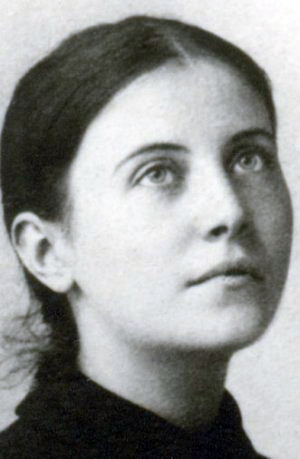
Saint Gemma Galgani
On this April 11th, in 1903 – the same year that the Italian Guiseppe Sarto was elected Pope later that summer as Pius X – a lovely, young Italian woman died, by the name of Gemma Galgani. She lived a brief life of 24 years, as did a number of other young saints, including Pier[…]Continue reading→
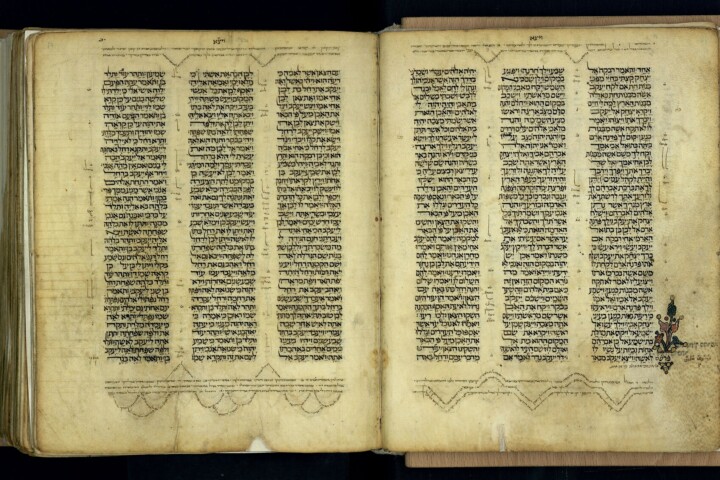
An Ideological and Improper Translation
I noticed something odd with the psalm reading at Mass the other day. Our bishops’ conference here in Canada has decreed that the Mass in English – Novus Ordo – use the ‘NRSV’, the ‘New Revised Standard Version’, an ‘updated’ translation of the original RSV, first published in 1952. This ‘new translation’ has the tendency[…]Continue reading→
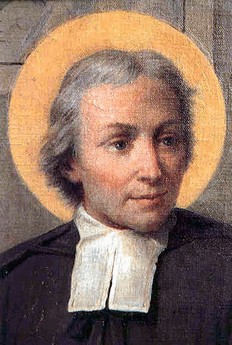
Saint Jean-Baptiste de la Salle: A Teacher for Teachers
Jean-Baptiste de la Salle (1651 – 1719), a French nobleman, ordained a priest, founded the first order in the Church’s history entirely without priests, and this came about almost by accident. I say ‘almost’, for, of course, there are no accidents with God. Destined for ordination from an early age, Jean-Baptiste never looked back, even[…]Continue reading→