
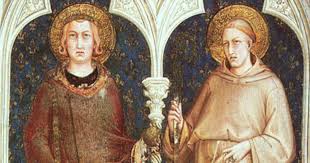
Pontian, Hippolytus, Pope and Anti-Pope, Saints Together
An anti-Pope is someone who thinks he’s the Pope – or at least who claims to be the Pope – when in reality he is not. And by ‘reality’, we mean Pope by the will of God, as manifested in the laws of the Church. These laws include such things as the rules for conclaves, elections and, yes, resignations.
Hippolytus (170 – ca. 235) is one such figure: The history is somewhat obscure, but he was a priest of Rome who held rather rigorous views, as many did in that era, who thought the Church was too lenient and merciful on repentant sinners – particularly apostates and adulterers – by actually granting them absolution and allowing such moral reprobates back into the Church! Ad inferos, omnibus! It seems to have been Hippolytus’ view that some sins merited exclusion from the Church – and, more than likely, from eternal life – unconditionally and irrevocably. To enforce his views, Hippolytus, sometime around the year 230, had himself elected ‘Pope’ against the true Pontiff, Pontian, whom we also celebrate today.
Thus began one of the first formal schisms in the Church, which continued until the persecution of pagan Emperor Maximinus Thrax in 235, when, to ensure there was no Pope, he sent both Pontian and Hippolytus to the Sardinian mines – a slow and torturous death sentence. While there, Hippolytus, humbled and contrite, was reconciled to the Church by Pontian, who also resigned his office on September 28, 235, the first Pope in history to do so, so that another might be elected. Pontian died in October, and Hippolytus sometime after that, and both were declared martyrs for the Faith. All’s well that ends well, even schisms and sometime anti-popes.
Hippolytus, a voluminous writer on a vast variety of theological and Scriptural topics – he was, as Pope Benedict pointed out, the first to posit December 25th as the birthday of the Christ – is somewhat ironically claimed as the source of the second, and shortest, of the three ‘Eucharistic prayers’ in the Novus Ordo (even if this connection is now disputed), the one that has God’s mercy ‘falling down like the dewfall’, or words to that effect, added in the wake of the Second Vatican Council for the Missal of Paul VI. This now often replaces the ‘Roman Canon’ – the rarely-heard ‘First Eucharistic Prayer’ in the New Mass – which had been used, right up until the revisions of 1969, and which goes back perhaps to the Apostles themselves.
Hippolytus also wrote a apocalyptic treatise on Christ and, ironically enough for an anti-Pope, the Anti-Christ, where we derive a good deal of our teaching on the latter mysterious figure, who will bring about the final ‘unleashing of evil’ near the end of time, which will prompt Christ to return in glory and triumph.
Ultimately, whether we’re near that time or not, it’s all about individual persons and our choice for or against Christ, God and our own salvation. Perseverance and hope are always rewarded, for, like Hippolytus, any wayward soul may be given the grace to see the truth in an instant, even if it requires being sent to the mines in Sardinia, breaking rocks and serendipitously meeting the real Pope to hear one’s confession to get to that point. God, after all, is a God of surprises.
The bodies of Pontian and Hippolytus were returned to Rome in triumph on this day, August 13th, 236, which is now their combined feast. May they intercede mightily for the Church in these troubled days, that the light of Christ may shine through our own darkness.
Hope, dear reader, and persevere.
Saints Pontian and Hippolytus, orate pro nobis! +

Carney’s Amoral Majority
After five defections – euphemistically described as ‘crossing the floor’ – and three by-elections, Mark Carney and his Liberals how have their coveted majority. One wonders what bowls of pottage were offered in back-room deals. In the archaic monarchical system that is the Dominion of Canada, this majority allows the newly-minted Prime Minister to rule[…]Continue reading→

Saint Kateri , Canada’s Protectress
This was the title given to Saint Kateri Tekakwitha, by Pope Benedict XVI, when he canonized her on October 28th, 2012, along with six others, in Saint Peter’ Square (she had been beatified by Pope John Paul II back in 1980). With Saint Joseph as our protector, along with the Canadian martyrs, we seem to[…]Continue reading→

Remembering Father Alphonse de Valk
(Today marks the sixth anniversary of the death of Father Alphonse de Valk, C.S.B., a faithful, courageous and indefatigable Basilian priest, pro-life-and-family apostle, and the founder of Catholic Insight magazine. Here is what we wrote those on his entering into eternity five years ago, as we continue to remember him in our prayers and thoughts)[…]Continue reading→
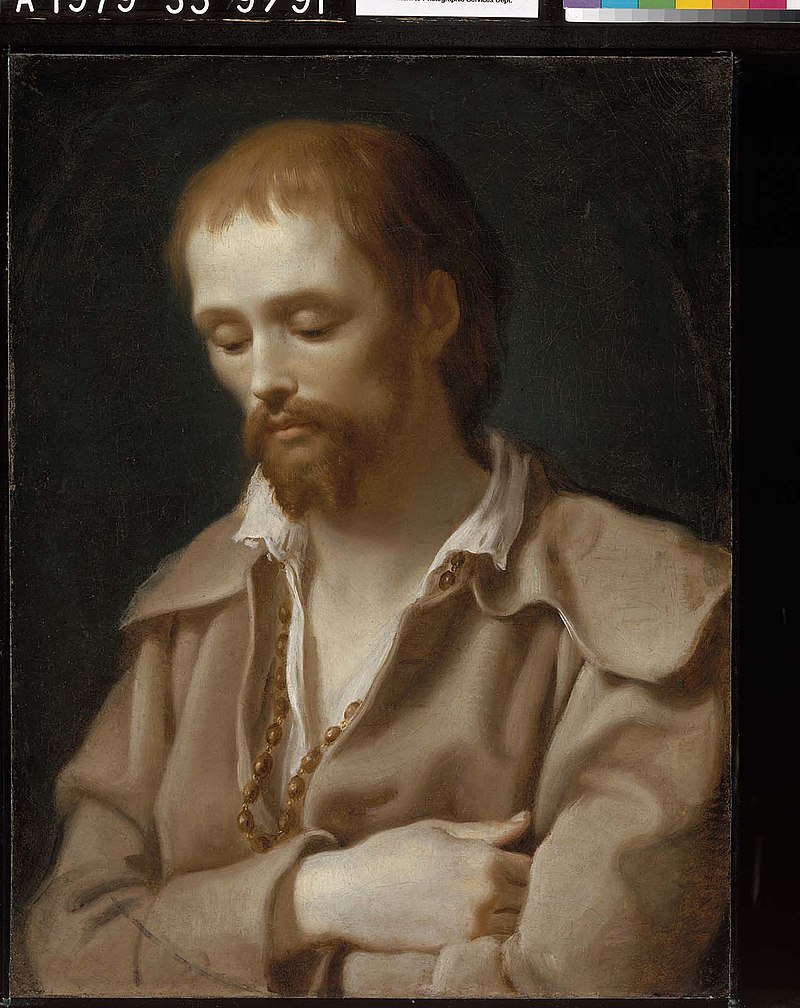
A Tale of Two Benedicts
A grace-filled Holy Week to all our readers! As we await and prepare for the Resurrection about to dawn upon us, we might keep in mind two Benedicts: Pope Emeritus Benedict XVI, requiescat in pace, elected on this day in 2005; and today’s commemoration of the mystic pilgrim, Benedict Joseph Labre, who died on this[…]Continue reading→

My Name is Bernadette
April 16th is a propitious day, for besides the anniversary of Father de Valk’s death, who founded Catholic Insight in its print form decades ago, and the commemoration of the ‘two Benedicts’, mentioned in accompanying posts, today we also recall Saint Bernadette Soubirous, the young visionary to whom the Virgin Mary appeared numerous times at[…]Continue reading→
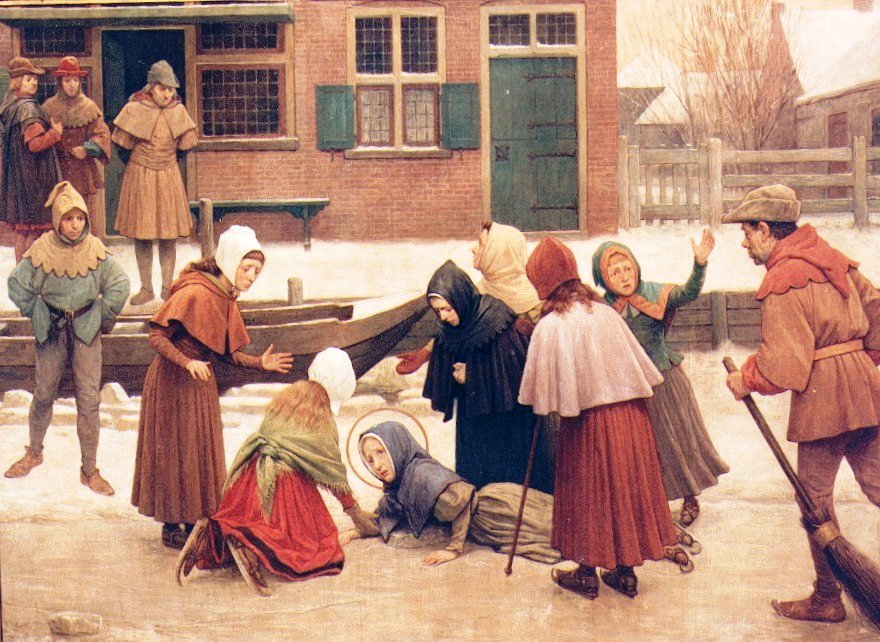
Saint Lydwina of Schiedam and Suffering Joyfully
Saint Lydwina of Schiedam (1380 – 1433) was one of the countless and glorious ‘victim souls’ in the history of the Church, those whose lives are filled with suffering, often of an unimaginable intensity, but who suffer joyfully. She was a fifteen-year old Dutch girl, out skating one day, when she fell and broke one[…]Continue reading→
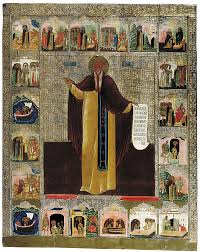
The Glorious Martyrdoms of Martin and Maximus
As we enter into Eastertide, we recall on this 13th of April Pope Saint Martin I (+655), one of the noblest, if most tragic, of the successors of Saint Peter. Born in Umbria, Italy, he was of noble lineage, with great intelligence combined with charity and love of the poor and the Church. While still[…]Continue reading→

Canonizing Sister Faustina and Divine Mercy
HOMILY OF THE HOLY FATHER MASS IN ST PETER’S SQUARE FOR THE CANONIZATION OF SR MARY FAUSTINA KOWALSKA Sunday, 30 April 2000 1. “Confitemini Domino quoniam bonus, quoniam in saeculum misericordia eius”; “Give thanks to the Lord for he is good; his steadfast love endures for ever” (Ps 118: 1). So the Church sings on the Octave of[…]Continue reading→
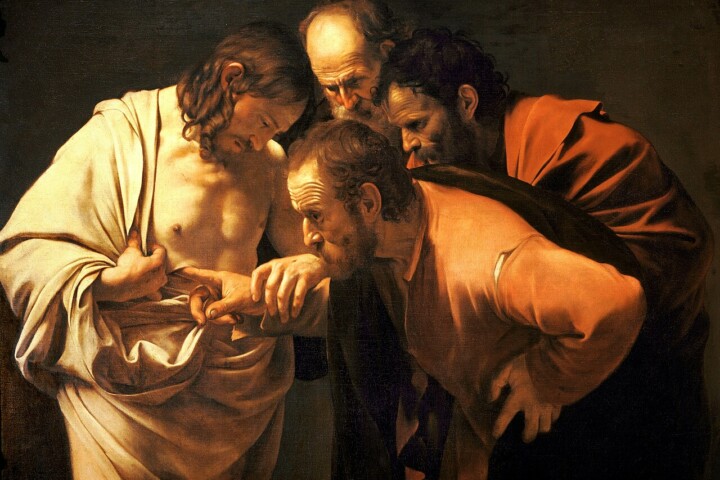
Divine Mercy Sunday – An Echo of Every Mass
Reach out your hand and put it in my side. Do not doubt but believe’… ‘My Lord and my God!’ (Jn. 20:18)). Today is Divine Mercy Sunday, and as we celebrate the end of the Easter Octave, we contemplate the wounded side of our Saviour, the Church’s source of life. On Good Friday in the[…]Continue reading→
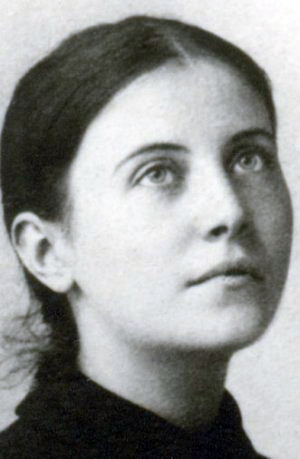
Saint Gemma Galgani
On this April 11th, in 1903 – the same year that the Italian Guiseppe Sarto was elected Pope later that summer as Pius X – a lovely, young Italian woman died, by the name of Gemma Galgani. She lived a brief life of 24 years, as did a number of other young saints, including Pier[…]Continue reading→