
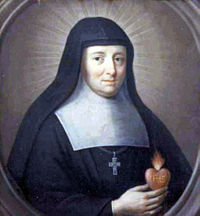
Jane Frances de Chantal and her Visitation
Jane Frances Fremiot (+1641) was a beautiful, refined young woman from Burgundy, betrothed to the handsome Baron de Chantal at 21 years old – a veritable Austen-esque marriage of true minds, in a French mode; and a happy union it was, until the Baron was killed by an harquebus in a tragic hunting accident, leaving Jane a young widow with four small children.
Yet she was resourceful, like the good wife of Proverbs, running her husband’s estate and finances prudently and well. Upon meeting the Bishop of Geneva, Saint Francis de Sales, she adopted him as her spiritual director (after his death, she was guided by Saint Vincent de Paul, so Jane was a fortunate woman – two saints in a row to guide another saint to heaven!). After ensuring her children were provided for, Jane committed herself to a life of chastity and almsgiving, eventually founding the Congregation of the Visitation (officially, the Ordo Visitationis Beatissimae Mariae Virginis) in 1610, in which Order she would spend the rest of her life. Originally dedicated to external good works, they were soon obliged to remain contemplative and enclosed, due to external pressure and carping voices. Bishop de Sales – who was overseeing things, and who originally approved their external life and work, was obliged to acquiesce. The world and culture were not yet ready for Sisters outside the convent, but the day would soon arrive, and Chantal helped pave the way. It was for them that de Sales wrote his Treatise on the Love of God. In the words of Pope Benedict:
“The Foundation of the Visitation, as the Saint wished, was characterized by total consecration to God lived in simplicity and humility, in doing ordinary things extraordinarily well: “I want my Daughters”, he wrote, “not to have any other ideal than that of glorifying [Our Lord] with their humility” (Letter to Bishop de Marquemond, June 1615).
The Congregation was unique in taking in even those rejected by other communities due to age, health or some other factor. When people complained about their taking in those who were considered outside the pale for vocations, the older and the infirm. Jane replied, What do you want me to do? I like sick people myself; I’m on their side. The rule of the Order was not as strict as others, with no perpetual abstinence or prolonged fasting, or night hours, saying instead the Little Office of the Blessed Virgin before retiring for the night.
Jane, formed early on in the practical world of housekeeping and business, was filled with good, solid practical advice, much needed in the spiritual frippery of seventeenth century France:
There is no danger if our prayer is without words or reflection because the good success of prayer depends neither on words nor on study. It depends upon the simple raising of our minds to God, and the more simple and stripped of feeling it is, the surer it is.
And one that hits home in our time:
An evil discovered is half healed.
By the time of Jane’s death on December 13th of 1641, when she was just shy of 70, there were already 86 houses throughout Europe; and when she was canonized in 1767 by Pope Clement XIII, there were 164. Her feast was originally on December 12th, but when Pope John Paul II included Our Lady of Guadalupe in the calendar in 2001 on that day, he moved Saint Jane de Chantal to August 12th, where she now resides.
Saint Margaret Mary Alacoque, she who received the private revelations of the Sacred Heart, was a Visitation Sister, as was Léonie Martin, sister of Saint Thérèse of Lisieux; Léonie’s own cause of beatification is in process.
By their fruits, ye shall know them, and the Visitation Sisters to this day do marvelous work for the kingdom of God, which is always closer than we think.
Saint Jane Frances de Chantal, ora pro nobis! +

Carney’s Amoral Majority
After five defections – euphemistically described as ‘crossing the floor’ – and three by-elections, Mark Carney and his Liberals how have their coveted majority. One wonders what bowls of pottage were offered in back-room deals. In the archaic monarchical system that is the Dominion of Canada, this majority allows the newly-minted Prime Minister to rule[…]Continue reading→

Saint Kateri , Canada’s Protectress
This was the title given to Saint Kateri Tekakwitha, by Pope Benedict XVI, when he canonized her on October 28th, 2012, along with six others, in Saint Peter’ Square (she had been beatified by Pope John Paul II back in 1980). With Saint Joseph as our protector, along with the Canadian martyrs, we seem to[…]Continue reading→
A Tale of Two Benedicts
A grace-filled Holy Week to all our readers! As we await and prepare for the Resurrection about to dawn upon us, we might keep in mind two Benedicts: Pope Emeritus Benedict XVI, requiescat in pace, elected on this day in 2005; and today’s commemoration of the mystic pilgrim, Benedict Joseph Labre, who died on this[…]Continue reading→

My Name is Bernadette
April 16th is a propitious day, for besides the anniversary of Father de Valk’s death, who founded Catholic Insight in its print form decades ago, and the commemoration of the ‘two Benedicts’, mentioned in accompanying posts, today we also recall Saint Bernadette Soubirous, the young visionary to whom the Virgin Mary appeared numerous times at[…]Continue reading→
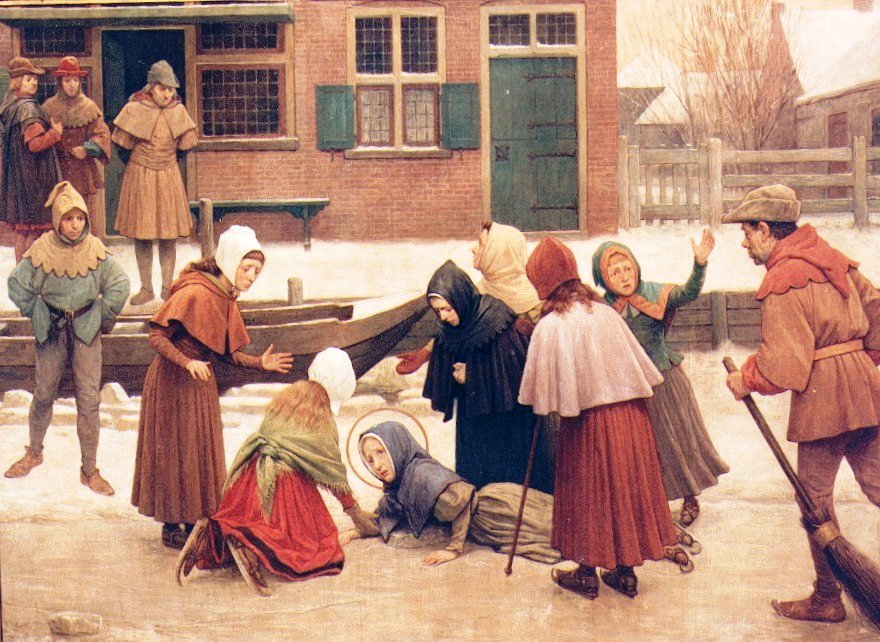
Saint Lydwina of Schiedam and Suffering Joyfully
Saint Lydwina of Schiedam (1380 – 1433) was one of the countless and glorious ‘victim souls’ in the history of the Church, those whose lives are filled with suffering, often of an unimaginable intensity, but who suffer joyfully. She was a fifteen-year old Dutch girl, out skating one day, when she fell and broke one[…]Continue reading→
The Glorious Martyrdoms of Martin and Maximus
As we enter into Eastertide, we recall on this 13th of April Pope Saint Martin I (+655), one of the noblest, if most tragic, of the successors of Saint Peter. Born in Umbria, Italy, he was of noble lineage, with great intelligence combined with charity and love of the poor and the Church. While still[…]Continue reading→
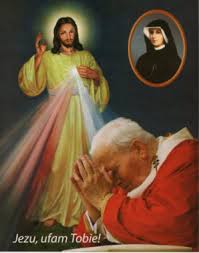
Canonizing Sister Faustina and Divine Mercy
HOMILY OF THE HOLY FATHER MASS IN ST PETER’S SQUARE FOR THE CANONIZATION OF SR MARY FAUSTINA KOWALSKA Sunday, 30 April 2000 1. “Confitemini Domino quoniam bonus, quoniam in saeculum misericordia eius”; “Give thanks to the Lord for he is good; his steadfast love endures for ever” (Ps 118: 1). So the Church sings on the Octave of[…]Continue reading→

Saint Stanislaus of Szczepanów
We celebrate Saint Stanislaus today (+ April 11, 1079), in light of this Easter Octave, a bishop and martyr who accepted the episcopacy only at the direct order of Pope Alexander II. He proved a wise and courageous leader of his flock, put to death by his own king, Boleslaus, for rebuking the monarch’s ‘immoral[…]Continue reading→
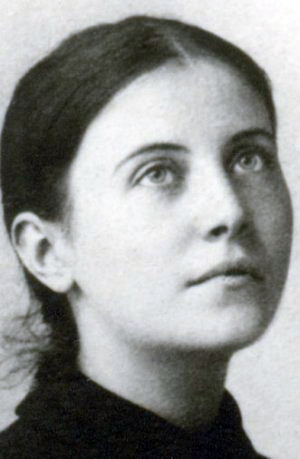
Saint Gemma Galgani
On this April 11th, in 1903 – the same year that the Italian Guiseppe Sarto was elected Pope later that summer as Pius X – a lovely, young Italian woman died, by the name of Gemma Galgani. She lived a brief life of 24 years, as did a number of other young saints, including Pier[…]Continue reading→
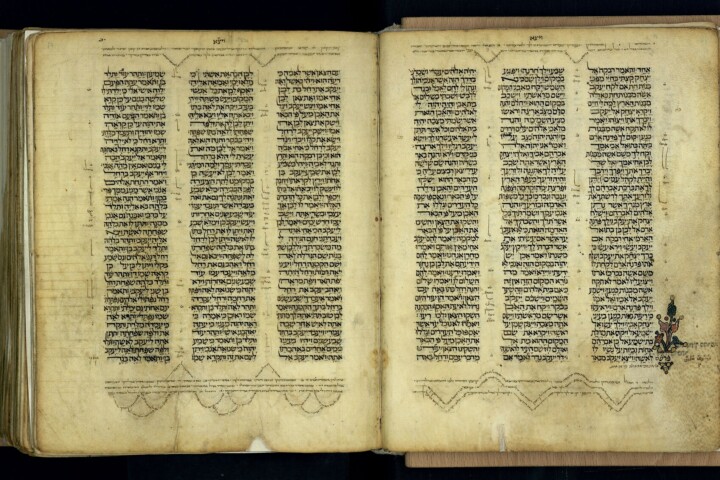
An Ideological and Improper Translation
I noticed something odd with the psalm reading at Mass the other day. Our bishops’ conference here in Canada has decreed that the Mass in English – Novus Ordo – use the ‘NRSV’, the ‘New Revised Standard Version’, an ‘updated’ translation of the original RSV, first published in 1952. This ‘new translation’ has the tendency[…]Continue reading→