
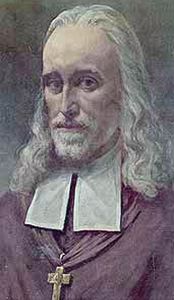
Orange Day and Saint Oliver Plunkett, the Last Martyr of the Protestant ‘Reformation’
July the 12th is ‘Orange’ Day, celebrated still with fervour in Northern Ireland, commemorating the defeat of the rightful Catholic king of the Stuart line, James II of England and Ireland (and VII of Scotland) by the forces of the Dutch and Protestant William of Orange (named after a region in Holland).
William’s wife was Mary, who was also William’s cousin, as well as James’ own daughter, but who had been taken away from her dear old Catholic dad-king, and raised Protestant.
The battle took place near the Boyne River in Ireland, outside the town of the Drogheda, on the north-east coast, and the defeat of the Catholic Stuarts – what Whig Protestant history calls the ‘Glorious Revolution’ – has been celebrated ever since as the definitive defeat of Catholic monarchy and the triumph of good old staunch ‘Protestantism’ over ‘Papism’. Of course, there are many stripes of Protestants in England, as is inevitably the case when one leaves the fold of the one, true Church. After all, one fervent Orangeman, C.S. Lewis, was quite orthodox, and would hardly recognize the current teachings of the Church of Ireland; then again, he would also likely be more Catholic than many modern ‘Catholics’.
July 12th is also, in one of those coincidences of providence which I quite enjoy, the death day of the last martyr of the Protestant persecution of Catholicism, Saint Oliver Plunkett (+1678). This good priest spent most of his early ministry in Rome, due to the ruthlessness of the persecution, as enforced by another Oliver, Cromwell by name, who, as ‘Lord Protector of the Realm’, enacted laws putting priests to death upon sight. He also happened to put to death King Charles I, ending royal reign (until the ‘restoration’ under Charles I). Oliver was a nephew of Thomas Cromwell, henchman of Henry VIII, who eventually lost his head over his arranged disastrous marriage of Henry to Anne of Cleves (see my post the other day).
Plunkett eventually returned to Ireland in 1670, after being made a bishop, and right away began an energetic apostolic ministry – fighting drunkenness amongst the Irish clergy, declaring, Let us remove this defect from an Irish priest, and he will be a saint, which reminds me of the old joke about why God gave drink to the Irish: So they wouldn’t take over the world, with sort of sincere apologies to anyone of non-Irish descent.
Anon, Father Plunkett founded a Catholic College at Drogheda, attracting 150 students – which Cardinal Newman would later claim as the ideal number for a liberal arts college. In fact, this has come to be known as ‘Dunbar’s number’, the limit in any group wherein they can truly get to know each other, and the leader can know each person by name. ‘Companies’ in the army follow this rule, as do troops of chimpanzees, funnily enough; or so I recall reading somewhere.
Forty of the students were Protestant, making Plunkett’s school the first integrated educational institution in the now-divided land, and which might have held great promise, until its closure in 1673, under the strict anti-Catholic laws of the Test Act of the same year. Good Bishop Plunkett himself was rounded up in the obviously-false ‘Titus Oates’ plot of 1678, charged with treason and, even though his innocence was known throughout the land, was hauled to Britain. When, after a formulaic fifteen-minute jury deliberation, he was declared guilty and sentenced to be hung, drawn and quartered at Tyburn, he said, ‘Thanks be to God’.
The Chief Justice, Sir Francis Pemberton, perhaps in a fit of stricken conscience, blurted out the real reason for Archbishop Plunkett’s sentence: You have done as much as you could to dishonour God in this case; for the bottom of your treason was your setting up your false religion, than which there is not any thing more displeasing to God, or more pernicious to mankind in the world
Just so. Oliver Plunkett has the distinction of being the last martyr of the so-called ‘Reformation’, put to death by being ‘hung, drawn and quartered’ on the very same day, July 1st in the old, Julian calendar (the 12th in the new, Gregorian) as the fateful Battle of the Boyne twelve years later.
The relics of Saint Oliver Plunkett’s body – already divided by the manner of his death – were distributed across various resting places, with most of his body in his casket at Downside Abbey, and his head on display at Saint Peter’s church in Drogheda.
So what might have been, and may yet be again, began and ended at Drogheda. The ‘Glorious Revolution’ of William and Mary has not turned out all that gloriously. The British Isles are now experiencing the tragic effects of her separation from the Church and her moral foundation, her identity, family life and culture gutted out, the hollowness filled with an inebriated and drug-addled hedonism and hooliganism, and the sad religion of ‘football’; Islam, with untrammeled ‘immigration’ waxes strong to fill this cultural and moral void, as one may evince from the most popular boy’s name in London, which isn’t Jack, or even Jill but, yes, Mohammad. After the recent elections, Britain is now governed by unhinged Labour socialists.
But God never abandons us, nor our countries. As the Psalm says, take delight in the Lord, and He will grant you the desires of your heart.
Would that the Brits would take those words to heart, and that King James and Bishop Plunkett had it right all along. The Church, with all her own truly glorious truth, beneath the maelstrom of wars and persecutions, endures unto the end, and is only thing that will save society, and ourselves.
Saint Oliver Plunkett, ora pro nobis! +
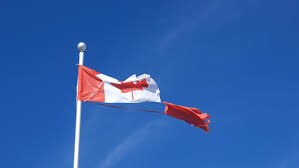
Carney’s Amoral Majority
After five defections – euphemistically described as ‘crossing the floor’ – and three by-elections, Mark Carney and his Liberals how have their coveted majority. One wonders what bowls of pottage were offered in back-room deals. In the archaic monarchical system that is the Dominion of Canada, this majority allows the newly-minted Prime Minister to rule[…]Continue reading→

Saint Kateri , Canada’s Protectress
This was the title given to Saint Kateri Tekakwitha, by Pope Benedict XVI, when he canonized her on October 28th, 2012, along with six others, in Saint Peter’ Square (she had been beatified by Pope John Paul II back in 1980). With Saint Joseph as our protector, along with the Canadian martyrs, we seem to[…]Continue reading→

A Tale of Two Benedicts
A grace-filled Holy Week to all our readers! As we await and prepare for the Resurrection about to dawn upon us, we might keep in mind two Benedicts: Pope Emeritus Benedict XVI, requiescat in pace, elected on this day in 2005; and today’s commemoration of the mystic pilgrim, Benedict Joseph Labre, who died on this[…]Continue reading→

My Name is Bernadette
April 16th is a propitious day, for besides the anniversary of Father de Valk’s death, who founded Catholic Insight in its print form decades ago, and the commemoration of the ‘two Benedicts’, mentioned in accompanying posts, today we also recall Saint Bernadette Soubirous, the young visionary to whom the Virgin Mary appeared numerous times at[…]Continue reading→

Saint Lydwina of Schiedam and Suffering Joyfully
Saint Lydwina of Schiedam (1380 – 1433) was one of the countless and glorious ‘victim souls’ in the history of the Church, those whose lives are filled with suffering, often of an unimaginable intensity, but who suffer joyfully. She was a fifteen-year old Dutch girl, out skating one day, when she fell and broke one[…]Continue reading→

The Glorious Martyrdoms of Martin and Maximus
As we enter into Eastertide, we recall on this 13th of April Pope Saint Martin I (+655), one of the noblest, if most tragic, of the successors of Saint Peter. Born in Umbria, Italy, he was of noble lineage, with great intelligence combined with charity and love of the poor and the Church. While still[…]Continue reading→

Canonizing Sister Faustina and Divine Mercy
HOMILY OF THE HOLY FATHER MASS IN ST PETER’S SQUARE FOR THE CANONIZATION OF SR MARY FAUSTINA KOWALSKA Sunday, 30 April 2000 1. “Confitemini Domino quoniam bonus, quoniam in saeculum misericordia eius”; “Give thanks to the Lord for he is good; his steadfast love endures for ever” (Ps 118: 1). So the Church sings on the Octave of[…]Continue reading→

Saint Stanislaus of Szczepanów
We celebrate Saint Stanislaus today (+ April 11, 1079), in light of this Easter Octave, a bishop and martyr who accepted the episcopacy only at the direct order of Pope Alexander II. He proved a wise and courageous leader of his flock, put to death by his own king, Boleslaus, for rebuking the monarch’s ‘immoral[…]Continue reading→
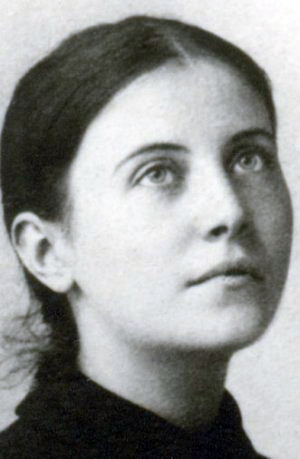
Saint Gemma Galgani
On this April 11th, in 1903 – the same year that the Italian Guiseppe Sarto was elected Pope later that summer as Pius X – a lovely, young Italian woman died, by the name of Gemma Galgani. She lived a brief life of 24 years, as did a number of other young saints, including Pier[…]Continue reading→
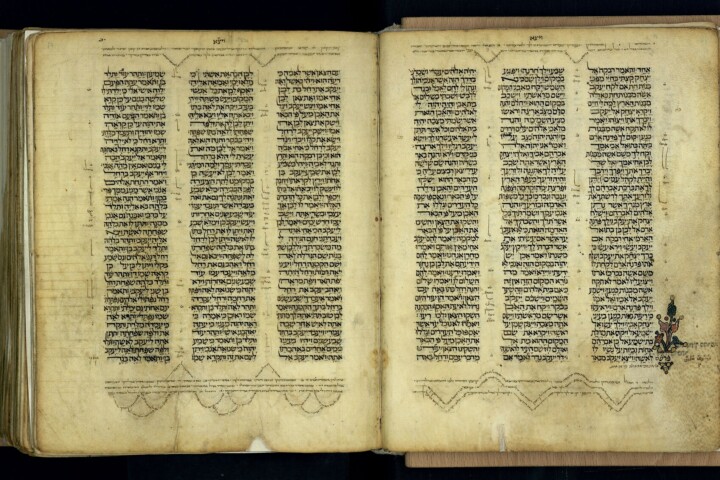
An Ideological and Improper Translation
I noticed something odd with the psalm reading at Mass the other day. Our bishops’ conference here in Canada has decreed that the Mass in English – Novus Ordo – use the ‘NRSV’, the ‘New Revised Standard Version’, an ‘updated’ translation of the original RSV, first published in 1952. This ‘new translation’ has the tendency[…]Continue reading→